Circle Symbolism
In art, the circle often signifies perfection, unity, and the encompassing order of the cosmos. Its continuous line suggests infinity, making it a favored device for framing ideal forms and visualizing geometric harmony.
Circle in Vitruvian Man
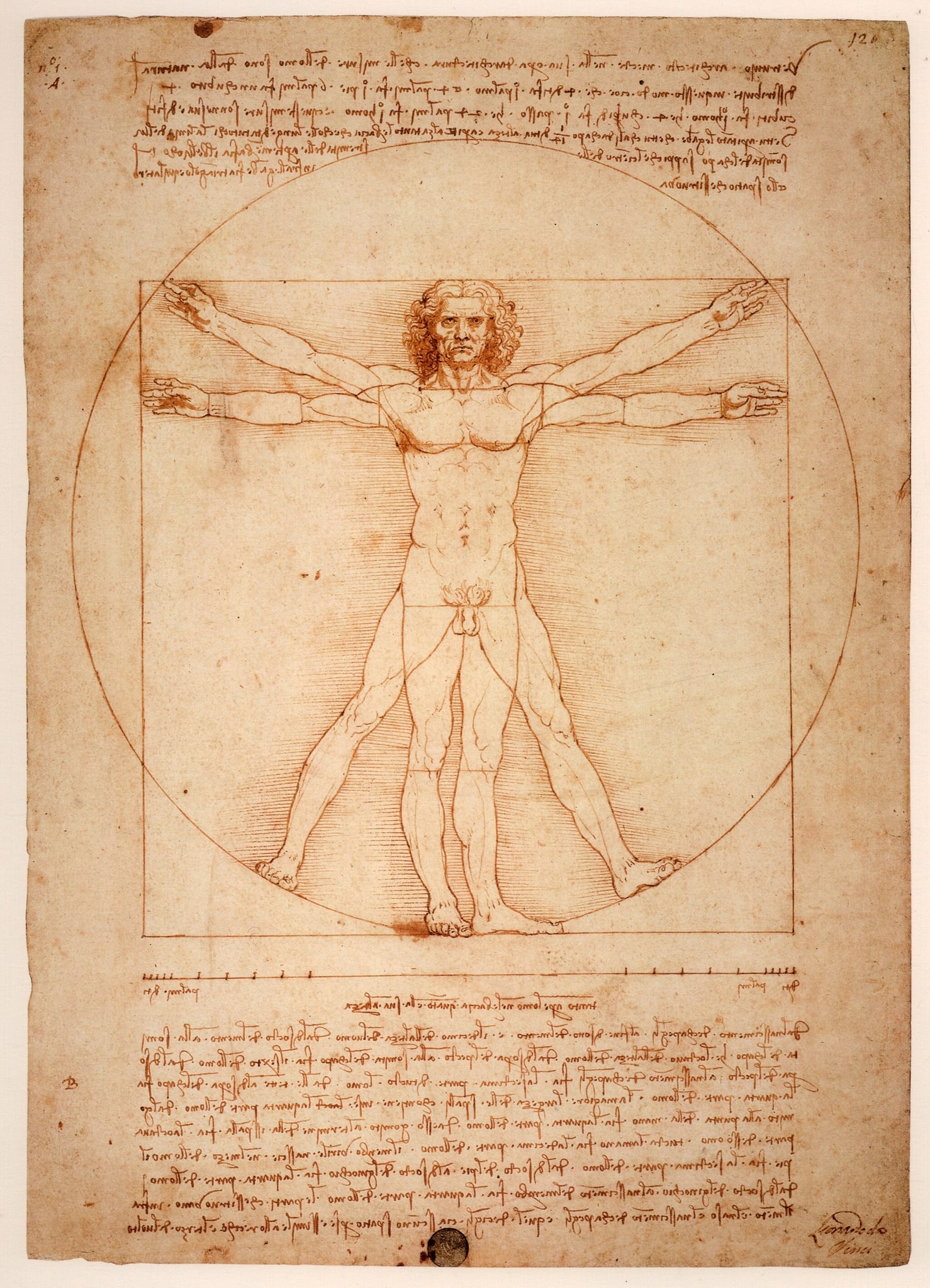
In Leonardo da Vinci’s Vitruvian Man (1498), a double-posed male figure is inscribed within a circle and a square. Here the circle operates as a measuring frame that aligns the human body with a universal order: the drawing advances a visual thesis of the body as a microcosm governed by ratio and reason. Paired with the square and accompanied by notes that test classical rules against observation, the circular boundary underscores the work’s fusion of geometry, anatomy, and humanist inquiry by enclosing the figure within an ideal, all-embracing domain.