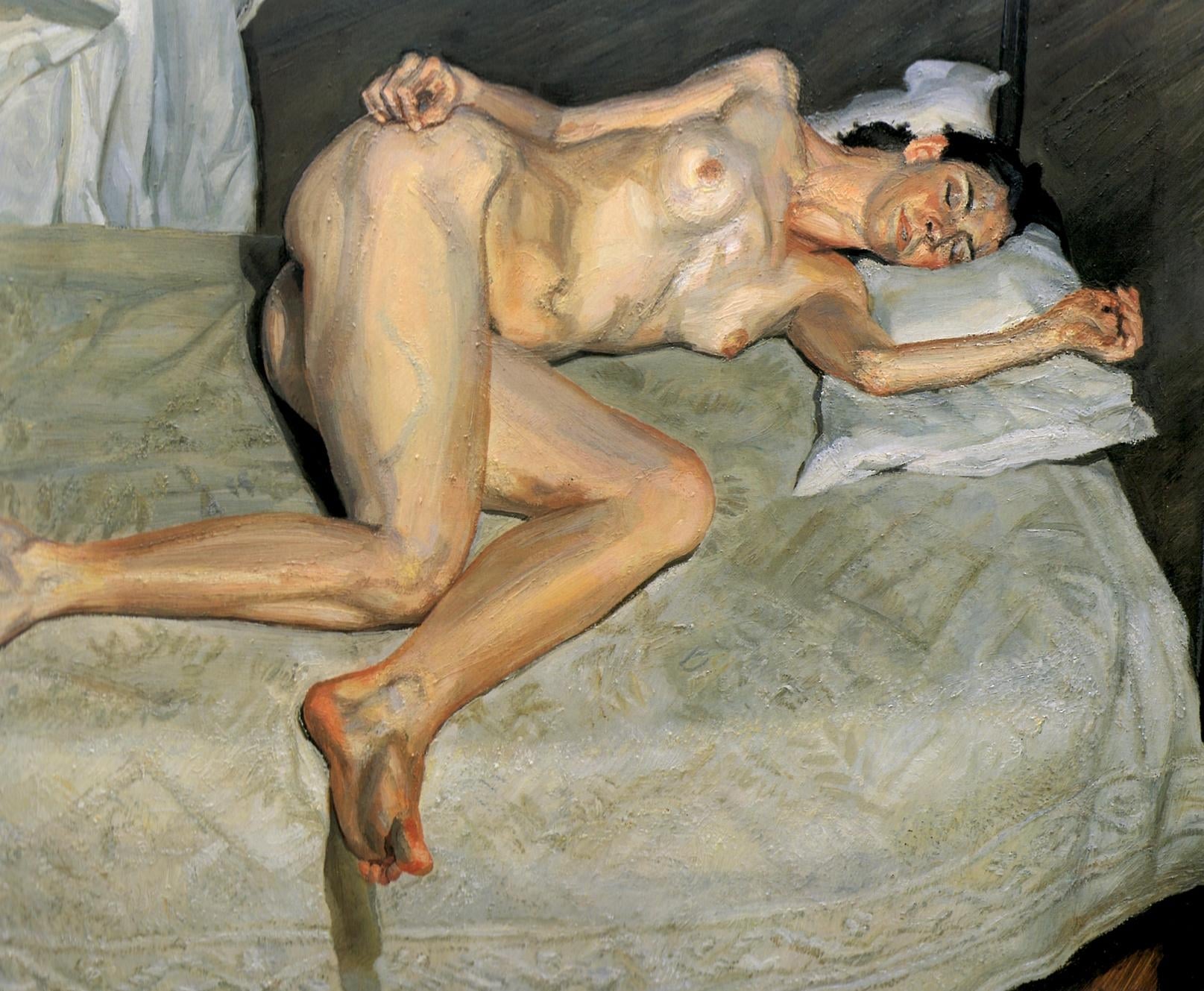
Diagonal bed edge Symbolism
A diagonal bed edge is a slanted boundary of mattress, sheet, or cover that cuts across the picture plane, creating a raking stage for the reclining body. In figurative painting, such diagonals animate repose, make weight and duration legible, and guide the gaze through foreshortened forms. They translate the physics of lying down—gravity, drift, and sag—into compositional force.
Diagonal bed edge in Portrait on a White Cover
In Lucian Freud’s Portrait on a White Cover (2002–2003), the diagonal edge of the white cover rakes across the composition, turning the bed into a measuring device for bodily weight and time. Set against the cool, worked cloth named in the title, the sitter’s warm, bruised flesh sprawls along this slant; twisted feet and a clenched left hand register the pull of gravity, while the diagonal organizes the figure’s spread and directs the eye across the picture. The angle paces looking, concentrating attention where cover meets skin, so that the bed’s diagonal becomes the painting’s structural armature and an index of lived duration.