Gloves Symbolism
In art, gloves commonly symbolize respectability and the disciplined presentation of self in public. Because they cover and mediate touch, they mark social boundaries and tact, signaling status and self‑possession within the rituals of modern life.
Gloves in Summer's Day
In Berthe Morisot’s Summer’s Day (about 1879), two fashionable women drift in a boat in the Bois de Boulogne, their attire—dresses, hats, and a bright blue parasol—framing a carefully composed appearance in a public setting. Their gloved hands reinforce that poise: the gloves function as markers of propriety and self‑containment amid leisure, aligning personal composure with the codes of urban sociability that Morisot captures through her swift, zig‑zag brushwork.
Common Themes
Artworks Featuring This Symbol
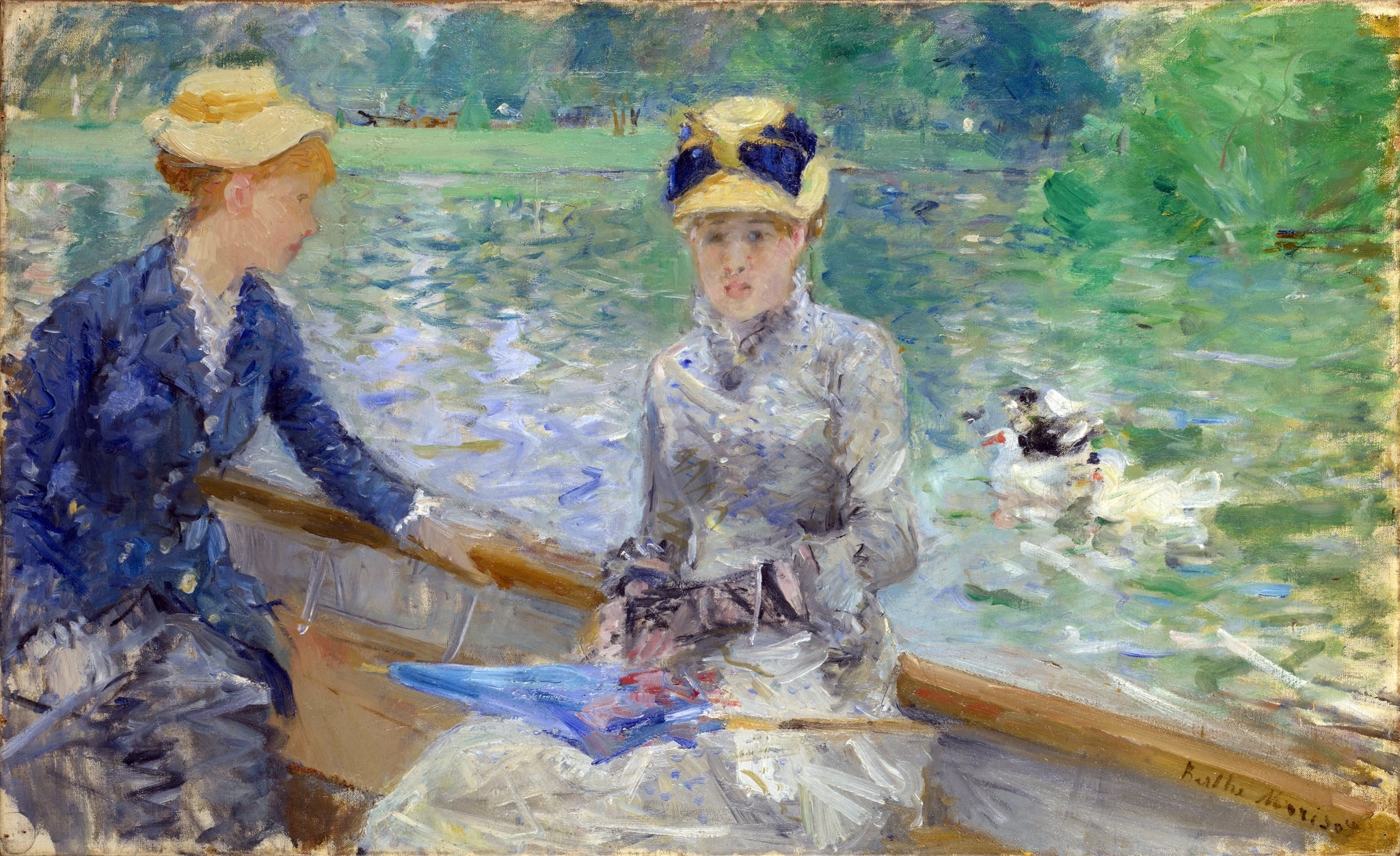
Summer's Day
Berthe Morisot (about 1879)
Two women drift on a boat in the Bois de Boulogne, their dresses, hats, and a bright blue parasol fused with the lake’s flicker by Morisot’s swift, <strong>zig‑zag brushwork</strong>. The scene turns a brief outing into a poised study of <strong>modern leisure</strong> and <strong>female companionship</strong> in public space <sup>[1]</sup>.
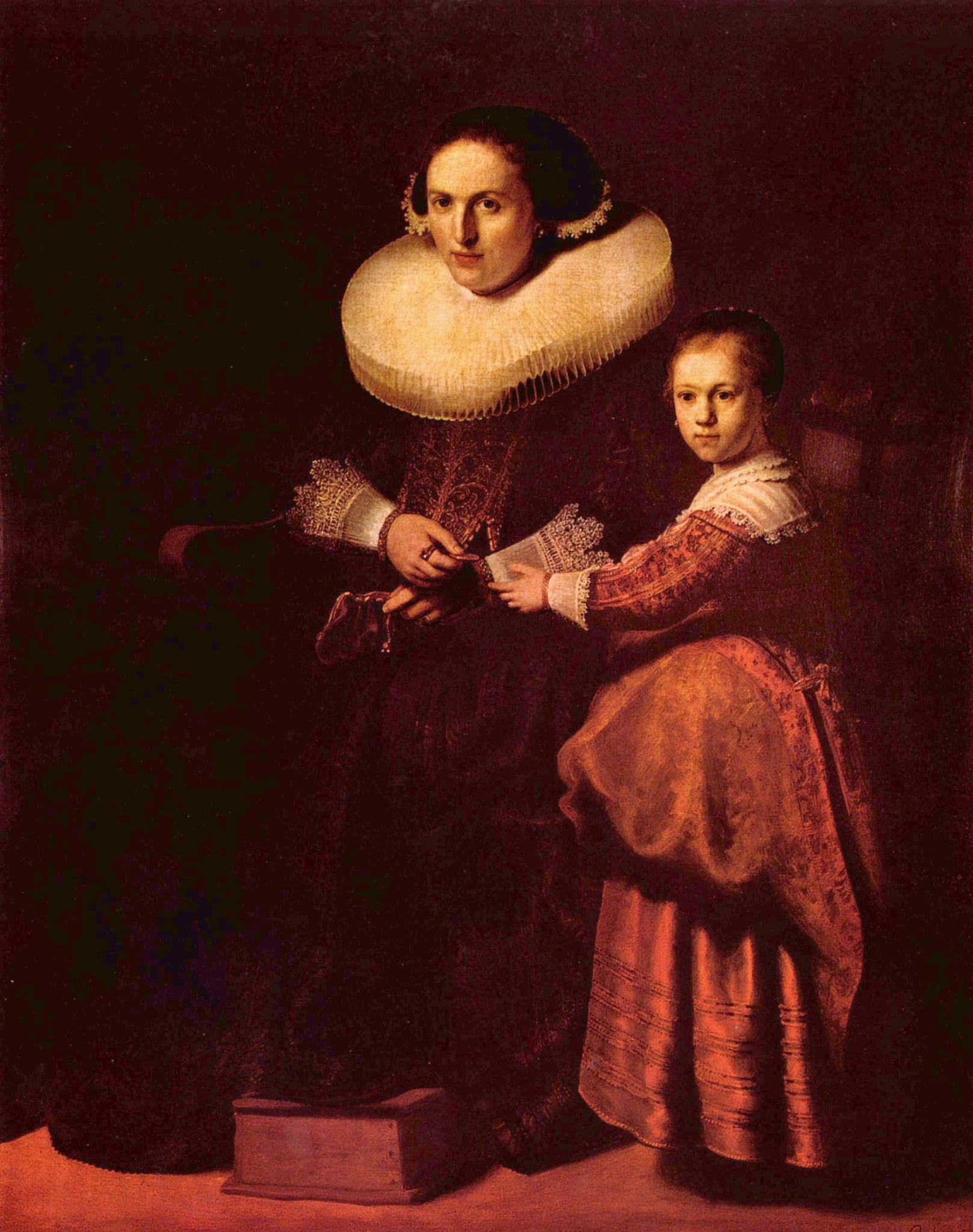
Portraits of Susanna van Collen and her Daughter Anna
Rembrandt van Rijn (c. 1632–33)
A mother and daughter step out of darkness, their faces, hands, and fabrics seized by Rembrandt’s <strong>chiaroscuro</strong>. The mother’s monumental <strong>ruff</strong> and sober black gown declare <strong>prosperity with restraint</strong>, while gloves, a clasped hand, and a book encode civility, lineage, and piety <sup>[1]</sup><sup>[4]</sup><sup>[5]</sup>.