Golden ivy/laurel Symbolism
In art, laurel signals victory, fame, and poetic achievement, while ivy suggests fidelity and steadfast artistic devotion. When rendered as golden vine or wreath, these evergreens elevate the message to enduring, exalted honor—linking triumph with consecrated creative vocation.
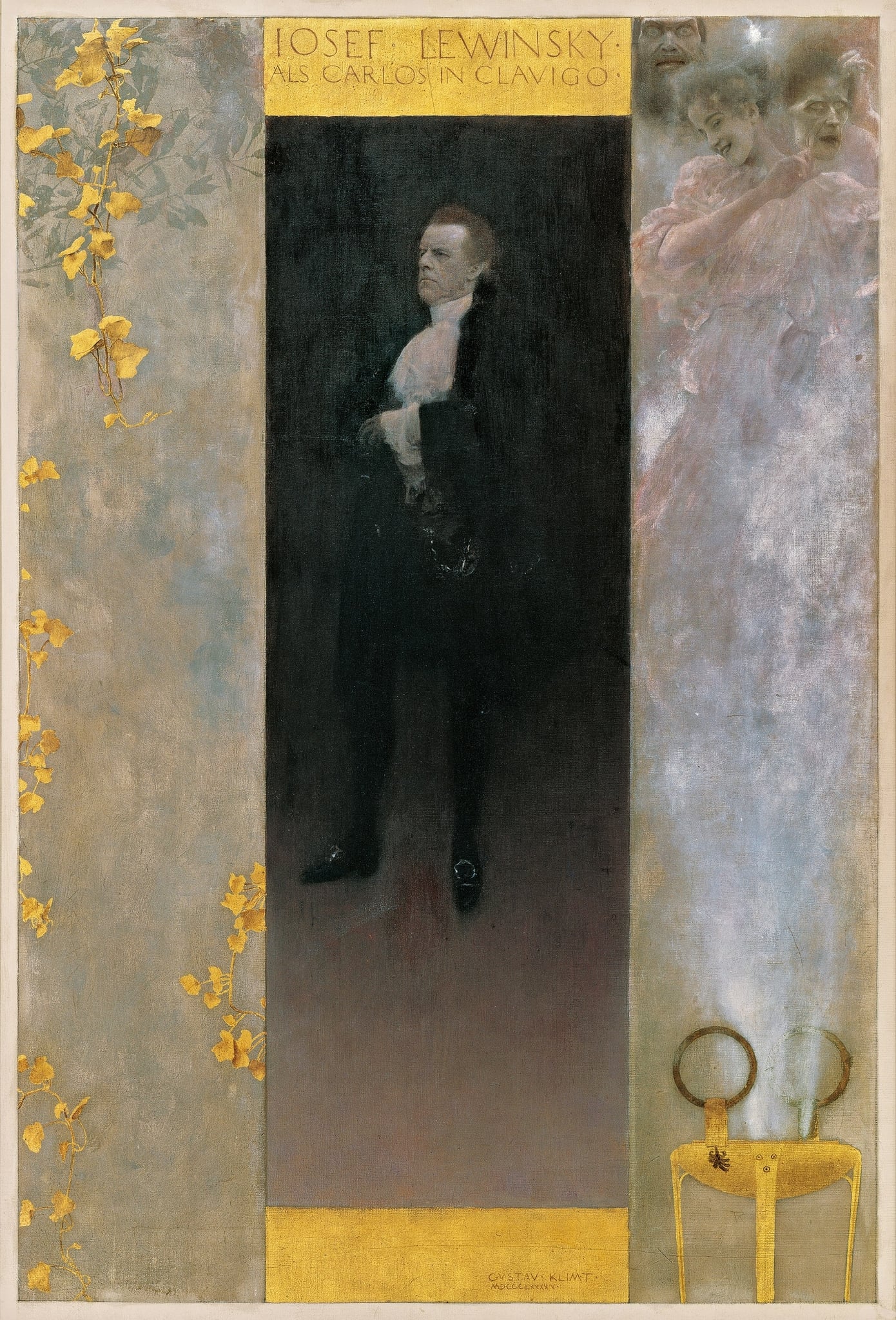
Golden ivy/laurel in Josef Lewinsky as Carlos in Clavigo
In Gustav Klimt’s Josef Lewinsky as Carlos in Clavigo (1895), a laurel/ivy motif forms part of the allegorical surround that confronts the actor’s upright silhouette, alongside theatrical masks and an antique tripod. Klimt fuses portrait and allegory so that the vine functions as an honorific and moral frame: it evokes public renown and artistic commitment while testing the character’s resolve, aligning Carlos’s staged identity with the laurel/ivy’s traditional associations of fame, fidelity, and devotion to the arts.