Head tilted toward light Symbolism
In art, a head inclined toward light often signals receptivity, awakening, or longing, aligning the figure with revelation rather than obscurity. Across traditions, light is linked to knowledge and presence, so turning into illumination can mark a threshold between shadow and awareness. The gesture makes interior orientation legible through the body’s relation to brightness and darkness.
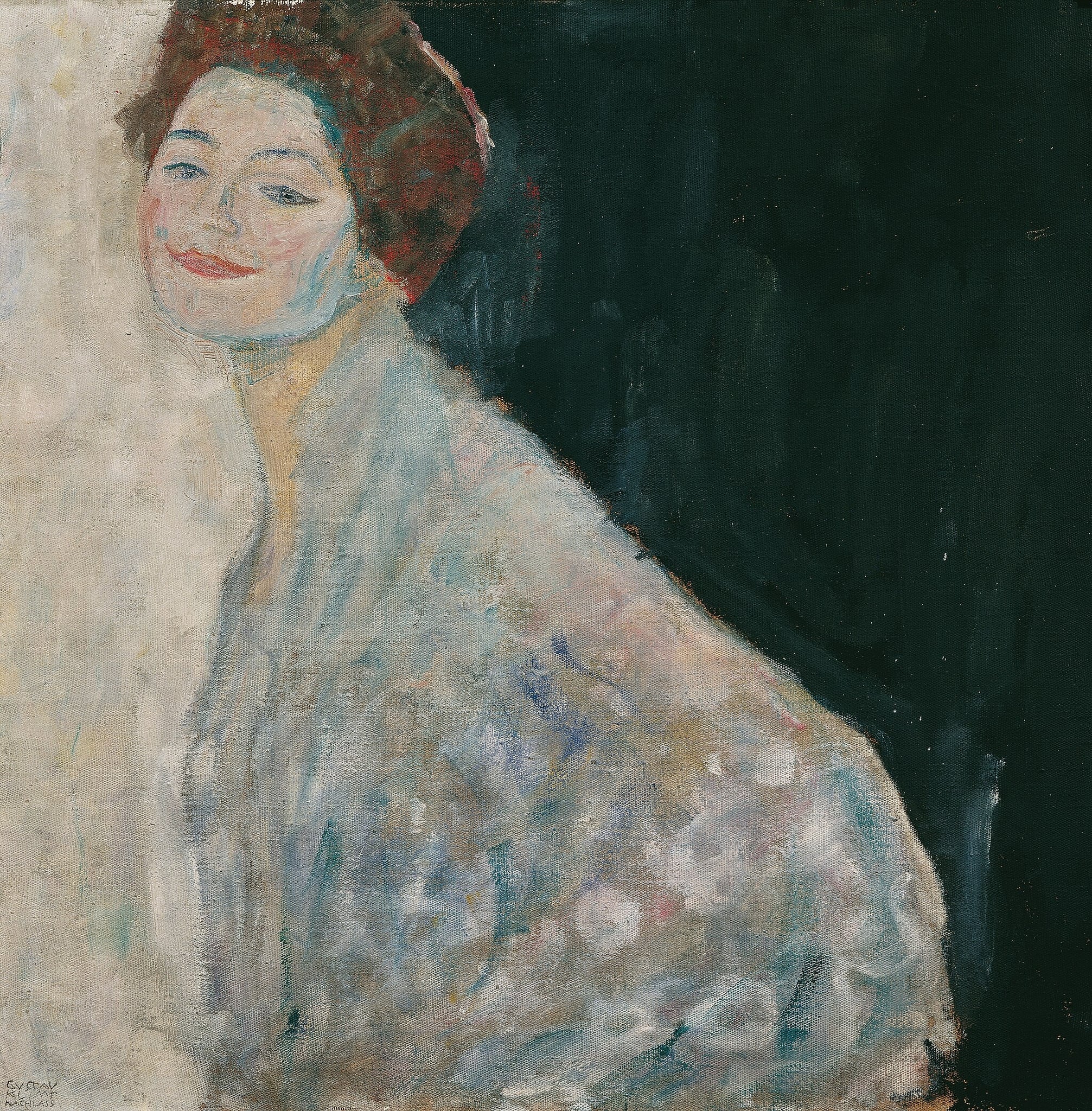
Head tilted toward light in Lady in White
In Gustav Klimt’s Lady in White (1917–1918), the figure coalesces at the meeting of a pale field and a dark one, and her slight tilt—registered in the mask‑like smile—reads against this divide. Klimt’s iridescent whites, touched by blues and violets in the kimono‑like robe, dissolve the figure into the illuminated side even as the adjacent darkness holds her at the threshold. The composition visualizes orientation to illumination: desire and awareness articulated not by detailed likeness but by a poised lean toward the pale field, where emergence counters the pull of shadow.