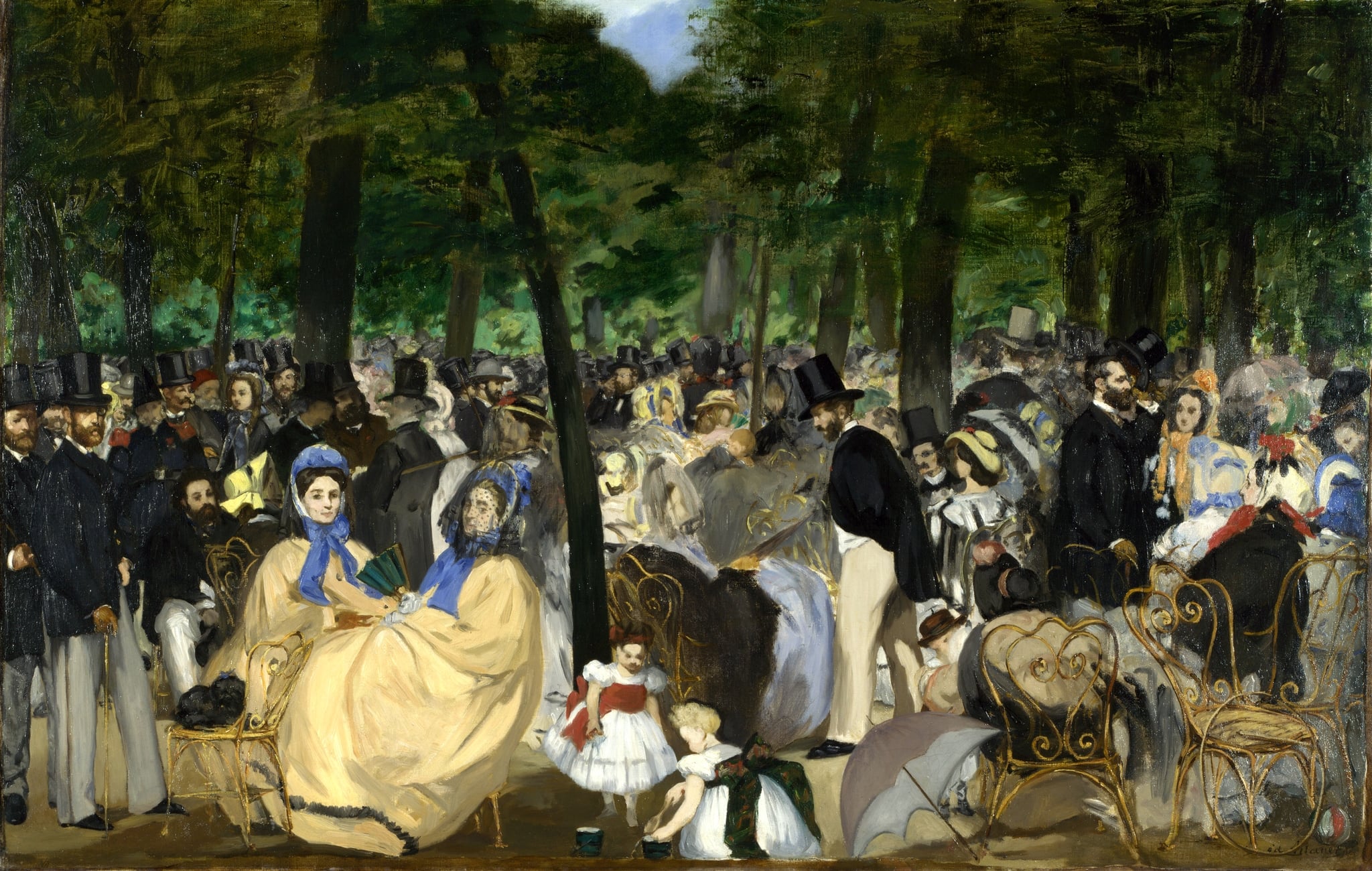
Parasols/umbrella Symbolism
Parasols and umbrellas in art signal outdoor leisure, fashion, and the etiquette of public life. In nineteenth-century European painting they are key props of the promenade, mediating sun and gaze while staging self-presentation. Their distinct shapes can also punctuate crowded scenes, marking social types and rhythms of looking.
Parasols/umbrella in Music in the Tuileries
In Édouard Manet’s Music in the Tuileries (1862), the symbol aligns with modern urban spectatorship: carried among a fashionable crowd, parasols and umbrellas operate as markers of class and genteel outdoor leisure. Manet disperses attention across a frieze of top hats, crinolines, and iron chairs beneath vivid foliage; within this milieu of promenade culture, the handheld shelter functions as both practical shade and social signal, reinforcing the painting’s theme of seeing and being seen.