Red mantle (father’s cloak) Symbolism
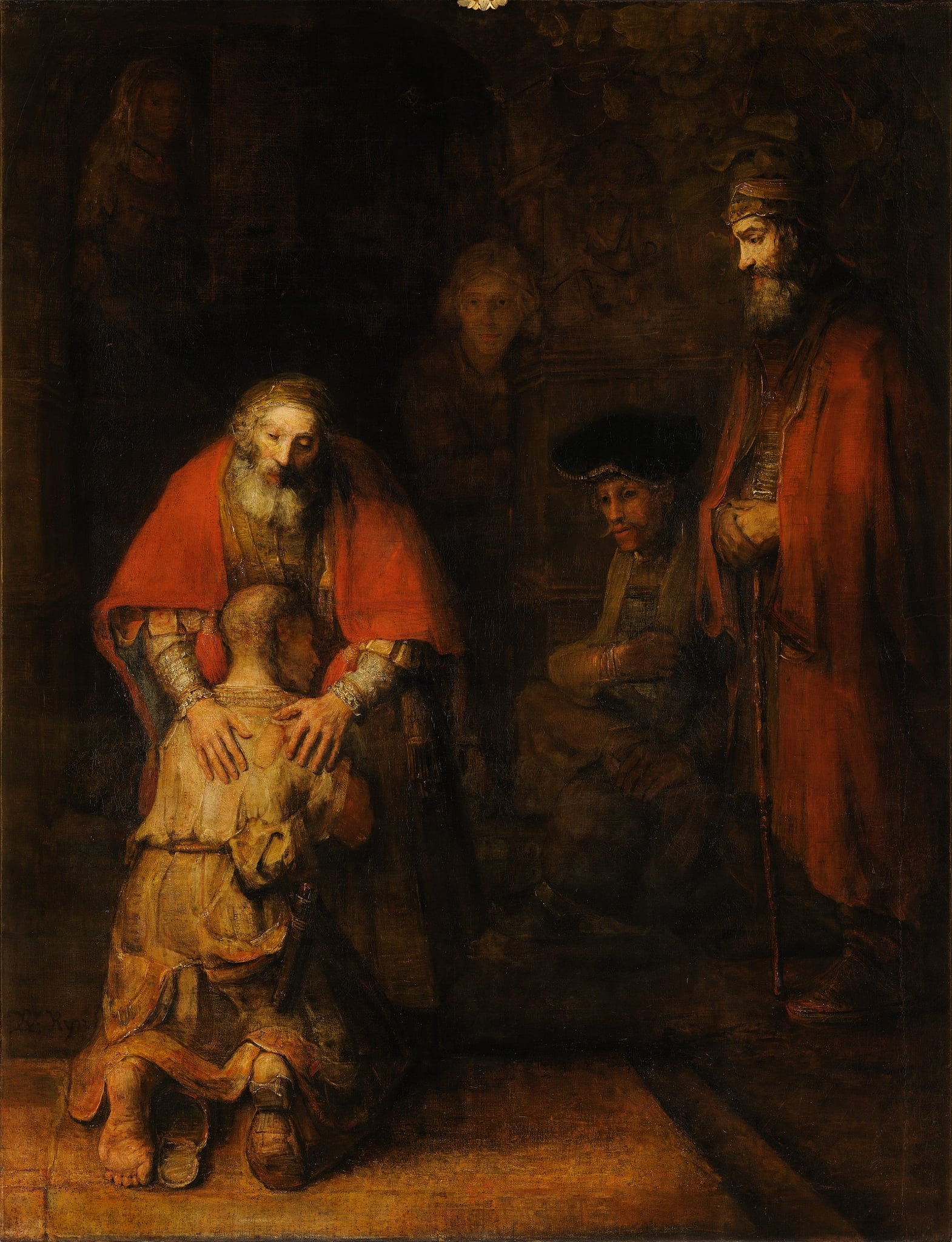
As seen in Rembrandt van Rijn’s late Return of the Prodigal Son, a father’s red mantle signifies merciful welcome, protection, and the warmth of homecoming. The cloak’s saturated color and ample form become the visible sign of restored dignity, enclosing the penitent child in paternal care. In Baroque pictorial language, Rembrandt uses color, light, and touch to give this garment the emotional weight of return and reconciliation.
Red mantle (father’s cloak) in The Return of the Prodigal Son
In The Return of the Prodigal Son (c. 1661–1669, probably completed by 1669), Rembrandt van Rijn makes the father’s red mantle the focal sign of homecoming. In the hush of dusk-like light, the ragged son kneels into his father’s embrace; the broad, red cloak gathers the light around them, reading as warmth and shelter. The illuminated faces, hands, and feet concentrate meaning, with the father’s hands emerging from the mantle to enact mercy and protection, while the upright elder brother holds back in shadow. Within this single tableau, the red mantle anchors the composition and conveys the son’s restored dignity under the father’s care.