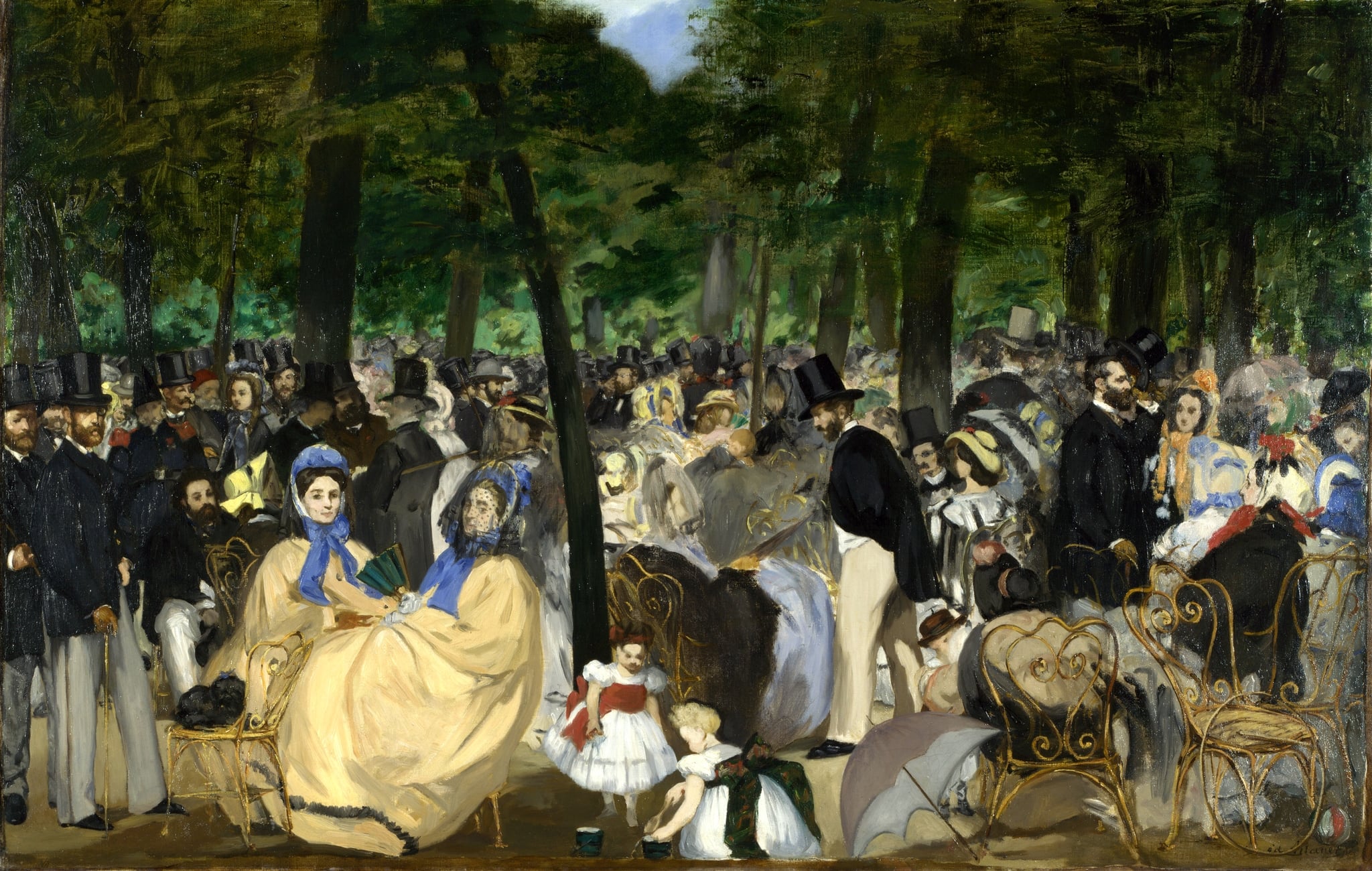
Top hats Symbolism
In 19th-century art, the top hat signals bourgeois masculinity, wealth, and the codes of urban sociability. As a crisp, conspicuous silhouette, it became shorthand for the flâneur and for modern leisure spaces where looking and being seen define the experience.
Top hats in Music in the Tuileries
In Édouard Manet’s Music in the Tuileries (1862), a frieze of top hats mingles with crinolines and iron chairs at a Sunday concert, turning the gathering into a manifesto of modern life. Manet disperses these hats across a restless crowd beneath toxic green foliage, so that bourgeois male spectatorship—rather than a single hero—organizes the scene; the repeated black cylinders punctuate the field and shift attention from narrative to the act of looking itself.