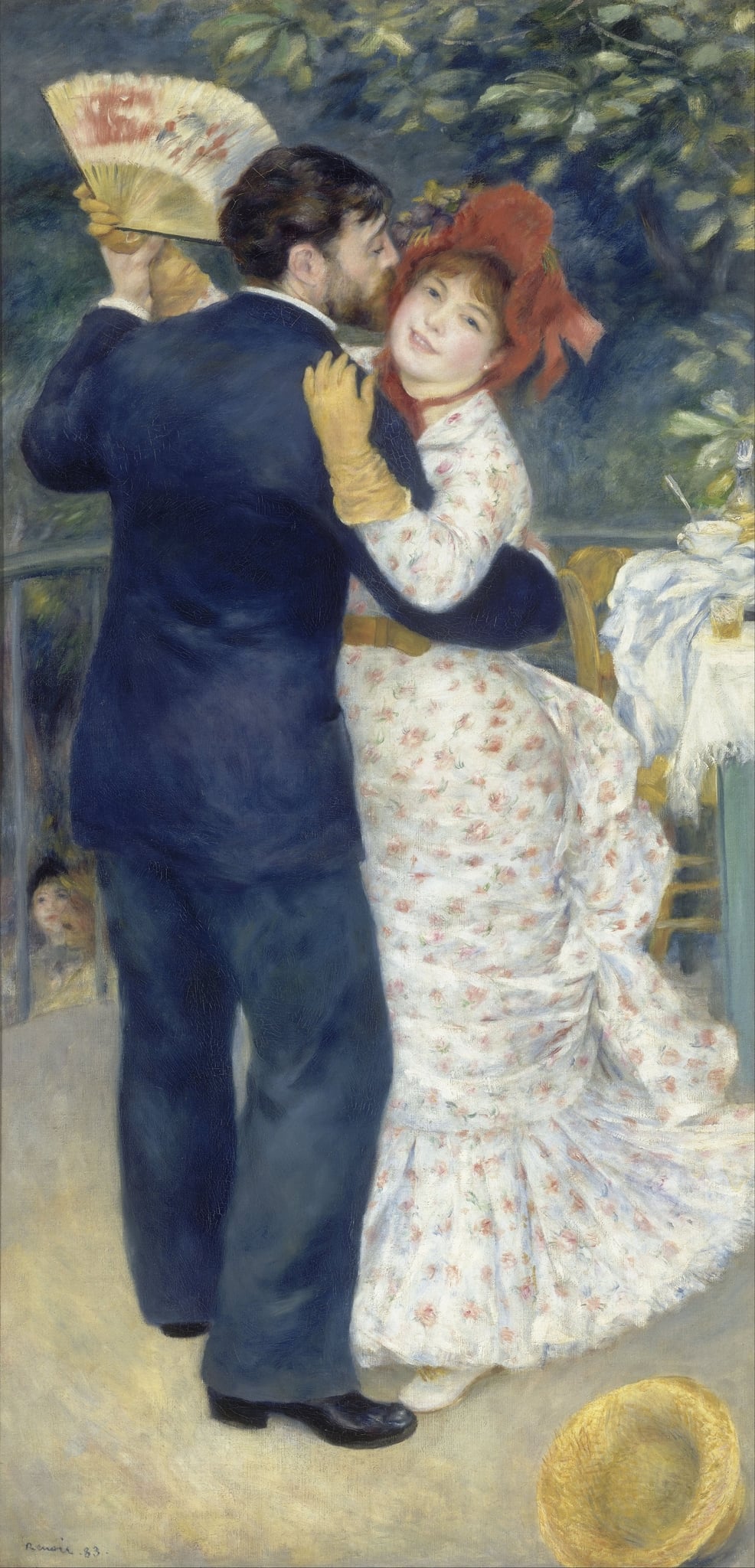
Yellow gloves Symbolism
In art, gloves signal etiquette, cleanliness, and the social regulation of touch. Yellow gloves—often pale leather—are associated with formal, public occasions such as social dancing, where they make hand-to-hand contact acceptable. As a symbol, they mark intimacy as sanctioned rather than illicit.
Yellow gloves in Dance in the Country
In Dance in the Country (1883) by Pierre-Auguste Renoir, the man's yellow gloves punctuate a scene of bourgeois leisure on a café terrace. Amid the tossed straw boater, the small table with glass and napkin, and the partner’s floral dress and red bonnet, the gloves articulate the code that permits the couple’s close embrace: touch is allowed, but governed by decorum.
Renoir stages the moment where propriety and desire meet; the yellow gloves become the visible mediator between social rules and shared pleasure. Set within the painting’s blend of dappled color and firmer contours, they translate intimacy into a public, respectable gesture.