Claude Monet Paintings in Tokyo — Where to See Them
Tokyo offers a focused way to see Claude Monet: roughly two paintings are on permanent display across three museums—Tokyo Fuji Art Museum (2), The National Museum of Western Art (0), and the Artizon Museum (Ishibashi Foundation) (0). This setup makes trip planning straightforward: go to Tokyo Fuji Art Museum for the Monet canvases, and use the other two institutions to round out your understanding of his era through their Western art focus and rotating exhibitions.
At a Glance
- Museums
- The National Museum of Western Art, Artizon Museum (Ishibashi Foundation), Tokyo Fuji Art Museum
- Highlight
- View two Monet paintings at Tokyo Fuji Art Museum.
- Best For
- Monet enthusiasts seeking Tokyo's confirmed holdings and broader Western art collections.
The National Museum of Western Art
Even without a Monet on site, this museum is crucial for understanding how Monet’s ideas landed in Japan: its core holdings in Impressionism let you track the color, light, and serial landscape strategies Monet shared with and influenced in peers like Renoir, Sisley, and Pissarro. Special exhibitions here frequently bring major Monet loans to Tokyo, offering rare chances to see key canvases in dialogue with the museum’s broader Impressionist context.
Artizon Museum (Ishibashi Foundation)
Artizon matters for Monet because the Ishibashi Foundation has long shaped Japan’s Impressionist scholarship and staging—its shows often position Monet alongside Japonisme and modern Japanese painting to reveal how his color and surface evolved in a cross-cultural circuit. Even when no Monet is present, the curatorial essays, wall texts, and comparative hangs make it an excellent place to study how Monet’s innovations radiated into 20th‑century art.
Tokyo Fuji Art Museum
With two Monet paintings, this is a chance to examine his brushwork and changing treatment of light at close range, without the crush you’d face at bigger institutions. The museum’s European painting route often sets Monet near Barbizon and later modernists, helping you see how his handling of atmosphere bridged realism and abstraction.
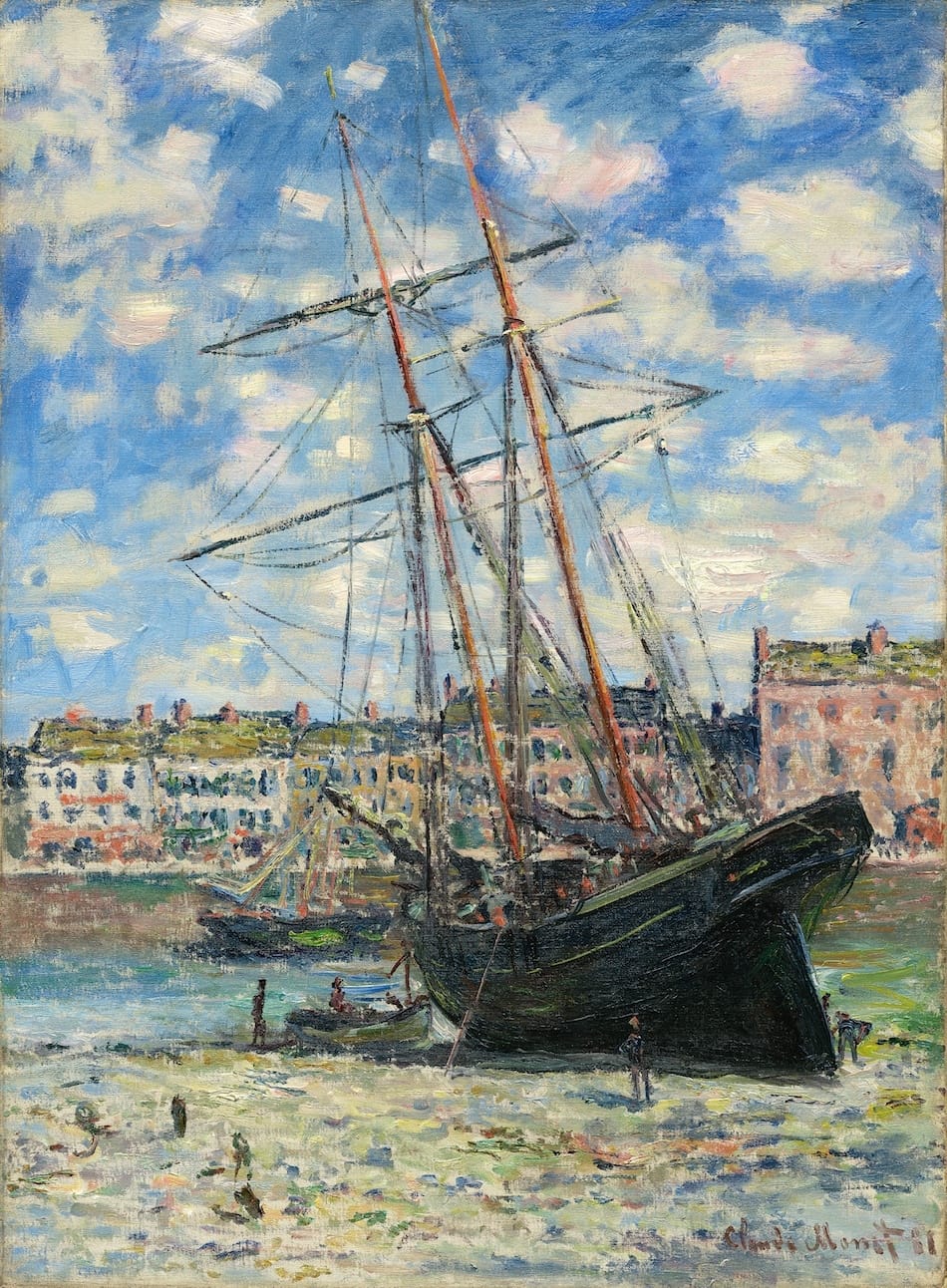
Boat Lying at Low Tide
1881
Monet depicts a beached working boat resting on wet tidal flats, its hull catching cool coastal light while ripples and sand glisten around it. The painting is significant as part of Monet’s sustained exploration of Normandy’s shoreline, where he studied fleeting light on modest, everyday subjects. Look for the broken, directional brushstrokes that suggest breeze and moisture, and the subtle color shifts in the reflected sky across shallow water and damp sand.
Must-see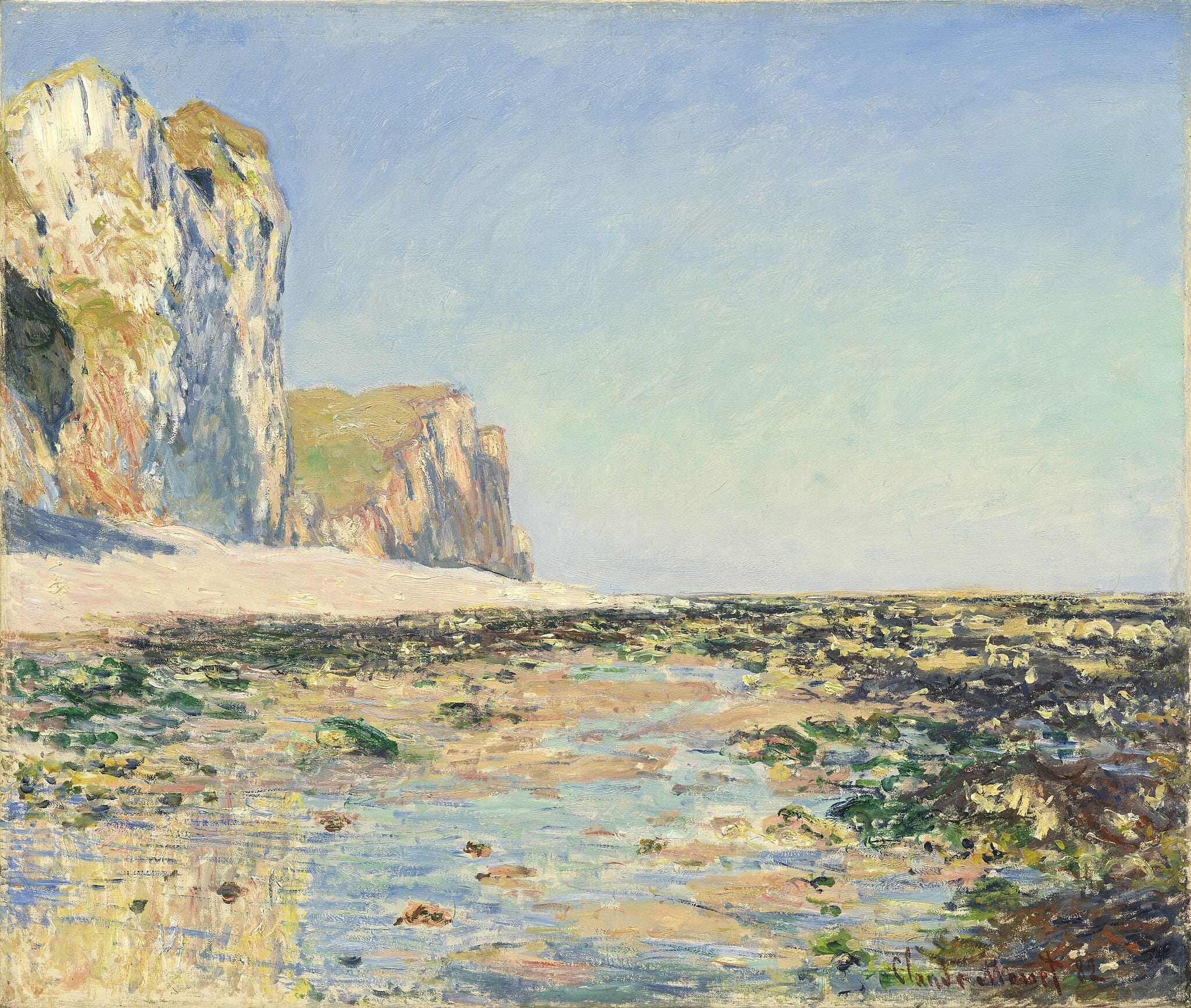
Seashore and Cliffs of Pourville in the Morning
1882
This view captures the chalk cliffs and surf at Pourville under fresh morning light, with sea, sky, and land bound by quick, luminous touches of paint. It is significant within Monet’s Pourville series, where he tested how time of day transforms color and atmosphere along the coast. Watch for the cool, pearly palette of early hours, the rhythmic brushwork of the waves, and how the high horizon and cliff contours lead the eye through depth and sea air.
Must-see