Claude Monet Paintings in London — Where to See Them
London is one of the best places outside France to see Monet up close, with approximately 16 paintings on permanent display across three museums: 14 at The National Gallery, none at Tate Britain, and 2 at The Courtauld Gallery. The concentration at Trafalgar Square and Somerset House lets you compare Monet’s shifts in light, color, and brushwork within a short walk—while the zero at Tate Britain is a handy planning note that keeps you headed to where the pictures actually hang.
At a Glance
- Museums
- The National Gallery, Tate Britain, The Courtauld Gallery
- Highlight
- Begin at the National Gallery for London’s largest Monet holdings.
- Best For
- Monet fans wanting a dense, top-tier viewing across central London museums.
The National Gallery
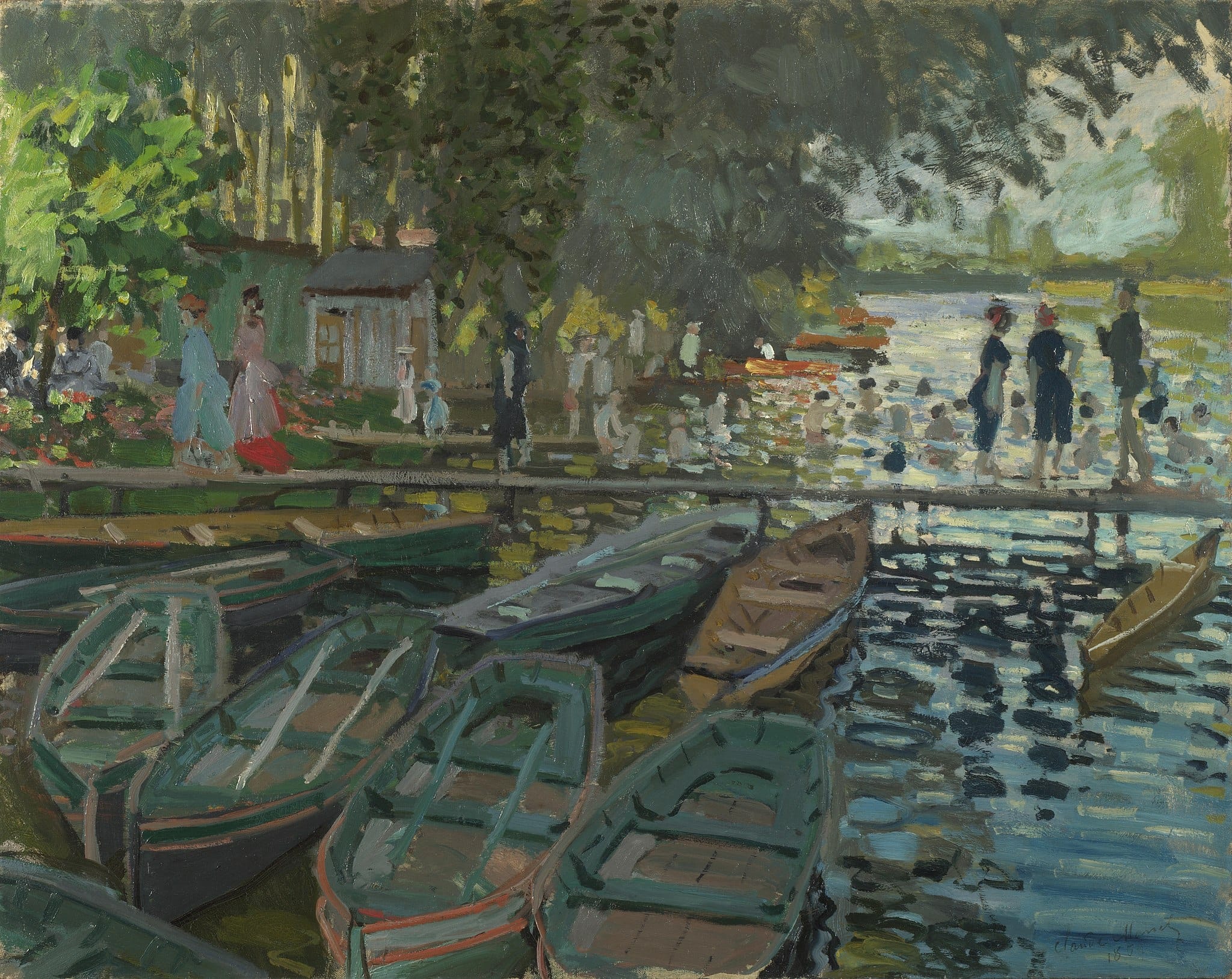
Bathers at La Grenouillère
1869
Monet captures a bustling Seine-side resort with moored boats, a footbridge, and figures glimpsed in swift, sketchy strokes. Painted rapidly on the spot as a study, it signposts Impressionism’s turn toward modern leisure and fleeting effects. Look for the way the horizontal bridge slices the view and how rough, flat brushmarks make water and light shimmer. ([nationalgallery.org.uk](https://www.nationalgallery.org.uk/paintings/claude-monet-bathers-at-la-grenouillere))
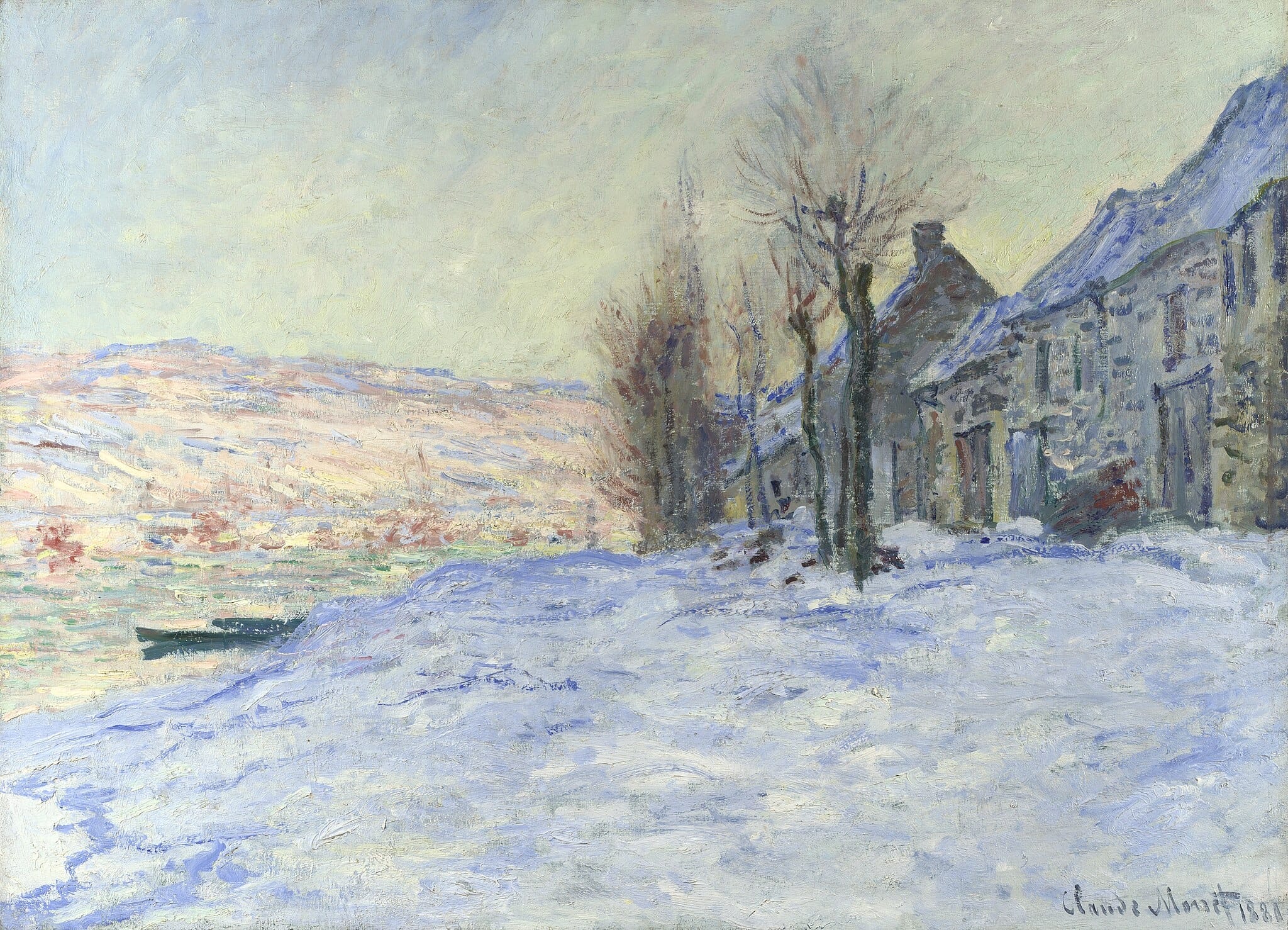
Lavacourt under Snow
A hamlet on a bend of the Seine lies under hard winter light, likely from the unusually cold winter of 1879–80. The picture shows Monet’s fascination with snow’s colors and atmosphere as he shifted toward painting motifs in series. Look for the strong diagonal of cottages and the broad, blue-laced sweeps of paint that build the great snowbank. ([nationalgallery.org.uk](https://www.nationalgallery.org.uk/paintings/claude-monet-lavacourt-under-snow))
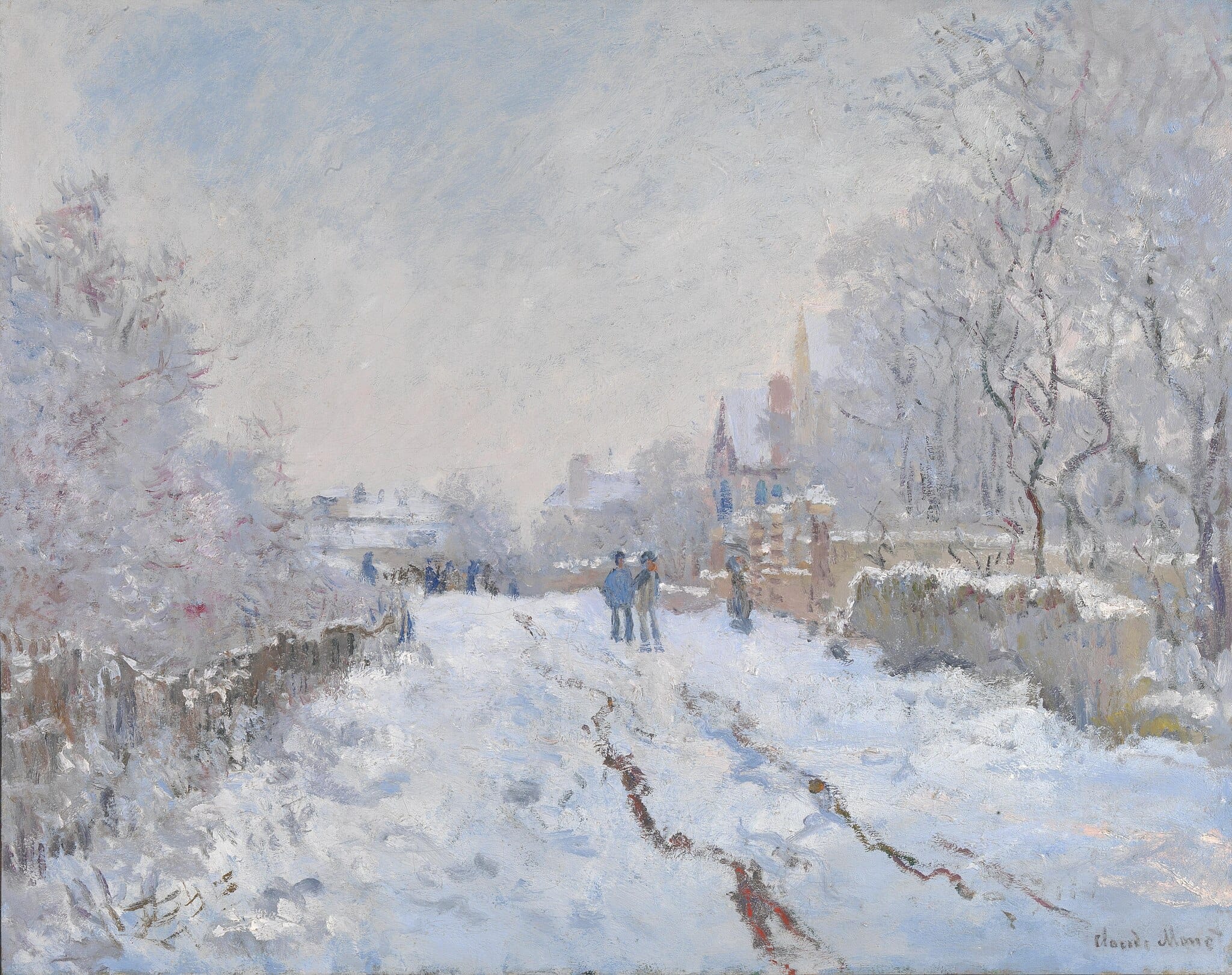
Snow Scene at Argenteuil
1875
Monet records a suburban boulevard under winter skies, its figures trudging past wavy cart tracks that pull the eye into misty distance. It’s one of many Argenteuil canvases that study weather and light rather than anecdote. Notice the thicker paint in the foreground snow and the near-monochrome palette warmed by pinks. ([nationalgallery.org.uk](https://www.nationalgallery.org.uk/paintings/claude-monet-snow-scene-at-argenteuil))
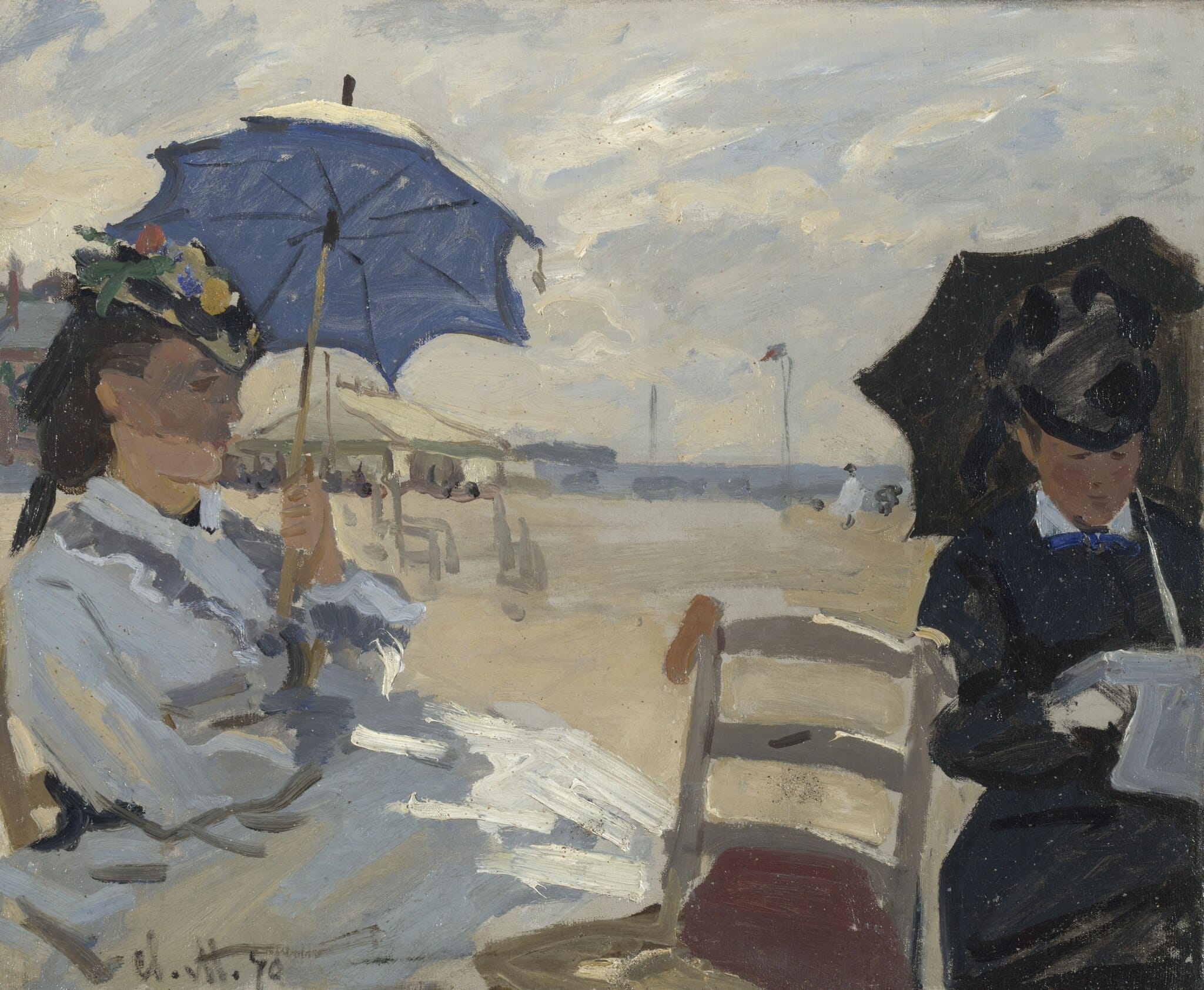
The Beach at Trouville
1870
Two fashionably dressed women sit close to us on a breezy Normandy beach, their faces shaded by parasols. Painted during a family stay, it reframes the coast as a modern holiday setting and was worked, at least in part, right on the sand. Look closely for grains of sand embedded in the paint and the brisk, sun-catching dashes of white. ([nationalgallery.org.uk](https://www.nationalgallery.org.uk/paintings/claude-monet-the-beach-at-trouville?utm_source=openai))
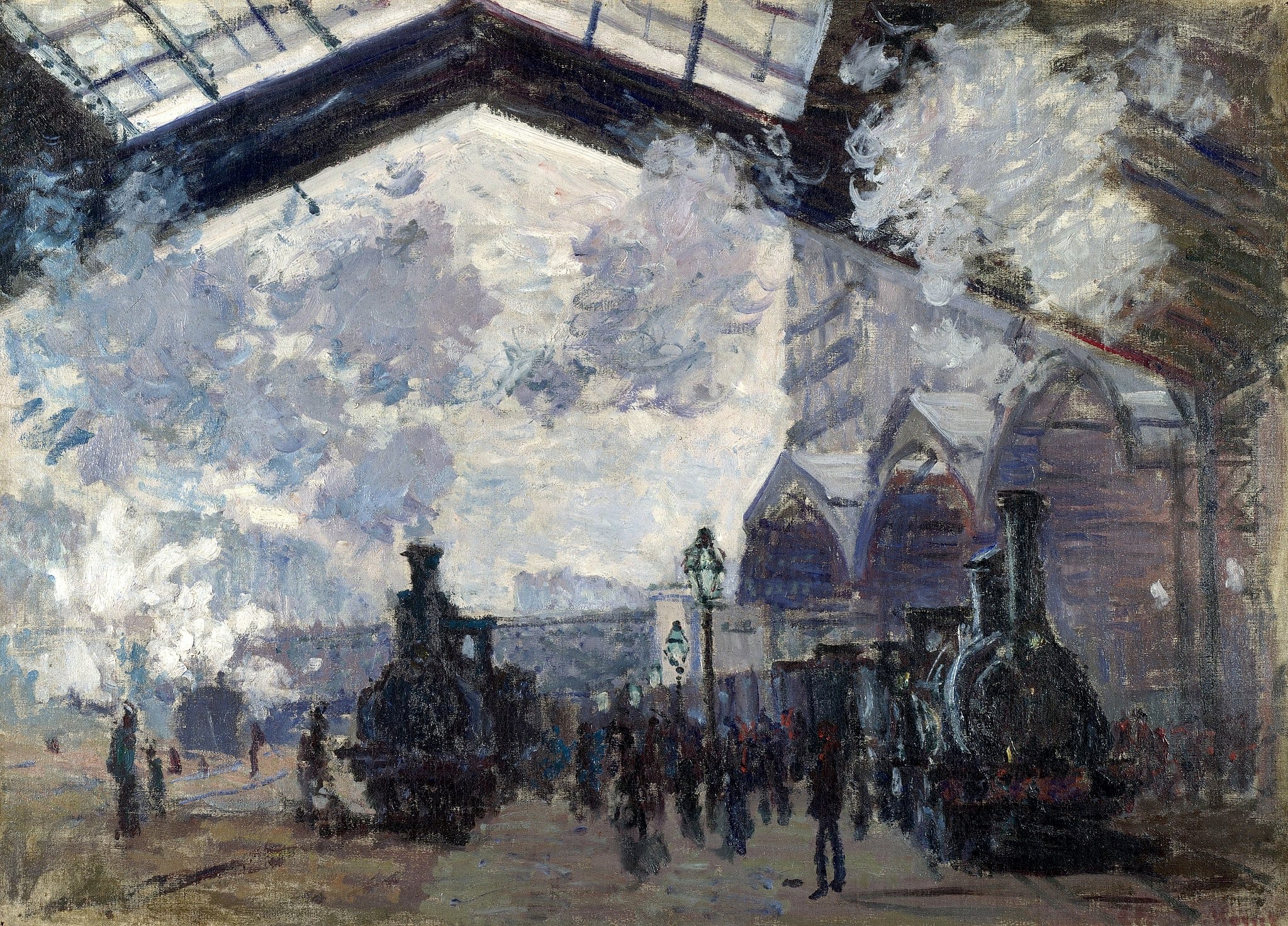
The Gare St-Lazare
1877
Inside Paris’s great iron-and-glass station, locomotives billow steam that turns the sky of a landscape into an indoor haze. One of a dozen views from 1877, it exemplifies Monet’s fascination with modernity and transient effects. Watch how the rigid roof girders counter the amorphous vapor and how freely the paint is laid. ([nationalgallery.org.uk](https://www.nationalgallery.org.uk/paintings/claude-monet-the-gare-st-lazare))
Must-see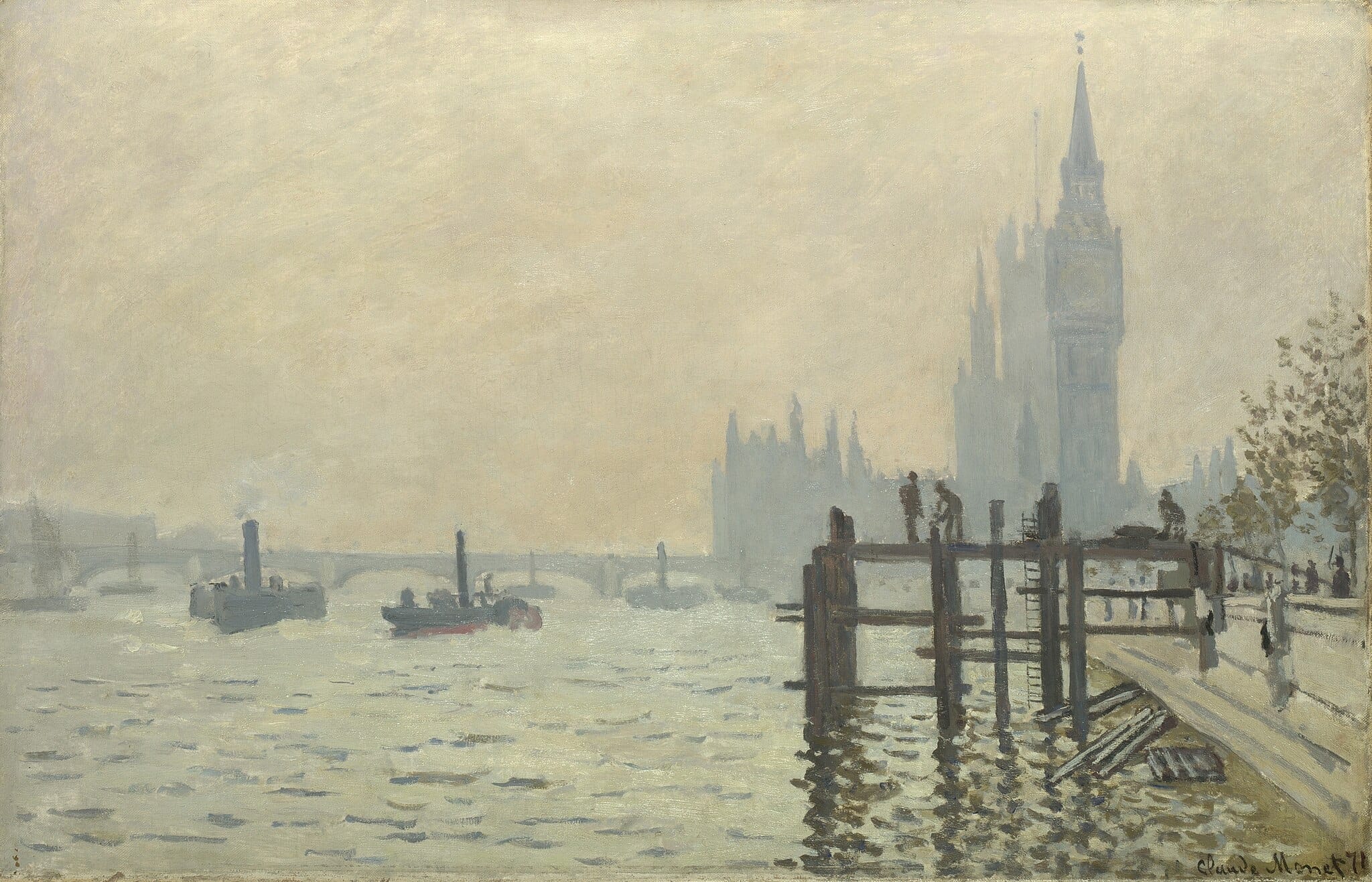
The Thames below Westminster
London dissolves in fog: a jetty, the span of Westminster Bridge, and the new Houses of Parliament anchor a scene of vapor and light. Painted during Monet’s 1870–71 stay, it privileges mood over architectural detail—even subtly elongating the towers. Look for the scaffold of horizontals and verticals that steadies the mist. ([nationalgallery.org.uk](https://www.nationalgallery.org.uk/paintings/claude-monet-the-thames-below-westminster?utm_source=openai))
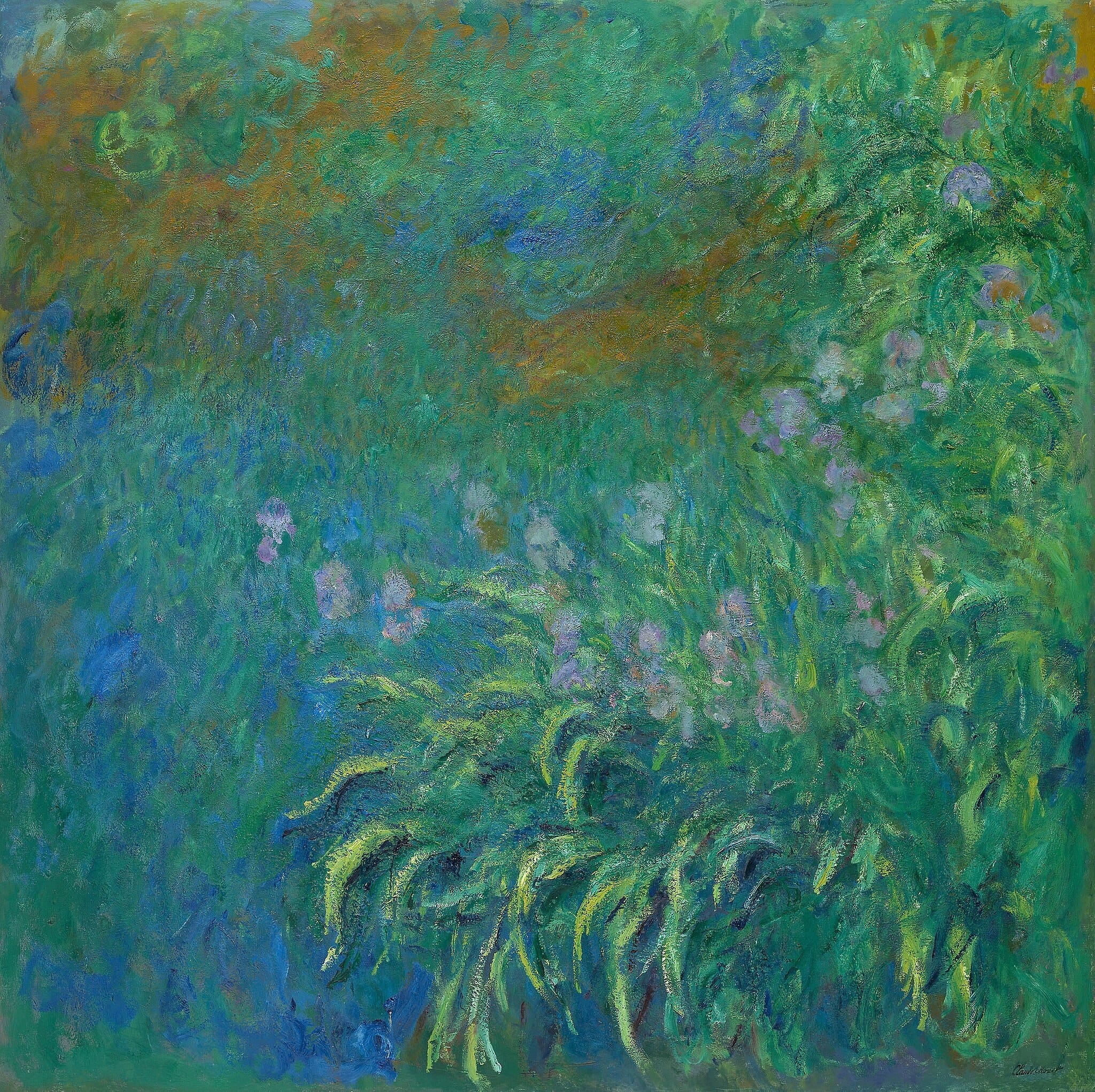
Irises
A path bordered by exuberant irises is painted with bold, thick strokes over a luminous white ground. Made around 1914–17, it belongs to Monet’s late garden works, likely executed as his cataracts altered his vision. Look for the bird’s‑eye viewpoint (as if from the Japanese bridge) and the raw, experimental handling of purple and blue. ([data.ng.ac.uk](https://data.ng.ac.uk/0CL3-0001-0000-0000.htm))
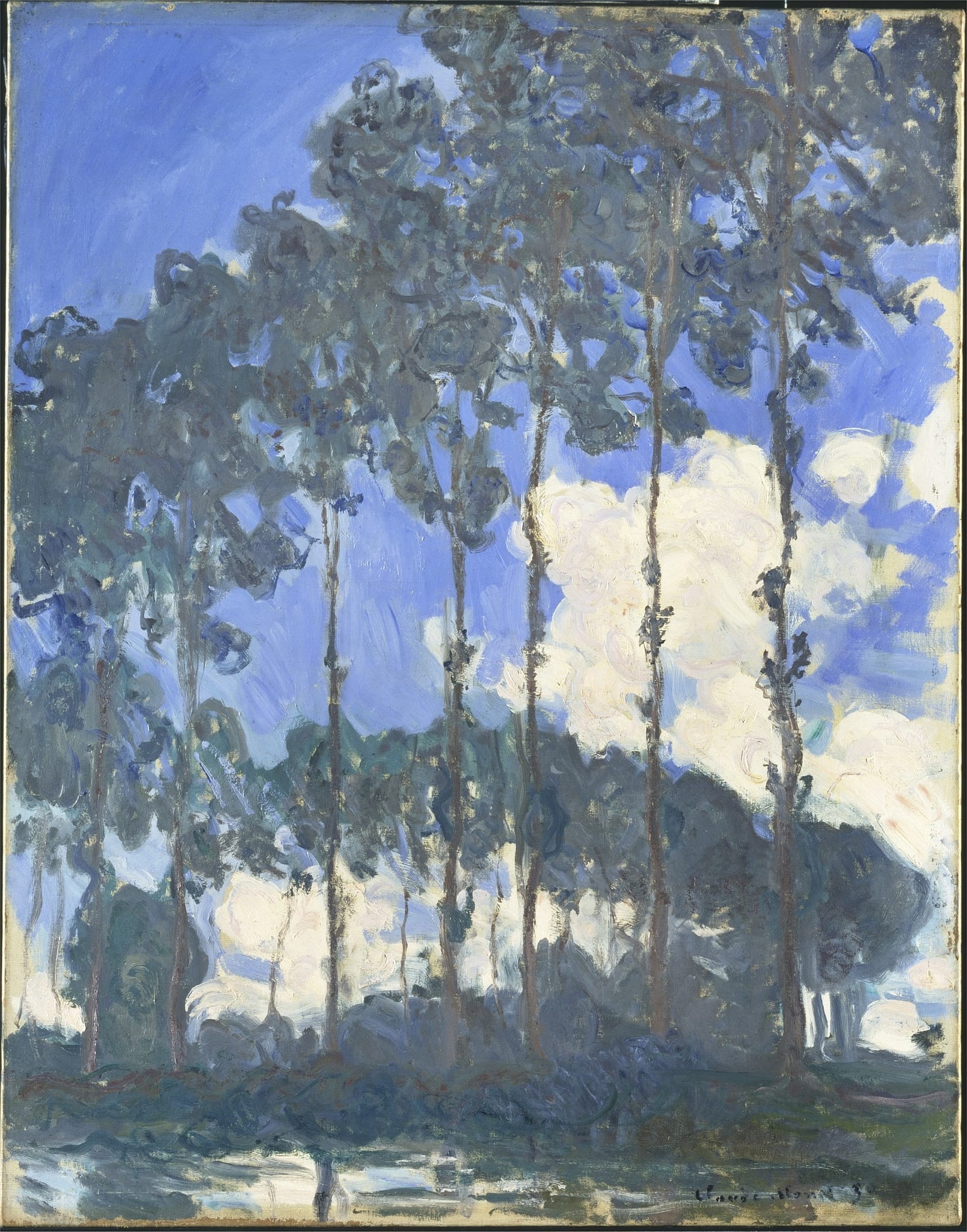
Poplars on the Epte
1891
Slender trunks and leaf canopies form a rhythmic S‑curve against summer sky, their reflections rippling below. Part of a 23‑painting series from 1891, Monet even helped delay the poplars’ felling so he could finish. Watch for the low, boat-borne viewpoint and the pattern-like grid of trunks that turns landscape into design. ([nationalgallery.org.uk](https://www.nationalgallery.org.uk/paintings/claude-monet-poplars-on-the-epte))
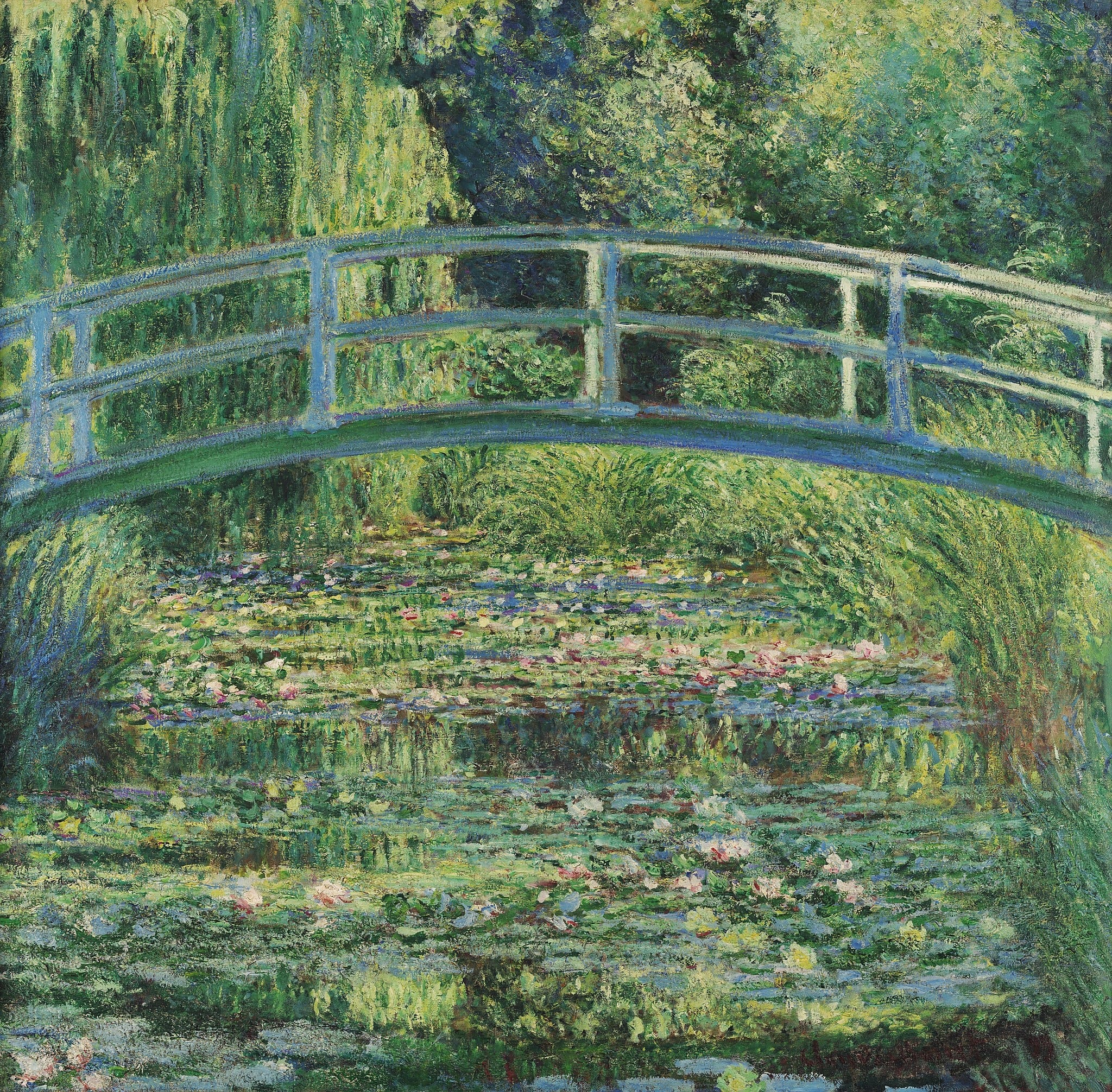
The Water-Lily Pond
1899
Monet’s Japanese bridge arcs over his Giverny pond, with lilies and dense foliage compressing space into a near-abstract tapestry. This 1899 canvas marks a pivot to the water garden as a lifelong theme. Look for the play between vertical reflections and horizontal lily clusters, and the feeling of looking up at the bridge but down at the water. ([nationalgallery.org.uk](https://www.nationalgallery.org.uk/paintings/claude-monet-the-water-lily-pond))
Must-see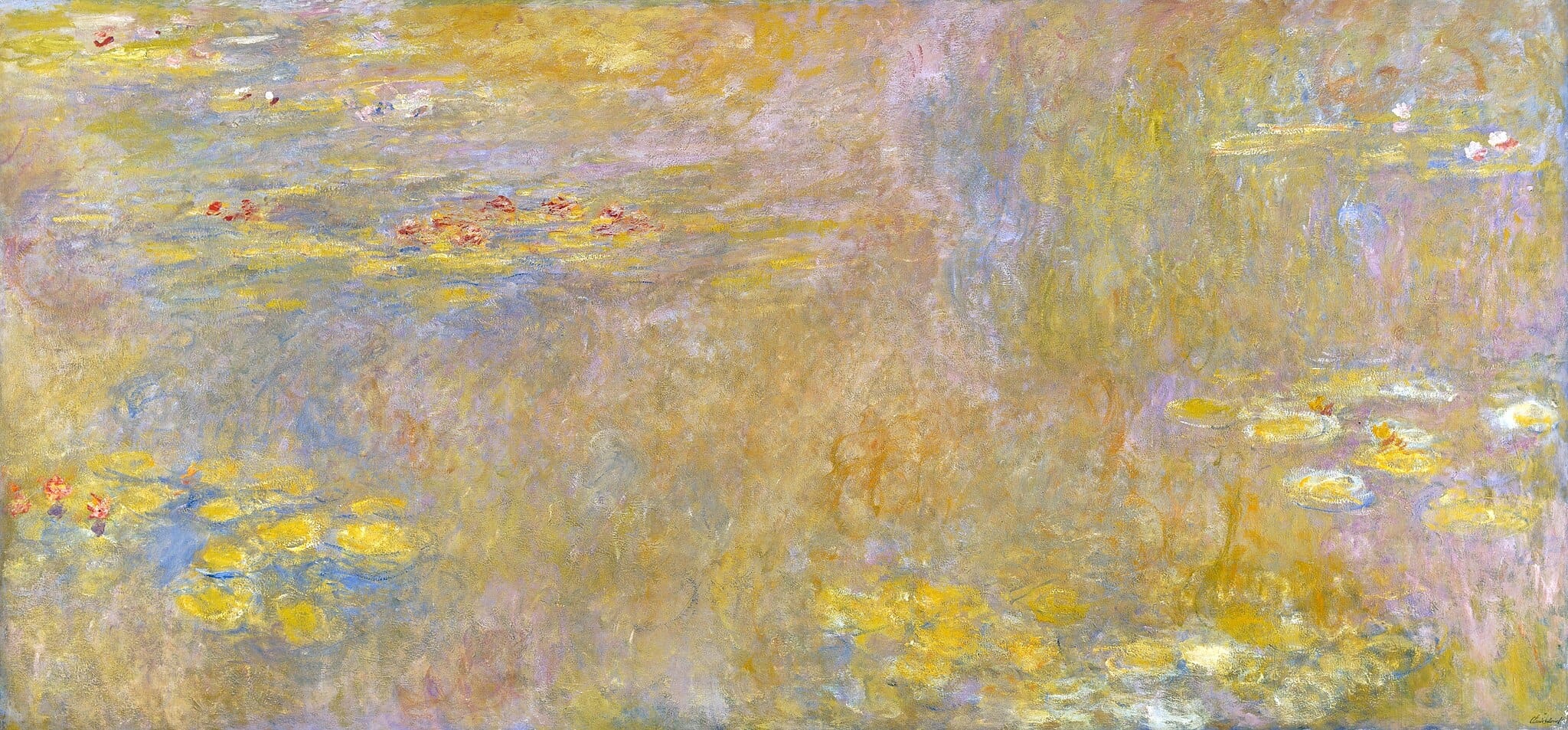
Water-Lilies
This 1917 canvas offers a closer, more intimate cut of the pond: dark green water, oval pads drawn in circular strokes, and three creamy blooms. It shows Monet balancing abstraction with legible motifs during his late period. Look for the diagonal sliver of bank at lower left and the ringed outlines that make the pads hover. ([nationalgallery.org.uk](https://www.nationalgallery.org.uk/paintings/claude-monet-water-lilies-1))
Must-see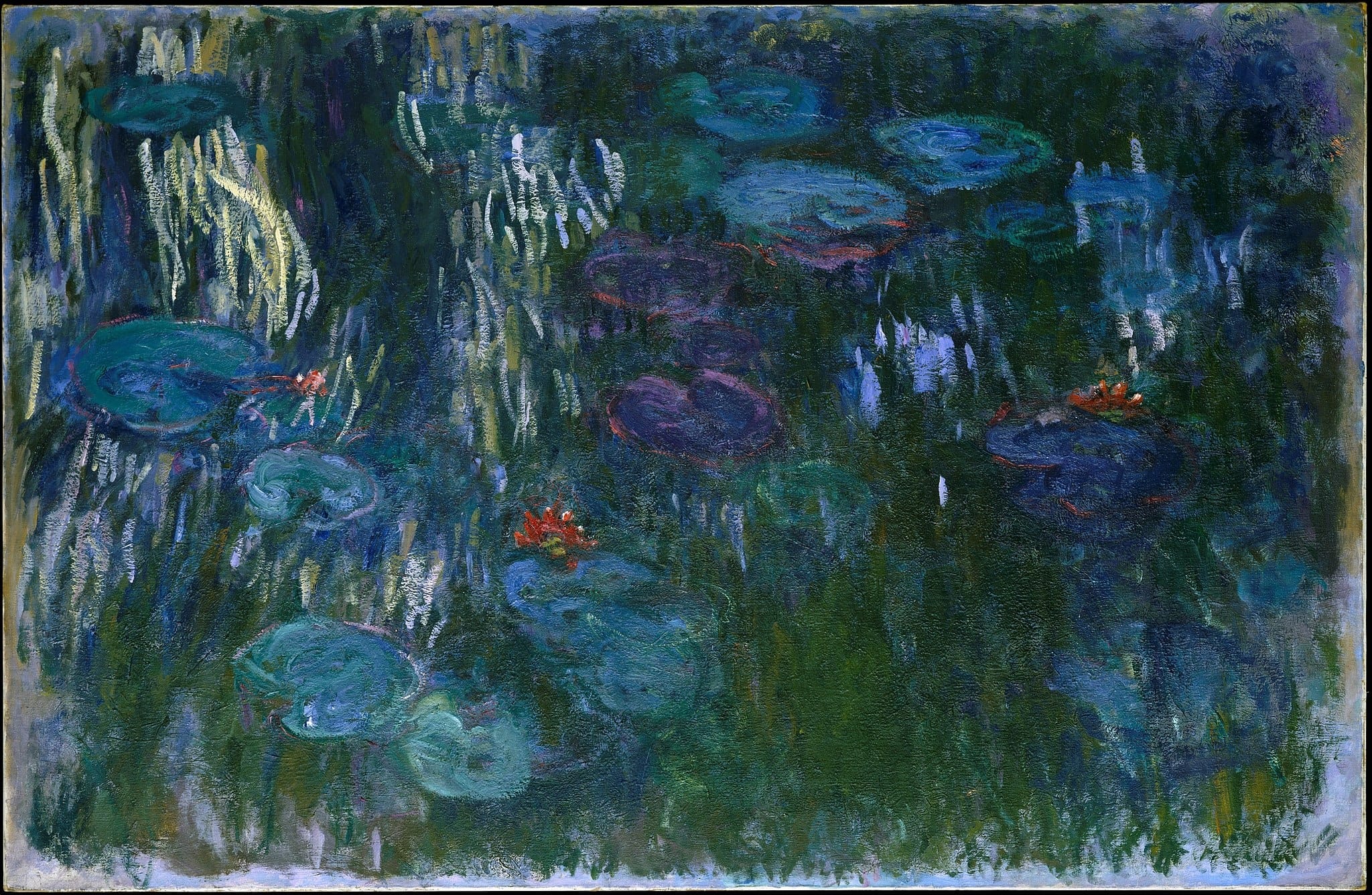
Water-lilies
1917
This 1917 canvas offers a closer, more intimate cut of the pond: dark green water, oval pads drawn in circular strokes, and three creamy blooms. It shows Monet balancing abstraction with legible motifs during his late period. Look for the diagonal sliver of bank at lower left and the ringed outlines that make the pads hover. ([nationalgallery.org.uk](https://www.nationalgallery.org.uk/paintings/claude-monet-water-lilies-1))
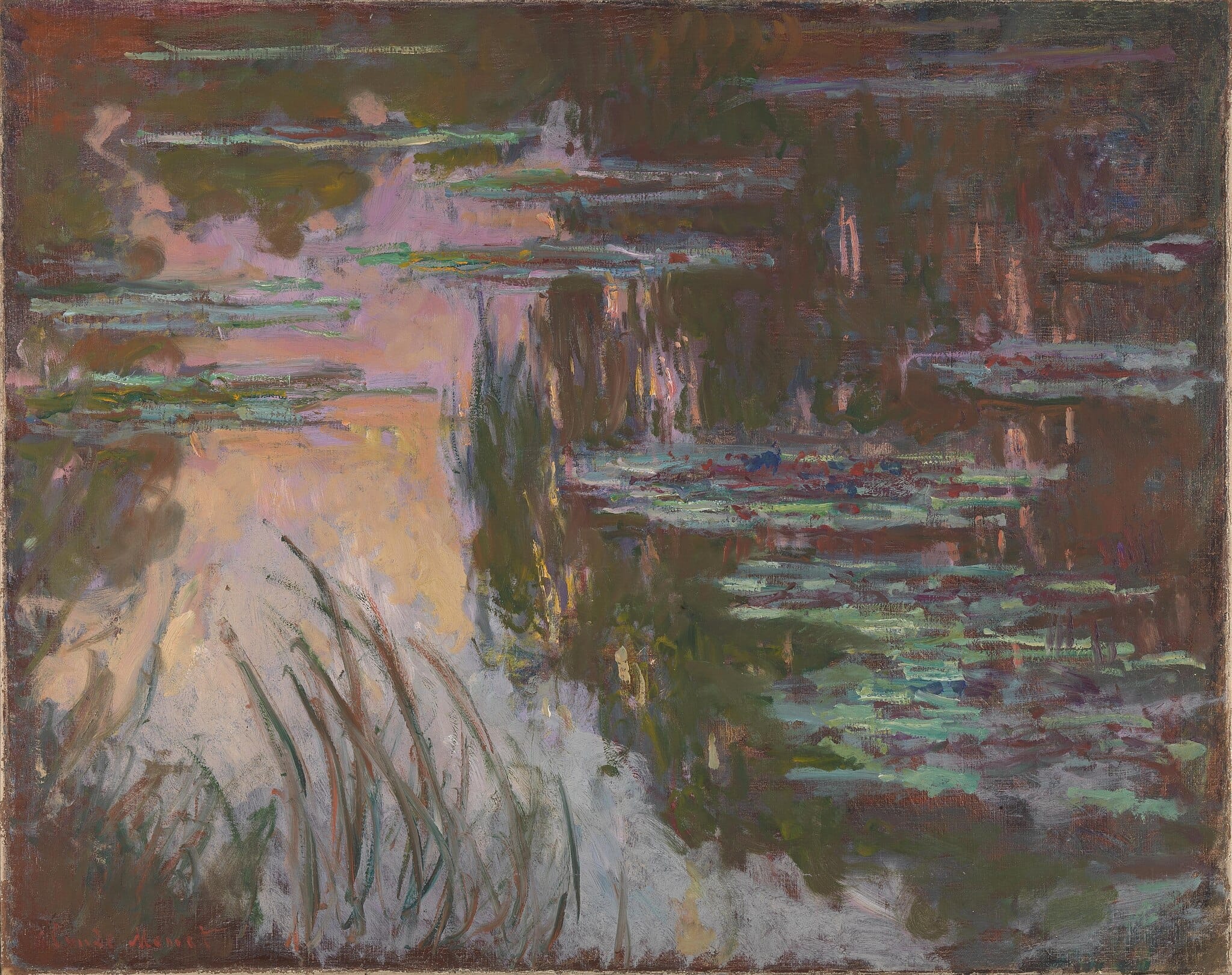
Water-Lilies, Setting Sun
Monet eliminates banks and bridge to focus on water, reflections, and the pink‑gold rays of a setting sun trembling across the pond. The late series experiments with vision itself—surface versus depth, horizontals versus the willows’ vertical reflections. Watch how a small clump of plants at lower left is the only cue to your position. ([nationalgallery.org.uk](https://www.nationalgallery.org.uk/paintings/claude-monet-water-lilies-setting-sun))
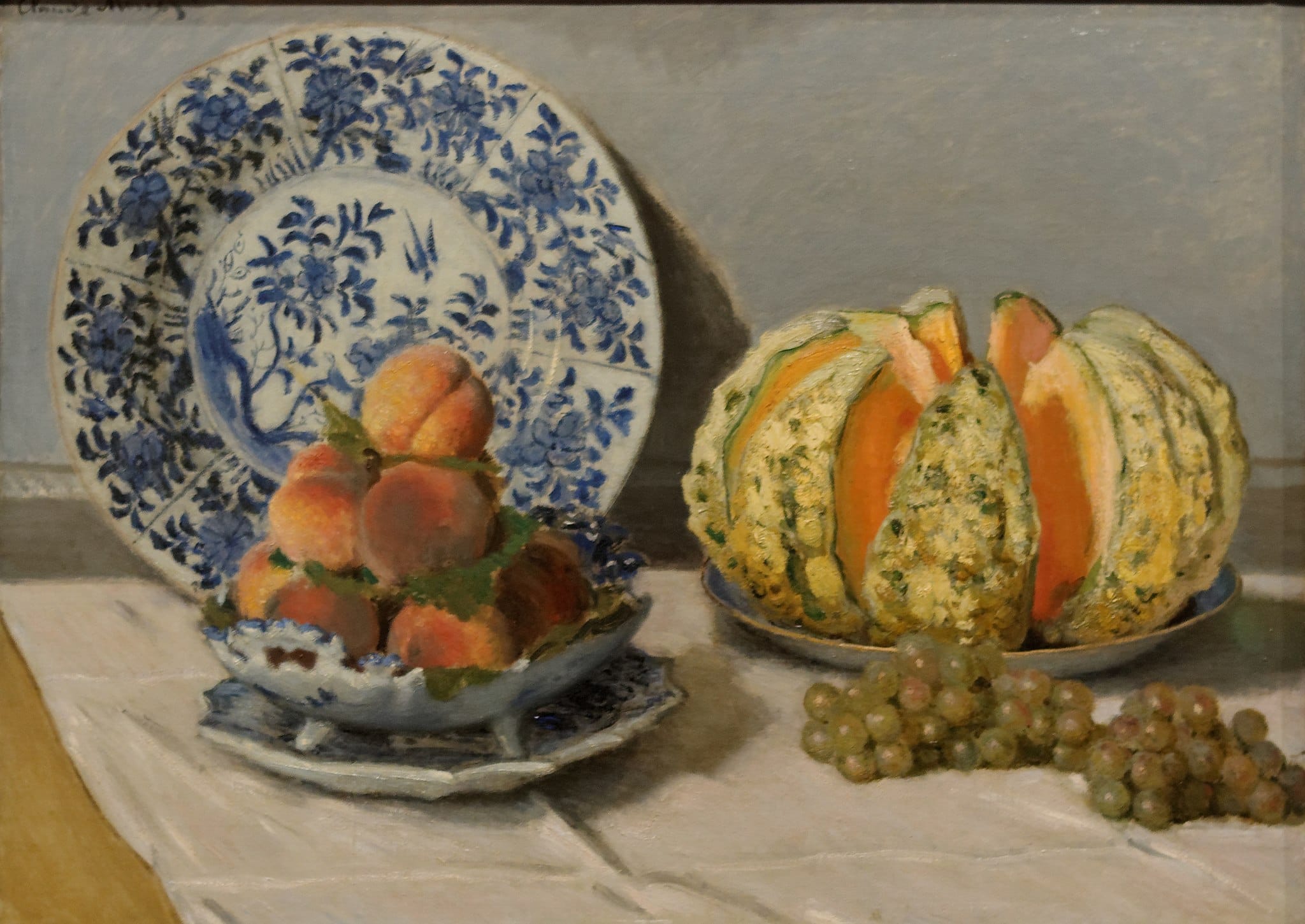
Still Life
Fruit on a white‑clothed table glows against a plain brown ground, echoing the quiet dignity of Chardin while pushing color and handling toward modernity. Painted about 1869, it shows Monet’s strategic engagement with a popular genre early in his career. Look for the careful balance of vibrant hues and deep shadows across the tabletop. ([nationalgallery.org.uk](https://www.nationalgallery.org.uk/paintings/claude-monet-still-life?utm_source=openai))
Tate Britain
Tate Britain holds no Monets, but its Turner galleries are essential to understanding Monet’s London pictures—he studied Turner’s handling of fog, light, and river haze and translated those ideas into his own Thames series. Use this stop to build the eye for atmospheric effects that make Monet’s late work click.
The Courtauld Gallery
With just two Monets, the Courtauld offers a concentrated look at his early Impressionist language in dialogue with masterworks by Manet, Renoir, and Cézanne inches away. The tight hang makes brushwork, palette, and motif choices unusually easy to compare across artists and periods.
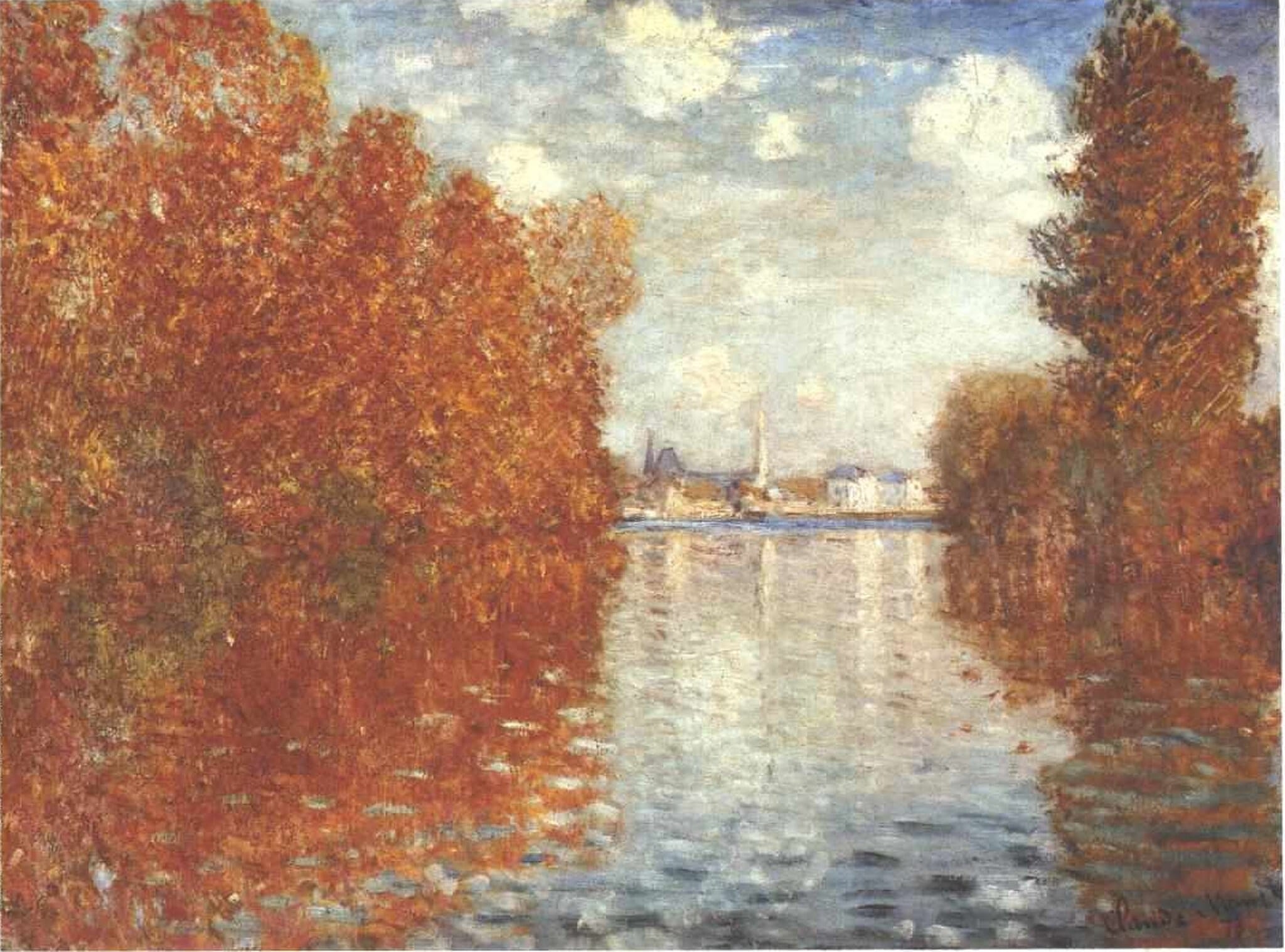
Autumn Effect at Argenteuil
1873
Monet paints the Seine and the town of Argenteuil from his floating studio, capturing gusty light on water and the blaze of autumn leaves. It’s a key Argenteuil-period canvas that he showed at the Second Impressionist exhibition (1876), celebrated for its fresh, modern view of a changing suburb. Look for the hot oranges against cool blue water, the parallel strokes on the river, and the bark textures scratched with the end of the brush. ([courtauld.ac.uk](https://courtauld.ac.uk/highlights/autumn-effect-at-argenteuil/))
Must-see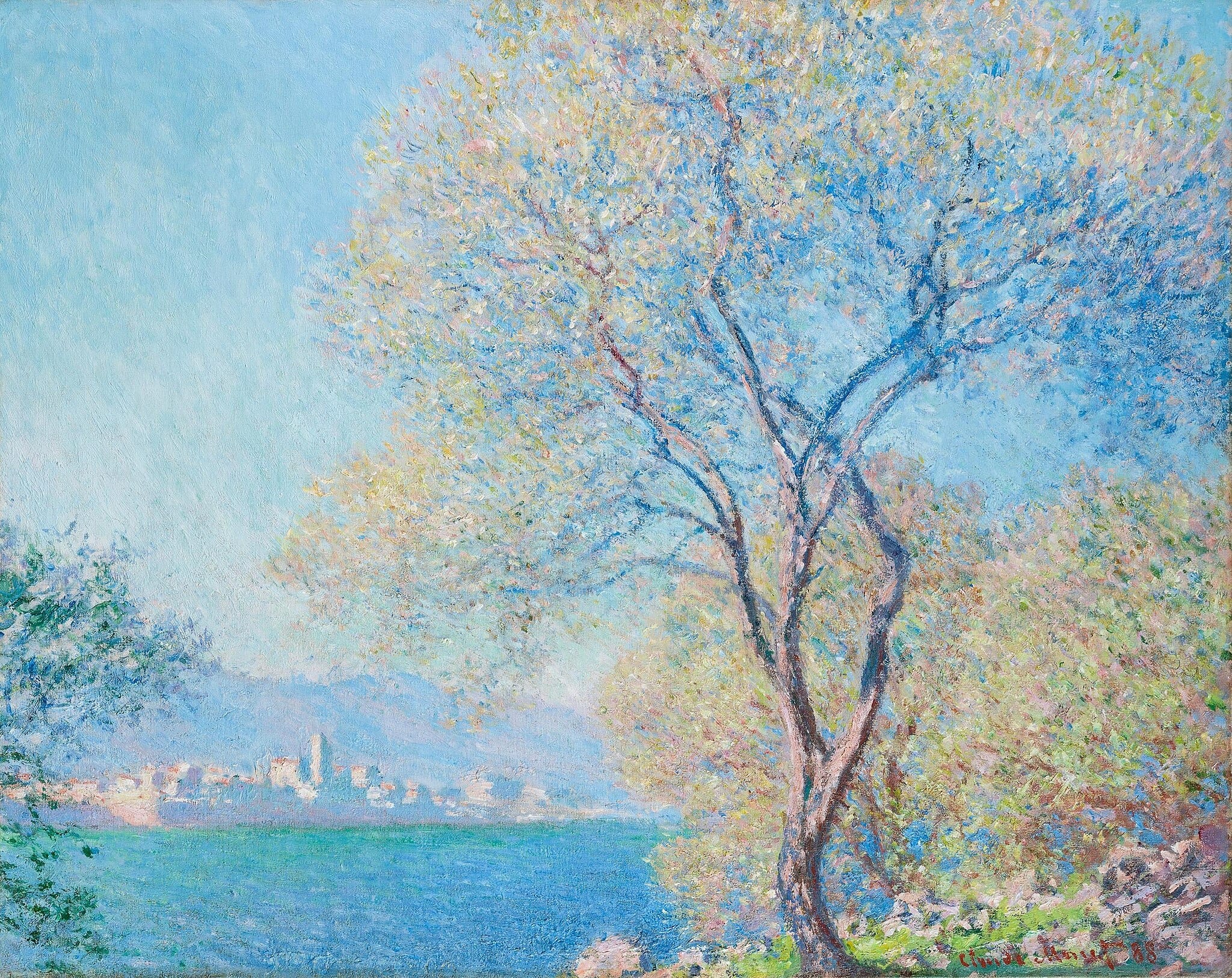
Antibes
1888
During early 1888 in the south of France, Monet sought to translate the Mediterranean’s ‘jewel-like’ light, setting the warm pinks and oranges of Antibes against the strong greens and blues of a wind-blown pine and the sea. The work marks his shift from northern motifs to radiant southern color and atmosphere. Look for the sparkling color contrasts and the breeze-tossed pine that anchors the composition. ([gallerycollections.courtauld.ac.uk](https://gallerycollections.courtauld.ac.uk/object-p-1948-sc-276))
Must-see