The Gare St-Lazare

by Claude Monet

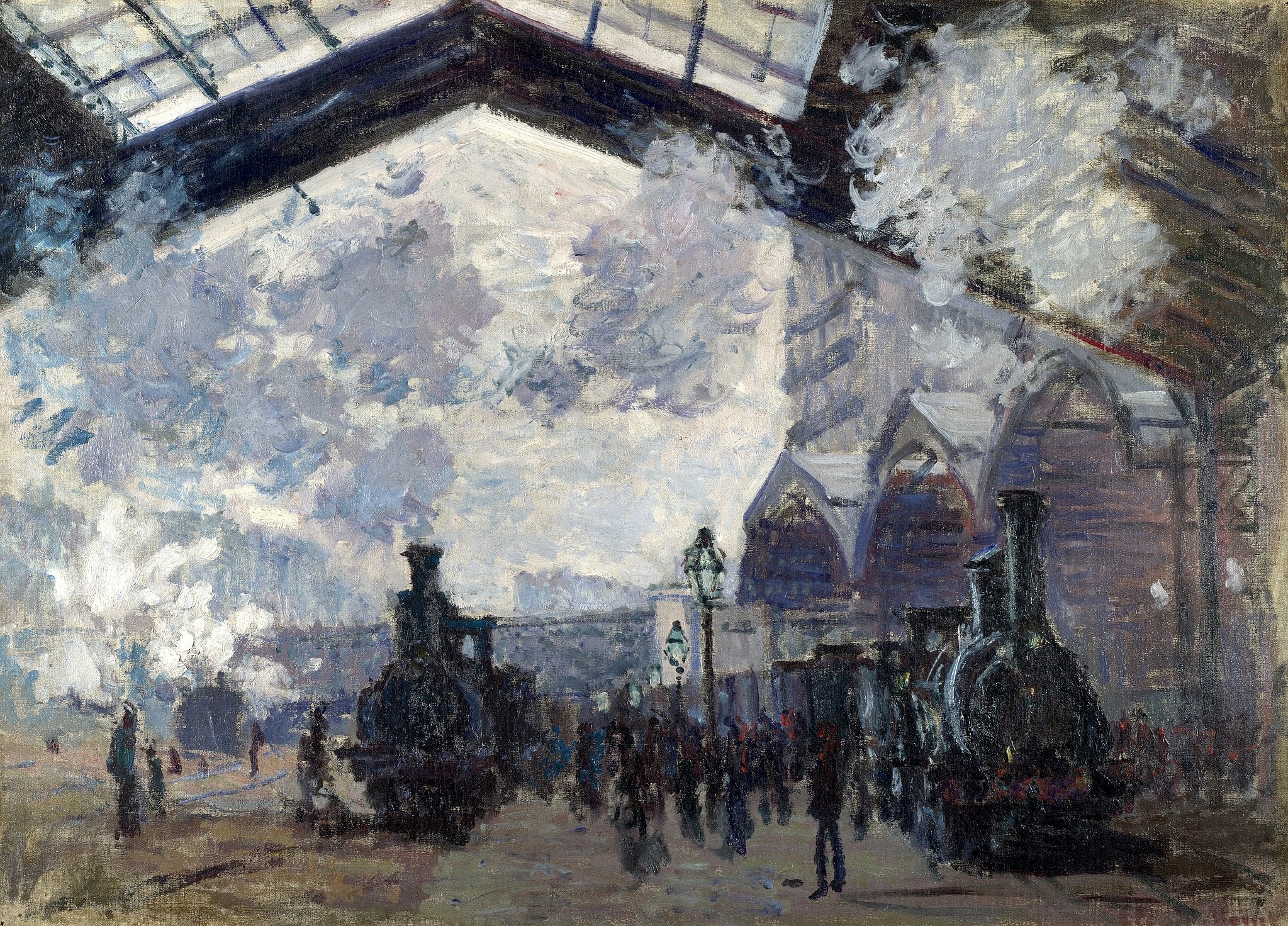
The Gare St-Lazare turns a bustling rail hub into a theater of light, steam, and speed. Under a nave-like iron-and-glass canopy, two dark locomotives loom as crowds and gas lamps dissolve into atmosphere, translating industry into sensation [1].

Study Print Studio

Create a personal study print

Build a companion study sheet around the part of this painting that speaks to you most. Choose a detail, shape an interpretation, and walk away with something personal and display-worthy.

Fast Facts

Year
1877
Medium
Oil on canvas
Dimensions
54.3 × 73.6 cm
Location
National Gallery, London
See all Claude Monet paintings in London
The Gare St-Lazare by Claude Monet (1877) featuring Iron-and-glass canopy, Steam clouds, Locomotive silhouettes, Pont de l’Europe (horizontal bridge)

Click on any numbered symbol to learn more about its meaning

Meaning & Symbolism

Monet composes The Gare St-Lazare as a secular cathedral of modernity. The iron-and-glass roof vaults overhead like a nave, enclosing what looks like cloudscape but is in fact industrial steam, a deliberate inversion of traditional landscape in which sky becomes an interior phenomenon 1. Two locomotives anchor the foreground as dark masses; they are not anatomized as machines so much as pitched against the luminous haze that defines the scene. The verticals of the parcels depot arches at right and the low band of the Pont de l’Europe in the middle distance supply the geometry that vapor incessantly unravels 1. Gas lamps prick the fog as greenish stars, and the crowd—rendered in quick, broken strokes—reads as urban pulse more than individual presence. Monet’s chromatic strategy avoids earthy browns and near‑black, building shadow from purples and blues so that even darkness breathes with optical vibration, asserting atmosphere over object as the painting’s true protagonist 1. What is at stake here is modern time. In 1877 Paris, railway schedules synchronized clocks and bodies; the station was a civic metronome. Monet’s decision to paint a campaign of Saint‑Lazare canvases from January to March 1877, then exhibit several together, turns the motif into a temporal instrument—a serial notation of shifting light, steam densities, and traffic states that viewers experience across canvases and within this one image of arrivals and imminent departures 43. Steam is more than weather: it is a metaphor for regulated yet fleeting time, forever reforming into new shapes as trains enter and exit on fixed timetables. The platform figures clustered between the engines become a collective index of synchronization—gathering, scattering, and pausing under the canopy’s grid, a visual counterpart to the city’s newly unified hours 3. The painting thereby reframes industrial architecture as a site of perception, where the conditions of seeing—backlit vapor, refracted glare on iron trusses—are produced by technology itself. This is why the locomotives remain silhouettes: the canvas privileges the experience that machines generate over the machines’ anatomy. At the same time, The Gare St-Lazare asserts a radical modernization of landscape and pictorial space. Monet relocates the Impressionist concern with fleeting light from riverside leisure to the infrastructural core of Haussmannized Paris. The gridded roof, the Pont de l’Europe, and the parcel depot arches are not mere backdrops; they certify a new aesthetic of the engineered city, where iron span and glass plate rival mountains and clouds as legitimate subjects 1. By wrapping those structures in vapor and rendering the crowd as flicker, Monet converts permanence into impermanence without denying the authority of the built. The painting thus holds progress and evanescence in the same frame: technology appears both as monument and as mist. In doing so, Monet pioneers a mode of modern art that is less about chronicling events than about staging the conditions of modern perception itself—a vision in which speed, synchronization, and atmospheric uncertainty define what it feels like to live in the present 14.

Explore Deeper with AI

Ask questions about The Gare St-Lazare

Popular questions:

Powered by AI • Get instant insights about this artwork

💬 Ask questions about this artwork!

Interpretations

Temporal Standardization and Seriality

Monet’s Saint‑Lazare campaign is best read through the lens of standardized time. In 1870s Paris, telegraphy synchronized railway schedules and public clocks; the station became a civic metronome. Monet’s decision to paint and then exhibit multiple station views in 1877 constitutes a serial instrument that measures change across regulated intervals—steam density, sun angle, traffic states—much like a visual chronograph. In this reading, vapor is not merely atmospheric but an index of time’s calibration and drift: it obeys timetables (arrivals, departures) yet continually evaporates, materializing modern punctuality while reminding viewers of duration’s irrecoverable flow. The canvases thereby align Impressionist perception with a new temporal regime that joined bodily rhythms to the clock, transforming the act of looking into a rehearsal of synchronized urban life 53.

Source: André Dombrowski, The Art Bulletin (2020); Art Institute of Chicago

Chromatic Engineering: Material Means for Modern Effects

Technical analysis shows Monet avoiding earth pigments and near‑black, building shadows from violets and blues to keep darkness optically active. This material choice is not cosmetic; it engineers a field where iron trusses, steam, and figures cohere through color vibration rather than contour, letting perception—rather than object anatomy—do the structural work. Small top‑touches of vermilion and cobalt punctuate the vapor like signal lights, while mixed darks replace traditional tonal modeling, aligning facture with a city of glass and gas illumination. The result is a chromatic system that enacts modernity at the level of paint: a network of reflections and refractions that turns the trainshed into a laboratory for seeing in an engineered world 1.

Source: National Gallery, London

Exhibition Ecology and the Making of a Motif

The 1877 display of several Saint‑Lazare canvases did more than showcase a theme; it constructed a motif through exhibition strategy. Securing access from the railway company, painting on site across weeks, and then hanging multiple versions together positioned viewers to read variation as content—an urban analogue to plein‑air seriality. Early buyers like Hoschedé and de Bellio validated the motif within a nascent market for modern life subjects, while Caillebotte’s support embedded it in an Impressionist network of patronage and display. In this ecology, the station picture is not a single view but a modular system of perception, commerce, and logistics, prefiguring Monet’s later serial ensembles (haystacks, poplars, Rouen) as curated experiences of change 3.

Source: Art Institute of Chicago (Online Scholarly Catalogues)

Dialogues of Spectatorship: Manet, Monet, and the Rail

Monet’s Saint‑Lazare paintings converse with Manet’s The Railway, shifting the spectator’s position from the threshold (Manet’s fence, the look outward) to the interiorized theater of steam. Where Manet stages modern seeing as interruption and framing, Monet turns infrastructure itself into an optical generator—glass canopy, Pont de l’Europe, parcel‑depot arches—so that technology produces the very conditions of visibility. This dialogue reframes the station from subject to apparatus: a built environment that both contains bodies and fabricates sensation. By embedding the viewer within the vaporous nave, Monet reconceives modern spectatorship as immersion rather than observation, aligning Impressionist facture with urban perception’s scatter, glare, and rhythm 41.

Source: National Gallery of Art, Washington (Manet, Monet, and the Gare Saint‑Lazare); National Gallery, London

Haussmannized Landscape: Engineering as Aesthetic

The Saint‑Lazare works relocate the genre of landscape to the infrastructural core of Paris. Girders spanning roughly forty meters, the low band of the Pont de l’Europe, and the parcel‑depot arches certify iron and glass as legitimate pictorial terrain, rivaling mountain and sky. Enveloped in steam, these structures are not negated but re-coded: solidity reads through atmospheric veils, so permanence and flux are co‑present. This is not topographical reporting; it is a proposal for a new landscape grammar in which engineered scale, serial repetition, and transparency organize space and light. Monet’s station thus becomes a site-specific poetics of the Haussmann city—an environment where architecture is both monument and medium for optical events 12.

Source: National Gallery, London; Musée d’Orsay

Related Themes

About Claude Monet

Claude Monet (1840–1926) led Impressionism’s pursuit of open-air painting and optical immediacy, especially during his Argenteuil years focused on modern leisure and light. He later developed serial studies of changing conditions, culminating in the Water Lilies cycle [2].
View all works by Claude Monet

More by Claude Monet

Haystacks Series by Claude Monet | Light, Time & Atmosphere by Claude Monet

Haystacks Series by Claude Monet | Light, Time & Atmosphere

Claude Monet

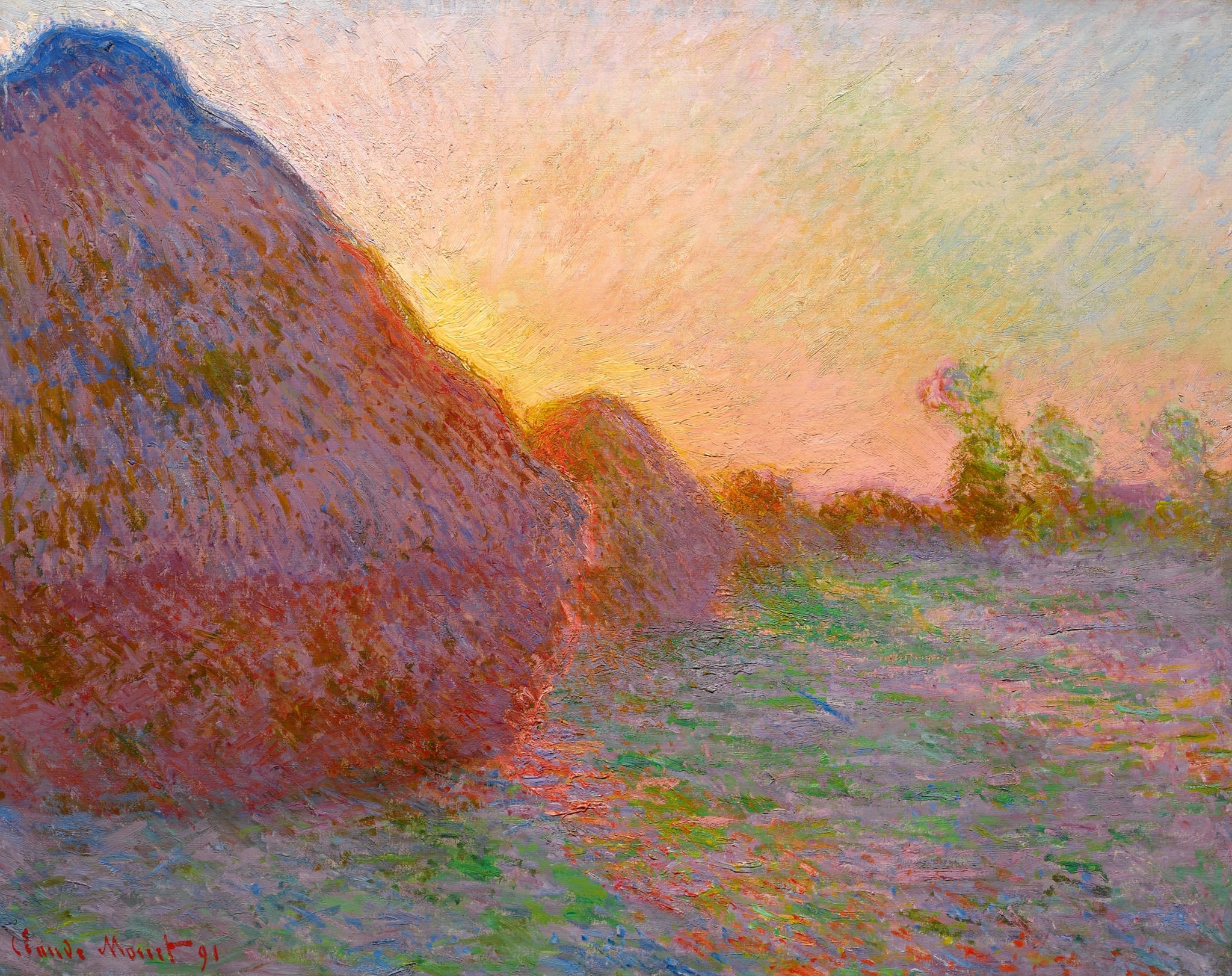
Claude Monet’s <strong>Haystacks Series</strong> transforms a routine rural subject into an inquiry into <strong>light, time, and perception</strong>. In this sunset view, the stacks swell at the left while the sun burns through the gap, making the field shimmer with <strong>apricot, lilac, and blue</strong> vibrations.
Women in the Garden by Claude Monet

Women in the Garden

Claude Monet (1866–1867)

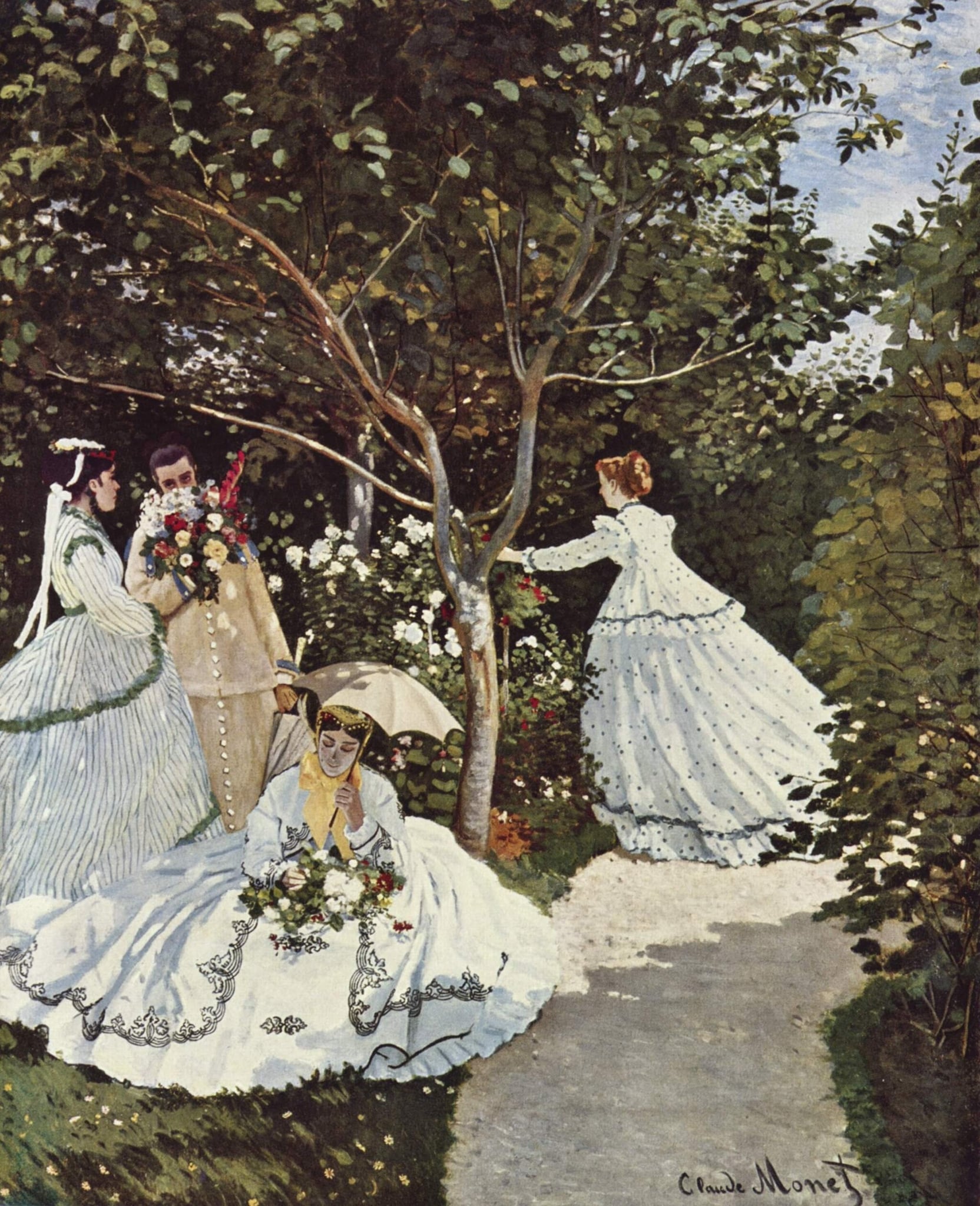
Claude Monet’s Women in the Garden choreographs four figures in a sunlit bower to test how <strong>white dresses</strong> register <strong>dappled light</strong> and shadow. The path, parasol, and clipped flowers frame a modern ritual of leisure while turning fashion into an instrument of <strong>perception</strong>. The scene reads less as portraiture than as a manifesto for painting the <strong>momentary</strong> outdoors <sup>[1]</sup><sup>[3]</sup>.
The Train in the Snow (The Locomotive) by Claude Monet

The Train in the Snow (The Locomotive)

Claude Monet (1875)

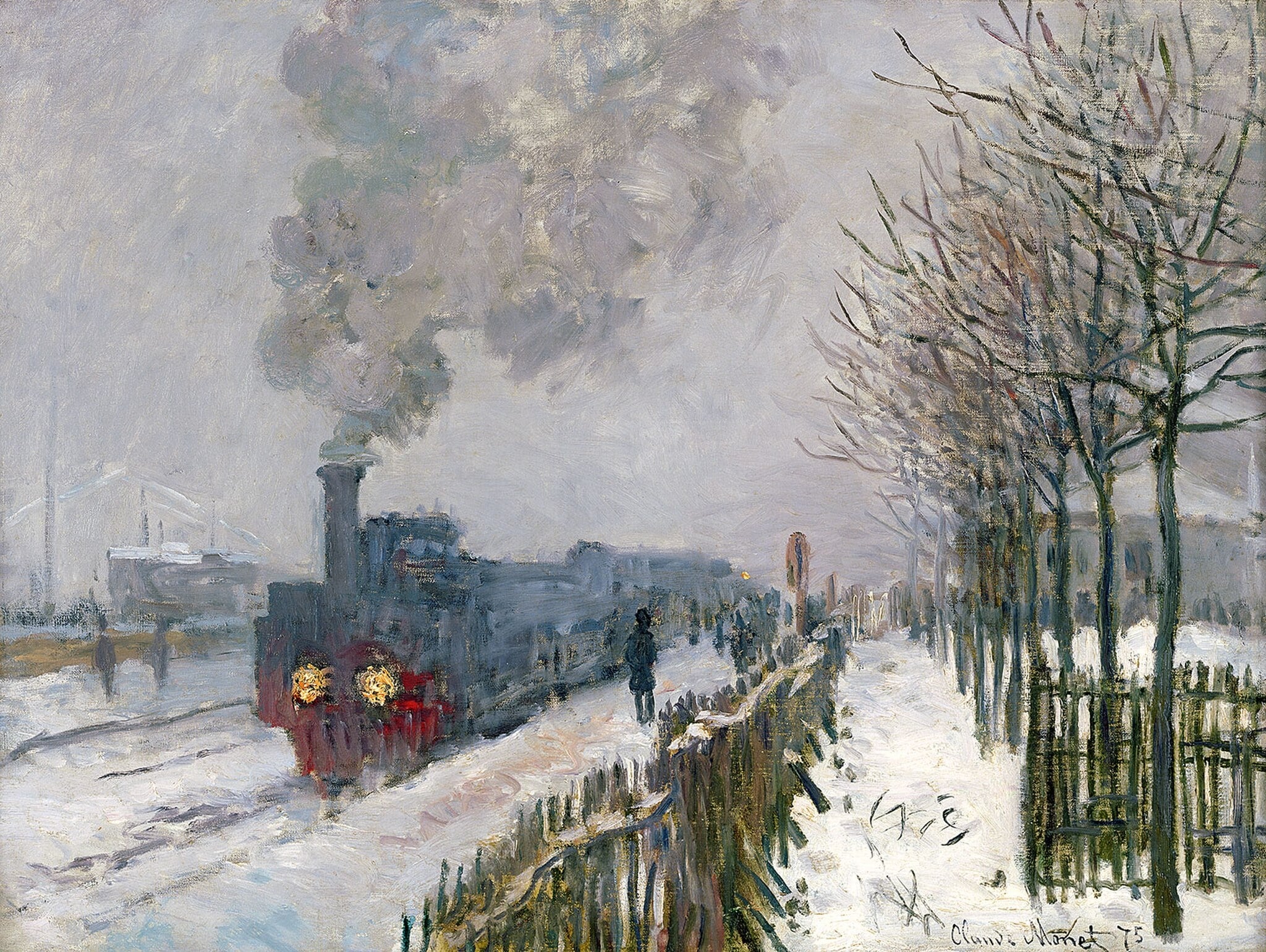
Claude Monet’s The Train in the Snow (The Locomotive) (1875) turns a suburban winter platform into a study of <strong>modernity absorbed by atmosphere</strong>. The engine’s twin yellow headlights and a smear of red push through a world of greys and violets as steam fuses with the low sky, while the right-hand fence and bare trees drill depth and cadence into the scene <sup>[1]</sup><sup>[4]</sup>. Monet fixes not an object but a <strong>moment of perception</strong>, where industry seems to dematerialize into weather <sup>[1]</sup><sup>[2]</sup>.
The Artist's Garden at Giverny by Claude Monet

The Artist's Garden at Giverny

Claude Monet (1900)

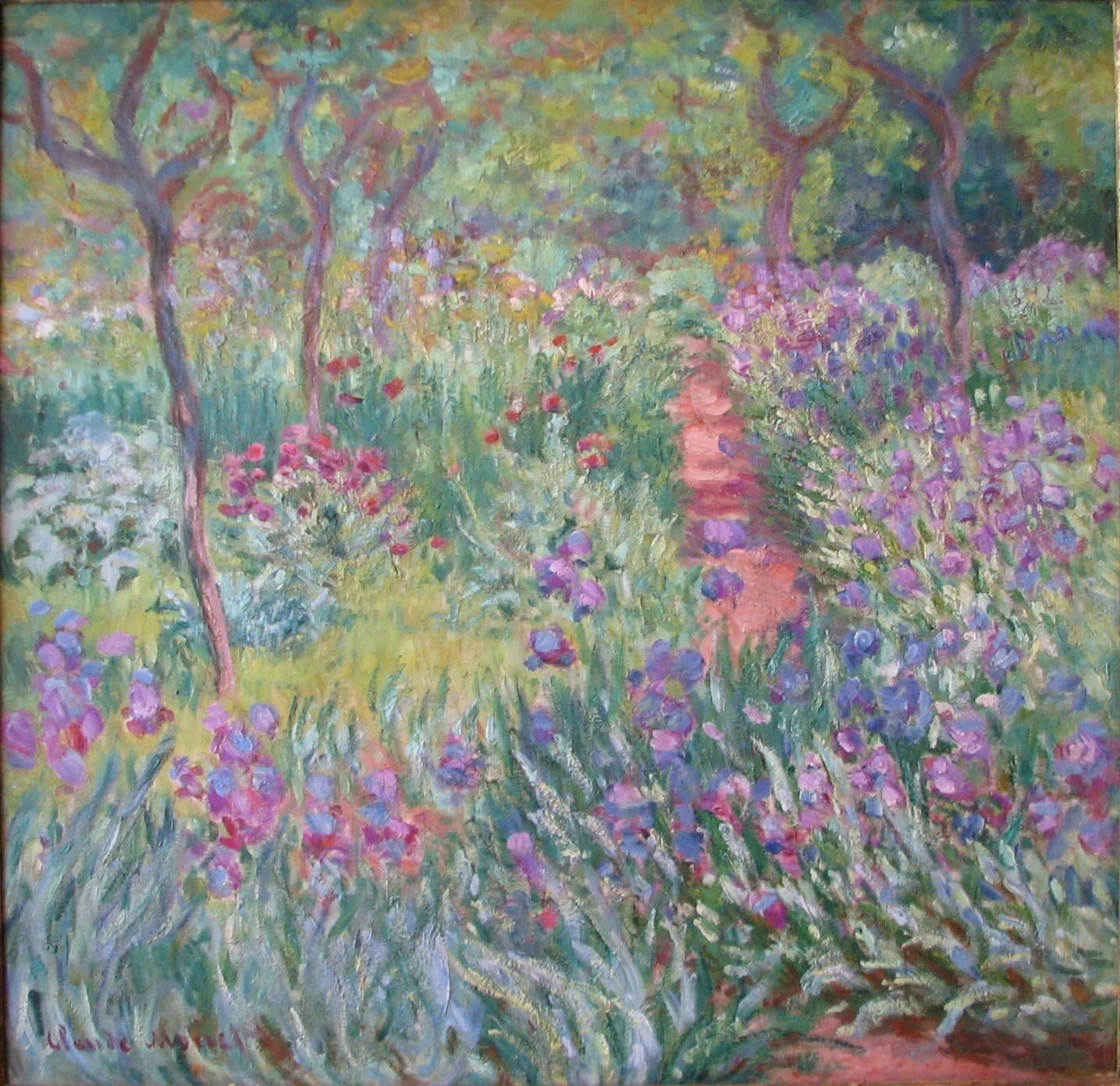
In The Artist's Garden at Giverny, Claude Monet turns his cultivated Clos Normand into a field of living color, where bands of violet <strong>irises</strong> surge toward a narrow, rose‑colored path. Broken, flickering strokes let greens, purples, and pinks mix optically so that light seems to tremble across the scene, while lilac‑toned tree trunks rhythmically guide the gaze inward <sup>[1]</sup><sup>[3]</sup>.
Water Lilies by Claude Monet

Water Lilies

Claude Monet (1899)

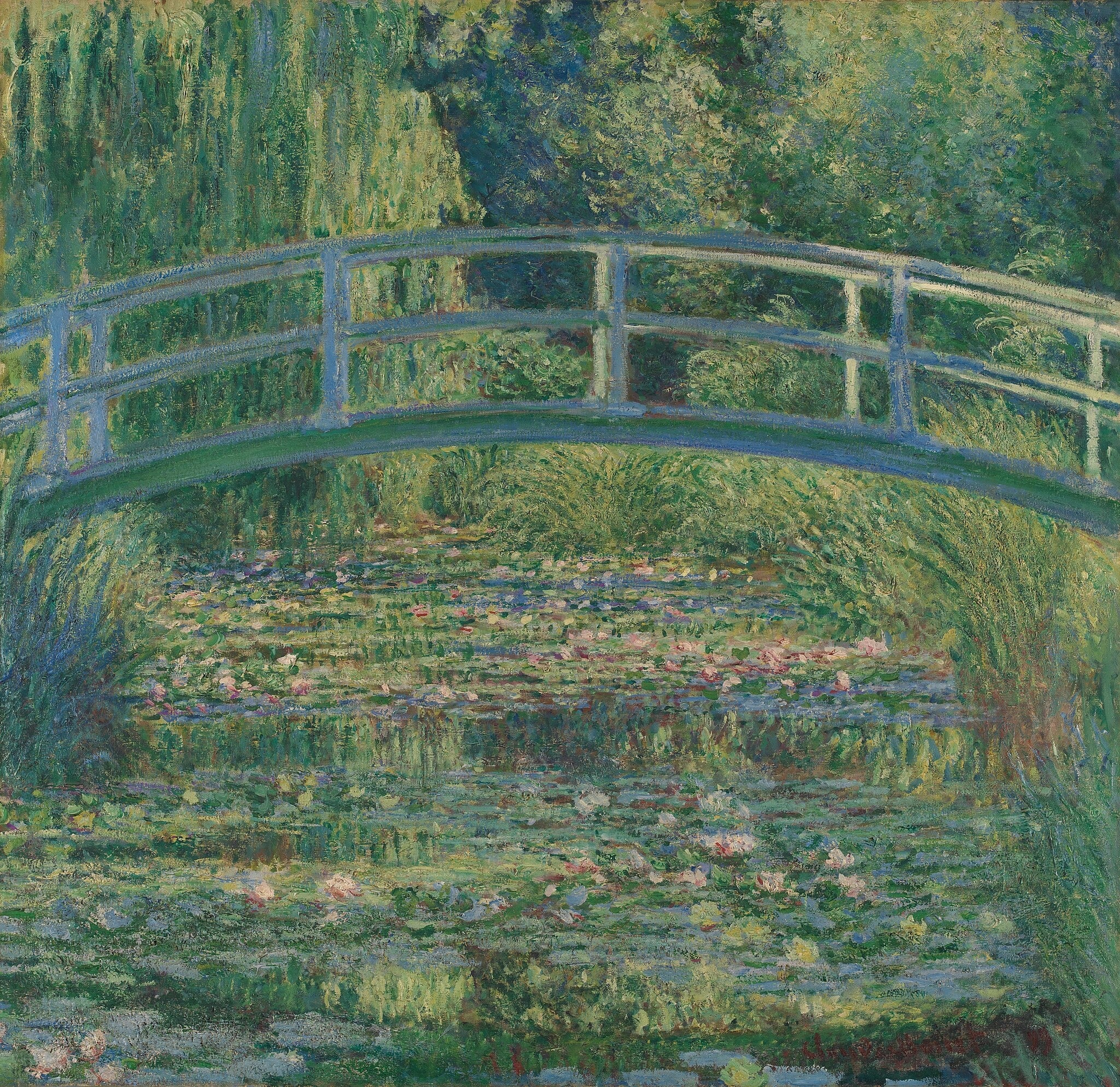
<strong>Water Lilies</strong> centers on an arched <strong>Japanese bridge</strong> suspended over a pond where lilies and rippling reflections fuse into a single, vibrating surface. Monet turns the scene into a study of <strong>perception-in-flux</strong>, letting water, foliage, and light dissolve hard edges into atmospheric continuity <sup>[1]</sup><sup>[3]</sup>.
The Grand Canal by Claude Monet

The Grand Canal

Claude Monet (1908)

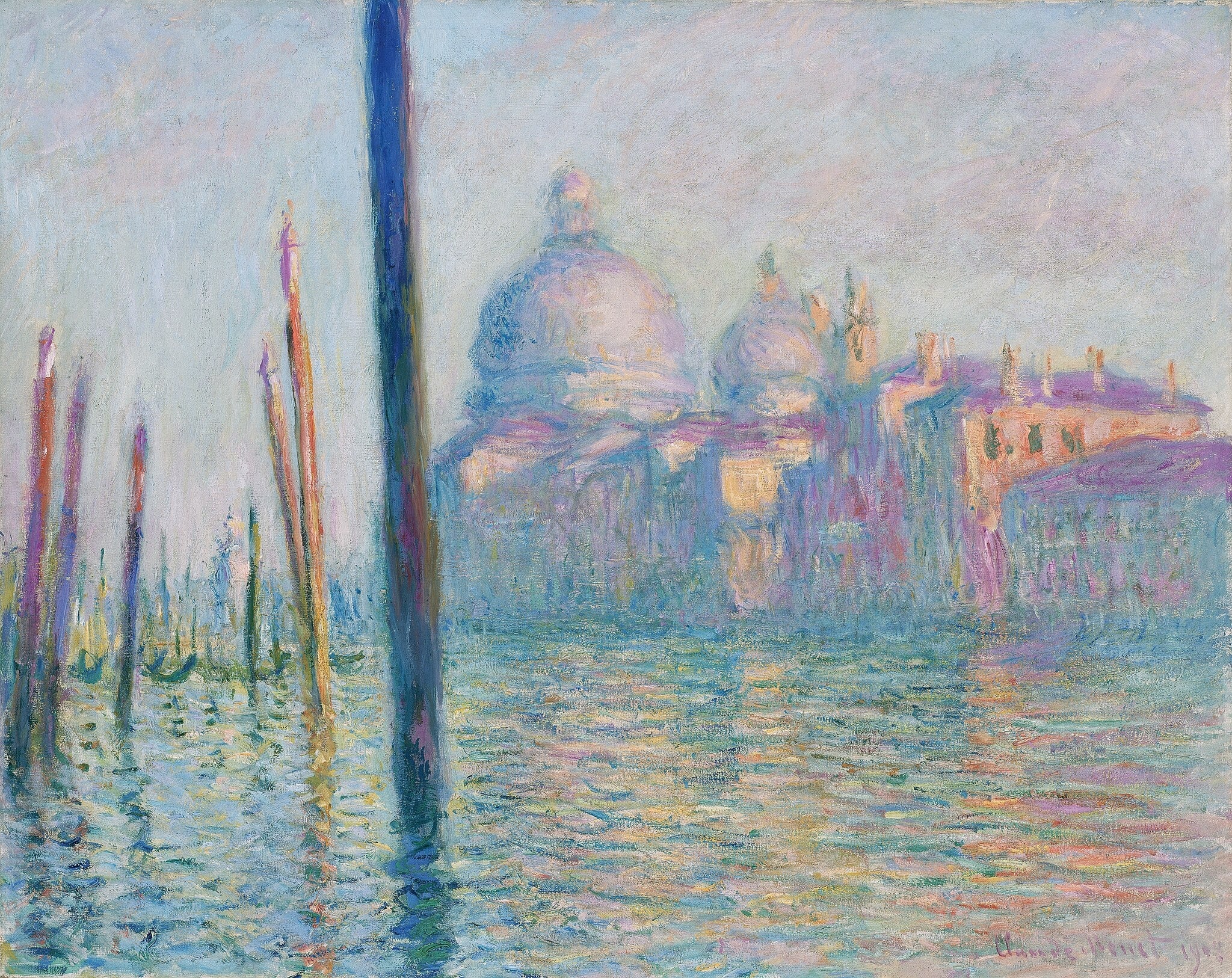
Claude Monet’s The Grand Canal turns Venice into <strong>pure atmosphere</strong>: the domes of Santa Maria della Salute waver at right while a regiment of <strong>pali</strong> stands at left, their verticals reverberating in the water. The scene asserts <strong>light over architecture</strong>, transforming stone into memory and time into color <sup>[2]</sup><sup>[3]</sup>.