Water-Lilies, Setting Sun

by Claude Monet

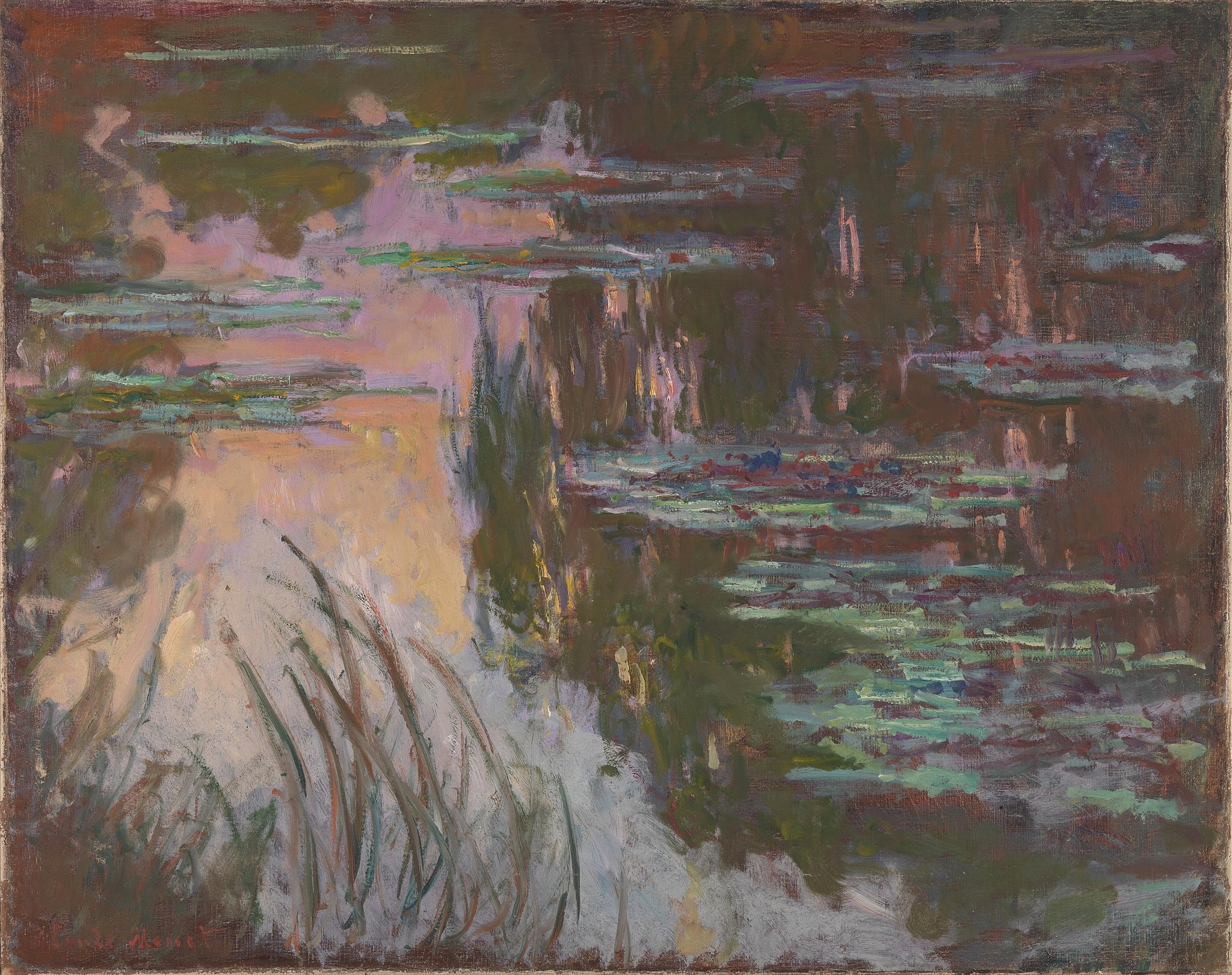
Claude Monet’s Water-Lilies, Setting Sun turns the Giverny pond into an immersive field of light where reflections overtake solid forms. Horizontal lily pads and a central column of pink-apricot glow register sunset as a reflection, while dark, vertical willow traces unsettle depth and horizon [1]. The result is a vision of time in flux, held together by the quiet persistence of the floating lilies.
💰

Market Value

$50-70 million

How much is Water-Lilies, Setting Sun worth?

Study Print Studio

Create a personal study print

Build a companion study sheet around the part of this painting that speaks to you most. Choose a detail, shape an interpretation, and walk away with something personal and display-worthy.

Fast Facts

Year
about 1907
Medium
Oil on canvas
Dimensions
73 × 92.7 cm
Location
National Gallery, London
See all Claude Monet paintings in London
Water-Lilies, Setting Sun by Claude Monet (about 1907) featuring Sunset reflection column, Water-lily pads (horizontal bands), Willow reflections (dark verticals), Reeds/grass at the bank

Click on any numbered symbol to learn more about its meaning

Meaning & Symbolism

Water-Lilies, Setting Sun centers its drama not on the literal sun but on a warm, vertical wake of pinks and apricots that ripples through the water like a slowly extinguishing flare. This reflected shaft of light divides and binds the canvas, threading between bands of turquoise and mint that articulate the lily pads. Around it, the pool thickens into violets, russets, and smoky greens; the dark, feathery uprights of reflected willows press down from above and right, countering the pads’ horizontals. Near the lower left, reedlike strokes—swift, diagonal, and wind-leaning—touch the bank and tug the eye back to the surface. Monet forgoes sky, shore, and bridge to compel a reading in which foreground and reflection trade places: the viewer sways between seeing water as a flat mirror and as a deep, enveloping space 1. The effect is not descriptive scenery but a lived instant, a twilight register in which forms dissolve into their own afterimages. In this close-up phase of the Nymphéas, Monet engineers perception as a sequence of tensions: horizontal pads stabilize the surface; vertical willow reflections pull the gaze downward; the sunset’s rose-and-gold column cuts across both, fusing them. Because the light is only a reflection, it makes visible a paradox: the source we cannot see becomes the organizing force of what we do. That logic—building a painting on the evidence of things that are not present—explains the work’s emotional pitch. The water feels saturated with passing time; the loose, variable strokes register the minute shifts of evening color, so that duration itself becomes the motif. The lilies, touched with cool greens and brief lilac shadows, are not emblems so much as breath-marks across the surface—a pulsing rhythm of persistence inside a field devoted to change 12. Formally, the canvas anticipates later modernist concerns. Its near-horizonless spread and all-over distribution of incident diminish traditional figure-ground hierarchy, guiding the eye to roam without a single focal anchor 24. The surface reads as a woven screen of touches—dragged bristles, scumbled veils, sudden impastos—that keeps perception active and provisional. This is why the small clump of grasses at lower left is decisive: by supplying one tangible cue to the bank, Monet calibrates ambiguity rather than abolishing it, allowing the rest of the image to vibrate between surface and depth 1. The meaning of Water-Lilies, Setting Sun, then, is neither allegory nor anecdote; it is a conviction that reality is apprehended in passing, that painting can hold the instant when the world slides from matter to light. And why Water-Lilies, Setting Sun is important is that it compresses Monet’s lifelong serial quest—measuring change by painting it—into a lucid, twilight experiment whose perceptual daring helped prepare viewers and painters alike for the nonhierarchical, immersive pictorial fields of the twentieth century 124.

Explore Deeper with AI

Ask questions about Water-Lilies, Setting Sun

Popular questions:

Powered by AI • Get instant insights about this artwork

💬 Ask questions about this artwork!

Interpretations

Historical Context

In 1909 Monet exhibited 48 water-lily canvases at Durand-Ruel as a unified “series of water landscapes,” withholding narrative titles and inviting viewers to read them phenomenologically rather than iconographically. Critics already sensed a push toward abstraction, praising his “final degree of abstraction and imagination.” This matters for Water-Lilies, Setting Sun (c. 1907): the later, descriptive title is retrospective; its original frame was serial perception across changing hours and states of weather. The National Gallery also notes Monet retained this canvas until 1923 and may have reworked it—likely adding the lower-left grasses—signaling his habit of returning to works to adjust the balance of surface and depth in service of the series’ evolving aims 12.

Source: National Gallery, London; Art Institute of Chicago

Formal Analysis

The painting operates as an all-over tapestry where figure–ground hierarchies collapse: lily-pad horizontals pin the plane; willow reflections impose vertical drag; the sunset’s rose–gold column slices through both, binding the field. Brushwork is variegated—dragged bristles, scumbles, and impastos—so that no single zone monopolizes attention, a hallmark of modernist distribution. Crucially, the modest clump of wind-leaning grasses at lower left acts as a calibrated “cue to shore,” stabilizing the eye while preserving ambiguity elsewhere. This single indexical sign lets the rest oscillate between surface and depth, a compositional gambit that keeps perception in motion rather than resolving it into scenery 12.

Source: National Gallery, London; Art Institute of Chicago

Reception and Legacy

Mid-20th-century critics and curators reframed Monet’s late waterscapes as precursors to American abstraction. MoMA and the Musée de l’Orangerie emphasize how the horizonless spread, scale (in the murals), and nonhierarchical incident forecast the immersive fields of Abstract Expressionism. After WWII, large canvases and mural panels were read through Greenbergian optics as “all-over” structures where local events cohere into a continuous skin. Water-Lilies, Setting Sun shares that DNA: the absent sky, roaming gaze, and pulsating touch offer a prototype for later painters seeking to dissolve motif into pictorial field while retaining affective charge. Monet’s pond thus became a laboratory for modern painting’s surface logic 34.

Source: MoMA; Musée de l’Orangerie

Environmental/Engineered Nature

Monet’s Giverny pond was an engineered ecosystem—diverted water, cultivated exotics, pruned willows—designed as a living studio for optical experiments. By eliminating horizon and banks in Water-Lilies, Setting Sun, Monet presents not untouched nature but a curated matrix where light, plant forms, and reflections are orchestrated to test perception. The result is a landscape that is also a construction of seeing: the garden’s manipulation of flow and flora parallels the painting’s manipulation of brush and color. In this lens, “nature” is co-authored by horticulture and technique, and the lily pads serve less as symbols than as modular elements in a perceptual apparatus tuned to record minute twilight shifts 15.

Source: National Gallery, London; National Gallery of Art (Washington)

Technical/Materials Insight

Late Water Lilies exploit a refined palette and material play: cool turquoises and mints set against violets and russets, with warm apricot–rose veils marking the reflected sun. Technical studies note Monet’s use of modern pigments and layered procedures—thin scumbles over denser passages—to create chromatic vibration and atmospheric depth without linear perspective. In Water-Lilies, Setting Sun, the subtle lilac shadows on pads and smoky greens in the pool exemplify this calibration of complements to hold twilight’s fugitive tones. The paint surface functions as a woven screen where optical mixing and tactile facture produce duration: color changes feel temporal, not just tonal, binding material process to the sensation of time passing 26.

Source: Art Institute of Chicago

Phenomenology of Time

The setting sun appears only as reflection—a source we cannot see organizing what we do. This absence/presence dynamic turns the pond into a phenomenological instrument: the world grasped through its effects, not its causes. The warm, vertical wake stages twilight as a duration rather than an event; forms “dissolve into their own afterimages,” making vision itself time-bound. Such staging resonated culturally; Proust drew on Monet’s water-lily optics in crafting memory’s shimmering surfaces in Swann’s Way. The canvas thus articulates a modern conviction: reality is apprehended in passing, and painting can catch that sliding instant when matter becomes light—an ethics of attention as much as a style 1.

Source: National Gallery, London

Related Themes

About Claude Monet

Claude Monet (1840–1926) led Impressionism’s pursuit of open-air painting and optical immediacy, especially during his Argenteuil years focused on modern leisure and light. He later developed serial studies of changing conditions, culminating in the Water Lilies cycle [2].
View all works by Claude Monet

More by Claude Monet

Haystacks Series by Claude Monet | Light, Time & Atmosphere by Claude Monet

Haystacks Series by Claude Monet | Light, Time & Atmosphere

Claude Monet

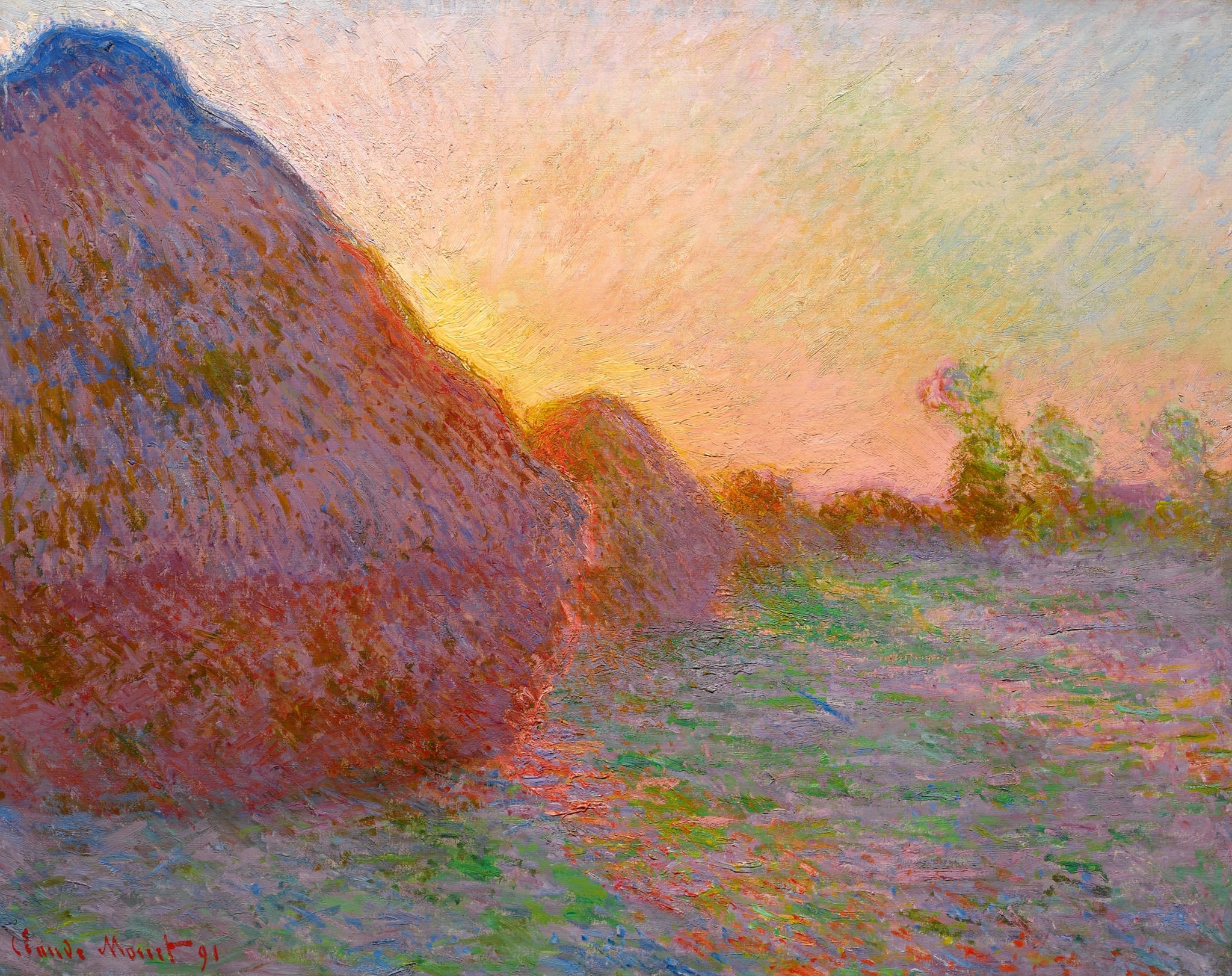
Claude Monet’s <strong>Haystacks Series</strong> transforms a routine rural subject into an inquiry into <strong>light, time, and perception</strong>. In this sunset view, the stacks swell at the left while the sun burns through the gap, making the field shimmer with <strong>apricot, lilac, and blue</strong> vibrations.
Women in the Garden by Claude Monet

Women in the Garden

Claude Monet (1866–1867)

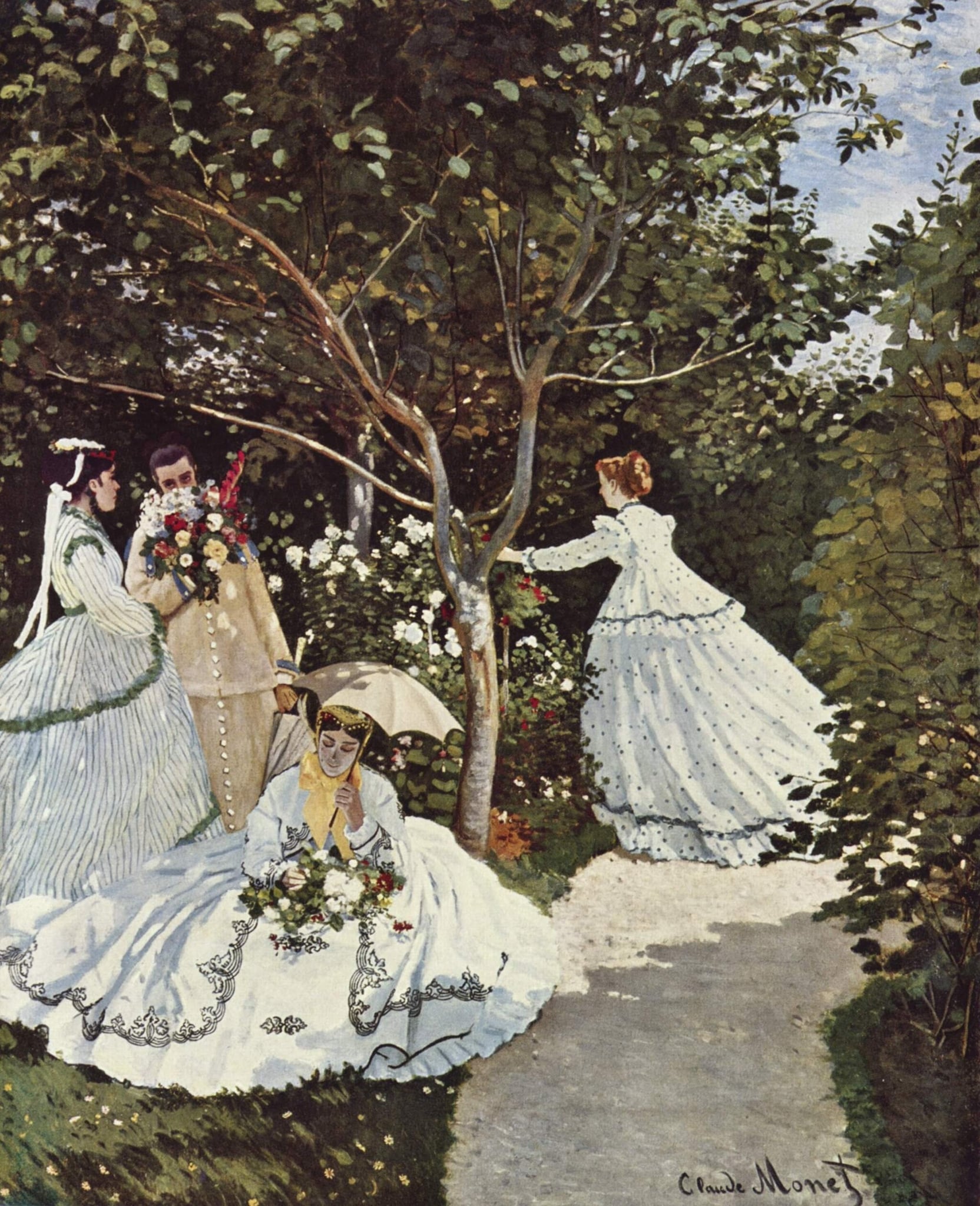
Claude Monet’s Women in the Garden choreographs four figures in a sunlit bower to test how <strong>white dresses</strong> register <strong>dappled light</strong> and shadow. The path, parasol, and clipped flowers frame a modern ritual of leisure while turning fashion into an instrument of <strong>perception</strong>. The scene reads less as portraiture than as a manifesto for painting the <strong>momentary</strong> outdoors <sup>[1]</sup><sup>[3]</sup>.
The Train in the Snow (The Locomotive) by Claude Monet

The Train in the Snow (The Locomotive)

Claude Monet (1875)

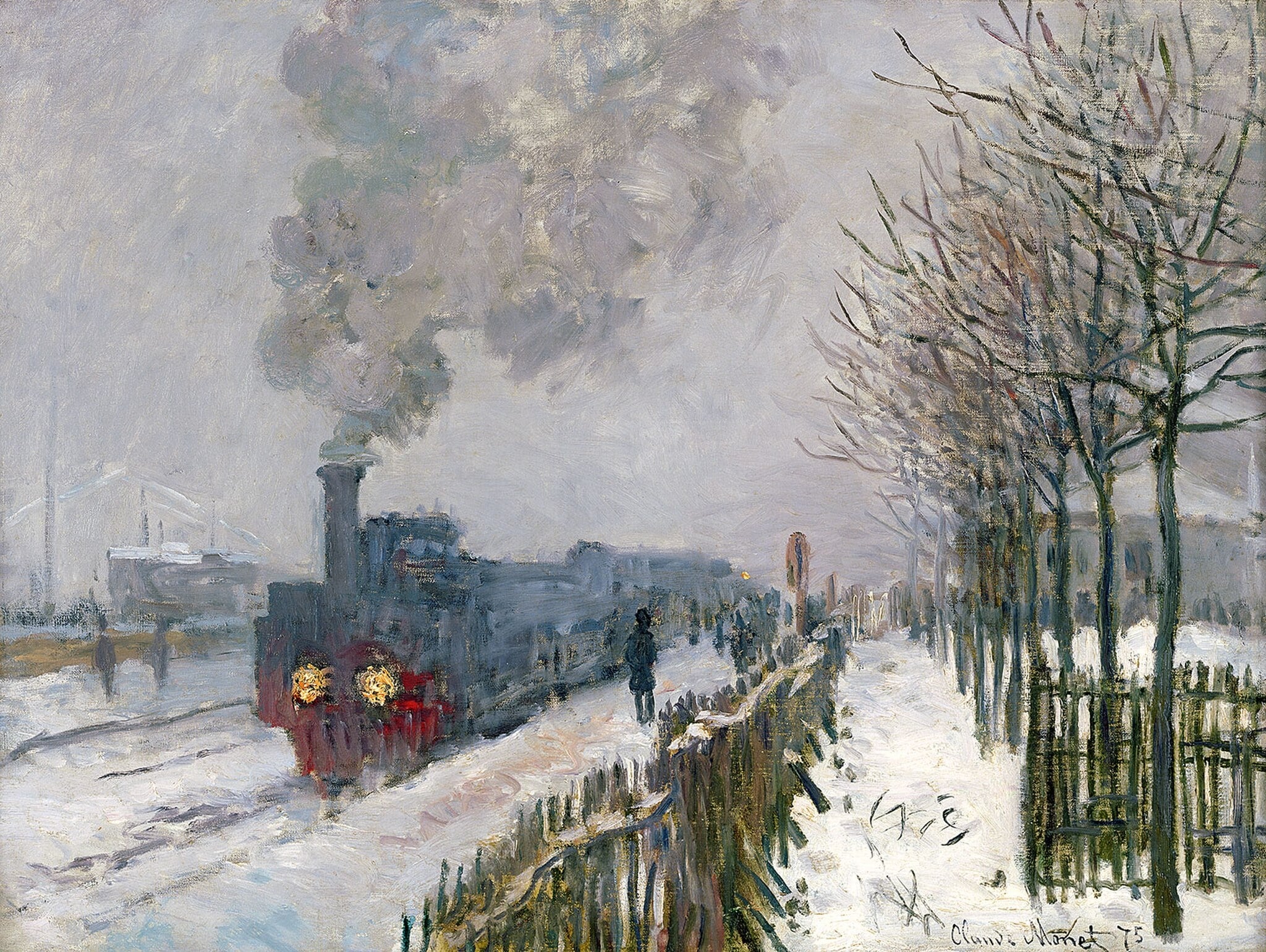
Claude Monet’s The Train in the Snow (The Locomotive) (1875) turns a suburban winter platform into a study of <strong>modernity absorbed by atmosphere</strong>. The engine’s twin yellow headlights and a smear of red push through a world of greys and violets as steam fuses with the low sky, while the right-hand fence and bare trees drill depth and cadence into the scene <sup>[1]</sup><sup>[4]</sup>. Monet fixes not an object but a <strong>moment of perception</strong>, where industry seems to dematerialize into weather <sup>[1]</sup><sup>[2]</sup>.
The Artist's Garden at Giverny by Claude Monet

The Artist's Garden at Giverny

Claude Monet (1900)

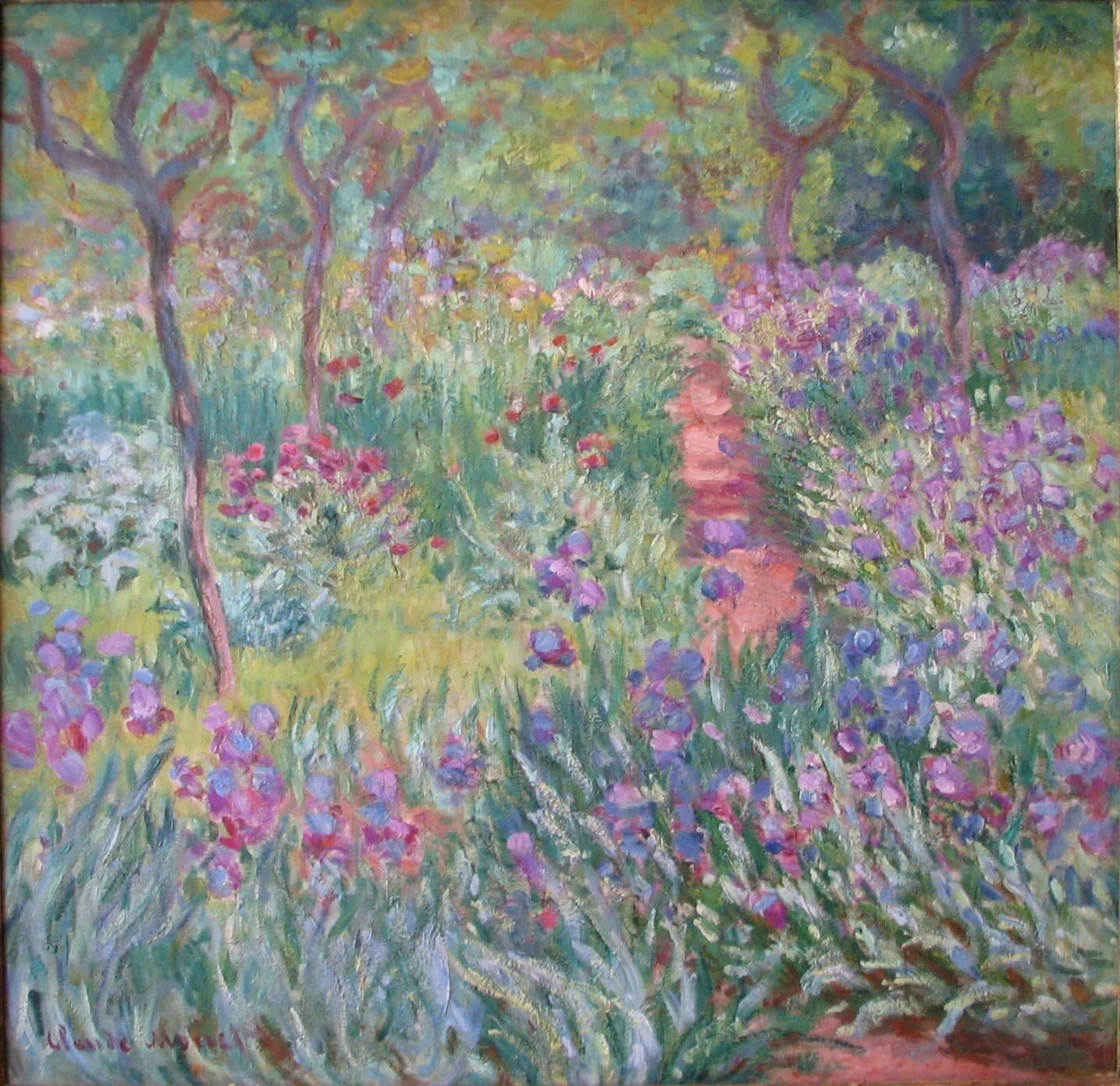
In The Artist's Garden at Giverny, Claude Monet turns his cultivated Clos Normand into a field of living color, where bands of violet <strong>irises</strong> surge toward a narrow, rose‑colored path. Broken, flickering strokes let greens, purples, and pinks mix optically so that light seems to tremble across the scene, while lilac‑toned tree trunks rhythmically guide the gaze inward <sup>[1]</sup><sup>[3]</sup>.
Water Lilies by Claude Monet

Water Lilies

Claude Monet (1899)

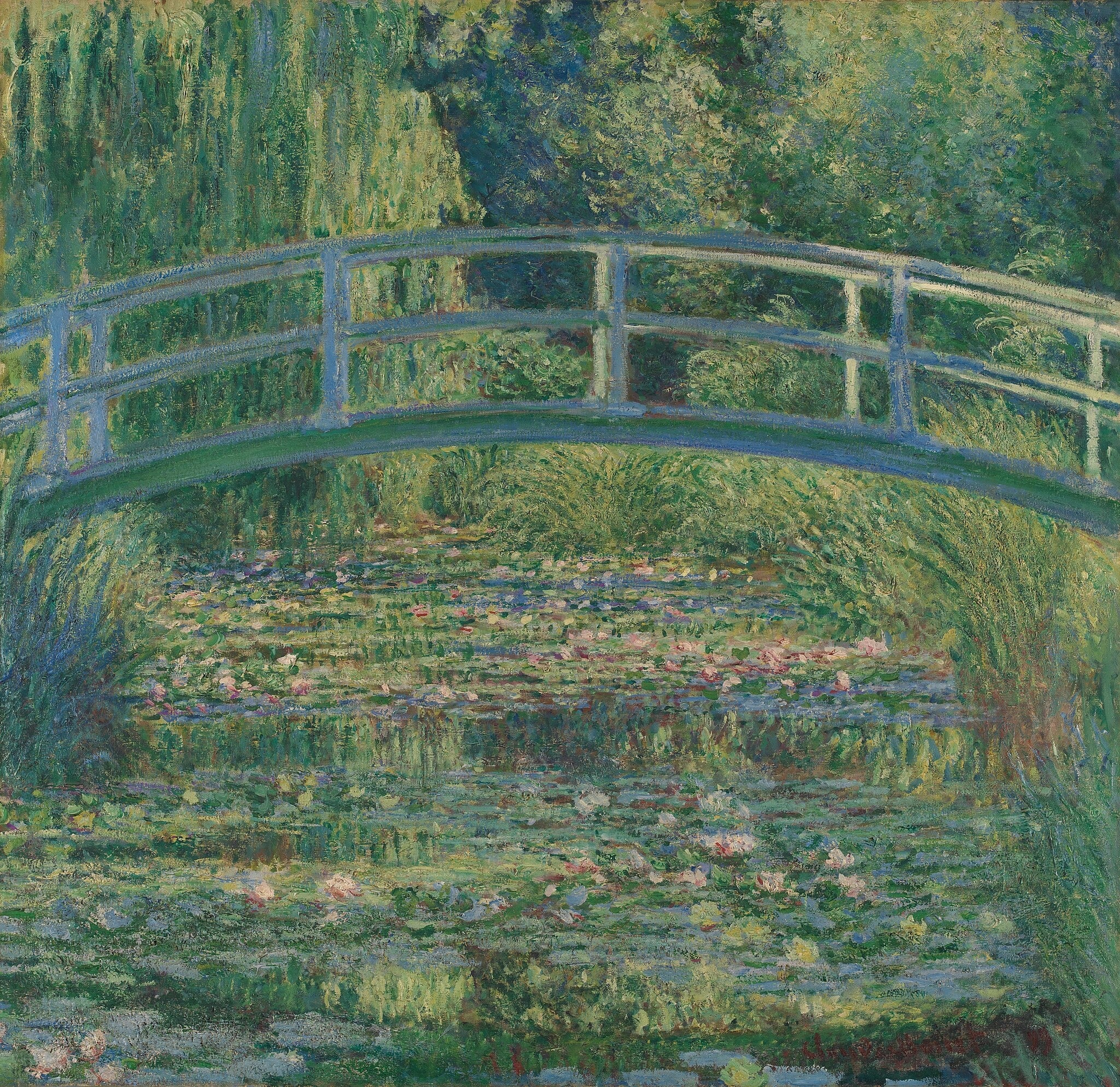
<strong>Water Lilies</strong> centers on an arched <strong>Japanese bridge</strong> suspended over a pond where lilies and rippling reflections fuse into a single, vibrating surface. Monet turns the scene into a study of <strong>perception-in-flux</strong>, letting water, foliage, and light dissolve hard edges into atmospheric continuity <sup>[1]</sup><sup>[3]</sup>.
The Grand Canal by Claude Monet

The Grand Canal

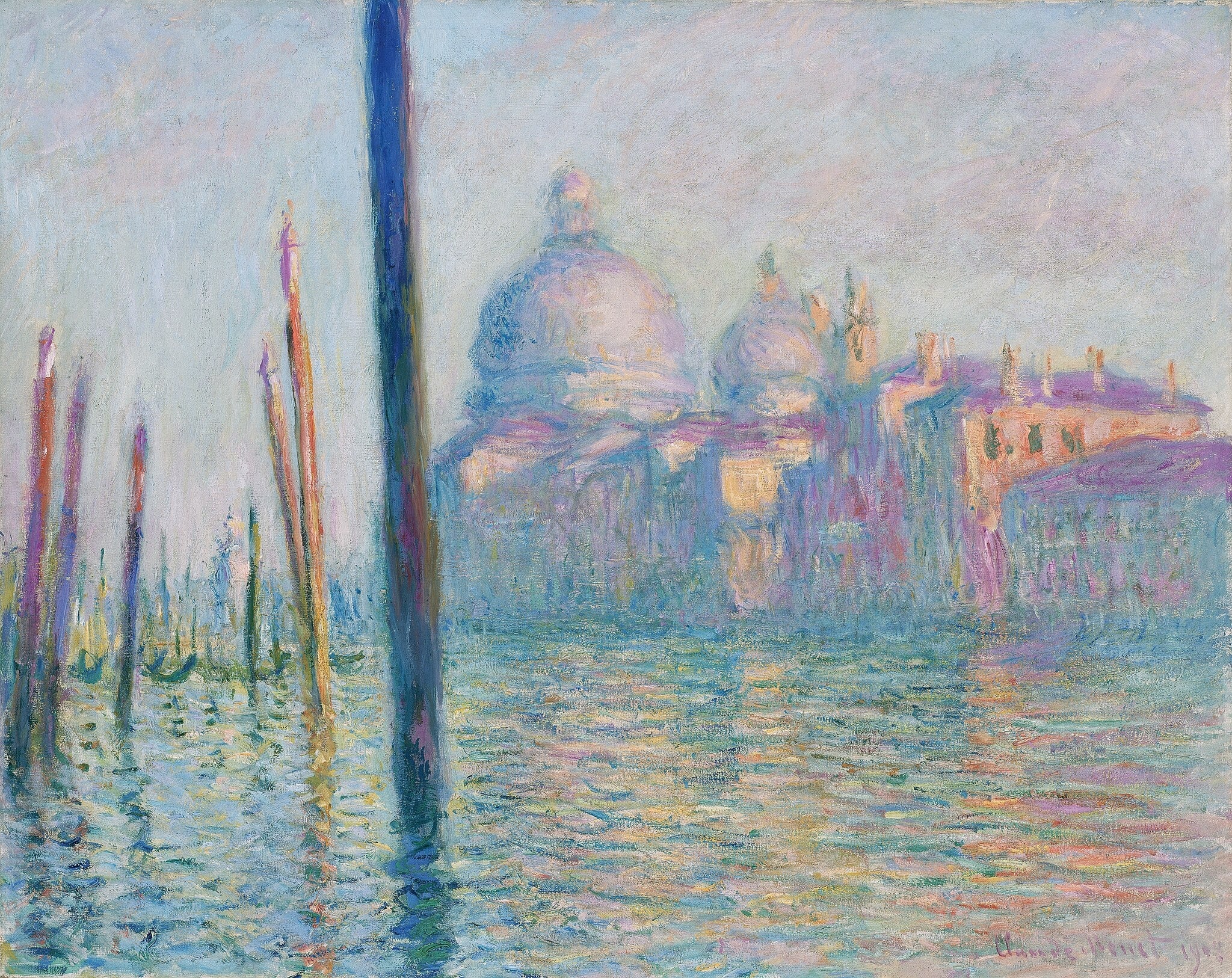
Claude Monet (1908)

Claude Monet’s The Grand Canal turns Venice into <strong>pure atmosphere</strong>: the domes of Santa Maria della Salute waver at right while a regiment of <strong>pali</strong> stands at left, their verticals reverberating in the water. The scene asserts <strong>light over architecture</strong>, transforming stone into memory and time into color <sup>[2]</sup><sup>[3]</sup>.