How Much Is The Doge's Palace Worth?
Last updated: February 26, 2026
Quick Facts
- Methodology
- comparable analysis
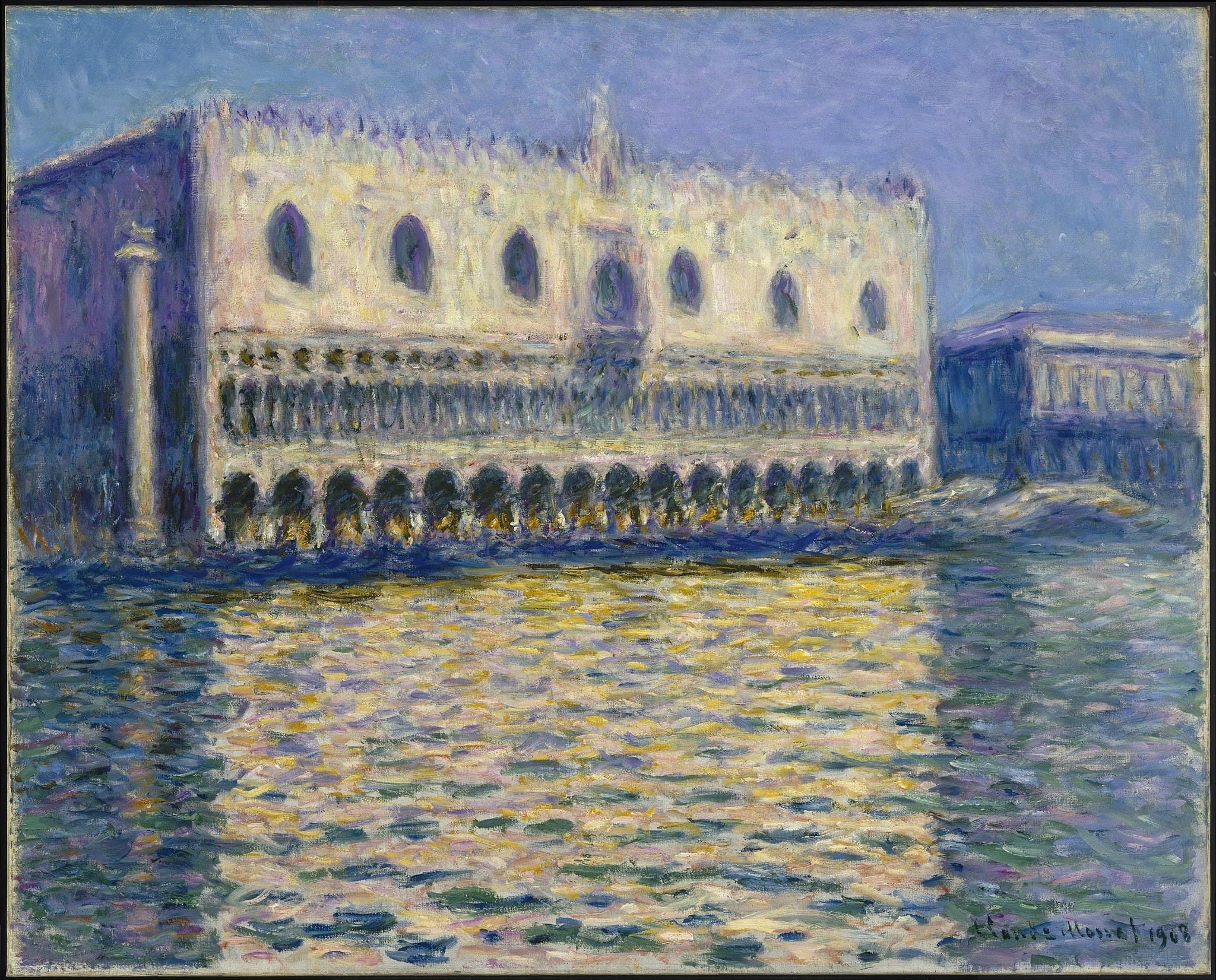
Based on direct, same‑series comparables, we estimate a hypothetical fair market value of $40–60 million for Claude Monet’s The Doge’s Palace (1908) at the Brooklyn Museum. A 2019 Doge’s Palace canvas achieved $36.4m and a 2022 Venice series highlight brought $56.6m, bracketing today’s range for a strong example. Final positioning would depend on condition, coloristic strength, and sale context.
Valuation Analysis
Conclusion: Our synthesized fair market valuation for Claude Monet’s The Doge’s Palace (1908, oil on canvas; Brooklyn Museum) is $40–60 million, assuming excellent condition and presentation. This is a hypothetical figure, as the work is museum‑held; it reflects observed pricing for top Venice‑series Monets and current demand for late masterworks by the artist.
Rationale and key comparables: Monet’s 1908 Venice campaign (c. 37 canvases) is a canonical late series, with the Doge’s Palace among its most coveted motifs. A closely related Doge’s Palace sold at Sotheby’s London in 2019 for £27.5m (≈$36.4m at the time), establishing a robust subject‑specific benchmark [2]. The series high water mark came in 2022 when Le Grand Canal et Santa Maria della Salute realized $56.6m in New York, demonstrating that prime Venice views can command mid‑eight figures in peak evening contexts [3]. Anchored by these bracketing results—and recognizing modest inflation and selective depth at the trophy end—we place the Brooklyn canvas at $40–60m today, with the upper half achievable if the picture’s palette is saturated, condition is prime, and marketing leverages its institutional standing.
Artist market support: Monet remains blue‑chip with exceptional depth at the top. Major late Water Lilies canvases have led recent seasons ($74.0m in November 2023; $65.5m in November 2024), reaffirming global appetite—especially from U.S. and Asian buyers—for first‑tier material by the artist [4][5]. This brand strength reliably lifts adjacent prime series (Poplars, Haystacks, Venice) when quality is incontestable.
Market context: The broader Impressionist/Post‑Impressionist auction segment contracted in 2024 (fewer trophy lots; buyers highly selective), but demand for blue‑chip masters held up when quality, freshness, and narrative were compelling [6]. Against that backdrop, Venice‑series Monets with strong coloration, crisp architectural rendering, and luminous atmosphere remain scarce and internationally competed. The Brooklyn painting’s long, well‑documented museum tenure and recent exhibition visibility reinforce its stature and potential positioning if hypothetically offered [1].
Practical note on insurance: Museums typically set insurance/replacement values above observed auction comps to reflect scarcity and replacement difficulty. While no figure is public for this painting, a planning band moderately above fair market value (e.g., high‑$40m to ~$70m) is common for works of this rarity and importance; any formal value should be informed by a current condition report and underwriting requirements [1].
Key Valuation Factors
Art Historical Significance
High ImpactThe 1908 Venice series is a cornerstone of Monet’s late oeuvre, uniting his lifelong study of light with a grand, cosmopolitan subject. Within it, the Doge’s Palace motif is among the most coveted, balancing recognizable architecture with shimmering atmospheric effects. The Brooklyn canvas has long institutional visibility and recent exhibition prominence, reinforcing its status. While the Venice group sits just below the absolute apex of Monet’s brand—the very best Water Lilies, Haystacks, and Rouen Cathedrals—it is firmly ‘trophy‑level’ for many collectors. This significance underpins sustained demand in the mid‑eight figures when quality, color, and condition are most compelling.
Direct Market Comparables (Venice Series)
High ImpactA closely related Doge’s Palace sold for £27.5m (≈$36.4m) in 2019, providing a subject‑specific benchmark, while a prime Grand Canal variant achieved $56.6m in 2022, setting the series high. Adjusting for inflation and selective but deep bidding at the top end, these comps bracket today’s fair value for a strong Doge’s Palace between the high‑$30m and high‑$50m zones. Given the Brooklyn work’s museum‑level standing, strong palette, and comparable scale, a $40–60m range is well supported. Any premium above the midpoint would depend on confirmed condition, color saturation, and curatorial placement in a top evening sale.
Condition, Palette, and Scale
High ImpactLate Monets are highly sensitive to condition and presentation. The Venice canvases typically measure around 81 × 99 cm (32 × 39 in), a desirable, display‑friendly scale. Paint surface integrity, absence of discoloring varnish, and preserved chromatic intensity (the pinks, violets, and golds of Venetian light) are critical to value. Exceptional coloristic strength and atmospheric vibrancy can drive multiple bidders into the upper half of the range; conversely, structural issues, restoration discordance, or dulled tonality can reduce competition and compress pricing. A current, independent condition report would be the single biggest variable affecting the final estimate within this band.
Provenance and Institutional Profile
Medium ImpactThe painting entered the Brooklyn Museum in 1920 and has remained there for over a century, with recent visibility in a dedicated Monet and Venice exhibition. Deep institutional provenance and scholarly publication typically aid market confidence and storytelling. If hypothetically deaccessioned, its museum history could be framed as a positive differentiator. That said, lack of a modern sale history introduces some uncertainty around current trade price elasticity, and U.S. deaccessions of major Monets are uncommon and can face public scrutiny. Net effect: supportive of demand and positioning, but not automatically price‑expansive without top‑tier condition and marketing.
Sale History
American Art Association (Arthur B. Emmons sale), New York
Brooklyn Museum, New York
Claude Monet's Market
Claude Monet remains one of the most liquid and internationally competed names in the market. His auction record stands at $110.7 million (Meules, 2019), with repeated eight‑ and nine‑figure prices for first‑tier series. Recent marquee results for late Water Lilies—$74.0m in 2023 and $65.5m in 2024—demonstrate persistent depth among global buyers and institutional bidders. Beyond lilies, prime Poplars, Haystacks, and Venice subjects reliably command strong prices when scale, palette, and freshness align. While broader market conditions have ebbed and flowed, Monet’s brand has proven highly resilient; carefully estimated, well‑presented works continue to clear ambitious benchmarks, often with cross‑border competition.
Comparable Sales
Le Palais Ducal (The Doge’s Palace)
Claude Monet
Same artist and year (1908), same Venice campaign, same Doge’s Palace motif, comparable scale; set a Venice-series record at the time.
$36.4M
2019, Sotheby's London
~$45.8M adjusted
Le Grand Canal
Claude Monet
Same artist and 1908 Venice campaign; iconic Grand Canal view with similar size and market tier—strong proxy for late Venice demand.
$35.8M
2015, Sotheby's London
~$48.6M adjusted
Le Grand Canal et Santa Maria della Salute
Claude Monet
Same artist and 1908 Venice campaign; prime, trophy-level variant from the series; current record for any Monet Venice painting.
$56.6M
2022, Sotheby's New York
~$62.3M adjusted
Current Market Trends
The high end of the Impressionist/Post‑Impressionist auction market cooled in 2024 amid fewer mega‑lots and increased buyer selectivity, but blue‑chip names with trophy‑level quality continued to attract deep bidding. By late 2025, confidence and totals improved, though the market remained quality‑driven and estimate‑sensitive. Currency and geography matter: premium Western masterpieces sold well in New York and London, with meaningful participation from Asian buyers. In this environment, top‑quality Monets—especially late, large‑scale works or iconic series—remain sought after, while mid‑tier examples require conservative estimates and compelling presentation to achieve strong outcomes.
Study print
Study this painting as a print
Pair the full artwork with a museum-style study sheet focused on one meaningful detail.
Sources
- Brooklyn Museum – The Doge’s Palace (object page)
- AuctionDaily – Monet’s Le Palais Ducal achieves $36.4m (Sotheby’s London, 2019)
- UPI – Monet’s Le Grand Canal et Santa Maria della Salute sells for $56.6m (Sotheby’s New York, 2022)
- Christie’s – Nov 9, 2023 20th Century Evening Sale totals; Monet at $74.0m
- Wall Street Journal – Monet Water Lilies sells for $65.5m (Sotheby’s, Nov 2024)
- Art Basel & UBS – The Art Market 2025: Auctions