How Much Is Triptych Inspired by the Oresteia of Aeschylus Worth?
Last updated: June 3, 2026
Quick Facts
- Last Sale
- $84.6M (2020, Sotheby's New York)
- Methodology
- recent sale
Anchored to the identical work’s public sale at Sotheby’s New York (29 June 2020; price achieved ≈ $84.6M), this valuation adjusts that realized result for inflation, market movement and premium sale scenarios. On a current-market basis the defensible market window for Francis Bacon’s Triptych Inspired by the Oresteia of Aeschylus (1981) is $100–150 million, with nearer-term realizations toward the low end if marketing/placement or condition are sub‑optimal.
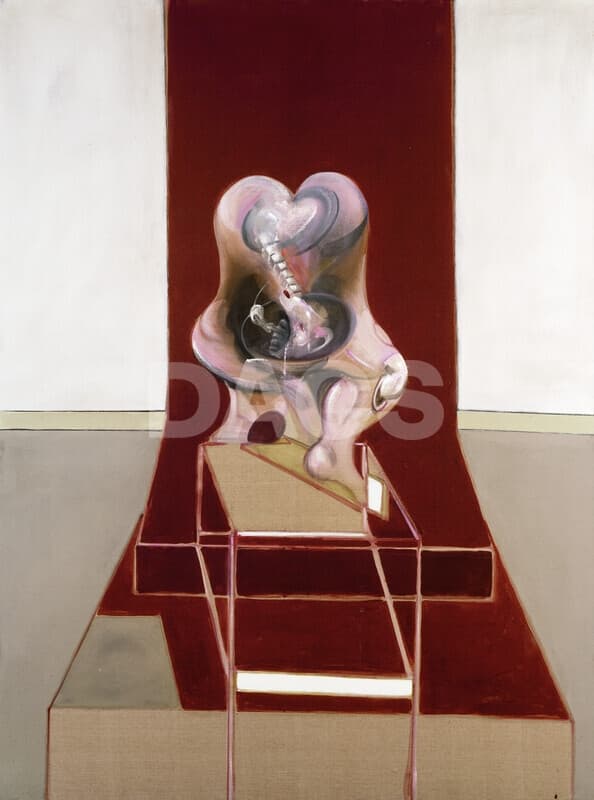
Triptych Inspired by the Oresteia of Aeschylus
Francis Bacon, 1981 • Oil on canvas (triptych)
View more by Francis Bacon →Valuation Analysis
Valuation anchor and approach. The principal market datum is the painting’s public sale at Sotheby’s New York on 29 June 2020, where the lot achieved a hammer of $74,000,000 and a price achieved including buyer’s premium of approximately $84,600,000. Because the 2020 lot is the identical work, that realized result is the primary anchor for a present valuation and the starting point for adjustments [1].
Why a $100–150M window? Translating the 2020 result to today requires two adjustments: (1) a general uplift for cumulative inflation and the blue‑chip segment’s movement since mid‑2020, and (2) a qualitative premium or discount driven by sale channel, marketing, condition and any new provenance/exhibition developments. A conservative market uplift of ~15–25% from the realized 2020 price yields a midpoint in the low hundreds of millions; the top end of the range reflects a best‑case evening‑sale outcome (major auction house, strong institutional/collector interest, and no condition or title issues) where competitive bidding can push the lot materially above the inflation‑adjusted figure.
Comparables and market context. The Bacon market supports this window. Triptychs are Bacon’s most sought‑after format and have produced the artist’s highest auction realizations (the 1969 Three Studies of Lucian Freud remains the market ceiling) — demonstrating the market’s capacity to pay nine‑figure sums for exceptional, museum‑quality triptychs [2]. At the same time, recent single‑panel sales (2021–2024) show robust demand in the multi‑tens of millions, underscoring that format, scale and provenance materially uplift price versus single panels.
Upward and downward drivers. Upside to the upper bound requires top placement (major evening sale), new high‑profile exhibitions or scholarship, and demonstrated impeccable condition and title. Downside scenarios that would push realizations toward the 2020 level include undisclosed condition problems, weak marketing/placement (e.g., secondary‑channel private sale without international promotion), or any provenance uncertainties or title disputes.
Practical recommendation. Treat the $100–150M window as the actionable market band for a well‑presented offering; if you intend to sell or insure, obtain an up‑to‑date condition report, confirm catalogue raisonné and exhibition references, and engage a top evening‑sale specialist to determine precise reserve and estimate strategy. Absent those controls underwrite closer to the 2020 sale result.
Key Valuation Factors
Art Historical Significance
High ImpactThis triptych engages directly with a canonical classical drama (Aeschylus’ Oresteia) and belongs to Bacon’s mature late period, when his formal vocabulary of triptych narrative reach and psychological intensity was fully developed. Triptychs are central to Bacon’s critical reputation; works that combine a distinctive thematic reference, large scale and late‑career refinement carry disproportionate scholarly and curatorial interest. That cultural and academic weight increases institutional demand and underpins collector confidence, producing a sustained premium in the market for museum‑quality examples.
Provenance & Exhibition History
High ImpactProvenance is excellent: the work passed through Marlborough to the Astrup Fearnley collection (a noted public collection) and was formally deaccessioned via Sotheby’s in 2020. Museum ownership and documented exhibition/literature references materially reduce buyer risk and increase competition among institutions and blue‑chip collectors. If additional high‑profile loans or new catalogue‑raisonné entries have followed 2020, those would further strengthen value; any gaps or disputes in provenance would conversely impose discounts and reduce achievable prices.
Recent Realized Market Evidence
High ImpactThe identical painting’s June 2020 sale at Sotheby’s (price achieved ≈ $84.6M) is the single most important market fact and provides a firm transactional floor and anchor for uplift. The artist’s auction ceiling (notably the 1969 triptych that set a nine‑figure record) demonstrates the market’s willingness to pay well into the hundreds of millions for exceptional triptychs. Recent comparable sales of Bacon works show that format and pedigree move prices into the high multiples of single‑panel results, validating an uplifted present‑day valuation band.
Condition & Authenticity
High ImpactCondition and unambiguous authenticity are decisive. Bacon canvases sometimes require conservation treatment, and any significant restoration, relining, or structural issue will materially reduce buyer confidence and price. Conversely, a recent conservation report confirming stable condition and original execution, together with catalogue‑raisonné authentication, will maximize competitive bidding. Underwriting, insurance and sale estimates should always be conditioned on a current professional condition report.
Rarity, Scale & Format (Triptych)
High ImpactTriptychs are both rarer and more coveted than single panels in Bacon’s output; scale and compositional ambition directly translate to market premium. Large, museum‑quality triptychs from the 1960s–1980s are limited in number and rarely offered, concentrating buyer demand when they appear. This scarcity dynamic is a primary justification for the nine‑figure ceiling for the very best triptychs and supports the upper half of the $100–150M window for an optimally presented offering.
Sale History
Private acquisition / Marlborough International Fine Art
Sotheby's New York
Francis Bacon's Market
Francis Bacon remains a blue‑chip post‑war master whose market is driven by a small number of trophy triptychs and select high‑quality panels. The artist’s auction record and recurring institutional interest keep demand concentrated at the top end. While single panels trade more variably in the multi‑millions, museum‑quality triptychs regularly command outsized premiums; collectors and institutions typically pay for rarity, provenance and exhibition history. The market is selective — supply scarcity and scholarly visibility determine pricing outcomes more than sheer market breadth.
Comparable Sales
Triptych Inspired by the Oresteia of Aeschylus
Francis Bacon
Primary direct comparable — identical work sold at a major evening auction with strong provenance and exhibition history; anchors any current valuation.
$84.6M
2020, Sotheby's New York
~$104.9M adjusted
Three Studies of Lucian Freud
Francis Bacon
Artist auction record and benchmark triptych — highest ceiling for Bacon triptychs; useful as a top‑end reference for market potential.
$142.4M
2013, Christie's New York
~$183.7M adjusted
Study for Portrait of Lucian Freud
Francis Bacon
High‑profile single‑panel portrait of an important sitter (Lucian Freud) — demonstrates demand for iconic Bacon portraits and helps bracket high single‑panel values versus triptychs.
$52.7M
2022, Sotheby's London
~$59.0M adjusted
Pope with Owls
Francis Bacon
Important mid‑century Bacon single panel sold at a secondary house — useful as a market reference for strong single‑panel works outside the evening‑sale triptych tier.
$33.0M
2021, Phillips New York
~$38.0M adjusted
Portrait of George Dyer Crouching
Francis Bacon
Recent mid‑market Bacon portrait (May 2024) — shows current demand and pricing for quality portraits with strong provenance; helps bracket the lower end relative to triptychs.
$27.7M
2024, Sotheby's New York
~$28.6M adjusted
Landscape near Malabata, Tangier
Francis Bacon
2024 sale of a Bacon landscape — provides a recent market datapoint for non‑portrait works and helps define pricing for high‑quality but lower‑tier (vs triptych) works.
$24.9M
2024, Christie's London
~$25.6M adjusted
Current Market Trends
Since 2020 the global art market has moved from pandemic‑era volatility through a strong resale phase, then into a more cautious, selective environment. As of 2024–2026, top‑tier museum‑quality works remain resilient while mid‑tier lots show greater variance. Auction houses increasingly rely on guarantees and private‑sale channels to manage risk. For Bacon, institutional loans and catalogue attention continue to be the key value drivers.