Most Expensive Francis Bacon Paintings
Francis Bacon occupies a rarefied position in the art market where raw psychological intensity and relentless formal invention translate into extraordinary collectibility; his works routinely command the highest prices—most notably Three Studies of Lucian Freud, estimated at $180–230 million—because they fuse visceral impact with historical significance. Collectors prize pieces such as Study for Portrait of Pope Innocent X ($120–180 million) and the mythically scaled Triptych Inspired by the Oresteia of Aeschylus ($100–150 million) not only for their auction-room records but for the way Bacon reimagined portraiture and narrative as sites of existential drama. Later triptychs like Triptych, 1976 ($100–150 million) and intimate portraits—Three Studies for a Portrait of John Edwards ($95–140 million) or Study from Innocent X ($80–120 million)—demonstrate how variation in scale and subject can produce equally coveted outcomes. Even works with comparatively lower estimates, such as Portrait of George Dyer Talking ($50–85 million) or Figure with Meat ($40–80 million), are market stalwarts, while studies for Lucian Freud ($45–70 million) and Study for Portrait (1977) ($48–68 million) confirm that Bacon’s distinctive vision remains a dominant force for collectors and institutions worldwide.
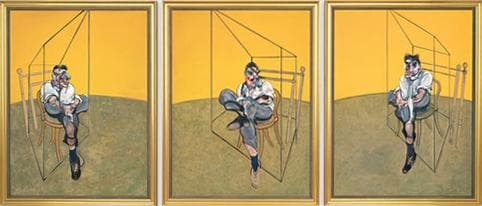
$180-230 million
Its 2013 Christie’s sale for $142.4M remains Bacon’s auction record, and inflation‑adjusted market strength supports a present fair‑market indication of $180–230M.
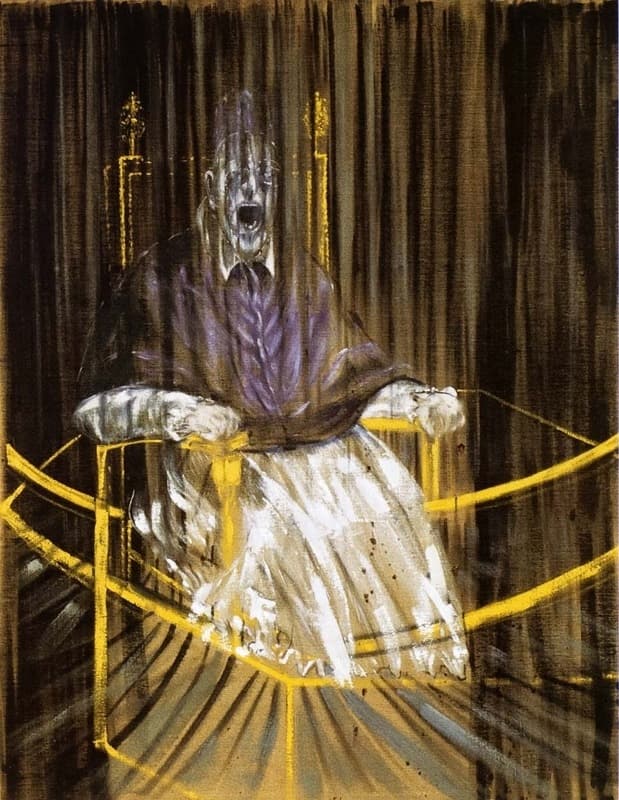
$120-180 million
As an A+ 1953 ‘Screaming Pope,’ it could fetch $120–180M at auction—potentially becoming Bacon’s highest‑priced single‑panel and challenging his overall auction record.
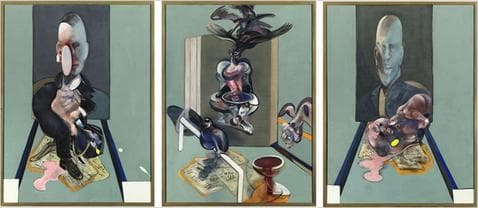
$100-150 million
Anchored to its 2008 Sotheby’s realization of US$86.281M and top‑end triptych comparables, the present estimate for Triptych, 1976 is US$100–150M, dependent on venue and condition.
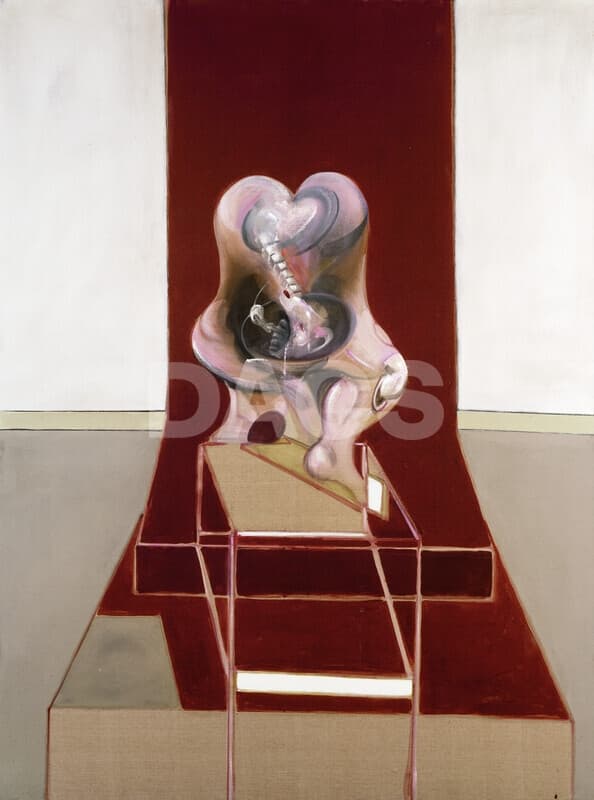
$100-150 million
Following the identical triptych’s ≈$84.6M realization at Sotheby’s New York on 29 June 2020, adjustments for inflation and market movement justify a $100–150M range.
$95-140 million
Based on Christie’s 13 May 2014 invoice of $80.805M and subsequent high‑end triptych sales, Three Studies for a Portrait of John Edwards is valued at approximately $95–140M.
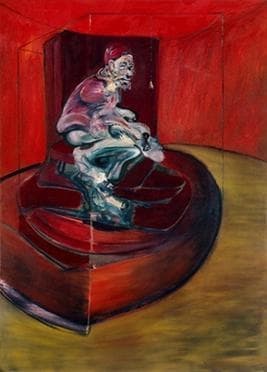
$80-120 million
This exact 1962 canvas sold for $52.68M in 2007, and large‑format, prime‑period Pope benchmarks support a current fair‑market estimate of $80–120M.
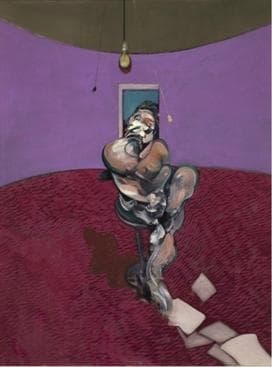
$50-85 million
Using Christie’s London 13 Feb 2014 realized result of US$70.043M as the primary anchor, Portrait of George Dyer Talking is currently placed at US$50–85M.
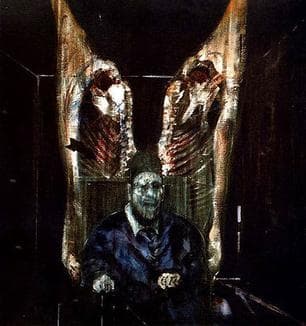
$40-80 million
Held by the Art Institute of Chicago with no modern public auction record, Figure with Meat’s hypothetical market estimate is US$40–80M, contingent on deaccession rules and sale venue.
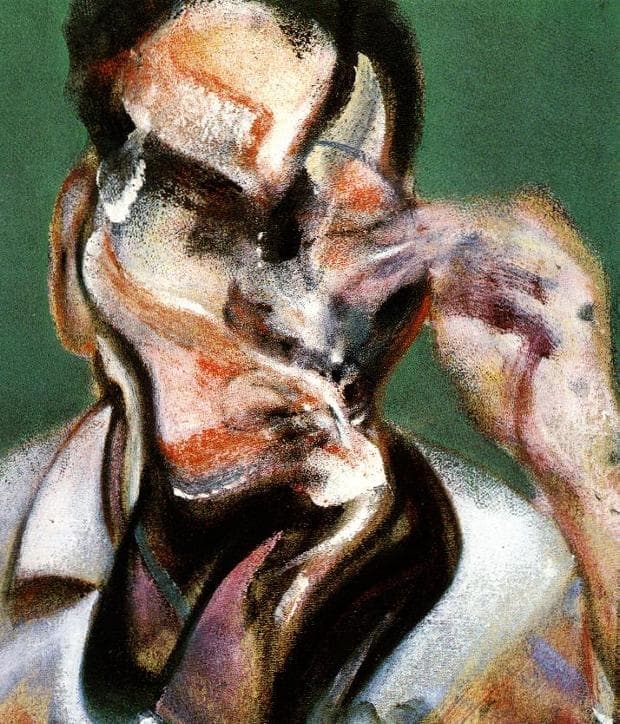
$45-70 million
Realized at ≈US$52.6M at Sotheby’s London on 29 June 2022, Study for Portrait of Lucian Freud is presently valued at US$45–70M.
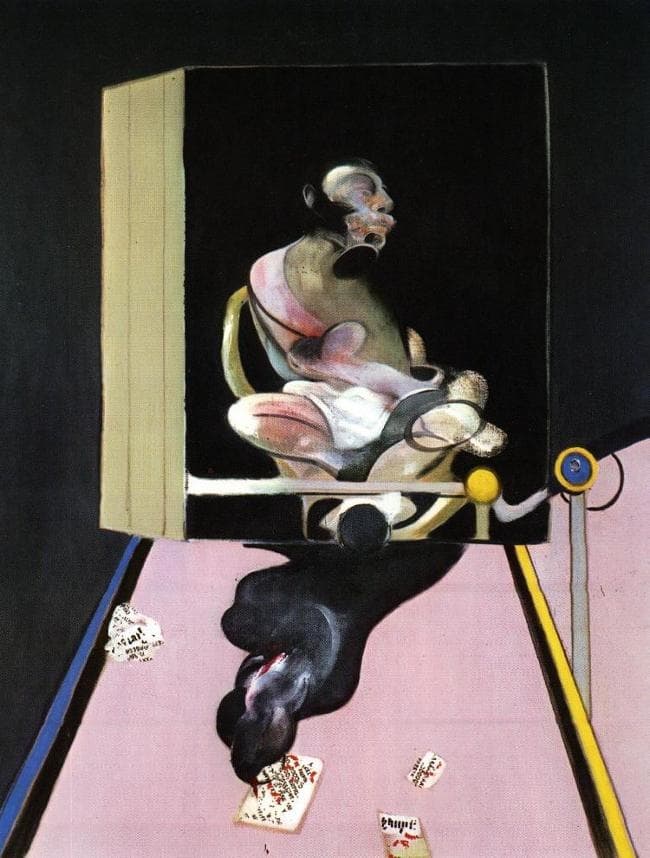
$48-68 million
The identical canvas realized $49.8125M at Christie’s on 17 May 2018; current valuation for Study for Portrait (1977) is US$48–68M, assuming clear Marlborough→Konow provenance.
What Drives Value in Francis Bacon's Work
Triptych Format & Monumental Scale
Bacon’s triptychs are his trophy works: large, multi‑panel compositions routinely outprice single canvases. Three Studies of Lucian Freud (1969) remains the auction record (US$142.4M) and triptychs such as the Oresteia (Sotheby’s 2020 ≈ US$84.6M) and the 1976 triptych or the 1984 John Edwards triptych (Christie’s 2014 ≈ US$80.8M) show a persistent, structural premium tied to scale, narrative reach, and the triptych’s rarity in private hands.
Iconic Sitters and Recurring Motifs
Specific Bacon subjects carry outsized value: Popes, Lucian Freud, George Dyer and the carcass/meat motif are market signifiers. The 1953 ‘Screaming Pope’ and the 1962 Innocent X type are priced above generic heads; Lucian Freud portraits include the record 1969 triptych and a 2022 Freud panel (~US$52.6M). George Dyer canvases and Figure with Meat (Art Institute of Chicago) likewise attract institutional bidders and premium pricing.
Tightly Defined ‘Prime’ Periods and Dating
Collectors differentiate narrow windows of Bacon’s production. Early‑1950s Popes (when the scream/cage grammar coalesced), mid‑1960s Freud portraits, and the late‑1960s triptychs are regarded as canonical and command higher bids. For example, a 1953 Pope or a 1969 life‑size Freud triptych sits above many 1970s/80s single panels, reflecting a period‑based hierarchy that materially shifts valuation even between works only a few years apart.
Surface Technology & Condition Sensitivity (Bacon’s Materials)
Bacon’s particular handling—oil mixed with pastel, delicate veils and frequent relinings—makes condition a Bacon‑specific gating factor. Houses and buyers demand technical reports; visible abrasion, unstable pastel or heavy restoration can cut prices 10–25% or more (noted for mid‑size Popes and triptychs). Condition concerns have repeatedly been flagged (Triptych 1976, Study from Innocent X), directly determining whether a work reaches the top of its estimate band.
Market Context
Francis Bacon’s auction market remains firmly blue‑chip and top‑heavy, anchored by a small number of museum‑caliber triptychs and prime‑period portraits; his standing record is $142.4m for Three Studies of Lucian Freud (1969) at Christie’s New York (2013), and the monumental Oresteia triptych made $84.6m in 2020. Recent seasons show resilient, selective demand—buyers from the US, Europe and the Middle East compete for canonical subjects (Freud, Dyer, Popes) and institutionally exhibited works—while supply scarcity limits trophy opportunities. Single panels trade variably in the mid‑eight figures ($20–55m typical) with mid‑tier lots more price‑sensitive. Auction houses increasingly deploy guarantees, private‑sale channels and institutional loans; overall trajectory since the 2023–24 reset is renewed growth at the very high end.