How Much Is Cottage Garden with Sunflowers Worth?
Last updated: March 16, 2026
Quick Facts
- Methodology
- comparable analysis
If offered on the open market today, Gustav Klimt’s Cottage Garden with Sunflowers (c.1906–07, Belvedere) would most likely hammer in the range USD 3,000,000–25,000,000. A routine museum deaccession or day‑sale scenario would place the work at the lower end; a well‑presented, museum‑quality evening sale with strong condition and exhibition history could push toward the upper end.
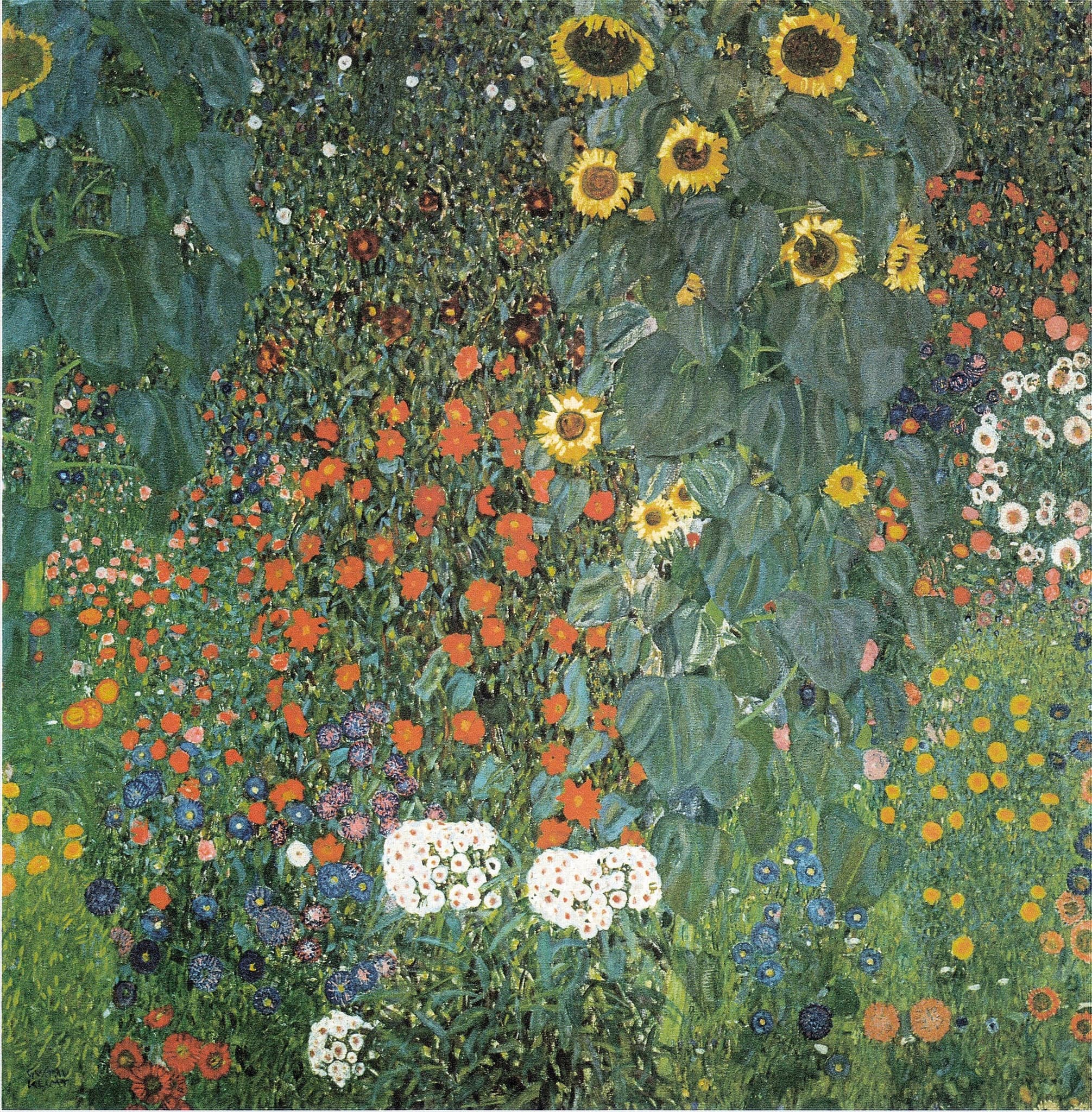
Cottage Garden with Sunflowers
Gustav Klimt, 1906–1907 (signed 1907) • Oil on canvas
Read full analysis of Cottage Garden with Sunflowers →Valuation Analysis
Estimate and approach. This valuation is derived by direct comparable analysis calibrated to the painting’s confirmed museum ownership and Klimt market dynamics. The Belvedere holding gives the picture impeccable provenance but also means the work has not circulated publicly recently, so the most realistic hammer‑price band for planning is USD 3,000,000–25,000,000 (hammer). Museum provenance, condition, exhibition/publication history and sale venue are the principal levers that will move the final price [1].
Comparables and context. High‑profile Klimt landscapes and garden pictures have demonstrated very wide outcomes: trophy examples in marquee sales have realized tens of millions to over $100M (e.g., Birch Forest at Christie’s and several important landscapes in the Leonard A. Lauder dispersal), while other garden/landscape works have sold lower depending on context [2][3]. Sotheby’s 2017 London garden sale is a direct subject‑match precedent demonstrating that exceptional garden pictures can enter the high tens of millions when offered in the right venue [4]. These results are instructive but represent the upper tail of outcomes driven by single‑owner consignments, heavy marketing and competitive global bidding.
Why the range is wide. Cottage Garden with Sunflowers is a landscape/garden scene—an important but generally secondary genre in Klimt’s market relative to his Golden‑Phase portraits. That lowers the baseline demand compared with an Adele Bloch‑Bauer or a late portrait, but Klimt’s name, combined with museum provenance and scarcity, sustains multi‑million valuations. The painting’s moderate dimensions (110 × 110 cm) and unknown public exhibition/publication history are neutral to positive factors; the unknown condition and any past conservation work are key value risks that must be resolved in a technical dossier [1].
Sale strategy and likely outcomes. In a routine deaccession/day‑sale or private treaty marketed to regional collectors, expect a lower single‑digit to low‑mid‑single‑digit million hammer (floor of the band). If the Belvedere were to sanction a high‑profile evening sale with pre‑sale loans, catalogue exposure and competitive estimates, the painting could reach low‑to‑mid tens of millions within the band. Exceptional trophy outcomes above the band are possible but require a confluence of factors: pristine condition, unusually strong exhibition history, provenance narrative or placement in a marquee single‑owner dispersal [2][3][4].
Next steps. To refine this estimate to a formal presale range, obtain a full condition/conservation report, a complete provenance and exhibition/publication CV, and confirm deaccession permissions or donor restrictions. With those documents an auction specialist can provide an agreed pre‑sale estimate and recommended sale channel.
Key Valuation Factors
Art Historical Significance
Medium ImpactCottage Garden with Sunflowers is a garden/landscape work from Klimt’s mature period (c.1906–07). While Klimt’s Golden‑Phase portraits and major allegorical canvases command the highest scholarly and market attention, his landscapes are an established and collectible sub‑category that illustrate his evolving surface treatment, palette and compositional experimentation. The painting’s significance is therefore meaningful to specialists and curators—it can bolster exhibition narratives on Klimt’s engagement with nature and the Attersee/Salzkammergut landscapes—but it lacks the universal market magnetism of an iconic portrait. That positions the work for strong institutional and specialist collector interest but typically at a lower price tier than major portraits.
Provenance and Institutional Ownership
High ImpactBelvedere ownership is a major value‑enhancer because it provides unimpeachable provenance and likely a clear legal title, reducing buyer hesitation. Museum provenance tends to increase buyer trust and can produce stronger bidding, particularly from institutions and established private collectors who prize collection‑quality works. Conversely, museum ownership reduces the probability of a near‑term market appearance: deaccessions require institutional approvals, which can lengthen sale timing and introduce donor/legislative restrictions. If the Belvedere were to sanction a sale, the institutional provenance is more likely to attract marquee attention and achieve higher results than an otherwise comparable private picture.
Condition and Conservation
High ImpactTechnical condition is one of the single largest price‑moving factors. A pristine surface, original stretcher and minimal restoration will materially support the upper end of the estimate; conversely, extensive relining, heavy inpainting, structural instability or unattractive past restorations can reduce buyer interest and push the painting into the lower end of the band or below. A conservator’s report that documents stability, reversibility of treatments and ultrasonic/x‑ray technical findings will materially refine the estimate and is required for a sale catalogue and institutional loans.
Comparable Sales & Sale Context
High ImpactRecent marquee sales show that context dominates outcome: single‑owner dispersals and evening auctions (with guarantees, robust marketing and international loan programs) have produced outsized prices for Klimt landscapes. By contrast, day‑sales, regional auctions or poorly marketed private‑treaty offers typically deliver much lower results. Therefore the chosen sale channel, pre‑sale exhibition strategy, and any guarantee/third‑party interest are essential determinants of where in the USD 3–25M band (or above) the final hammer will land.
Market Demand & Scarcity
Medium ImpactKlimt is a blue‑chip, highly sought name with a global collector base; supply of museum‑quality Klimts is extremely limited, creating a scarcity premium for the best examples. Landscapes attract a competitive but narrower pool than Golden‑Phase portraits; demand is strong among European institutions and private collectors focused on Vienna Modernism, but price sensitivity is greater than for Klimt’s most iconic subjects. Broader economic sentiment and the presence of competing high‑value lots at the same auction session also influence final bids.
Sale History
Cottage Garden with Sunflowers has never been sold at public auction.
Gustav Klimt's Market
Gustav Klimt is a blue‑chip Modern master whose market has seen dramatic headline results in recent years. His Golden‑Phase portraits and a small number of major landscapes have achieved nine‑figure and high‑eight‑figure outcomes at auction and in private sale, while other works (landscapes, smaller canvases, drawings) trade in a wide band of values. Scarcity of museum‑quality canvases, strong institutional provenance, and high‑profile single‑owner sales drive the top end; outside those conditions price sensitivity increases. Buyers are global and include institutions, private museums and UHNW collectors.
Comparable Sales
Bauerngarten (Flower Garden), 1907
Gustav Klimt
Direct subject match (flower/garden scene) and same period (1907 vs c.1906–07). A good precedent for Klimt garden pictures entering the high-end market.
$59.3M
2017, Sotheby's, London
~$72.9M adjusted
Birch Forest, 1903
Gustav Klimt
Large, museum-quality Klimt landscape that set a high-water mark for Klimt landscapes at auction; shows trophy-level demand for top landscapes.
$104.6M
2022, Christie's, New York
~$121.4M adjusted
Blumenwiese (Blooming Meadow), c.1908
Gustav Klimt
Very similar subject (flower meadow/garden) and close date; sold in a marquee single-owner sale — a direct, high-end market comparator for Klimt garden works.
$86.0M
2025, Sotheby's, New York (Leonard A. Lauder collection sale)
Waldabhang bei Unterach am Attersee (Forest Slope)
Gustav Klimt
Landscape from the same broad period/genre sold in the same high-profile sale; useful for pricing upper‑mid Klimt landscape examples.
$68.3M
2025, Sotheby's, New York (Leonard A. Lauder collection sale)
Current Market Trends
The current market shows pronounced strength at the very top: marquee consignments and single‑owner dispersals have reset records, and trophy Klimts attract deep global bidding. At the same time the market is selective—the strongest results require perfect condition, institutional provenance and high‑visibility sale placement. Supply remains constrained, which supports values for the best examples; outside that elite subset prices are more variable and sensitive to sale strategy and condition.
Study print
Study this painting as a print
Pair the full artwork with a museum-style study sheet focused on one meaningful detail.
Sources
- Österreichische Galerie Belvedere – Gustav Klimt (collection/education PDF)
- Sotheby’s – Leonard A. Lauder collection coverage (Klimt sale overview)
- Christie’s – Paul G. Allen / Birch Forest press materials (Nov 2022 results)
- Sotheby’s article – important Klimt landscape leads London Impressionist sale (Bauerngarten precedent, 2017)