How Much Is Flowering Poppies Worth?
Last updated: March 16, 2026
Quick Facts
- Methodology
- comparable analysis
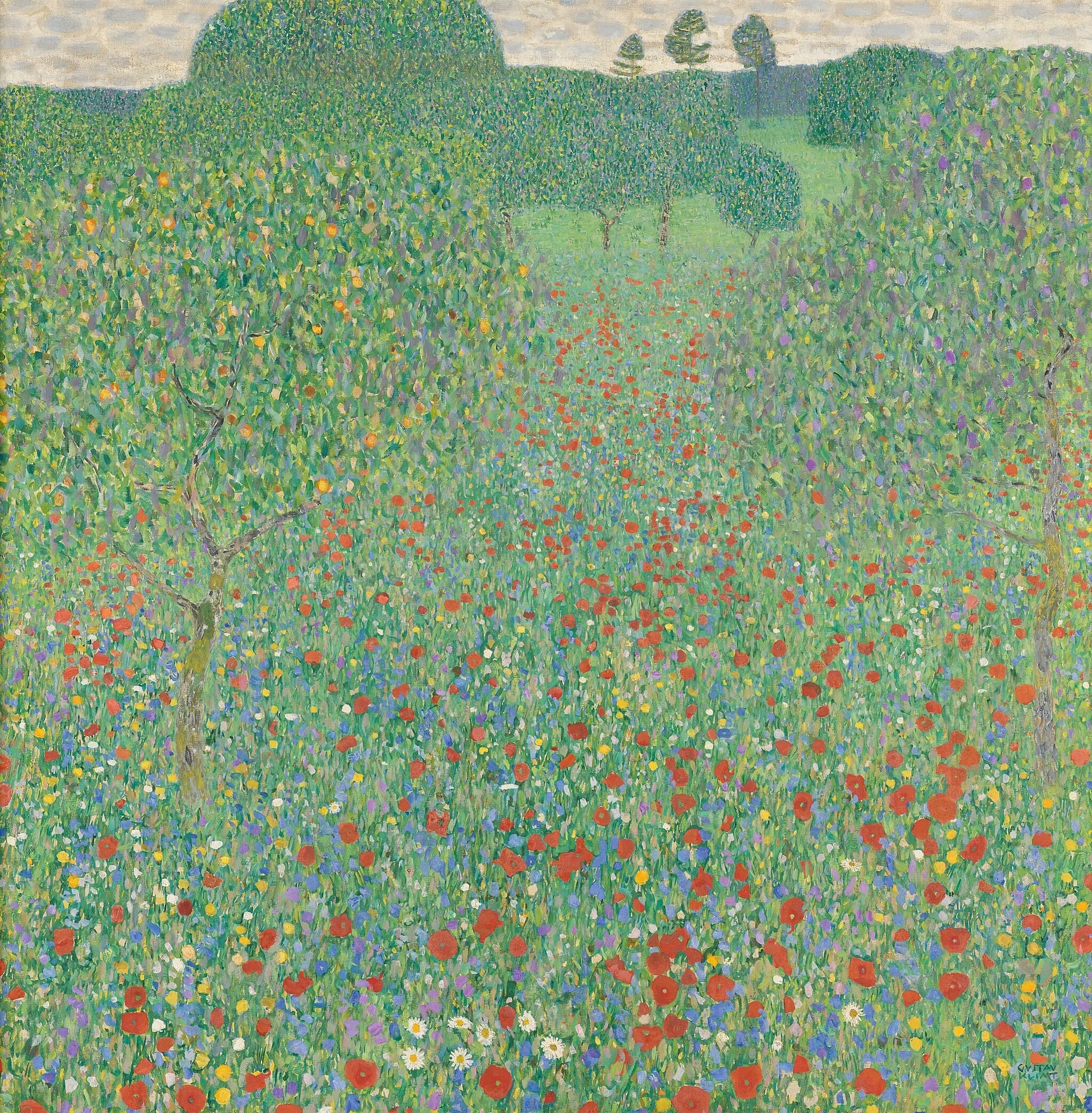
Flowering Poppies (1907) by Gustav Klimt is museum‑held at the Österreichische Galerie Belvedere and has no modern public auction record [1]. If offered on the open market under normal sale conditions, a defensible preliminary fair‑market range is USD 8–35 million (most likely band USD 12–25M), subject to condition, literature/exhibition prominence, provenance clarity and Austrian deaccession/export constraints.
Valuation Analysis
Overview: This valuation uses a comparable‑analysis approach rooted in recent, high‑quality Klimt transactions and the painting’s institutional provenance. Flowering Poppies (1907) is catalogued in the Belvedere collection (oil on canvas, 110 × 110 cm) and has not appeared in modern public auction records, which both supports impeccable provenance and materially reduces practical marketability [1].
Market anchors and comparables: Gustav Klimt’s market has produced headline results in the tens to low hundreds of millions (notably the 18 Nov 2025 Sotheby’s sale of Portrait of Elisabeth Lederer) that establish the artist’s top‑end ceiling and active collector demand for museum‑quality canvases [2]. Landmark non‑portrait Klimt sales (e.g., Birch Forest, Christie's 2022) demonstrate upside for rare landscapes, while more typical museum‑quality but non‑iconic Klimt canvases have traded in the low‑to‑mid tens of millions; rediscovered or contested provenance examples (e.g., the 2024 Vienna sale of the Lieser portrait) underline the market’s sensitivity to title and provenance [3][4][5].
Why USD 8–35M: The lower bound reflects a conservative auction outcome for a non‑signature Klimt landscape/flower work with museum provenance but lacking market exposure and with unknown condition (estimated market entry through a major auction house without a blockbuster selling narrative). The upper bound allows for stronger buyer competition in an optimal sale environment (major house, strong catalogue placement, lender/guarantee support, and strong scholarly / exhibition visibility). A most‑likely band of USD 12–25M reflects the balance of Klimt’s blue‑chip name and mature 1907 date against the secondary subject matter and institutional ownership constraints.
Caveats and next steps: This is a preliminary, opinion‑level valuation. It assumes clean title, no major conservation issues, and potential deaccession permission. Key unknowns — physical condition/conservation history, presence in major catalogues raisonnés or landmark exhibitions, and any wartime provenance complexities — could move the estimate materially. Confirming the Belvedere’s internal valuation/condition report and assembling size‑ and date‑matched auction comparables would materially tighten the band. Recent market dynamics (strong top‑end demand offset by mid‑market provenance caution) were also factored into the range [6].
Key Valuation Factors
Art Historical Significance
Medium ImpactFlowering Poppies dates to 1907, a mature and productive phase for Klimt when decorative motifs and landscape/flower studies appear alongside his major portraits. While the painting represents Klimt’s mature stylistic vocabulary and decorative experimentation, it is not one of his canonical, headline images (e.g., Adele Bloch‑Bauer I, The Kiss) that consistently drive the absolute top market prices. As a well‑executed, sizeable (110 × 110 cm) canvas from a peak period, the work has solid scholarly interest and institutional display value—attributes that support collector confidence and a premium over minor studies—but its subject places it in a secondary tier relative to Klimt’s most iconic commissioned portraits and gold‑phase compositions.
Artist Market Standing
High ImpactGustav Klimt is a top‑tier, blue‑chip artist with demonstrated capacity to produce very large auction receipts; recent marquee sales reset public ceilings and attracted global collector focus. The artist’s major portrait and landmark landscape results create a strong pricing umbrella under which high‑quality works trade. Market appetite for Klimt remains robust for museum‑quality pieces and works with clean, well‑documented provenance. Consequently, the artist’s very strong market standing is a primary upward driver of value for Flowering Poppies despite its secondary subject matter.
Provenance & Institutional Ownership
High ImpactThe painting’s chain into the Österreichische Galerie Belvedere provides impeccable provenance, exhibition access and scholarly validation—factors that support higher valuations because buyers accept lower title risk. Conversely, institutional ownership substantially lowers the probability of an open‑market sale: deaccession policies, national cultural property rules, and political/public opposition in Austria can effectively preclude availability. If the museum were to deaccession (rare and legally constrained), a sale would attract institutional scrutiny and possibly restrictions on export, all of which materially affect pricing and purchaser universe.
Condition & Physical Attributes
Medium ImpactAt 110 × 110 cm and oil on canvas, Flowering Poppies is a substantial work suitable for major display; scale is a positive commercial attribute. However, no publicly available conservation/condition report was reviewed for this valuation. Condition issues (structural instability, significant inpainting, non‑original overpainting) or costly conservation requirements can depress buyer interest and net realizations by tens of percent. Conversely, documented stable condition and recent conservation would support the upper part of the valuation band. Obtaining a formal condition report is a priority for final valuation.
Market Liquidity & Legal Constraints
High ImpactLiquidity for top‑tier Klimt works is strong; however, liquidity for museum‑held, secondary‑subject Klimts is constrained by rarity of supply. Legal and administrative constraints (Austrian deaccession/export law, museum policy) and potential provenance/restitution scrutiny are high‑impact risks that can render a work unsaleable or require sale within restricted channels (domestic retention, museum‑to‑museum transfer). Market channel (major auction house vs. private treaty) and the availability of guarantees/third‑party backing will therefore strongly determine net proceeds and the practical realizable value.
Sale History
Flowering Poppies has never been sold at public auction.
Gustav Klimt's Market
Gustav Klimt is an established blue‑chip artist whose top works command exceptional prices on both public and private markets. Recent record sales demonstrate a robust high‑end bidder base and re‑establish Klimt as a market leader in Vienna Secession material. While portraits and unique landmark canvases capture headline numbers, landscapes, florals and decorative studies—when museum‑quality and well‑provenanced—still achieve strong results in the mid‑single to low‑double‑digit millions. Provenance clarity, exhibition history and condition remain decisive in translating Klimt’s strong name into realized value.
Comparable Sales
Portrait of Elisabeth Lederer
Gustav Klimt
Same artist and period; represents the current auction ceiling for Klimt and indicates top market demand for museum‑quality, high‑profile Klimt canvases (though subject is a portrait, not a landscape/flower scene).
$236.4M
2025, Sotheby's New York
Lady with a Fan (Dame mit Fächer)
Gustav Klimt
Major late‑period Klimt portrait sold at high value; less directly comparable by subject but shows institutional/private buyer appetite and price levels for important Klimt canvases.
$108.4M
2023, Sotheby's London
~$113.8M adjusted
Birch Forest
Gustav Klimt
Same artist and a landscape (non‑portrait) — therefore more directly relevant in subject category to Flowering Poppies; exceptional sale that demonstrates upside for rare Klimt landscapes, though Birch Forest is a landmark example and likely more significant.
$104.6M
2022, Christie's New York
~$115.0M adjusted
Portrait of Fräulein Lieser
Gustav Klimt
Mid‑market Klimt portrait that sold in the tens of millions; more comparable as an indicator of realistic pricing for high‑quality but non‑superstar Klimt works and illustrates provenance sensitivity.
$32.0M
2024, im Kinsky (Vienna)
~$33.0M adjusted
Current Market Trends
The late‑2023 through 2025 market produced headline Klimt sales that revived top‑tier demand; however, mid‑market transactions remain sensitive to provenance and condition. Institutional exhibitions and renewed scholarship sustain interest, but buyers are more cautious where wartime provenance or documentation gaps exist. Overall, masterpieces and museum‑quality works continue to attract competitive bidding, while liquidity and pricing for secondary subjects are more variable and depend on sale strategy and legal constraints.
Study print
Study this painting as a print
Pair the full artwork with a museum-style study sheet focused on one meaningful detail.
Sources
- Österreichische Galerie Belvedere — Sammlung Online: Gustav Klimt, Blühender Mohn (Flowering Poppies), 1907
- Sotheby's — New York November 18, 2025 sale coverage (Portrait of Elisabeth Lederer)
- Christie's / market reporting — Birch Forest (press/auction reporting, Nov 2022)
- Bloomberg — report on Lady with a Fan sale (27 June 2023)
- Associated Press — coverage of the 2024 Vienna Klimt sale and subsequent provenance discussion (Portrait of Fräulein Lieser)
- UBS Art Market Check / market commentary (late‑2025 overview)