How Much Is The Blind Man Worth?
Last updated: April 2, 2026
Quick Facts
- Insurance Value
- $27.0M (Appraiser’s opinion; retail replacement typically 15–25% above auction FMV)
- Methodology
- comparable analysis
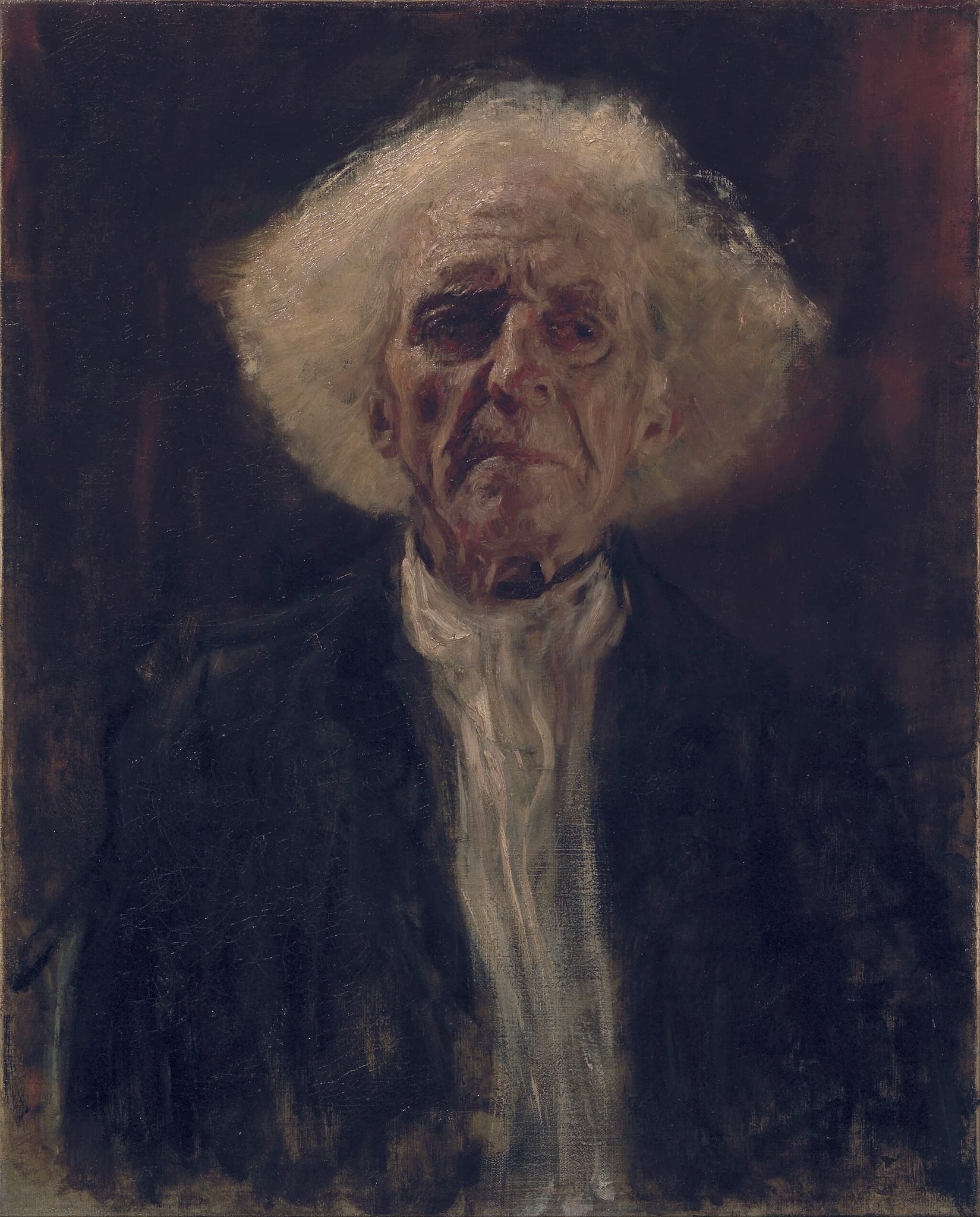
Based on recent Klimt market benchmarks and the work’s early date, subject, and scale, The Blind Man (c. 1896) would likely achieve $14–23 million in a Tier‑1 auction setting. Its museum-grade provenance, 1898 Secession exhibition history, and secure attribution support value; the realist, early-period male genre subject tempers it relative to Klimt’s late portraits and prime landscapes.
Valuation Analysis
Conclusion: A hypothetical fair market estimate of $14–23 million (premium-inclusive) is appropriate for Gustav Klimt’s The Blind Man (c. 1896), with an indicative insurance (retail replacement) value around $27 million. The painting is an early, small-format oil from Klimt’s pre–“Golden Phase,” exhibited at the 1st Vienna Secession in 1898 and reproduced in Ver Sacrum, with secure, well-published provenance culminating in the Leopold Museum, Vienna [1]. This institutional pedigree, combined with the artist’s blue‑chip status, underpins a robust but disciplined valuation.
Market anchors and comp logic: Klimt’s auction ceiling has moved dramatically higher: Portrait of Elisabeth Lederer realized about $236.4m in 2025, resetting the artist and modern-art record [2]. Late masterpieces such as Dame mit Fächer brought $108.4m in 2023 [3], while prime landscapes like Birch Forest achieved $104.6m in 2022 [5]; non‑golden but highly decorative early-1900s works such as Insel im Attersee fetched $53.2m in 2023 [4]. A more directly relevant portrait benchmark—though later, larger, and more finished—is the 1902 Portrait of Gertrud Loew at $39.1m in 2015 (≈$51m in today’s dollars) [7]. The 2024 Vienna result for the unfinished Portrait of Fräulein Lieser (c. $37m) offers a mid-range datapoint, albeit one later clouded by provenance questions [6].
Positioning of The Blind Man: Relative to these anchors, The Blind Man is materially earlier, smaller (c. 66 × 53 cm), realist in handling, and a male genre subject—traits that are less commercially favored than the artist’s late society portraits and luminous Attersee landscapes. These factors warrant a significant discount versus later portrait benchmarks. Countervailing strengths include first-rate provenance (documented sales in 1917, 1932, and 1981 leading to Dr. Rudolf Leopold), secure attribution, early exhibition history (1st Secession, 1898), and publication in the period’s flagship journal—all of which reinforce confidence and liquidity should a sale be possible [1]. Supply is thin for comparable 1894–1898 oils, increasing scarcity value but also widening uncertainty bands.
Estimate and insurance: We therefore bracket a plausible auction outcome at $14–23 million all‑in, reflecting today’s strong but highly selective demand for Klimt oils outside the gilded/prime canon. For insurance, where replacement difficulty and transaction costs are considered, a c. $27 million figure is warranted. Note that the work is museum-held in Austria; any actual transaction would depend on deaccession policy, title review, export permissions, and venue strategy, each of which could materially influence price discovery [1].
Key Valuation Factors
Provenance and Exhibition History
High ImpactThe work’s documented, uninterrupted chain—from early 20th‑century private ownership, through multiple recorded auctions (1917, 1932, 1981), to acquisition by Dr. Rudolf Leopold and contribution to the Leopold Museum—provides exceptional attribution security and institutional validation. Its inclusion in the 1st Vienna Secession exhibition (1898) and reproduction in Ver Sacrum position it firmly within Klimt’s formative context and early reception. This museum-grade pedigree meaningfully reduces title and authenticity risk, broadens the pool of potential institutional and private buyers, and supports stronger bidding in a hypothetical sale. In today’s top-end market, where provenance scrutiny is intense, this factor is a material value driver.
Period, Subject, and Scale
Medium ImpactPainted circa 1896, The Blind Man precedes Klimt’s gilded portraits and most coveted landscapes. Its realist handling, modest dimensions (about 66 × 53 cm), and male genre subject place it outside the visually opulent works that command nine‑figure prices. While historically important as a socially conscious, pre‑Secession painting, these attributes typically attract a narrower collector segment and limit decorative appeal in trophy-driven bidding. Consequently, relative to late society portraits or shimmering Attersee views, this work warrants a substantial pricing discount—tempered by its rarity among early oils and its scholarly significance within Klimt’s development.
Artist Market Momentum
Medium ImpactKlimt’s market has demonstrated extraordinary strength and depth, with a new record set in 2025 and multiple sales above $100 million since 2022. This momentum lifts the entire category of Klimt oils. However, the market is highly stratified: late, highly finished female portraits and prime landscapes dominate the top tier, while earlier or less decorative works trade at markedly lower levels. The Blind Man benefits from the brand effect and global demand for Klimt, but still prices as a secondary subject/period within that hierarchy. The result is a solid but disciplined range rather than a stretch into mid-eight figures.
Scarcity and Liquidity Considerations
Medium ImpactEarly Klimt oils of comparable date, size, and subject rarely surface, creating scarcity value—but also a thinner comp set and wider pricing error bars. The painting’s residence in a public museum further limits real-world liquidity; any hypothetical sale would likely require deaccession approval and export permissions, which can influence venue choice and buyer reach. In a structured sale with robust marketing and a third‑party guarantee, competition should be adequate to clear fair value, but the pool of trophy-driven buyers is narrower for early realist subjects than for Klimt’s late icons.
Sale History
Dorotheum, Vienna
272. Kunstauktion (Mar 28–Apr 2, 1917), lot 1250. Purchased by Dr. Paul and Irene Hellmann; price reported as 4,000 crowns (approx. $500 at the time).
Buch- und Kunstantiquariat Dr. Ignaz Schwarz, Vienna
Auction “Sammlung eines Wiener Kunstfreundes…,” lot 25a; price not located in public sources.
Christie's New York
German Expressionist Paintings, Drawings and Sculpture, lot 261; purchased by Dr. Rudolf Leopold (later Leopold Museum-Privatstiftung). Price not publicly posted.
Gustav Klimt's Market
Gustav Klimt is among the most valuable artists at auction, with prices that have escalated sharply in recent years. Late portraits and prime landscapes now command between roughly $50 million and well over $200 million, led by the 2025 record for Portrait of Elisabeth Lederer. The 2023 sale of Lady with a Fan for $108.4 million set a European auction record, while Birch Forest realized $104.6 million in 2022. Demand is global—Asia, Europe, and the U.S.—and depth is supported by institutional interest and bulletproof provenance. Within this robust market, subject, period, scale, and decorative impact drive large dispersion, with early realist works trading at substantial discounts to the gilded portraits and mature landscapes.
Comparable Sales
Portrait of Gertrud Loew (Gertha Felsövanyi)
Gustav Klimt
Same artist; non-golden figurative portrait (1902). Closer in medium/finish to The Blind Man than golden-period works; later, larger, and more finished, so a higher tier but a useful directional for Klimt portrait pricing without gold.
$39.1M
2015, Sotheby's London
~$51.6M adjusted
Portrait of Fräulein Lieser
Gustav Klimt
Same artist; late (1917) portrait with strong visibility. Portrait category overlap; later period and larger scale increase desirability, while its unfinished state moderates it. Useful mid‑range portrait benchmark.
$37.0M
2024, im Kinsky (Vienna)
~$38.1M adjusted
Insel im Attersee (Island in the Attersee)
Gustav Klimt
Same artist; early 1900s oil (c.1901–02), non-golden. Not a portrait, but shows pricing for non-golden oils from an adjacent period, underscoring the premium for more decorative/finished works.
$53.2M
2023, Sotheby's New York
~$56.4M adjusted
Lady with a Fan (Dame mit Fächer)
Gustav Klimt
Same artist; late masterpiece portrait (1917–18). Not similar in period/subject to The Blind Man, but establishes the contemporary ceiling for Klimt portraits post‑2023.
$108.4M
2023, Sotheby's London
~$114.9M adjusted
Birch Forest
Gustav Klimt
Same artist; prime-period landscape (1903) and a headline bellwether for Klimt’s non-portrait market. Demonstrates the premium for highly decorative, mature works versus early realist pieces.
$104.6M
2022, Christie's New York
~$115.0M adjusted
Portrait of Elisabeth Lederer
Gustav Klimt
Same artist; late society portrait (1914–16) with impeccable provenance; the current Klimt auction record. Serves as the upper anchor for portrait demand.
$236.4M
2025, Sotheby's New York
Current Market Trends
The current high end of the Modern market is selective but intensely competitive for blue-chip names with museum-grade provenance. Klimt exemplifies this two-speed dynamic: late, highly decorative portraits and Attersee landscapes attract multiple bidders and strong guarantees, while earlier or less iconic works clear at disciplined levels. Macro volatility has shifted demand toward masterpieces and works with secure, transparent histories. For a secondary-period Klimt oil, this environment supports a solid mid–eight figure outcome if presented at a top venue, with export/title clarity and strong marketing, but it does not warrant the stretch pricing seen for late icons.
Study print
Study this painting as a print
Pair the full artwork with a museum-style study sheet focused on one meaningful detail.
Sources
- Leopold Museum online collection: Gustav Klimt, The Blind Man (Der Blinde)
- The Art Newspaper: Klimt record at Sotheby’s New York (Portrait of Elisabeth Lederer)
- The Art Newspaper: Klimt’s Lady with a Fan sets European auction record
- Forbes: Sotheby’s sells Insel im Attersee for $53.2 million
- Christie’s: Paul G. Allen Collection sale results (includes Klimt’s Birch Forest)
- Associated Press: Klimt’s Portrait of Fräulein Lieser sells in Vienna amid later provenance queries
- Los Angeles Times: Klimt’s Portrait of Gertrud Loew fetches $39.1 million (2015)