How Much Is No. 10 Worth?
Last updated: May 11, 2026
Quick Facts
- Last Sale
- $81.9M (2015, Christie's New York (Post‑War & Contemporary Evening Sale))
- Methodology
- comparable analysis
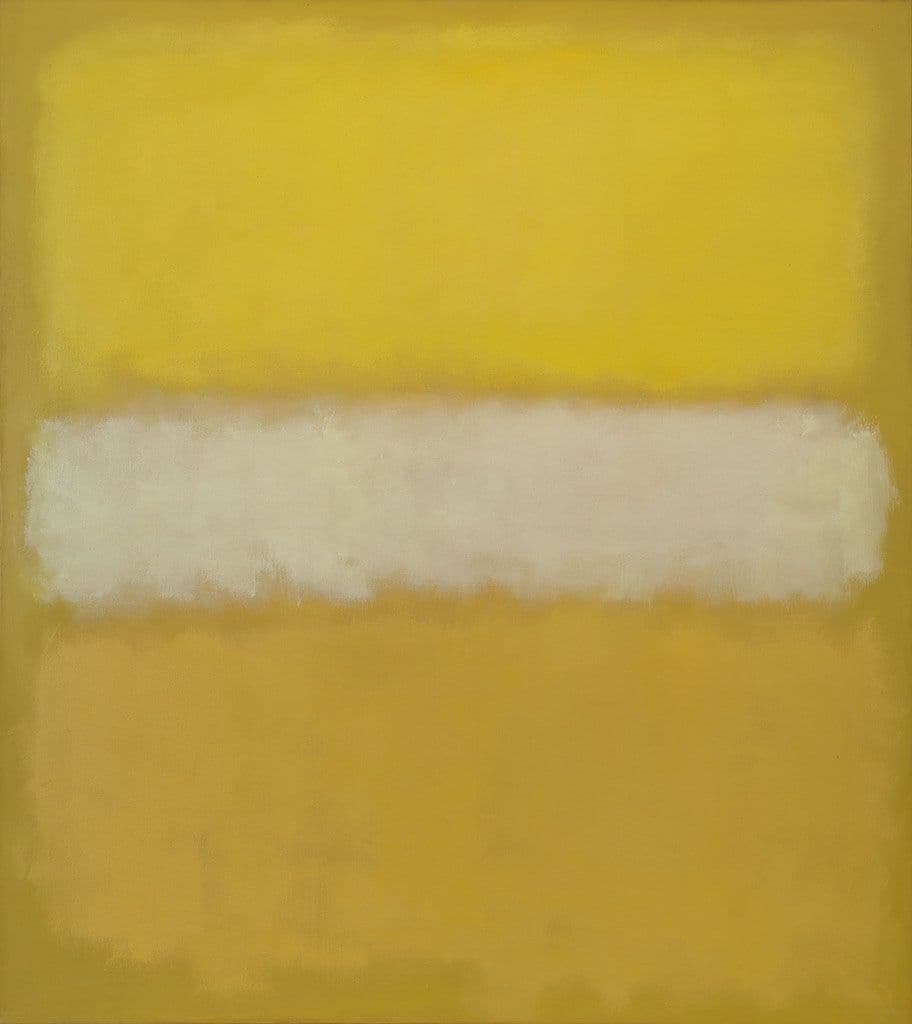
For a large, museum‑quality, well‑provenanced Mark Rothko No. 10 (1958) the market estimate is $100–150 million. This opinion is grounded in the 2015 Christie’s sale of this exact canvas ($81,925,000), inflation‑adjusted comparables and recent top‑end private sale activity; final placement within the band depends on confirmed condition, provenance and sale channel.
Valuation Analysis
Final estimate: $100–150 million (range reflects present market for a large, exhibition‑quality, fully documented 1958 No. 10).
This valuation is driven principally by direct comparable sales and current market signals. The single strongest datum is the 13 May 2015 Christie’s sale of the same 1958 No. 10 for $81,925,000, which establishes a concrete baseline for this canvas [1]. When that result is adjusted to current market conditions and viewed alongside the historical public‑auction benchmark Orange, Red, Yellow (1961) and other marquee Rothko outcomes, a contemporary market midpoint near the low‑six‑figure tens of millions is supported [2][3].
Recent private‑sale activity and single‑owner consignments show the top of the Rothko market can exceed public auction records: a press‑reported Christie’s‑brokered private sale in early 2024 was reported at roughly $100 million, demonstrating an off‑market ceiling above public auction highs and underscoring the importance of sale channel strategy [4]. Conversely, several high‑quality Rothkos have realized in the $60–85M band in public sale (including large 1950s–60s canvases), which explains the lower bound of the range and the observed dispersion among similar‑period works [5][6].
Value drivers: date (1958 = mature multiform period), scale (large canvases are far more valuable), condition (original surface, minimal invasive restoration) and provenance/exhibition history (catalogue‑raisonné listing, museum loans, publications) are the primary determinants of where the work will fall within the $100–150M band. If the work is confirmed as the same provenance/condition as the 2015 lot and presented fresh to a major evening sale or a targeted private campaign, expect valuation at or above the lower half of this band; pristine, museum‑documented examples with exceptional buyer competition can push toward the high end.
Risk factors: heavy restoration, relining, unresolved provenance gaps, or absence from recognized scholarship can materially reduce the value—potentially to the mid‑single‑digit or low‑double‑digit millions if multiple negative factors coexist. Technical imaging, pigment analysis and a formal conservation report are therefore prerequisites for conversion of this market opinion into a firm asking or reserve.
Recommendation: obtain (1) catalogue‑raisonné confirmation (Anfam), (2) complete high‑resolution photography and reverse/stretcher documentation, (3) a full condition/technical report, and (4) confidential estimates from senior specialists at Christie’s and Sotheby’s to select the optimal sale pathway (private sale vs. evening auction with/without guarantee). With those items in hand this opinion can be narrowed to a precise expectation and recommended listing strategy. [1][2][4]
Key Valuation Factors
Art Historical Significance
High ImpactMark Rothko's late 1950s canvases are central to his mature multiform practice and to the post‑war Color‑Field narrative; a large, well‑executed 1958 No. 10 sits squarely within the most sought‑after phase of his output. Works from this period are routinely selected for major retrospectives and catalogue essays, which increases institutional interest and collector competition. A No. 10 with documented exhibition and publication history will attract both museum and private buyers seeking canonical examples, translating directly into premium pricing and more competitive bidding dynamics at auction or stronger private offers.
Condition & Technical Integrity
High ImpactRothko paintings derive value from subtle surface qualities—thin veils, saturated color fields and delicate edges—so conservation history is a decisive factor. Relining, overpainting, heavy restorations or irreversible surface alterations materially depress market value; conversely, an original surface in stable condition supports top‑market prices. Technical exams (X‑ray/IR/Raman/pigment analysis) and a conservator's report are essential to confirm integrity and to quantify risk. Because buyers at the top end price condition risk into bids, even relatively minor conservation issues can swing realized price by tens of millions.
Provenance & Exhibition/Publication History
High ImpactUnbroken, documented provenance from the artist or reputable galleries and inclusion in the accepted catalogue raisonné (Anfam) or major exhibitions materially increase confidence and market value. Museum loans, catalogue entries and notable previous owners reduce buyer uncertainty and broaden the buyer pool to include institutions and blue‑chip collectors. Gaps, anonymous ownership periods, or unverified transfers introduce title or authenticity risk; those factors reduce demand and produce discounting. For a Rothko of this stature, strong provenance is often the single most important non‑physical value driver.
Market Comparables & Liquidity
High ImpactTop‑tier Rothko liquidity is concentrated: a small number of museum‑quality canvases transact at headline prices and often move privately or with guarantees. Public comparables (e.g., the 2015 sale of this No. 10 and the 2012 Orange/Red/Yellow benchmark) anchor expectations, while press‑reported private deals demonstrate an off‑hammer ceiling. Market variability between $60M and $110M+ for mature‑period canvases shows the importance of timing, sale channel and guarantee structures; sellers who optimize these variables can capture top‑end outcomes, while mis‑positioned lots face significant markdowns.
Sale History
Christie's New York
Christie's New York (Post‑War & Contemporary Evening Sale)
Sotheby's New York (The Macklowe Collection)
Christie's New York (Anne H. Bass collection)
Private sale brokered by Christie's (press‑reported)
Christie's New York (Weis collection)
Mark Rothko's Market
Mark Rothko is a blue‑chip, top‑tier post‑war artist whose large, mature‑period canvases command the highest prices in the Color‑Field segment. Public auction records and high‑value private transactions demonstrate sustained demand from museums, institutional buyers and ultra‑high‑net‑worth collectors. Because supply of museum‑quality Rothkos is extremely limited, single‑owner consignments and private sales (often brokered by major houses) have a disproportionate impact on headline pricing. Works on paper and smaller canvases have seen rising institutional interest, but the market’s core value remains concentrated in large 1950s–1960s canvases.
Comparable Sales
Orange, Red, Yellow (1961)
Mark Rothko
Iconic, large mature-period Rothko and the canonical public-auction benchmark (highest public record); similar scale and market significance.
$86.9M
2012, Christie's New York
~$122.5M adjusted
No. 10 (1958)
Mark Rothko
The same 1958 No. 10 sold in 2015 — the most direct and primary comparable (identical work/size/provenance).
$81.9M
2015, Christie's New York (Post‑War & Contemporary Evening Sale)
~$111.9M adjusted
No. 7 (1951)
Mark Rothko
Large, museum-quality Rothko sold in a high-profile single-owner sale (Macklowe); demonstrates strong market demand for marquee Rothkos.
$82.5M
2021, Sotheby's New York (The Macklowe Collection)
~$98.5M adjusted
Untitled (Shades of Red) (1961)
Mark Rothko
1961-period large canvas sold at a major house; similar period but realized a lower price — useful as a lower-bound comparable.
$66.8M
2022, Christie's New York (Anne H. Bass collection)
~$73.8M adjusted
Private sale reported (Rothko, reported No. 6, 1951)
Mark Rothko
Press-reported off-market transaction (reported >$100M) — indicates top-end private demand and price ceiling above public-auction records; treat as indicative, not public proof.
$100.0M
2024, Private sale (brokered by Christie's; press-reported)
~$103.0M adjusted
No. 31 (Yellow Stripe) (1958)
Mark Rothko
Another 1958 Rothko sold at auction in 2025; useful as a recent same-year comparable though it realized less than earlier marquee lots.
$62.2M
2025, Christie's New York (The Collection of Robert F. and Patricia G. Ross Weis)
Current Market Trends
The market for top‑quality Rothkos remains robust: marquee lots continue to attract strong buyer interest while many high‑value transactions now occur privately or with guarantees. After a mid‑cycle softening in 2023–24 the segment showed recovery in 2025–2026 around single‑owner estate sales and major exhibitions. Macro risks (rates, geopolitical uncertainty) add caution, but canonical Rothkos remain resilient as trophy assets with concentrated liquidity at the highest tier.
Sources
- Christie's — Mark Rothko, No. 10 (lot page)
- Christie's press release — 2015 Post‑War & Contemporary results
- Christie's press release — Orange, Red, Yellow (2012) sale
- CNBC — Press report on Christie’s‑brokered private Rothko sale (Feb 2024)
- Sotheby's — The Macklowe Collection press release (No. 7 sale, 2021)
- Christie's press release — No. 31 (Yellow Stripe) sale (Nov 2025)