Mark Rothko
Biography
Themes in Their Work
Most Expensive Mark Rothko Paintings
Explore ranked valuations of Mark Rothko's most valuable works →
Featured Artworks
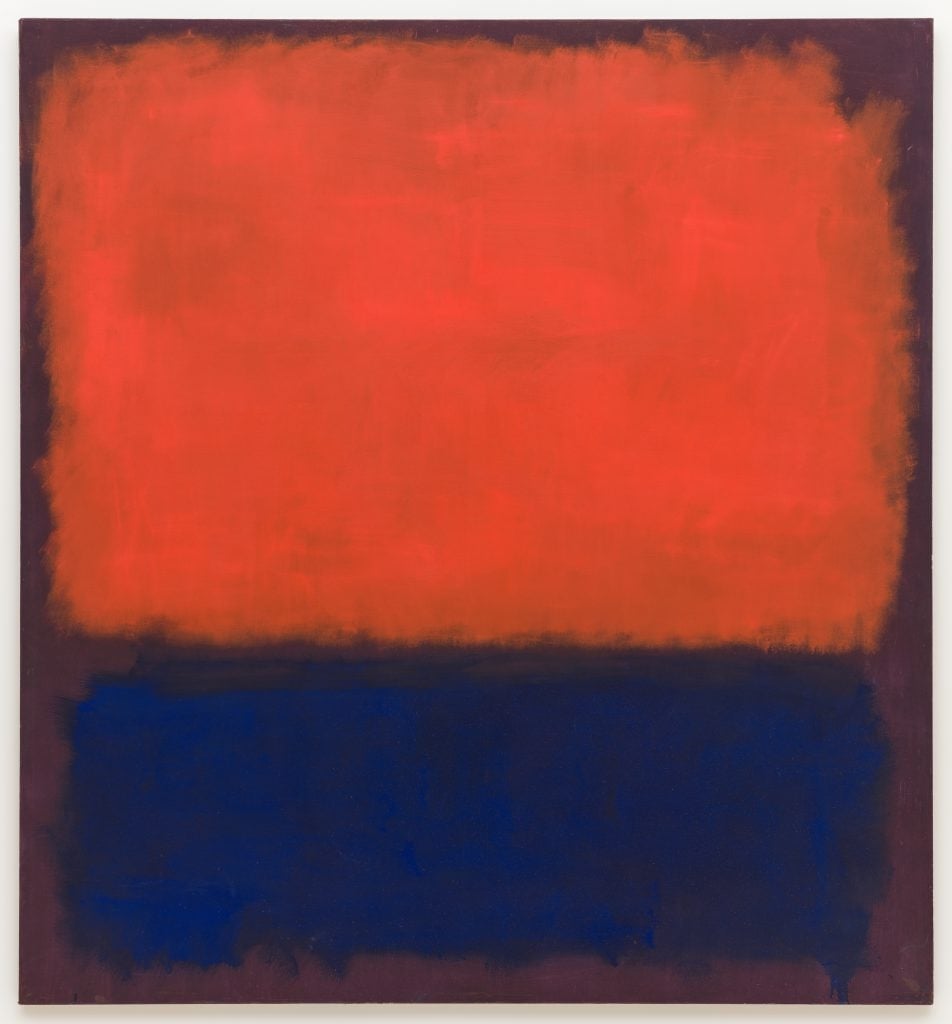
No. 14
Mark Rothko (1960)
In No. 14, 1960, Mark Rothko stages a charged encounter between a vast, <strong>ember-like red-orange</strong> plane and a weighty, <strong>indigo-blue</strong> band that nearly tips into black. The softly frayed borders and faint <strong>plum-violet</strong> surround cause the colors to hover and breathe, converting sheer scale and chroma into felt experience rather than depiction <sup>[1]</sup>.
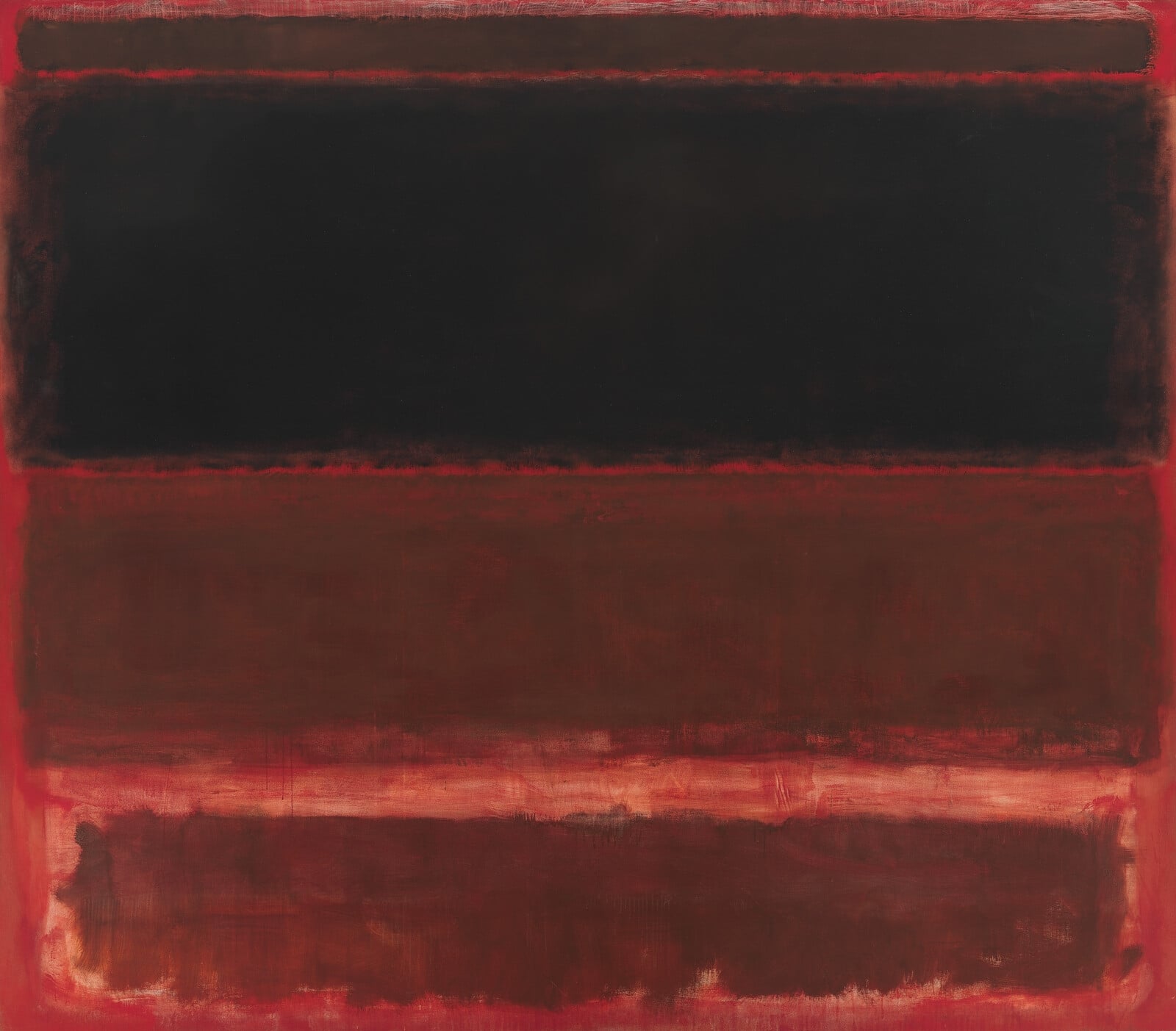
Four Darks in Red
Mark Rothko (1958)
Four Darks in Red stages four hovering bands within a smoldering red field to generate an <strong>immersive, solemn atmosphere</strong>. Thinly layered washes and feathered edges make the dark zones <strong>throb like thresholds</strong>, suspending viewers between weight and glow <sup>[1]</sup><sup>[4]</sup>. Painted in 1958 at monumental scale, it aligns with Rothko’s late‑’50s turn to wine‑dark, enclosing spaces <sup>[1]</sup><sup>[2]</sup>.
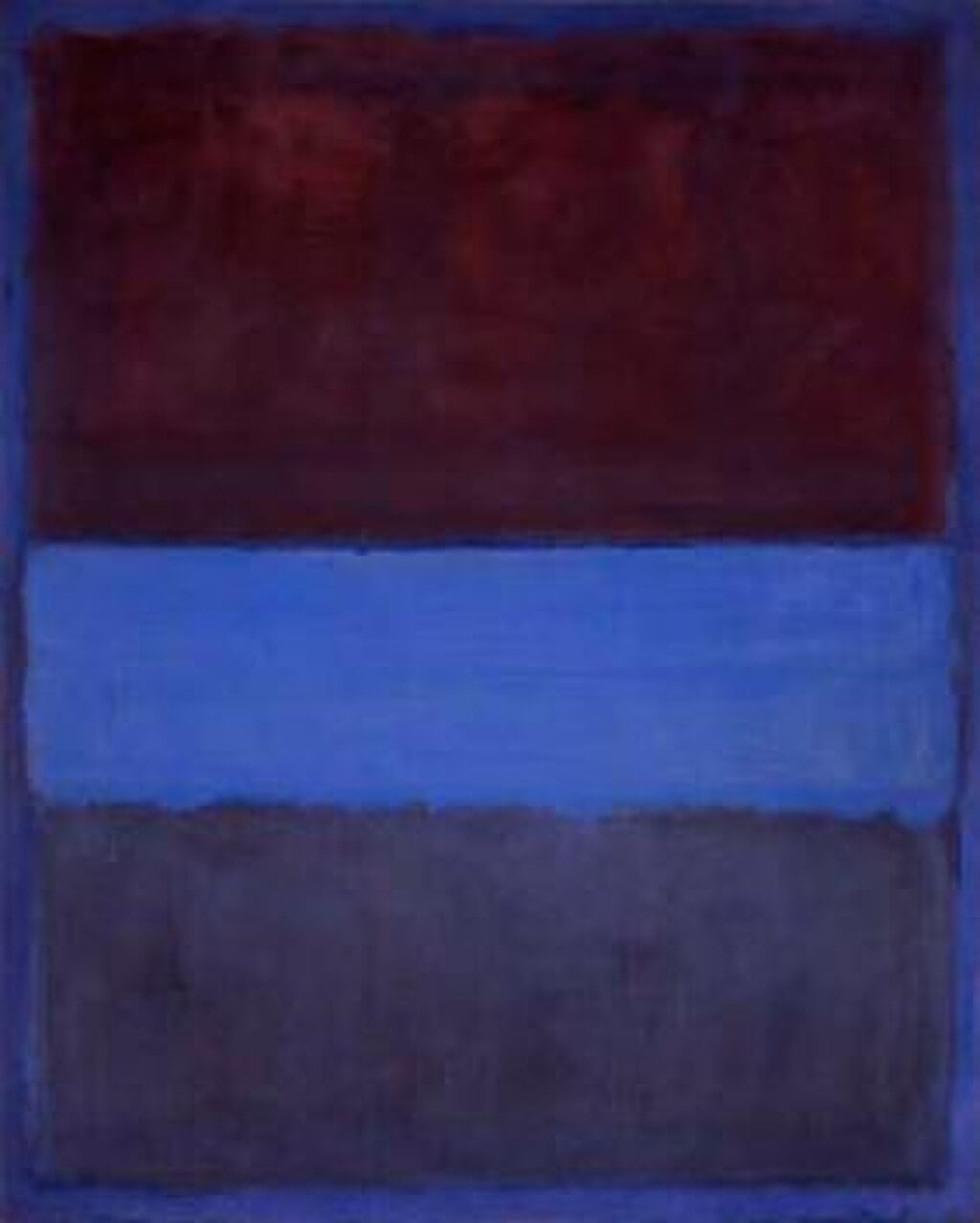
No. 61 (Rust and Blue)
Mark Rothko (1953)
<strong>No. 61 (Rust and Blue)</strong> (1953) stages three hovering color fields—rust, saturated blue, and indigo—within a deep blue perimeter. Through thin, layered oil and feathered borders, Mark Rothko turns color into a felt space where warmth and dusk meet, inviting a contemplative, immersive encounter <sup>[1]</sup><sup>[5]</sup>.
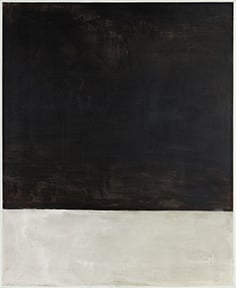
Untitled (Black on Grey)
Mark Rothko (1969–1970)
Mark Rothko’s Untitled (Black on Grey) compresses feeling into two stacked fields: a vast, softly modulated <strong>black</strong> pressing down upon a lower band of <strong>chalky grey</strong>, both ringed by a narrow white border. The blurred seam between them holds a charged <strong>threshold</strong> where descent and persistence meet <sup>[1]</sup><sup>[3]</sup><sup>[4]</sup>.