How Much Is Untitled (Black on Grey) Worth?
Last updated: May 11, 2026
Quick Facts
- Methodology
- comparable analysis
Hypothetical market value for Mark Rothko’s Untitled (Black on Grey), 1969–70 (203.3 × 175.5 cm), is USD 20–60M, with a most‑likely private/auction outcome in the USD 30–50M band. The work is museum‑held at the Solomon R. Guggenheim (gifted by The Mark Rothko Foundation), so this is a theoretical market valuation based on comparables and period adjustments.
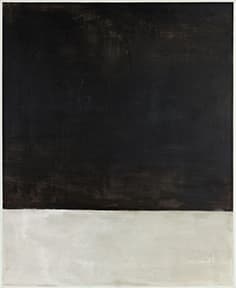
Untitled (Black on Grey)
Mark Rothko, 1969–1970 • Acrylic on canvas
Read full analysis of Untitled (Black on Grey) →Valuation Analysis
Valuation conclusion: Based on auction and private‑sale comparables for Rothko, adjusted for period (late 'black' works), scale (203.3 × 175.5 cm) and institutional provenance, I estimate a hypothetical market range of USD 20,000,000–60,000,000 (displayed as $20–60 million), with a most‑likely realizable outcome in the USD 30–50M band for a well‑marketed private placement or auction lot. The painting is accessioned to the Solomon R. Guggenheim (gift of The Mark Rothko Foundation, 1986) and therefore has no public sale history while in that collection [1].
Comparable evidence and market context: Rothko’s public auction record for peak mid‑1950s canvases ($86.9M Orange, Red, Yellow in 2012) establishes the market ceiling and confirms strong demand for museum‑quality Rothkos [2]. More recent headline sales and private placements (including high‑eight and nine‑figure private deals reported in the trade) show that top‑tier Rothkos can exceed public‑auction benchmarks, but these ceilings are primarily driven by mid‑1950s color‑field masterpieces and fresh‑to‑market, historically prominent canvases. Late‑period “Black on Gray” works, while art‑historically important, have typically realized lower prices than the 1950s color‑field masterpieces; comparables in the late‑period range have traded in the mid‑tens of millions to low‑double‑digit millions when they appear publicly. Against that backdrop, the Guggenheim canvas—large, with impeccable institutional provenance—fits squarely in the mid‑market band rather than at the market ceiling.
Work‑specific considerations: The painting’s dimensions (203.3 × 175.5 cm) are substantial and supportive of a higher valuation within the late‑period cohort; larger Rothkos generally command premiums. Museum provenance (gift from the Mark Rothko Foundation to the Guggenheim) strongly supports authenticity and scholarly value, which underwrites insurance and institutional interest, but it simultaneously means the work is effectively off‑market unless a rare deaccession occurs. Condition, conservation history, exhibition and publication record (catalogue raisonné entry, major loans) are key variables that could shift the estimate materially upward or downward; I have not reviewed a condition report or detailed exhibition history for this accessioned canvas [1].
Valuation rationale & recommendation: The range USD 20–60M reflects a comparable‑driven approach: lower bound for smaller/less exhibited/less desirable late works or those with condition/legal encumbrances; upper bound for a large, excellent‑condition, well‑published late Black on Grey with strong exhibition history and auction demand. The most likely outcome (USD 30–50M) assumes clean title, good condition, and active interest from blue‑chip collectors or institutions in a private placement or major auction. To refine this valuation to a formal appraisal, obtain a condition report, confirm catalogue raisonné status and exhibition history, and consult leading salesrooms (Christie’s/Sotheby’s) for private‑treaty interest and firm market testing.
Key Valuation Factors
Art Historical Significance
High ImpactMark Rothko’s late 'Black on Gray' canvases are central to scholarship of his final years and the emotional, reductive trajectory of his practice. The series is often featured in retrospectives and catalogue raisonnés and therefore carries strong academic and institutional weight. That scholarly importance supports robust museum valuation and institutional insurance norms, but in the secondary market these late works generally trade below the peak prices achieved by mid‑1950s color‑field masterpieces. The painting’s role in Rothko’s narrative elevates its cultural value even where commercial desirability is comparatively muted.
Provenance & Museum Ownership
High ImpactGifted to the Solomon R. Guggenheim by The Mark Rothko Foundation (accessioned 1986), the painting benefits from impeccable institutional provenance that strongly supports authenticity and scholarship. Museum ownership also reduces market supply and increases the work’s exhibition profile. Conversely, institutional holding usually places practical limits on marketability: deaccession is rare and regulated, so the accession record both elevates theoretical value and makes an actual transaction unlikely without exceptional circumstances.
Size, Condition & Physical Characteristics
High ImpactAt 203.3 × 175.5 cm the canvas is a substantial late‑period Rothko, which favors higher pricing within the late cohort. Condition and any conservation history are decisive: a pristine large canvas will attract competitive bidding or private offers, while visible damage, inpainting or structural issues materially depress value. Material (acrylic vs oil), stretcher history and framing also affect saleability and cost of restoration; an up‑to‑date condition report is required to firm the estimate.
Market Comparables & Price History
High ImpactPublic auction highs (e.g., Rothko’s 2012 and subsequent marquee sales) and recent private placements set the ceiling for the artist, but late‑period black works typically realize lower prices than peak‑period color fields. Comparable late works that have traded publicly or privately in recent years suggest mid‑single to low‑double digit million outcomes, with outliers at higher levels in confidential private deals. The valuation range reflects a discount to peak‑period benchmarks but recognises the premium conferred by size and museum provenance.
Sale Channel & Liquidity Risk
Medium ImpactThe channel—public auction versus private treaty—substantially affects price and certainty. Top Rothkos often move via private placement with guarantees, compressing public price discovery but enabling higher realized prices. Museum works face additional legal and ethical constraints on deaccession, limiting potential sellers and thus affecting liquidity. Geographic demand (North America, Europe, Asia) and buyer concentration among ultra‑high‑net‑worth collectors create both upside and volatility for trophy works.
Sale History
Untitled (Black on Grey) has never been sold at public auction.
Mark Rothko's Market
Mark Rothko is a blue‑chip postwar artist whose museum‑quality works command multi‑million and often multi‑tens‑of‑millions prices. Auction records for his mid‑1950s color‑field masterpieces set the market ceiling, while late‑period and early Multiform works trade at lower levels but remain highly sought after by institutions and major private collectors. Recent activity shows a mix of high‑visibility public sales and opaque private placements (including reported nine‑figure private transactions), which reinforces Rothko’s status as a top‑tier collectible whose realized price depends heavily on period, scale, provenance and sale channel.
Comparable Sales
Orange, Red, Yellow
Mark Rothko
Auction record for Rothko and a canonical mid‑period Color Field masterpiece; establishes the market ceiling for top Rothkos and helps bracket value for museum‑quality works.
$86.9M
2012, Christie's, New York
~$120.4M adjusted
No. 7 (1951)
Mark Rothko
High‑profile mid‑century Rothko sold in 2021; shows sustained demand for peak‑period works and provides a near‑term high benchmark versus late‑period black/gray canvases.
$82.5M
2021, Sotheby's, New York (The Macklowe Collection)
~$96.8M adjusted
Untitled (1960)
Mark Rothko
Later‑period Rothko (1960) sold publicly for $48M; closer in chronology to the Guggenheim Black‑on‑Gray series and therefore a useful market comparator for late/transition works.
$48.0M
2022, Sotheby's / New York (Macklowe Collection sale)
~$52.2M adjusted
Untitled (Yellow and Blue) (1954)
Mark Rothko
Regional sale (Asia) of a 1950s Rothko that demonstrates geographic demand and mid‑tier top‑market pricing; useful to gauge buyer pools and pricing for significant but non‑record works.
$32.5M
2024, Sotheby's, Hong Kong
~$32.9M adjusted
Confidential Rothko (reported private sale)
Mark Rothko
Reported private placement in early 2024 in excess of $100M; indicates private‑market ceiling and the opacity of top‑end placements—useful as an indicative ceiling but not a verifiable public benchmark.
$100.0M
2024, Christie's (private placement reported by CNBC)
~$101.3M adjusted
Current Market Trends
The Rothko and blue‑chip postwar markets are selective: top museum‑quality works attract strong demand and can outperform the broader market, while mid‑market lots are more price‑sensitive. Private sales and guaranteed placements have increased, reducing public transparency but often raising realized ceilings. Major retrospectives and institutional activity continue to support long‑term interest in canonical works.
Study print
Study this painting as a print
Pair the full artwork with a museum-style study sheet focused on one meaningful detail.
Sources
- Solomon R. Guggenheim Museum — collection entry: Mark Rothko, Untitled (Black on Gray), 1969–70
- Christie's — Press/release and result for 'Orange, Red, Yellow' (2012) — public auction benchmark
- Sotheby’s — No. 7 (1951) / Macklowe Collection sale (2021) — sale details and press
- CNBC — reporting on Christie’s confidential private Rothko sale (reported >$100M, Feb 29, 2024)