How Much Is Orange, Red, Yellow Worth?
Last updated: May 11, 2026
Quick Facts
- Last Sale
- $86.9M (2012, Christie's New York (Post‑War & Contemporary Art Evening Sale))
- Methodology
- comparable analysis
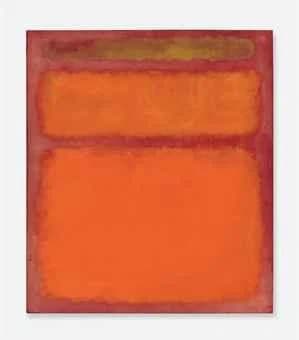
Anchored to the confirmed Christie’s 2012 public sale (final $86,882,500) and validated against later high‑end Rothko results, I place the current market value of Mark Rothko’s Orange, Red, Yellow (1961) at $85–$130M. The band reflects the 2012 anchor adjusted for inflation and market movement, with upward potential for pristine condition and leading provenance and downside risk for conservation issues or weak documentation.
Valuation Analysis
Valuation conclusion: Using the Christie’s 2012 sale as the primary transactional anchor, and testing that anchor against subsequent high‑end Rothko comparables, I value Mark Rothko’s Orange, Red, Yellow (1961) today at $85,000,000–$130,000,000. The lower bound reflects market discounting for any significant conservation issues or imperfect provenance; the upper bound reflects inflationary re‑pricing of the 2012 result combined with premiums paid for museum‑quality late‑1950s/early‑1960s multiforms.
The Christie’s lot (Lot 20, 8 May 2012) and the house’s post‑sale report supply the factual sale record and the primary anchor for this estimate [1][2]. That single public sale (final with premium $86,882,500) is decisive because identical works are rarely offered; where they are, the 2012 result sets buyer expectations. Subsequent high‑profile Rothko sales (for example, large canvases from the Macklowe dispersal and other evening‑sale results) confirm continued appetite for canonical works while demonstrating price dispersion driven by date, scale, condition and provenance [3].
Key adjustments applied to the anchor include a measured inflation/market re‑pricing of the 2012 final price toward the current market environment, a conservatively applied premium for exemplary provenance/exhibition history and catalogue‑raisonné confirmation, and potential discounts for any evidence of extensive restoration, relining, or non‑original surface alterations. Logistics (size, framing, shipping) and the painting's exhibitionability (museum loan potential) are also important: large, well‑documented works that can anchor exhibitions typically command higher multiples. Conversely, contested provenance, liens or export complications substantially reduce marketability.
Practical next steps: before any transactional commitment, obtain a full condition and conservation report, high‑resolution photography (front/back/edges/stretcher) and the complete provenance and catalogue‑raisonné documentation. With those materials, a major auction house will provide a formal written estimate and sale strategy; institutions and high‑net‑worth private collectors will respond differently to a work presented with robust scholarship and clean conservation history. The $85M–$130M band is actionable: expect realizations toward the top of the range for pristine, museum‑quality examples with leading provenance; expect outcomes nearer the bottom if there are material conservation or documentation issues.
Key Valuation Factors
Art Historical Significance
High ImpactOrange, Red, Yellow (1961) is a canonical example of Rothko's mature multiform period. Created at the height of his color‑field practice, works of this date are central to Rothko scholarship and museum collections and are widely accepted as among his most important outputs. That art‑historical status produces a durable collector base that prizes these canvases for both aesthetic and institutional acquisition purposes. Because such pieces define Rothko’s market identity, they attract deep competition among museums, blue‑chip private collectors, and major dealers when they appear for sale — a dynamic that supports premium pricing relative to earlier or less definitive works.
Provenance & Exhibition History
High ImpactProvenance for this painting is strong in the public record: gallery representation by Marlborough (Marlborough‑Gerson/Marlborough Fine Art), long‑term private ownership (acquired 1967) and consignment from the Estate of David Pincus to Christie’s in 2012. Documented museum loans and catalogue‑raisonné entries significantly increase buyer confidence and price realization. A work with clean, continuous provenance and inclusion in major exhibitions or scholarship will routinely command a premium, whereas gaps, disputed ownership, or unresolved restitution claims materially impair marketability and can reduce value by a substantial percentage of the estimate.
Condition & Conservation
High ImpactSurface condition is a decisive value driver for Rothko canvases, where thin veils of pigment and delicate layering can be altered by relinings, cleaning, inpainting or earlier restorations. A pristine original surface with only conservation‑grade interventions preserves maximum market value. Significant interventions (major relining, extensive retouching, visible overcleaning or flaking) introduce buyer risk and typically produce steep discounts versus comparable examples in original condition. A current, professional conservation report that details any treatments, stability and imagery is essential to substantiate the top of the valuation band.
Market Liquidity & Comparative Sales
Medium ImpactRothko’s top‑tier works sell infrequently, which both increases scarcity value and yields volatile realized outcomes when prime examples become available. The 2012 Christie’s result anchors value for this exact painting, while later major sales (Macklowe canvases, Anne H. Bass works, etc.) show sustained demand but notable dispersion by date and scale. Liquidity is strong for museum‑quality works at marquee evening sales, provided the seller times the market and supports sales with scholarship and loan prospects. For less distinguished examples, liquidity and price are materially lower.
Scale & Visual Impact
Medium ImpactAt approximately 93 × 81¼ inches, the work is large and has the immersive presence that institutions and serious private collectors prize. Size and visual impact typically command a premium because they suit major exhibition contexts and deliver the full experiential effect Rothko intended. The trade‑off is higher handling, shipping and insurance costs and sometimes more limited private buyership due to installation constraints. Overall, the scale is a positive commercial attribute that supports prices toward the top of the band when combined with excellent condition and provenance.
Sale History
Christie's New York (Post‑War & Contemporary Art Evening Sale)
Mark Rothko's Market
Mark Rothko is a blue‑chip figure of post‑war American art whose mature multiforms are among the most sought‑after works in the market. Auction records for Rothko place him consistently among the top tier of post‑war artists; museum demand is high, supply of prime canvases is limited, and leading examples trade infrequently but at high levels. Variability in realized prices is driven primarily by date (late‑1950s/early‑1960s works are most prized), scale, provenance, and condition. Institutional interest, high net worth private buyers and international collectors sustain one of the stronger markets within 20th‑century art.
Comparable Sales
Orange, Red, Yellow
Mark Rothko
Exact subject — definitive auction record and primary anchor for valuation (final price including premium $86,882,500); strong provenance (Estate of David Pincus) and catalogue entry.
$86.9M
2012, Christie's New York (Post‑War & Contemporary Art Evening Sale)
~$120.3M adjusted
No. 7
Mark Rothko
High‑profile, large‑scale Rothko from the Macklowe Collection sold in 2021; demonstrates sustained demand for top‑tier Rothkos and provides a close market benchmark.
$82.5M
2021, Sotheby's New York (The Macklowe Collection)
~$96.8M adjusted
Untitled (1960) — from The Macklowe Collection
Mark Rothko
Same artist and similar period (c.1960); realized substantially less than top‑tier canvases — useful to show price dispersion by scale/condition/provenance.
$48.0M
2022, Sotheby's New York
~$52.2M adjusted
Untitled (1952)
Mark Rothko
Large mid‑career Rothko sold at auction in 2014; close enough in period and scale to be a relevant benchmark though it sold below the subject's 2012 result.
$66.2M
2014, Christie's New York (Post‑War & Contemporary Art Evening Sale)
~$89.0M adjusted
Untitled (Shades of Red) — from the Anne H. Bass collection
Mark Rothko
High‑quality Rothko multiform from a major private collection sold in 2022; a recent market benchmark for large Color Field works.
$66.8M
2022, Christie's New York (Anne H. Bass sale)
~$72.6M adjusted
Current Market Trends
The high‑end market for canonical post‑war works remains selective but resilient. Institutions remain active acquirers of museum‑quality masterpieces, while private buyers compete in major evening sales. Economic headwinds and liquidity cycles produce intermittent softness, but blue‑chip scarcity and exhibition value continue to support strong pricing for top examples. For Rothko, demand concentrates on pristine, well‑provenanced 1958–1962 multiforms; these works typically outperform lesser or more ambiguous pieces.
Sources
- Christie's lot page — Orange, Red, Yellow (1961), Lot 20 (8 May 2012)
- Christie's post‑sale results — Post‑War & Contemporary Art Evening Sale, May 2012 (sale results PDF)
- Sotheby's — The Macklowe Collection (high‑profile Rothko comparables: 2021–2022 auctions)
- Christie's press release and coverage of subsequent Rothko evening‑sale results (example: 2014 and later high‑end sales)
- BBC News coverage of the 2012 Christie’s sale