How Much Is The Weeping Woman Worth?
Last updated: February 8, 2026
Quick Facts
- Methodology
- comparable analysis
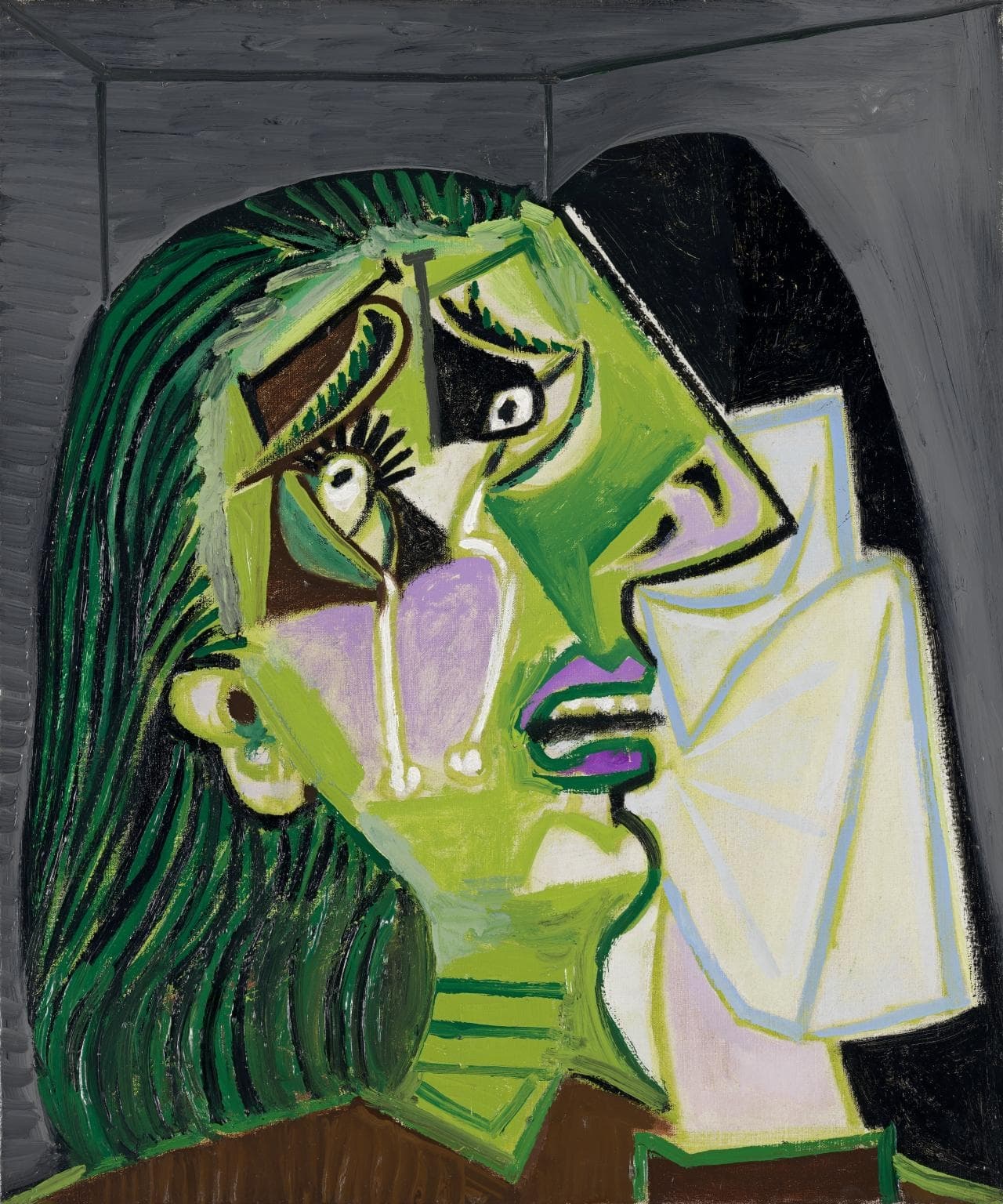
Hypothetical market valuation for Picasso’s The Weeping Woman (1937, NGV): $120–180 million. Its direct connection to the Guernica cycle, iconic Dora Maar subject, and museum-grade stature position it at the very top of Picasso’s market, with plausible upside in a trophy-driven contest.
Valuation Analysis
Estimated value (hypothetical): $120–180 million. Picasso’s The Weeping Woman (1937, NGV) is a canonical image from the Guernica cycle, embodying the artist’s searing response to the Spanish Civil War and crystallizing the Dora Maar iconography that defines his late-1930s output. The NGV version is among the most reproduced iterations of this motif and enjoys blue-chip institutional provenance, high scholarly profile, and exceptional cultural visibility—all factors that concentrate demand at the very top end of the market [1].
Comparable benchmarks anchor the range. Picasso’s recent nine-figure results for 1932 Marie-Thérèse masterpieces—$139.4m for Femme à la montre (2023) [2] and $103.4m for Femme assise près d’une fenêtre (2021)—demonstrate the current market ceiling for blue-chip Picassos. The artist’s auction record, $179.4m for Les femmes d’Alger (Version “O”) (2015), remains a critical reference point for trophy-level competition [3]. Works directly tied to Guernica possess rarer historical weight than most Dora portraits, warranting a bracket that approaches the artist’s record in the right circumstances.
Rarity and competitive dynamics support nine-figure pricing. High-caliber Guernica-related oils are exceptionally scarce in private hands; most reside in museums. If a museum-quality Weeping Woman ever surfaced, it would likely catalyze intense bidding from UHNW collectors and institutions seeking a cornerstone of 20th-century art. This scarcity premium compounds the work’s already powerful subject, date, and art-historical relevance, justifying a $120–180m range with potential upside under trophy-market dynamics.
Provenance, condition, and notoriety amplify value. The NGV acquired the painting in 1986; the work was famously stolen and swiftly recovered that year, a saga that cemented its public profile. Contemporary reporting noted the piece was uninsured at the time due to prohibitive costs, underscoring perceived value even then [4]. Museum stewardship typically implies exemplary care; pristine or excellent condition would support the upper end of the range. The painting’s compact format is typical for the series and does not diminish demand for late-1937 oils connected to Guernica.
Market context: While Picasso’s auction activity softened in 2024 amid thinner trophy supply, buyer appetite for historically decisive works remains deep and global. Category data show selectivity in mid-tier lots, but outlier demand for canonical masterpieces continues to clear at premium levels when offered freshly and with top-tier provenance [5]. Against this backdrop, a museum-grade Weeping Woman stands as a prime candidate to test the high nine-figure zone and potentially challenge the artist’s all-time record in a trophy-driven bidding war.
Key Valuation Factors
Art Historical Significance
High ImpactThe Weeping Woman motif is the definitive postscript to Guernica and one of the most intensely studied images in Picasso’s oeuvre. Painted in late 1937 and centered on Dora Maar, it distills the anguish and political urgency of the Spanish Civil War. Its proximity to Guernica elevates it beyond a conventional portrait: it is a keystone image of 20th-century modernism and a fixture in global art history curricula, exhibitions, and scholarship. That unique status places it in the “major work” tier where demand is deepest and price sensitivity is lowest, especially for museum-caliber examples.
Rarity and Competitive Dynamics
High ImpactTop-tier Guernica-related oils are vanishingly scarce in private hands; the most important examples are already in museums. This structural scarcity creates an acute competition premium. Should a museum-grade Weeping Woman reach the market, bidding would likely include leading private collectors and institutions seeking an anchor for their 20th-century holdings. Such dynamics have historically propelled Picasso’s masterpieces into the nine-figure range. The limited supply and oversized demand combine to justify pricing that approaches, and in the right moment could exceed, the artist’s auction record.
Provenance, Visibility, and Notoriety
Medium-high ImpactInstitutional ownership by the NGV provides unimpeachable provenance and a robust exhibition and publication record. The 1986 theft and swift recovery imprinted the painting in the public imagination, enhancing global recognition. While notoriety alone does not set price, visibility is a meaningful amplifier for already-great works: it broadens the buyer pool, strengthens the narrative at auction, and can nudge bidding higher by signaling cultural importance. Combined with museum stewardship, these factors support confidence at the top of the estimated range.
Market Comparables and Price Anchors
High ImpactRecent nine-figure Picasso outcomes for 1932 Marie-Thérèse masterpieces and the standing $179.4m artist record provide clear anchors for a Weeping Woman valuation. While subject and date differ, Guernica-linked works carry exceptional art-historical weight that can rival or surpass more decorative or romantic periods in the right sale context. The $120–180m bracket triangulates these benchmarks with the painting’s significance and scarcity; a heated contest could push toward the artist’s record given the caliber and cultural centrality of the work.
Sale History
Private acquisition by NGV (via The Art Foundation of Victoria)
Acquisition widely reported at c.A$1.6m (≈US$1.07m in 1986 terms); later famously stolen and recovered in 1986.
Pablo Picasso's Market
Pablo Picasso is a perennial market leader with one of the deepest global buyer pools. His auction record stands at $179.4 million for Les femmes d’Alger (Version “O”) (2015), and he continues to achieve nine-figure results for blue-chip masterpieces, notably the 1932 Marie-Thérèse series ($103.4m in 2021; $139.4m in 2023). Demand is highly stratified: canonical subjects and key dates command steep premiums, while mid-tier works can face selectivity. Despite cyclical softness in parts of the Modern category, Picasso’s most important paintings remain among the most liquid and globally coveted trophies, supported by broad institutional engagement and sustained scholarly attention.
Comparable Sales
Dora Maar au Chat
Pablo Picasso
Same artist; peak Dora Maar portrait in oil; museum‑tier icon that signals top-end demand for Dora subjects, though not directly tied to the Guernica cycle.
$95.2M
2006, Sotheby's New York
~$151.0M adjusted
Femme au béret rouge-orange
Pablo Picasso
Same artist; Dora Maar portrait painted in 1938—immediately following the 1937 Weeping Woman cycle; similar intimate bust format and scale.
$40.5M
2021, Sotheby's Las Vegas (Bellagio)
~$47.8M adjusted
Bust of a Woman with a Flowered Hat (Dora Maar)
Pablo Picasso
Same artist; Dora Maar portrait (1943) in oil; recent European benchmark for later Dora portraits, providing current-market depth for the subject.
$37.0M
2025, Drouot, Paris
Buste de femme (Dora Maar, 1944)
Pablo Picasso
Same artist; Dora Maar portrait (1944) in oil; demonstrates active Asia demand and price level for strong Dora works in 2025.
$25.3M
2025, Christie's Hong Kong
Femme à la montre
Pablo Picasso
Same artist; 1932 Marie‑Thérèse masterpiece and recent nine‑figure benchmark that reflects current trophy‑level Picasso demand (different subject but key market anchor).
$139.4M
2023, Sotheby's New York
~$146.2M adjusted
Femme assise près d’une fenêtre (Marie‑Thérèse)
Pablo Picasso
Same artist; 1932 Marie‑Thérèse icon that achieved nine figures; provides a second, recent high‑end benchmark for Picasso’s blue‑chip market ceiling.
$103.4M
2021, Christie's New York
~$122.8M adjusted
Current Market Trends
Modern market volumes have cycled lower in recent years amid thinner trophy supply and greater buyer selectivity, but the very top of the market remains resilient. In 2024, Picasso’s auction activity softened versus 2023’s outlier highs; however, nine-figure appetite persists for canonical works with perfect provenance and exhibition histories. Buyers continue to prioritize art-historical centrality over period breadth, rewarding masterpieces with deep literature, institutional pedigree, and cultural resonance. Against this backdrop, a museum-grade Guernica-related Picasso is precisely the type of work that can reactivate trophy-level competition and clear at the high end of estimates.
Study print
Study this painting as a print
Pair the full artwork with a museum-style study sheet focused on one meaningful detail.
Sources
- NGV Collection: Picasso, The Weeping Woman (1937)
- Sotheby’s: Emily Fisher Landau—Femme à la montre (Picasso) sells for $139.36m (2023)
- CNBC: Picasso sets auction record at $179.4m for Les femmes d’Alger (2015)
- ABC News: The Weeping Woman theft and acquisition price context
- Artnet News: 2024 artist auction rankings and Picasso’s softer year