How Much Is A Man with an Axe (L'Homme à la hache) Worth?
Last updated: May 4, 2026
Quick Facts
- Last Sale
- $40.3M (2006, Christie's New York)
- Methodology
- comparable analysis
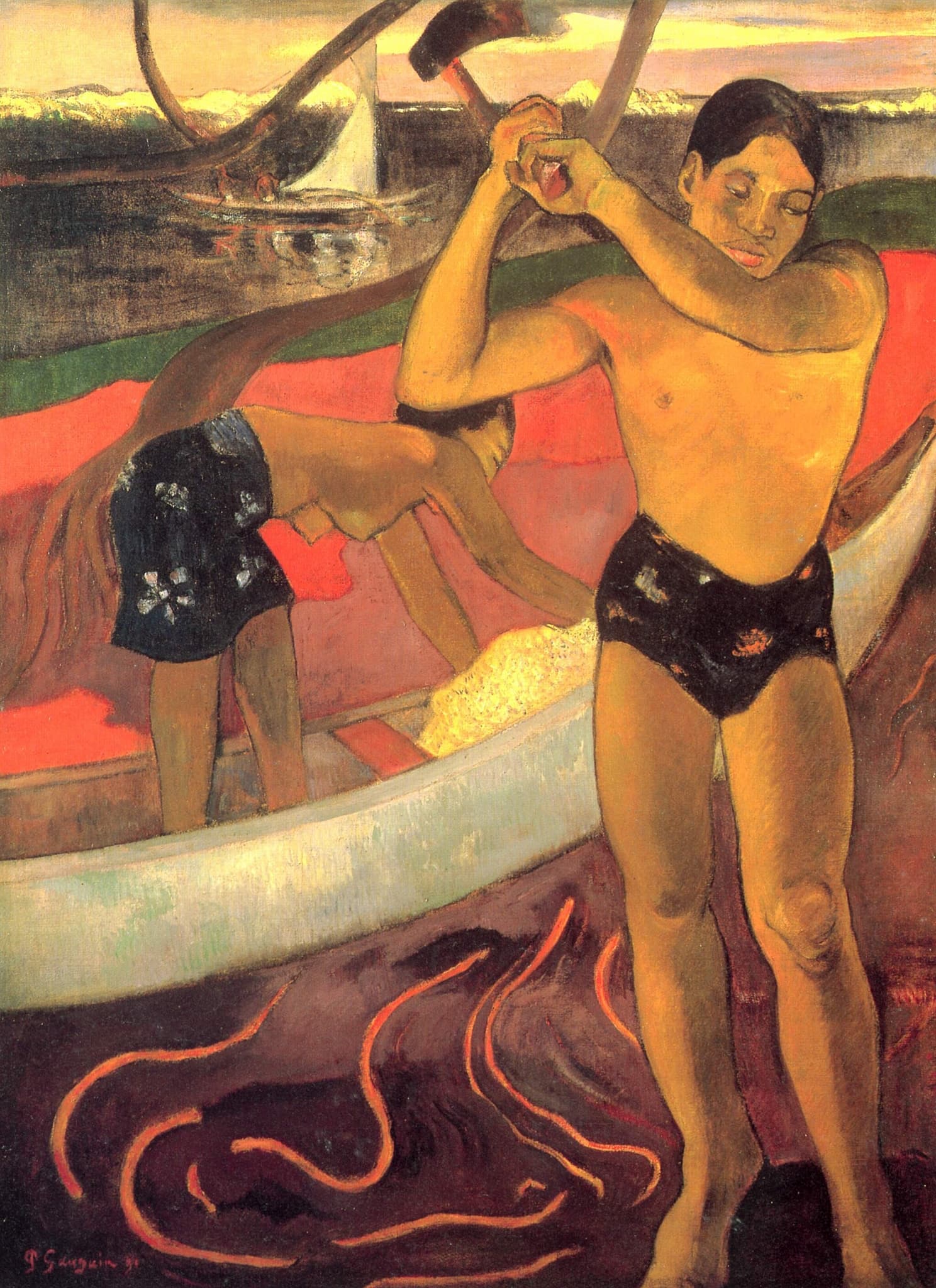
Anchored to the documented Christie’s New York sale on 8 November 2006 (US$40,336,000), this valuation uses inflation adjustment and recent top‑end Gauguin comparables to place L'Homme à la hache at approximately US$60–85M in today’s market, assuming no serious condition or title issues. A clean museum‑quality provenance and excellent condition would justify the upper band; major conservation or legal problems would push value materially lower.
Valuation Analysis
Basis and anchor: The primary market datum for L'Homme à la hache is the Christie’s New York evening sale on 8 November 2006, where the lot realised a reported sale total of US$40,336,000 [1]. That realised price is the most direct, public anchor for valuation. Adjusting that result for inflation and for the demonstrable appreciation in demand for high‑quality Gauguin Tahitian works provides the baseline range reported below.
Method and adjustments: I begin with the 2006 realised figure, apply standard US CPI inflation adjustment to present dollars (the 2006 result inflates to roughly US$60–65M in 2024/25 terms), and then calibrate upwards or downwards using recent artist‑level comps and market dynamics. The 2022 Christie’s sale of Maternité II and other high‑profile transactions demonstrate that top Gauguin Tahitian paintings can command substantially higher sums; however only a small subset of works reach 8–9 figure levels [2]. For L'Homme à la hache, which is a mature and well documented Tahitian composition but not usually catalogued among the handful of canonical masterpieces, a conservative marketed band of US$60–85M best reflects realistic buyer interest in a major sale window [1][2].
Key conditional variables: Provenance integrity, exhibition and catalogue history, and the painting's present physical condition are decisive. A continuous museum‑quality provenance and clean technical report push the estimate toward the top of the range; significant restoration, relining, or unresolved title claims reduce marketability and could lower realised price by tens of millions. Confirmed catalogue raisonné citations, documented loans to major exhibitions, and high‑resolution technical imaging all materially increase buyer confidence and price realization [3].
Sales strategy and marketability: Given the painting's public sale history, the optimal route to maximize value is a high‑profile evening sale at a premier international house with scholarly catalogue entry and targeted institutional outreach. A timed private sale to a strategic collector or institution is an alternative if confidentiality and speed are priorities. Pre‑sale exhibition loans, a current condition report, and proactive provenance documentation will materially improve the outcome.
Next steps to firm price: obtain a full condition/conservation report, assemble all provenance and exhibition documentation, secure catalogue raisonné confirmation, and seek pre‑sale estimates from the Impressionist & Modern specialists at Christie’s and Sotheby’s. With that material I can refine this band to a single figure and recommend an explicit marketing plan and reserve guidance [1][2][3].
Key Valuation Factors
Art Historical Significance
High ImpactL'Homme à la hache is a mature Gauguin from his Tahitian period (c.1891), a corpus that carries strong scholarly and collecting interest. While not usually listed among the handful of canonical images reproduced as the artist's single greatest masterpieces, it is a well documented composition that appears in catalogues and associated studies. That level of art historical anchoring elevates buyer confidence above lesser studio or workshop pieces. The painting's stylistic clarity, subject matter and date place it squarely within the segment of Gauguin's oeuvre that collectors prize most highly, which materially increases its market potency vis-à-vis undistinguished works.
Provenance & Exhibition History
High ImpactProvenance is a top driver of value for this painting. Early ownership by dealer Ambroise Vollard and a documented chain into prominent private collections provide a strong provenance backbone; the work's appearance in authoritative catalogues and selective exhibition records further reinforces market trust. A continuous, well-documented ownership history and loans to museum exhibitions will push the price toward the upper end of the range. Conversely, gaps in provenance, undocumented transfers or recent owners who cannot provide clear title will significantly deter institutional buyers and reduce competitive bidding.
Condition & Conservation
High ImpactCondition is among the single largest determinants of realised price. Original, stable paint layers, minimal inpainting, and a sympathetic conservation history sustain strong value. By contrast, extensive overpainting, aggressive relining, patching, or discoloration from old varnish treatments can depress value sharply. Technical imaging, IR and X-radiography and a conservator's report are needed to quantify impact; minor retouches are common and manageable, but major structural interventions will materially reduce collector confidence and the likely competitive bidding field.
Market Comparables & Recent Sales
High ImpactThe 2006 Christie�s sale (US$40.336M) is the definitive comparable for this exact painting and, when inflation adjusted, forms the base of this valuation. Recent top‑end results for Gauguin's Tahitian paintings (notably Maternité II in 2022) demonstrate that best-in-class works can reprice the ceiling for the market, but only a small number of works achieve that premium. The painting's own realized 2006 price plus the trajectory of premium Gauguins justify a multi‑tens‑of‑millions band today; precise positioning within that band depends on the other factors above.
Legal, Title & Marketability Risks
Medium ImpactTitle clarity and the absence of restitution claims are essential for high-value sale. Works with contested provenance or with gaps in ownership prior to World War II or in jurisdictions with complex export rules invite legal scrutiny and can chill the bidding. Even unresolved minor title questions may force private sale channels or heavy conditional warranties, reducing price. Export restrictions, tax implications for sellers and provenance-related litigation risks must be cleared prior to a high-profile offering to preserve the painting's full market value.
Sale History
Christie's New York, Impressionist & Modern Evening Sale
Paul Gauguin's Market
Paul Gauguin occupies a top tier in the late 19th‑century market: his Tahitian paintings are among the most sought after of Post‑Impressionism. The market is concentrated and selective; while many works trade in the multi‑million range, a small group of museum‑quality masterpieces produce blockbuster results in the tens and occasionally hundreds of millions. Auction and private sale demand is sustained by museums and wealthy private collectors with a strong appetite for canonical Tahitian compositions, making authenticated and well‑provenanced Gauguins highly liquid at the top end.
Comparable Sales
L'Homme à la hache (A Man with an Axe)
Paul Gauguin
Direct prior auction result for the same painting (fresh-to-market 2006 sale) — the primary market anchor for valuation.
$40.3M
2006, Christie's New York
~$63.0M adjusted
Maternité II
Paul Gauguin
High‑profile evening‑sale result for a major Gauguin Tahitian work (Paul Allen sale) — establishes current top‑end demand for museum‑quality Tahitian paintings.
$105.7M
2022, Christie's New York
~$113.8M adjusted
Nafea faa ipoipo (When Will You Marry?)
Paul Gauguin
Iconic, canonical Gauguin Tahitian masterpiece and the highest‑reported private sale — functions as a ceiling for the market for the artist's most important works.
$300.0M
2014, Private sale (widely reported)
~$399.4M adjusted
Current Market Trends
High-end market conditions remain favorable for museum-quality works by canonical artists; demand concentrates on a small number of exceptional works. Macro volatility can dampen mid-tier interest, but the top of the market for blue-chip 19th-century masters remains robust, as recent high-profile Gauguin and Impressionist results demonstrate. Timing, sale venue and presentation (catalogue scholarship and institutional loan history) are decisive in converting theoretical value into realised price.