How Much Is Maternité II Worth?
Last updated: May 4, 2026
Quick Facts
- Last Sale
- $105.7M (2022, Christie's New York (Visionary: The Paul G. Allen Collection))
- Methodology
- recent sale
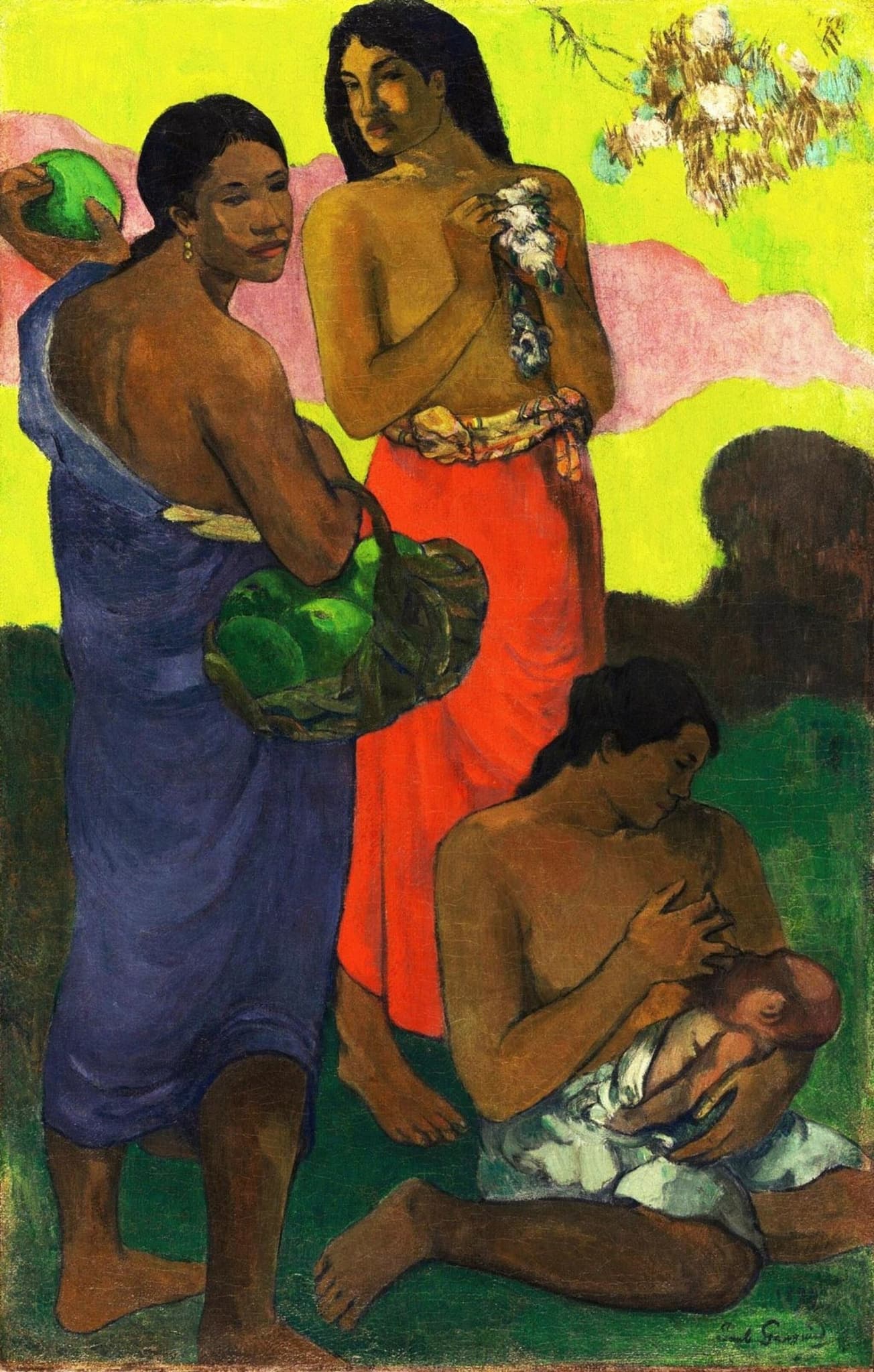
Anchored to the executed public sale of Maternité II at Christie’s New York (9 Nov 2022) for $105,730,000, the defensible present‑day market estimate for the painting is $100–150 million. The range reflects the 2022 realized price as the primary anchor, with upward or downward movement tied to sale format, condition (burlap support), provenance/exhibition packaging, and current buyer appetite.
Valuation Analysis
This valuation is anchored to the executed public sale of Paul Gauguin’s Maternité II (1899) at Christie’s New York on 9 November 2022, which realized $105,730,000 — the primary market datum for this canvas [1]. That result demonstrates clear, competitive demand for a museum‑quality late‑period Gauguin with exceptional provenance and a significant exhibition/publication record. Using the 2022 sale as the principal anchor, I place a present‑day market estimate for Maternité II at $100–150 million, a range intended to capture likely outcomes under differing transactional scenarios.
The painting’s earlier public sale at Sotheby’s in 2004 (≈$39.2M) documents long‑term appreciation and confirms the work’s traceable provenance through distinguished collections, a major factor in its 2022 revaluation [2]. The dramatic step‑up between 2004 and 2022 reflects cumulative scholarly and market recognition, plus the effects of single‑owner evening‑sale dynamics and buyer competition. For valuation purposes the 2022 price functions as the baseline; adjustments within the $100–150M band account for sale format (evening vs. private placement), guarantees, marketing/exhibition plans, and buyer depth.
Upward movement toward or above the top of the stated range would require additive, verifiable drivers: an impeccable technical condition report (especially a stable burlap support), fresh catalogue‑level scholarship or major retrospective loan commitments, or a sale executed in optimal auction conditions with broad international bidding. Conversely, any unresolved conservation issues, gaps in provenance, or a sale outside peak auction weeks would exert meaningful downward pressure and can materially reduce realized value.
Market context since 2022 shows continued resilience at the ultra‑high end for rare, iconic works even as broader market turnover has softened. Maternité II benefits from extreme scarcity of comparable late‑period Gauguins that combine size, subject, provenance and publication. The recommended commercial approach to maximize value is an evening single‑owner or marquee house sale with a pre‑sale institutional loan/exhibition strategy and, if needed, a guarantee structure to attract competitive bidding. A private placement can achieve a premium in select circumstances but typically requires a targeted buyer and confidentiality.
In short: the executed 2022 Christie's result is the defensible anchor; absent negative conservation or provenance developments the $100–150M range is a reasoned present‑day market valuation. To tighten this range to a single point estimate, obtain a full technical/condition report, assemble the complete provenance/exhibition dossier, and engage leading houses to test buyer demand and likely sale format.
Key Valuation Factors
Art Historical Significance
High ImpactMaternité II sits within Gauguin’s mature late‑19th‑century Tahitian/Marquesan production and exemplifies themes—maternity, symbolic color fields and primitivist composition—that are central to his critical reputation. While not as universally iconic by title as Where Do We Come From?, the work’s date, scale and pictorial quality place it among the artist’s stronger late works. That art‑historical standing raises buyer and institutional interest, improves loanability to major retrospectives, and materially supports a high valuation. Scholarly acceptance and inclusion in catalogues raisonnés amplify market confidence and reduce attribution risk, both of which have strong positive price effects.
Provenance & Exhibition History
High ImpactThe painting’s provenance chain—documented ownership from Gauguin’s estate through notable collectors and leading 20th‑century collections, culminating in the Paul G. Allen single‑owner sale—substantially elevates its market standing. A well‑documented exhibition and publication record (catalogue essays, museum loans) further reduces buyer risk and increases competitive demand. Provenance of this quality directly supported the 2022 nine‑figure result and is a decisive value driver for top‑tier collectors and museums; gaps or contested ownership would, conversely, impose significant downward pressure.
Condition & Technical Considerations (burlap support)
Medium ImpactLate Gauguins are often on non‑standard supports (burlap, coarse canvas); technical stability of that support is critical. A stable original burlap in good condition will not materially detract; by contrast, an unstable or extensively restored burlap support, significant relining, or aggressive overpainting can materially reduce market value. Technical analyses (X‑ray, IRR, pigment testing) that confirm period materials and acceptable conservation history preserve buyer confidence. For top‑end lots, outstanding condition can be worth a double‑digit percentage premium; poor condition can cut value by a similar or larger margin.
Comparables & Auction Evidence
High ImpactThe executed $105.73M Christie's sale (Nov 2022) of this same canvas is the primary comparable and market anchor. The 2004 Sotheby’s result (~$39.2M) shows sustained appreciation and provenance continuity. Broader comparables—mid‑tier Gauguin canvases and recent institutional buys in the $8–12M band—illustrate the discrete tiers within the market. The jump from 2004 to 2022 underscores the outsized effect that single‑owner evening sales and concentrated marketing can have; thus, auction context and house strategy are vital to realize the upper portion of the range.
Rarity & Buyer Demand
High ImpactHigh‑quality late‑period Gauguin canvases that combine scale, condition, and flawless provenance are exceptionally rare at auction. This scarcity creates a concentrated buyer set—museums, ultra‑high‑net‑worth collectors, and sovereign funds—able to drive competitive bidding. Rarity interacts with provenance and exhibition packaging to create the conditions for nine‑figure outcomes. Shifts in buyer geography/interest can influence timing and venue but do not diminish the underlying scarcity premium for works of this caliber.
Sale History
Christie's New York (Visionary: The Paul G. Allen Collection)
Sotheby's New York (Impressionist & Modern Art)
Private sale (reported)
National Gallery of Australia (institutional acquisition)
Paul Gauguin's Market
Paul Gauguin is a blue‑chip Post‑Impressionist whose top‑tier Tahitian and Marquesan canvases command the strongest prices in his market. The artist’s auction ceiling was publicly reset by the 2022 Christie’s sale of Maternité II; private‑sale ceilings for his absolute masterpieces are higher but less transparent. Gauguin’s market is bifurcated: a narrow, highly competitive upper tier for museum‑quality canvases and a broader mid‑market for drawings, smaller oils and works on paper. Provenance, publication and institutional interest are decisive value drivers across that spectrum.
Comparable Sales
Maternité II
Paul Gauguin
Executed public sale of the same work — highest-quality, single-owner evening sale and the primary market anchor for valuing this canvas.
$105.7M
2022, Christie's New York (Visionary: The Paul G. Allen Collection, Nov 9, 2022)
~$114.9M adjusted
Maternité II
Paul Gauguin
Earlier public sale of the same canvas — shows historic provenance continuity and long-term price appreciation for this specific work.
$39.2M
2004, Sotheby's New York (Impressionist & Modern Art, Nov 4, 2004)
~$66.0M adjusted
Nafea Faa Ipoipo (When Will You Marry?)
Paul Gauguin
Top-tier Tahitian masterpiece by Gauguin; provides a private-market ceiling for the artist's most important Tahitian works (reported figure is contested and not a public auction result).
$210.0M
2015, Private sale (widely reported, 2015)
~$281.9M adjusted
Still life (Vollard-restituted group)
Paul Gauguin
Representative mid-tier public auction result for a catalogue-quality Gauguin (still life from the Vollard-restituted group); useful to gauge demand for strong but non-masterpiece works.
$10.4M
2023, Sotheby's New York (May 2023)
~$10.8M adjusted
Farm at Le Pouldu (The Blue Roof)
Paul Gauguin
Recent institutional purchase of a representative Gauguin canvas (~mid-market); demonstrates museum demand in the high single‑digit / low double‑digit million band.
$9.8M
2024, National Gallery of Australia (institutional acquisition, Aug 1, 2024)
~$9.9M adjusted
Current Market Trends
Since the 2022 record sale the ultra‑high end for rare masterpieces has shown resilience even as total auction turnover softened. Collectors have become more selective; institutions and deep‑pocketed private buyers remain the primary demand sources for blue‑chip Gauguin works. Auction houses increasingly deploy guarantees, single‑owner packages and targeted regional marketing to secure competitive outcomes. In this environment, impeccable provenance, condition and exhibition plans are essential to capture top‑tier pricing.