How Much Is Te Pape Nave Nave (Delectable Waters) Worth?
Last updated: May 4, 2026
Quick Facts
- Methodology
- comparable analysis
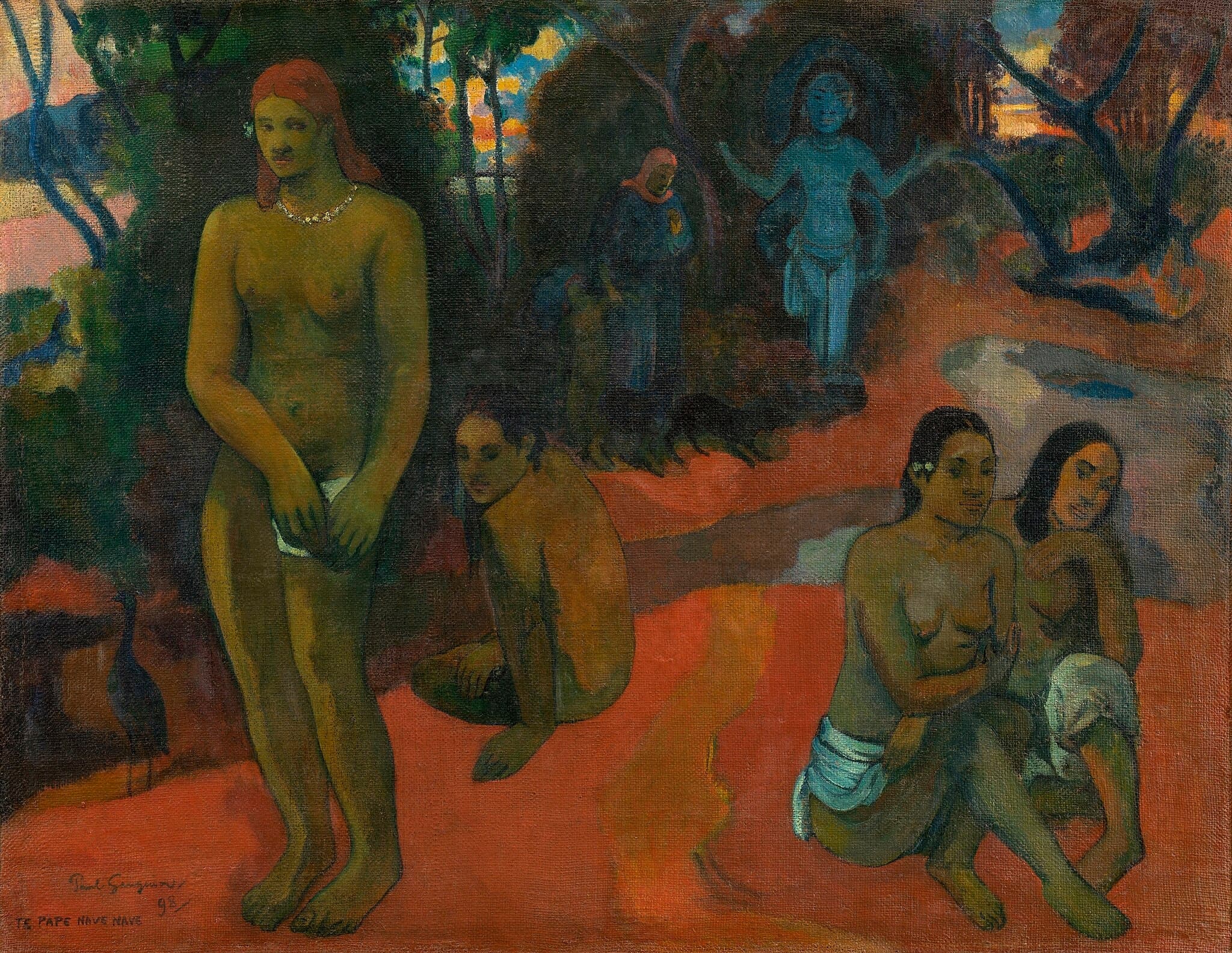
Te Pape Nave Nave (Delectable Waters), 1898 (oil on canvas, 74 × 95.3 cm), is a securely provenanced, museum‑held Gauguin (NGA accession 1973.68.2). Using comparables and provenance weighting, a realistic public‑auction range is USD 15–45 million; a competitive private sale or institutional acquisition could push above this band, while condition or market weakness could lower realized price.
Valuation Analysis
Overview: This valuation concerns Paul Gauguin’s Te Pape Nave Nave (Delectable Waters), 1898, oil on canvas, 74 × 95.3 cm, accession no. 1973.68.2, in the National Gallery of Art collection. The NGA catalogue documents autograph attribution, a continuous provenance (Bernheim‑Jeune → Wildenstein → Block → Paul Mellon → gift to NGA), and multiple exhibition and bibliography entries — all strong positive indicators for market recognition and desirability [1]. Because the work is museum‑held there is no modern public auction record, so valuation relies on market comparables, institutional precedent and the work’s confirmed provenance.
Comparables & market context: The contemporary auction ceiling for Gauguin was re‑set by highly publicized trophy sales (notably Maternité II, 1899, realizing US$105.73M at Christie’s in Nov 2022), which establishes a private‑sale and trophy benchmark for the artist’s finest Tahitian canvases [2]. By contrast, medium‑sized, well‑provenanced Tahitian canvases commonly trade in the low‑ to mid‑teens of millions at public auction: a recent relevant datapoint is Te Bourao (II) (1897–98), which realized ~€9.12M (≈ US$10.5M) at Artcurial in April 2025 [3]. These datapoints create a practical public‑auction band for Te Pape Nave Nave in the mid‑teens to mid‑tens of millions, with upside in private or institutional contexts.
Methodology & weighting: I used a comparable_analysis approach, weighting (a) the painting’s museum provenance and literature (strong positive), (b) its scale and autograph status (medium‑high positive), and (c) recent auction comparables for late‑Tahitian works (market anchor). Because the NGA provenance materially reduces provenance risk, the work should sit above poorly documented examples but below the small set of canonical, museum‑defining masterpieces that command trophy prices. That produces the indicated USD 15,000,000–45,000,000 public‑auction range.
Upside / downside scenarios & recommendations: Upside arises from competitive private sale conditions or institutional bidding where provenance and scholarship are highly valued. Downside arises from previously undocumented condition issues, contested attribution, or market softness at sale time. Reputational and contextual discussions about Gauguin’s subject matter may affect institutional demand for certain loans or acquisitions. Practical next steps: obtain NGA conservation/condition report, confirm the Wildenstein/Plattner catalogue entry, and solicit presale estimates from major houses (Sotheby’s/Christie’s/Phillips). This assessment is indicative and not a formal appraisal; engage qualified auction specialists or licensed appraisers for transaction‑grade valuation.
Key Valuation Factors
Art Historical Significance
High ImpactTe Pape Nave Nave dates to Gauguin’s late Tahitian period (1898), a phase central to his mature style and to market demand. Its inclusion in literature and exhibition histories elevates its scholarly profile and buyer interest. While not among the handful of world‑famous single masterpieces, it represents the period and subject matter that collectors and institutions prioritize, supporting robust institutional interest and competitive private‑sale potential. This degree of historical significance is a primary driver of the painting’s valuation and places it well above undocumented studio variants.
Provenance & Exhibition History
High ImpactThe painting’s documented provenance (Bernheim‑Jeune → Wildenstein → Block collection → Paul Mellon → National Gallery of Art) materially reduces title and attribution risk and substantially supports market confidence. Long exhibition presence and literature citations further validate authenticity and marketability. Museum ownership normally removes a work from short‑term market circulation, but when such works do come up they command premium attention from institutions and high‑net‑worth collectors because provenance mitigates buyer due diligence friction, shortening the path to purchase and supporting higher realizations.
Condition & Conservation
High ImpactCondition is a critical value determinant: structural stability, original paint surface, conservation history and any retouching materially affect both auction and insurance valuation. The NGA custodial record typically implies professional conservation oversight, which is positive, but an up‑to‑date, detailed condition report (including IRR/X‑ray) is essential to confirm surface integrity and restoration history. Significant conservation issues would reduce the estimate substantially; conversely, excellent condition can validate top‑end realizations within the stated range.
Comparable Sales & Auction Record
High ImpactRecent auction and private‑sale comparables establish both a market ceiling and a more typical realized range. The 2022 Christie’s Maternité II sale set a trophy ceiling for Gauguin, while medium‑sized Tahitian canvases have traded in the low‑ to mid‑teens at public auction (e.g., Artcurial 2025 Te Bourao II). Auction volatility and the distinction between public and private sales mean comparables must be applied with care; provenance and exhibition pedigree are used to adjust comparable results upward in this case.
Market & Reputational Risk
Medium ImpactMarket dynamics for Gauguin are bifurcated: trophy works remain highly sought while mid‑market demand is more price‑sensitive. Public debates about Gauguin’s colonial conduct and portrayals in Tahiti can influence institutional appetite and the framing required for museum acquisitions or loans. These cultural and reputational factors may narrow the pool of institutional buyers but can increase scholarly interest—both of which affect market timing and achievable sale channels.
Sale History
Te Pape Nave Nave (Delectable Waters) has never been sold at public auction.
Paul Gauguin's Market
Paul Gauguin occupies a top‑tier position among Post‑Impressionist painters: his late Tahitian works are highly collectible, historically important, and occasionally achieve trophy prices. Auction records and high‑profile private sales (notably the 2022 public auction record) demonstrate strong demand at the upper end, while a broader market of collectors supports reliable mid‑market activity for well‑provenanced canvases. The market is selective and benefits strongly from provenance, exhibition history, and condition.
Comparable Sales
Maternité II (1899)
Paul Gauguin
Same artist and late‑Tahitian period; museum‑quality, auction record that establishes the contemporary ceiling for top Gauguin Tahitian canvases.
$105.7M
2022, Christie's New York (Evening sale)
~$115.6M adjusted
L'Homme à la hache / Man with an Axe
Paul Gauguin
Important pre‑2022 auction high for Gauguin; useful historical mid‑to‑upper‑market comparable (shows what top works achieved before the recent trophy‑sale reset).
$40.3M
2006, Christie's New York (reported 2006 sale)
~$64.0M adjusted
Nafea Faa Ipoipo (When Will You Marry?)
Paul Gauguin
Most famous Tahitian masterpiece and the principal private‑sale outlier; demonstrates private‑market ceiling but is disputed/confidential—useful for upper‑end context, not a reliable public auction benchmark.
$210.0M
2014, Reported private sale (widely reported figure; confidential/private transaction)
~$283.9M adjusted
Te Bourao (II) (1897–98)
Paul Gauguin
Recent, directly comparable Tahitian‑period canvas sold at public auction; similar date/subject and a good mid‑market datapoint for medium‑sized Tahitian works.
$10.5M
2025, Artcurial, Paris (April 2025, hammer in EUR converted to USD)
Current Market Trends
The current market is bifurcated: trophy masterpieces of Gauguin remain highly valued and can set record prices, while mid‑market works face greater price sensitivity and occasional softening. Private sales have grown in prominence for high‑value works, and institutional interest remains a key demand driver for museum‑quality examples.