How Much Is Sleeping Girl Worth?
Last updated: June 26, 2026
Quick Facts
- Last Sale
- $44.9M (2012, Sotheby's New York)
- Methodology
- comparable analysis
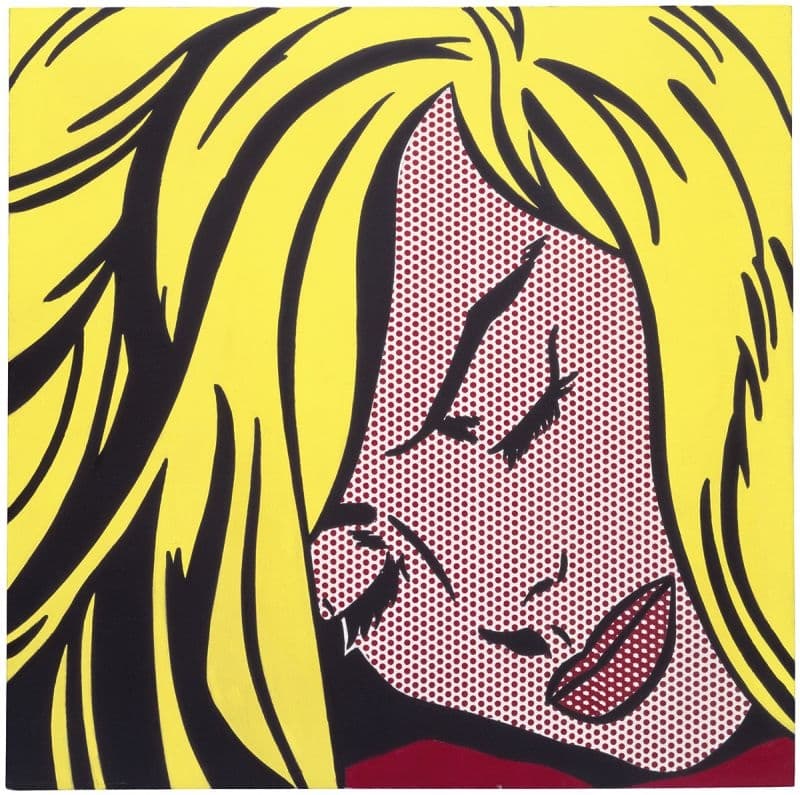
Anchored to the confirmed 9 May 2012 Sotheby’s sale (RLCR 968) and triangulated against later trophy Lichtenstein results, I estimate Sleeping Girl (1964) at $50–95 million. The low end reflects adverse condition/provenance or weak sale conditions; the high end represents a trophy outcome under pristine condition, exceptional marketing and institutional competition.
Valuation Analysis
Valuation conclusion: Based on the painting’s canonical catalogue‑raisonné entry (RLCR 968) and the documented Sotheby’s New York hammer on 9 May 2012 for $44,882,500 [2], I estimate a present market range of $50,000,000 to $95,000,000 for Sleeping Girl (1964). This valuation is a comparable_analysis anchored to the confirmed 2012 sale and adjusted for subsequent high‑end market movement among canonical mid‑1960s Lichtenstein paintings [1][2].
Methodology: The appraisal uses the 2012 public sale as the primary anchor, then triangulates with later headline auction results and reported private sales to define a realistic ceiling and plausible floor. The 2012 hammer, adjusted for inflation and market change, equates roughly to the low‑to‑mid‑tens of millions in today’s dollars and provides a conservative baseline; recent trophy sales (e.g., Nurse) and comparable Girl portraits establish the market ceiling and justify the upper bound of this range [2][3][4]. I applied scenario adjustments for condition, provenance, scale and sale channel to produce a market‑ready range.
Rationale for the range: The floor ($50M) assumes negative contingencies—noticeable restoration, ambiguous provenance, or sale in a weak market context—any of which can materially depress realized value. The mid‑band ($60–80M) reflects a well‑provenanced, museum‑quality Sleeping Girl with clean surface and conventional marketing at a major evening sale; this aligns with an inflation‑adjusted expectation above the 2012 hammer. The ceiling ($95M) is attainable only under optimal conditions—pristine original surface, outstanding exhibition/publication history, white‑glove marketing and competing institutional/private bidders—consistent with the artist’s highest auction and private‑sale outcomes [3].
Adjustments, risks and sale strategy: Condition and provenance are the dominant adjustment levers. Significant repainting, inpainting visible in normal viewing, or unresolved title issues can cut value meaningfully; conversely, a documented studio history, long single‑owner provenance (Ferus/Castelli/Gersh) and entries in exhibition catalogues lift buyer confidence and command premium pricing [1]. For sale, I recommend an evening Contemporary/20th‑Century sale at a top house with pre‑sale institutional outreach, or a targeted private sale to an institution—ideally timed to coincide with major Lichtenstein retrospectives or foundation placements to maximize competitive bidding and achieve the high end of the range [5].
Required next steps: To convert this market range into a transaction‑grade appraisal, provide high‑resolution recto/verso images, an up‑to‑date condition/conservation report, full documented provenance and exhibition/publication citations. With those materials I will produce a calibrated estimate and a recommended sale pathway (evening auction with guarantee vs. private treaty) that reflects the painting’s exact condition and market positioning.
Key Valuation Factors
Art Historical Significance
High ImpactSleeping Girl is a canonical mid‑1960s example from Lichtenstein’s celebrated 'Girl' / romance comics series and is catalogued as RLCR 968. The painting embodies the artist’s hallmark formal vocabulary—hand‑applied Ben Day imitation, bold contour, and pop iconography—produced at the height of his market and critical ascent. Works from this period are the most sought after by major museums and blue‑chip collectors because they represent the most influential phase of Lichtenstein’s career. That historical importance materially supports a premium in the secondary market: canonical 1964 paintings routinely command the strongest competitive bidding and form the basis for the high end of the valuation range.
Provenance & Exhibition History
High ImpactDocumented provenance is a major value driver. Sleeping Girl’s chain—Ferus Gallery/Leo Castelli to Beatrice and Philip Gersh (1964) and subsequent long‑term private ownership—is a market‑positive attribute that reduces title risk and appeals to institutional buyers. Confirmed exhibition and publication history (early gallery shows and later museum loans/catalogues) elevates scholarly profile and liquidity. A well‑documented single‑owner history and catalogue raisonné entry typically add a substantial premium versus similar works lacking that certification, often bridging the gap between a sound mid‑market result and a trophy realization.
Condition & Conservation
High ImpactCondition is decisive for Lichtenstein paintings because the aesthetic relies on crisp edges, flat color fields and dot technique. Original, unrestored surfaces with stable paint and no intrusive inpainting command top prices. Conversely, heavy restoration, visible retouching, or structural issues (relined canvas, unstable ground) can materially reduce value—commonly 20–50% depending on severity. A current, independent conservation report (UV/IR imaging, varnish and paint layer analysis) is a prerequisite for high‑value sale and will be referenced by buyers and institutions during underwriting and acquisition deliberations.
Size & Rarity
Medium ImpactSleeping Girl’s documented dimensions (36 × 36 in.) place it in a moderate scale relative to the largest Lichtenstein trophies. While the Girl series contains multiple related compositions, rarity is determined by the combination of canonical date, condition, and provenance rather than size alone. Larger, singular compositions and unique early examples often reach higher ceilings; a well‑provenanced moderate‑scale canvas will still attract strong buyer interest but typically trades below the largest, most iconic canvases. Size and uniqueness therefore contribute a medium upward or downward adjustment within the overall range.
Market Liquidity / Demand
High ImpactLichtenstein is a blue‑chip name with an active institutional and private buyer base; museum‑quality mid‑1960s paintings are highly liquid at the top end. Auction evidence shows a bifurcated market: canonical pieces with clean provenance sell quickly and often exceed estimates, while lesser examples and prints are more price‑sensitive. The presence of a major retrospective or foundation placement can markedly increase buyer competition and realized prices. Thus, market liquidity and contemporaneous institutional interest are powerful determinants of final sale outcome.
Sale History
Sotheby's New York (Contemporary Art Evening Sale)
Christie's New York
Christie's New York
Private sale (reported)
Roy Lichtenstein's Market
Roy Lichtenstein is a blue‑chip post‑war and contemporary artist whose mid‑1960s comic‑image and 'Girl' paintings drive the strongest collector and institutional demand. Headline records (Nurse, auction record; reported private sales above public ceilings) show a two‑tiered market—robust trophy pricing at the top and greater selectivity in the mid‑market. Provenance, condition and exhibition history determine where any single work sits within this spectrum; museum‑quality canvases remain highly sought after and generally resilient in desirable market windows.
Comparable Sales
Sleeping Girl (1964)
Roy Lichtenstein
Same work — canonical 1964 'Girl' series painting; museum‑quality provenance (Gersh collection); the primary public-market data point for valuing Sleeping Girl.
$44.9M
2012, Sotheby's New York
~$63.0M adjusted
Woman with Flowered Hat (1963)
Roy Lichtenstein
Same artist and period (early‑1960s 'Girl'/portrait/comic series); similar subject and canonical status — sold shortly after Sleeping Girl and surpassed it as an artist record, indicating strong demand for Girl portraits.
$56.1M
2013, Christie's New York
~$77.6M adjusted
Nurse (1964)
Roy Lichtenstein
Iconic 1964 comic‑book painting from the same peak period — set the artist's auction record and demonstrates the top of the public auction ceiling for canonical mid‑1960s Lichtensteins.
$95.4M
2015, Christie's New York
~$129.8M adjusted
White Brushstroke I (1965)
Roy Lichtenstein
Same decade but from the Brushstrokes series rather than the 'Girl'/comic portraits — useful to show the lower band for high‑quality mid‑1960s works that are less central to the Girl/comic canon.
$25.4M
2020, Sotheby's New York
~$31.7M adjusted
Masterpiece (1962) — reported private sale
Roy Lichtenstein
Major reported private transaction of an early masterpiece (often cited in market commentary); while not an auction comparable, it establishes a private‑market ceiling and demonstrates buyer willingness at the very top.
$165.0M
2017, Private sale (reported)
~$217.1M adjusted
Current Market Trends
As of mid‑2026 the high end of the post‑war/contemporary market is resilient: top works by blue‑chip artists capture most buying power while the mid‑market remains cautious. Auction houses use guarantees and targeted private sales to secure major lots. Institutional retrospectives and foundation placements continue to act as catalysts, so timing a sale to coincide with museum interest materially improves outcomes.
Sources
- Roy Lichtenstein Catalogue Raisonné — entry for Sleeping Girl (RLCR 968)
- Sotheby's — Contemporary Art Evening Sale, New York, 9 May 2012 — Lot 16: Sleeping Girl
- Bloomberg — Coverage of Lichtenstein's 'Nurse' auction record (Nov 2015)
- Christie's — Post‑War and Contemporary Art sale coverage (Woman with Flowered Hat, 2013)
- Art Basel & UBS Global Art Market / auction season reporting — market context and institutional catalysts