Most Expensive Roy Lichtenstein Paintings
Roy Lichtenstein’s canvases occupy a rarefied corner of the contemporary-art market, where comic-strip bravado and rigorous formal control translate into intense collector demand and stratospheric price tags: at the summit stands Masterpiece, estimated between $175–225 million, while marquee works such as Whaam! ($50–150 million), Nurse ($95–135 million) and Woman with Flowered Hat ($70–120 million) routinely anchor blue-chip sales. What makes Lichtenstein collectible is not only his iconic Ben-Day dots and bold graphic vocabulary but the way those elements codify an era—Pop’s collision of mass media, irony and painterly craft—into visually arresting, instantly recognizable objects. Rarity and provenance magnify that appeal; paintings like Sleeping Girl ($50–95 million), Look Mickey ($30–80 million) and Ohhh...Alright... ($50–80 million) are prized because they are both emblematic and scarce. Even works with wider estimated ranges—Drowning Girl ($30–70 million), I Can See the Whole Room...and There's Nobody in It! ($35–75 million) and In the Car ($15–40 million)—draw institutional interest and competitive bidding, ensuring Lichtenstein’s market standing remains robust and his images continue to define the visual language of 20th-century art.
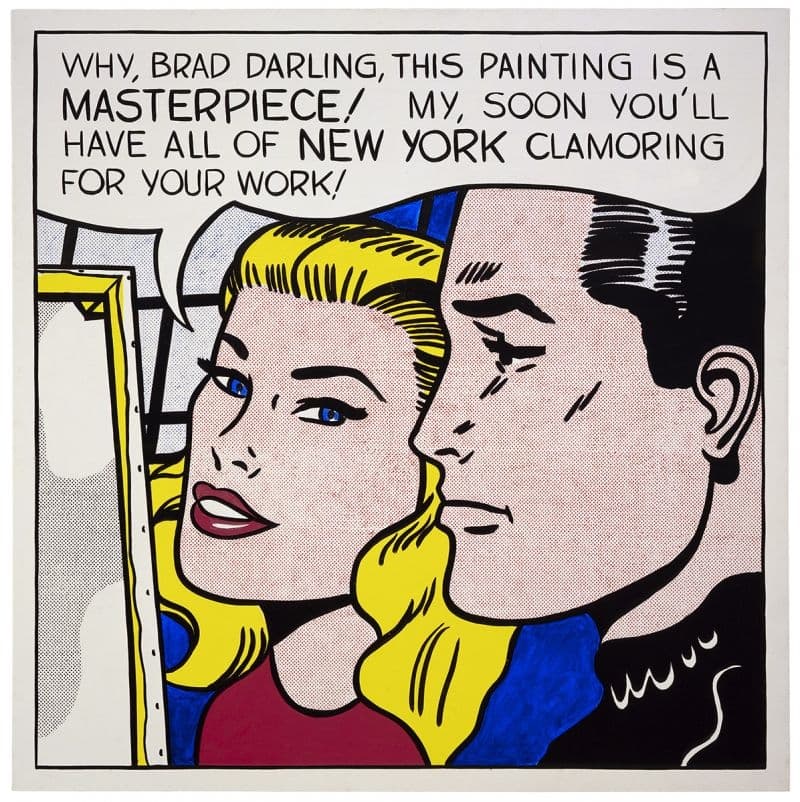
$175–225 million
Valued at $175–225M, Masterpiece’s estimate extrapolates from a confirmed $165M private sale in January 2017 and exceeds Lichtenstein’s public auction record due to its canonical status.

$50-150 million
Whaam!’s hypothetical $50–150M auction range reflects its Tate‑held canonical status, with most likely realizations in $60–100M, contingent on provenance, condition, and legal/deaccession feasibility.

$95-135 million
Nurse’s $95–135M band is anchored to Christie’s $95,365,000 November 9, 2015 sale and adjusted for present market conditions and evening‑sale demand.
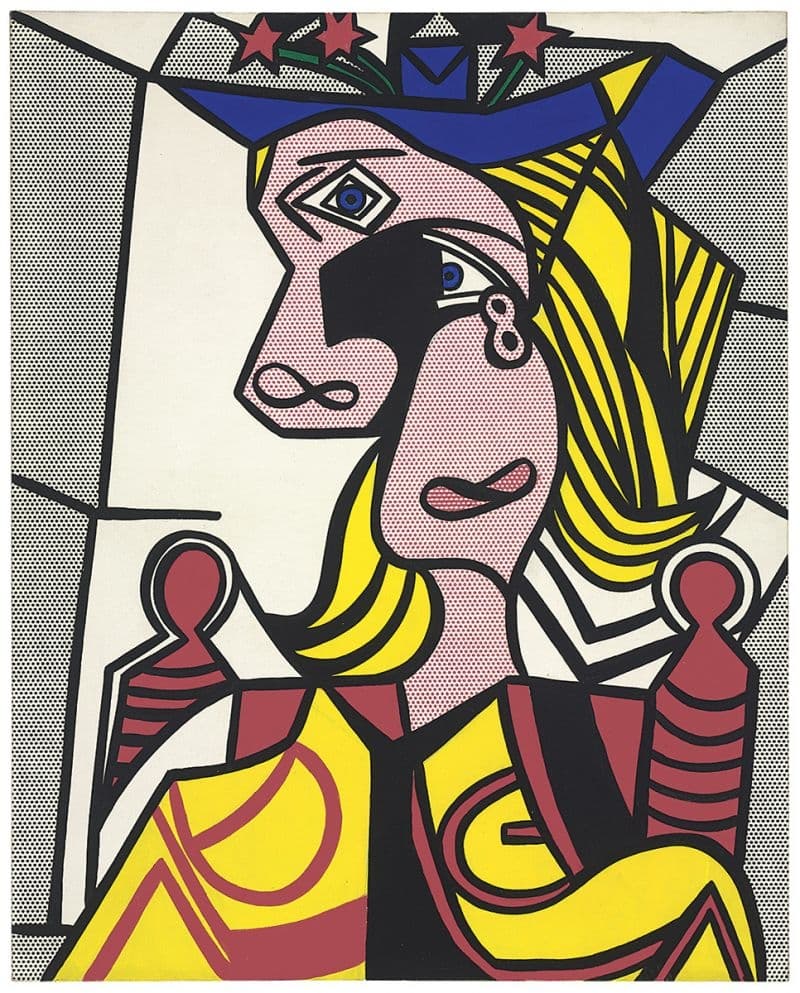
$70-120 million
Woman with Flowered Hat’s $70–120M estimate is adjusted from its $56,123,750 Christie’s May 2013 realization, accounting for inflation and comparable top‑tier 1960s Lichtenstein canvases.
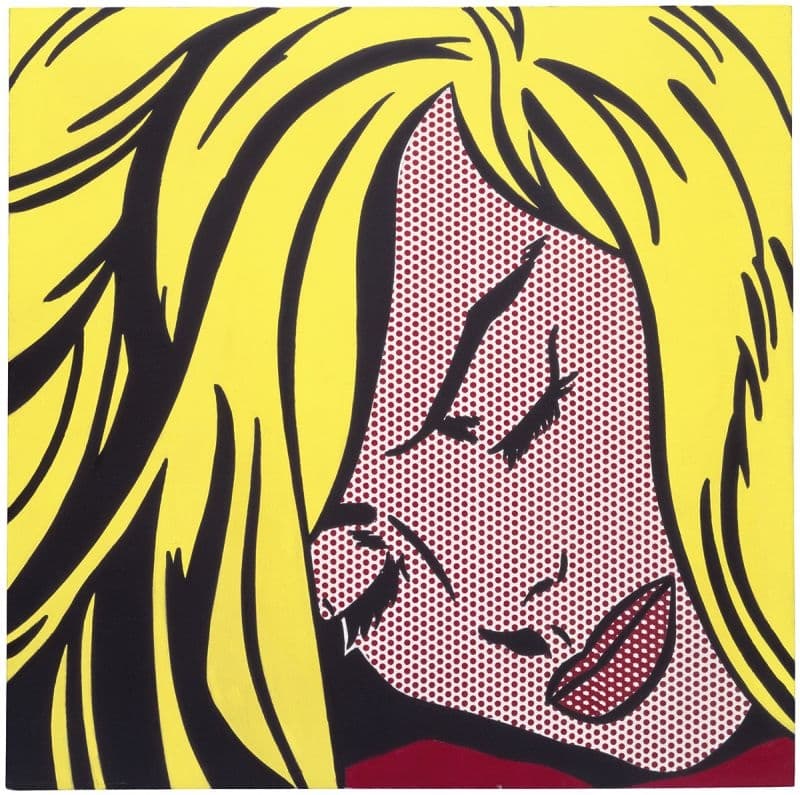
$50-95 million
Sleeping Girl’s $50–95M range is anchored to its 9 May 2012 Sotheby’s sale and spans poor‑condition/weak‑sale lows to trophy‑outcome highs.
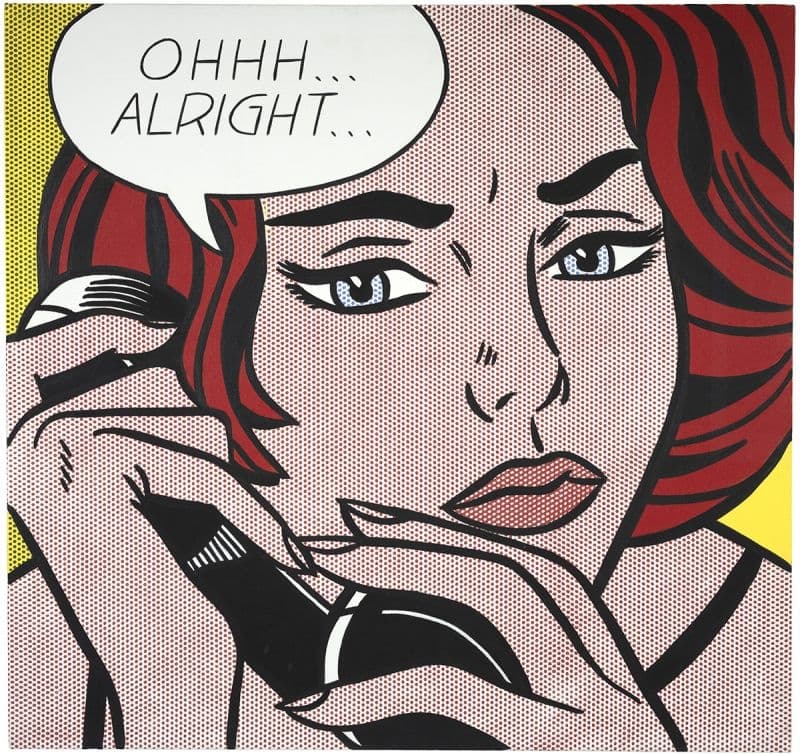
$50-80 million
Ohhh...Alright...’s $50–80M valuation is CPI‑ and market‑adjusted from Christie’s $42,642,500 (10 November 2010) evening‑sale result, allowing conservative and premium sale scenarios.
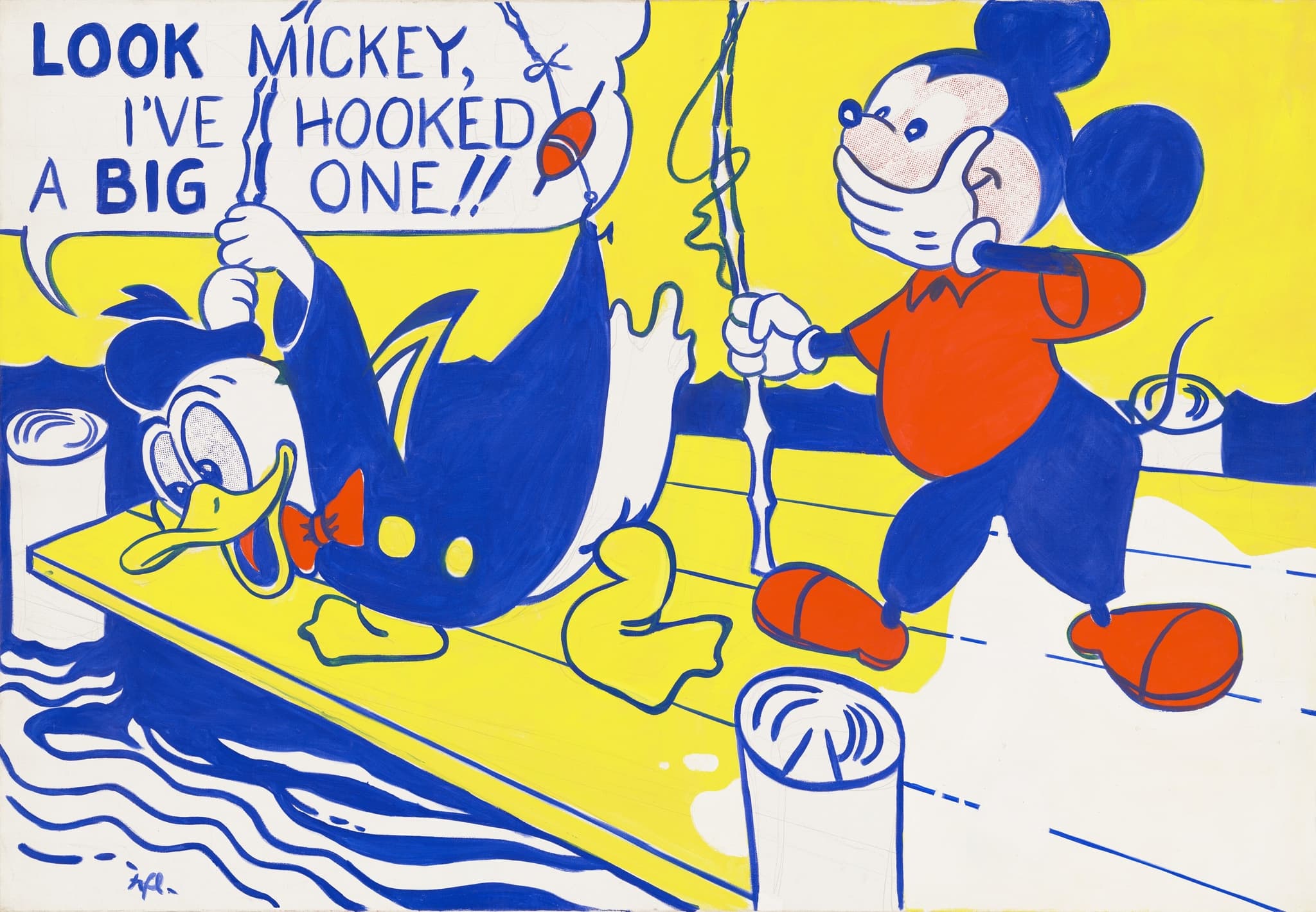
$30-80 million
Look Mickey’s $30–80M hypothetical reflects its museum‑quality early 1961 status at the National Gallery of Art and sensitivity to condition, provenance restrictions and sale mechanism.
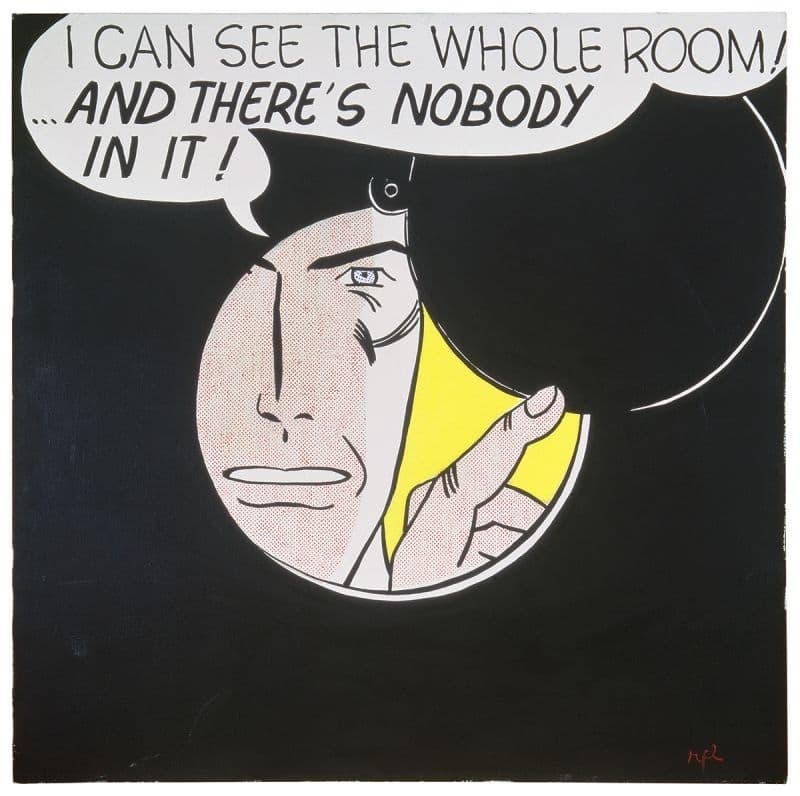
$35-75 million
I Can See the Whole Room...’s $35–75M band is anchored to Christie’s $43,202,500 (8 November 2011) sale and will depend on condition, venue/positioning and market timing.
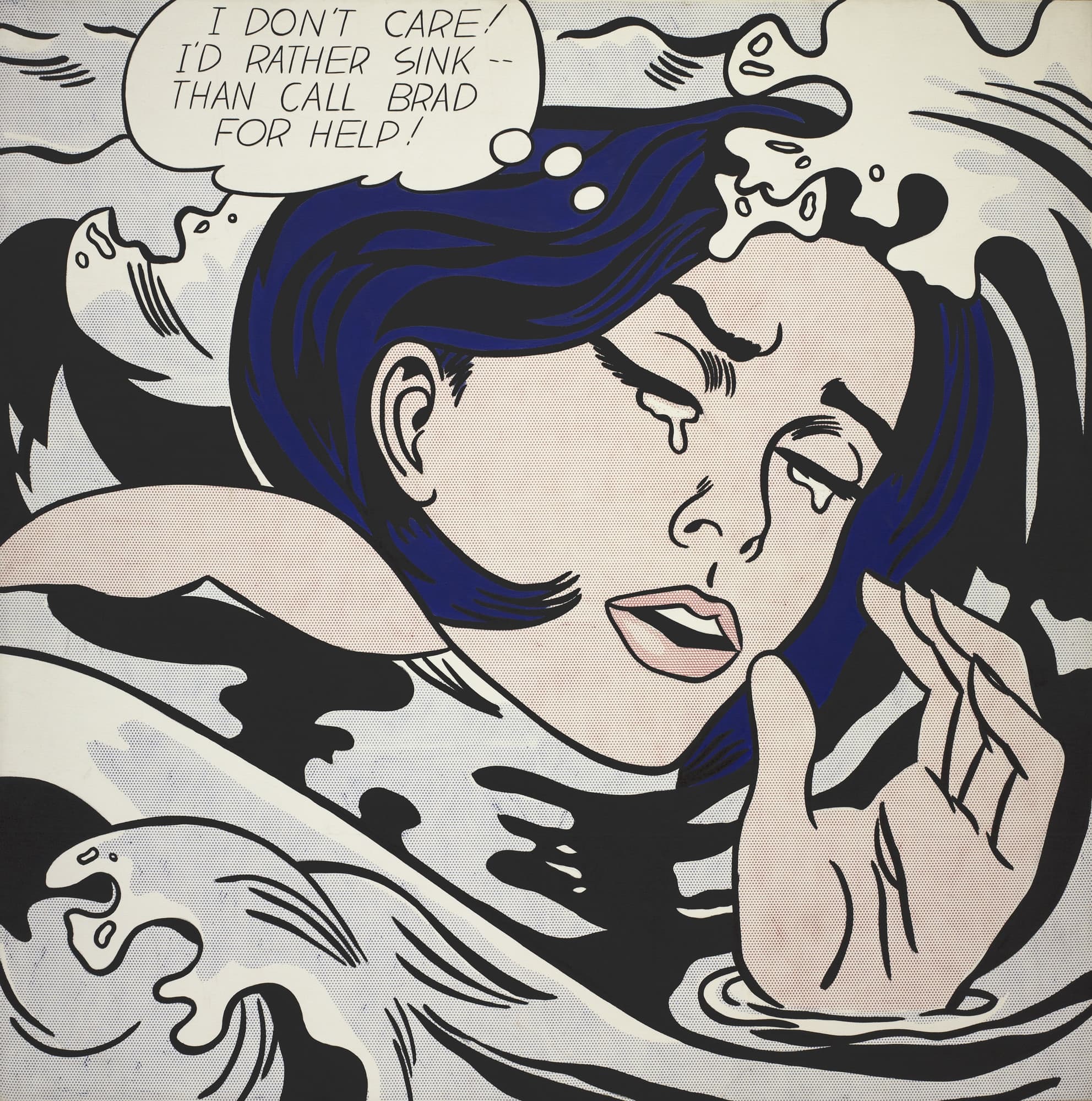
$30-70 million
Drowning Girl’s $30–70M hypothetical reflects decades off‑market in MoMA’s collection and comparable early‑1960s Lichtenstein auction evidence, with the greatest probability in a $40–55M band.
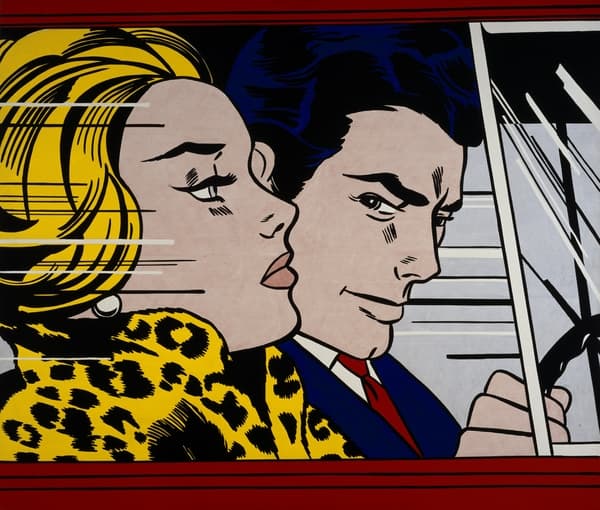
$15-40 million
In the Car’s $15–40M estimate applies to the smaller 1963 RLCR 780 canvas (anchored to a 2005 Christie’s sale); the larger RLCR 779 variant could command materially higher value.
What Drives Value in Roy Lichtenstein's Work
Prime-period dating (1961–64)
For Lichtenstein, precise date is decisive: works from the 1961–64 comic‑strip breakthrough are consistently treated as the market’s core. Early canonical canvases — e.g., Look Mickey (1961), I Can See the Whole Room... (1961), Masterpiece (1962), Whaam! and Drowning Girl (1963) — carry outsized scholarly weight and collector demand. Being a documented studio canvas from this narrow window materially elevates bids versus later or derivative works.
Iconography and motif (speech‑balloon ‘Girls’, diptychs, signature subjects)
Specific Lichtenstein motifs drive premiums: dialogue-bearing ‘Girl’ heads and romance‑comic compositions (Masterpiece, Drowning Girl, Sleeping Girl, Ohhh...Alright...) and monumental narrative diptychs like Whaam! are the most coveted. The presence of a speech balloon, a cropped blonde heroine, or a museum‑famous subject (Nurse) turns a painting into a recognisable cultural emblem — narrowing the comparables set and often producing trophy‑level bidding.
Provenance through the Castelli pipeline and institutional ownership
Lichtenstein’s market rewards lineage tied to Leo Castelli and blue‑chip collectors/institutions. Works with Castelli‑era provenance or passage through notable collections (Agnes Gund, Peter Brant, Mnuchin/Newhouse, or gifts to Tate/MoMA/NGA like Look Mickey, Whaam!, Drowning Girl) command higher prices and confidence. Conversely, museum ownership removes supply and creates scarcity; deaccession or museum provenance both raise the potential ceiling but complicate marketability.
Material/technique specifics and surface integrity (Ben‑Day, Magna vs oil, scale)
Value is sensitive to Lichtenstein‑specific technical attributes: authenticity of hand‑applied Ben‑Day dot simulation, original use of Magna or oil/graphite, and scale (studio canvases vs small studies) matter. Whaam!’s diptych scale and Masterpiece’s square format are intrinsic premiums; conversely, evidence of overpainting, relining or loss of crisp dot/outline execution—not generic condition issues but how they affect Lichtenstein’s trademark surface—can sharply reduce prices.
Market Context
Roy Lichtenstein’s auction market remains resilient and scarcity‑driven: his public record is roughly USD 95.4M for Nurse (2015), and marquee mid‑1960s canvases continue to command premium prices (Anxious Girl, 1964, realized $46.06M at Christie’s New York in May 2026). Demand is anchored by major museums, foundation placements, an authoritative catalogue raisonné and a deep global collector base—US, European and increasingly non‑Western trophy buyers—so museum‑quality 1962–66 comic‑image “Girl” works lead the market. The market is segmented: prints and later series offer greater liquidity, while unique canonical canvases trade selectively and benefit from curated sale campaigns, third‑party guarantees and private placements. Overall, top‑end interest is robust even as mid‑market caution moderates public volumes.