Whaam!
Study Print Studio
Create a personal study print
Build a companion study sheet around the part of this painting that speaks to you most. Choose a detail, shape an interpretation, and walk away with something personal and display-worthy.
Fast Facts
- Year
- 1963
- Medium
- Magna acrylic, oil, and graphite on two joined canvases (over oil‑modified alkyd ground)
- Dimensions
- 173 × 405.9 cm (overall)
- Location
- Tate, London
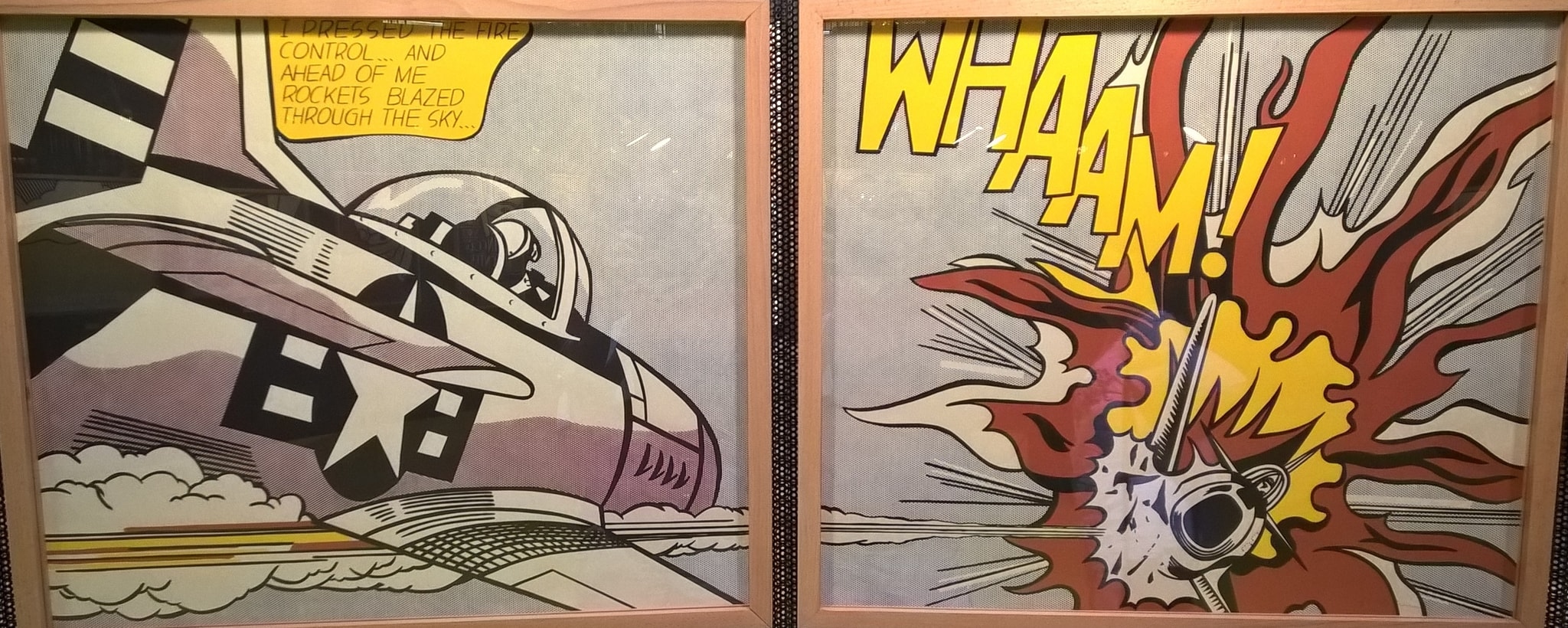
Click on any numbered symbol to learn more about its meaning
Meaning & Symbolism
Explore Deeper with AI
Ask questions about Whaam!
Popular questions:
Powered by AI • Get instant insights about this artwork
Interpretations
Technical/Material Analysis
Source: Tate/Heritage Science (Bartoletti et al., 2020)
History Painting Updated
Source: Art Institute of Chicago; Tate (Morphet, via reception histories)
Machine Vision and Detachment
Source: Michael Lobel, Oxford Art Journal (2001)
The Gutter as Engine of Causality
Source: Artist statement via reception histories; Art Institute of Chicago
Appropriation, Credit, and Transformation
Source: Roy Lichtenstein Foundation Catalogue Raisonné; Art Institute of Chicago; Wikipedia (cross-checked)
Related Themes
About Roy Lichtenstein
More by Roy Lichtenstein
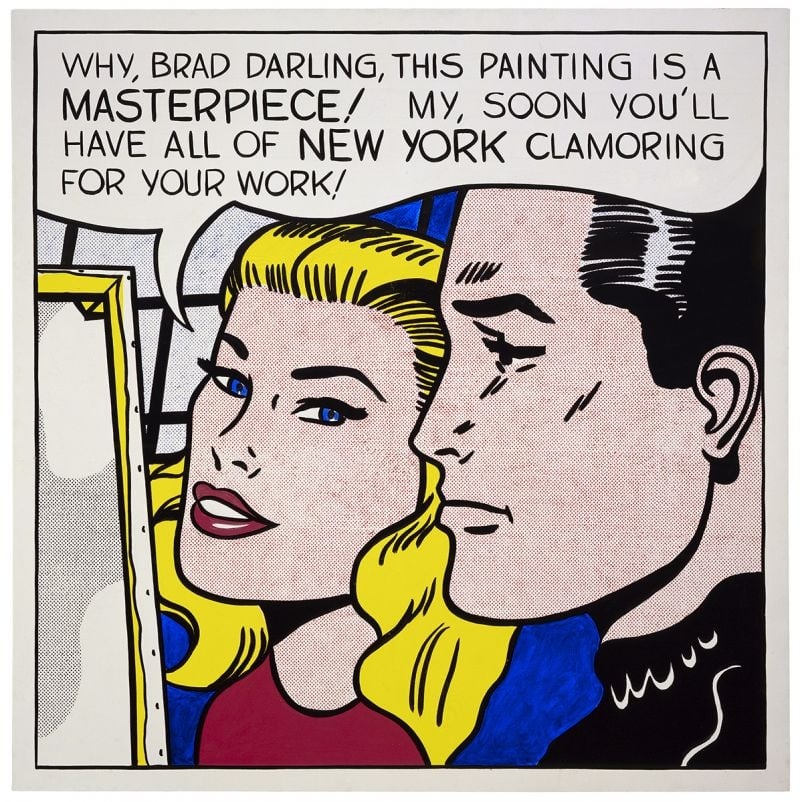
Masterpiece
Roy Lichtenstein (1962)
<strong>Masterpiece</strong> (1962) turns a romance‑comic close‑up into a cool exposé of how praise is manufactured. With a buoyant speech balloon and hand‑made Ben‑Day dots, Roy Lichtenstein converts private flattery into public <strong>promotion</strong>—an image about the image economy itself <sup>[1]</sup><sup>[2]</sup>.
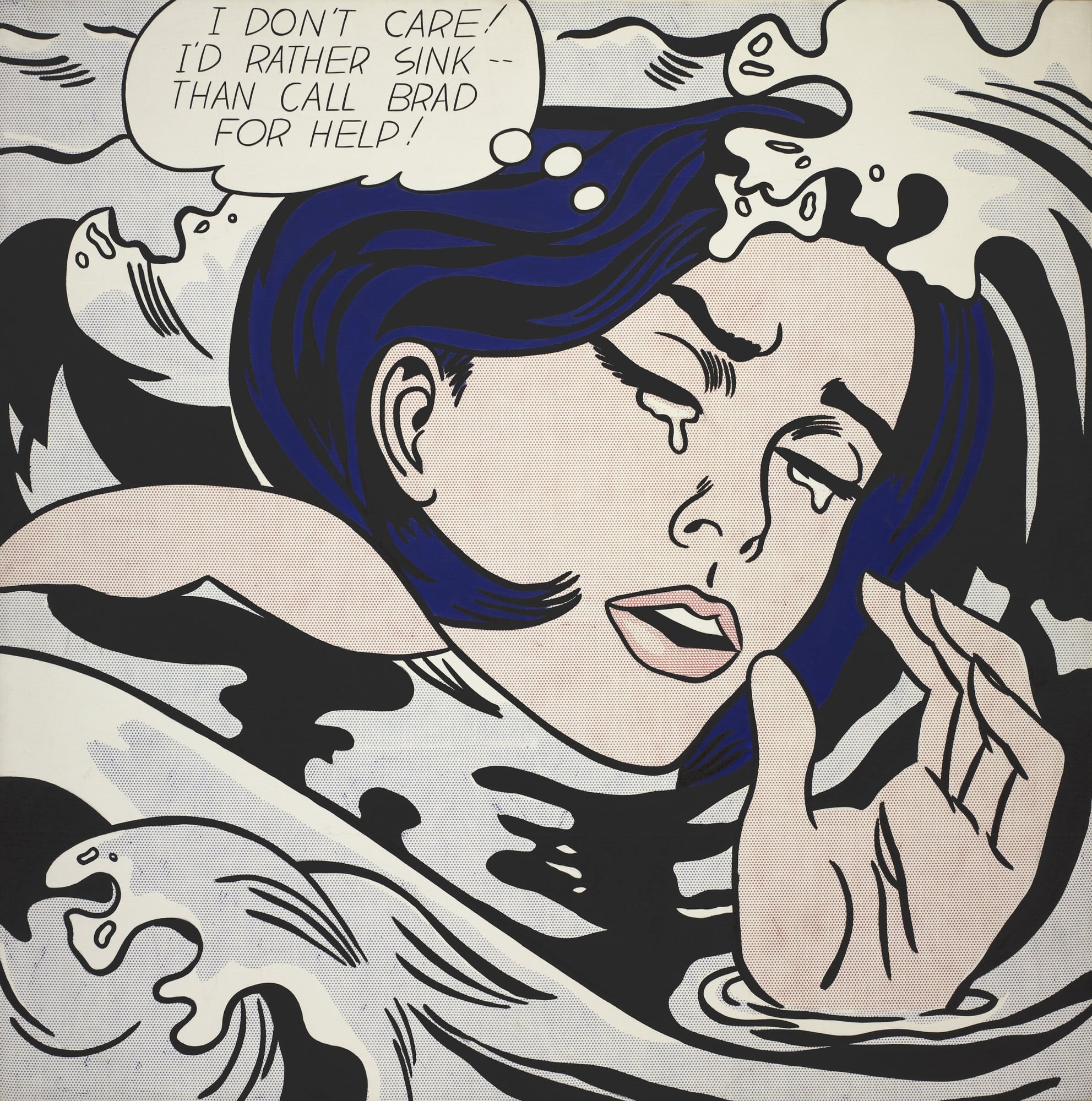
Drowning Girl
Roy Lichtenstein (1963)
<strong>Drowning Girl</strong> converts a romance-comic crisis into a monumental icon of cool, stylized emotion. With tight cropping, <strong>Ben-Day dots</strong>, and heavy black contours, <strong>Roy Lichtenstein</strong> isolates a heroine who declares, "I DON’T CARE! I’D RATHER SINK—THAN CALL BRAD FOR HELP!" The painting turns mass-media melodrama into a distilled language of signs that oscillates between parody and pathos <sup>[1]</sup><sup>[4]</sup>.
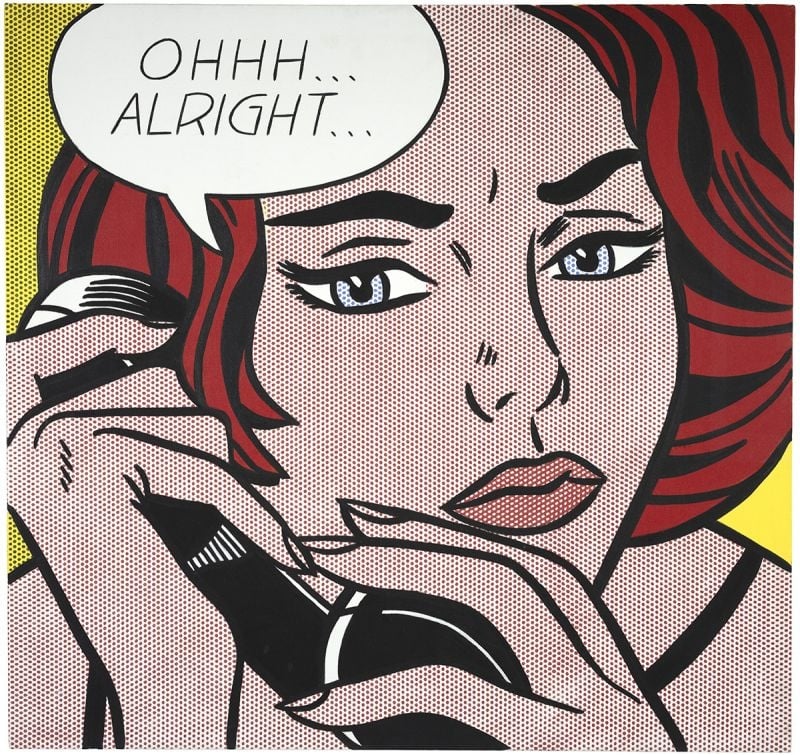
Ohhh...Alright...
Roy Lichtenstein (1964)
Roy Lichtenstein’s Ohhh...Alright... captures a suspended beat of romance‑comic melodrama in the cool idiom of <strong>Pop Art</strong>. A tightly cropped red‑haired woman grips a telephone as a speech balloon—“<strong>OHHH… ALRIGHT…</strong>”—signals reluctant acquiescence, while the hand‑painted <strong>Ben‑Day dots</strong> mimic mass printing to stage emotion as a commodity sign <sup>[1]</sup><sup>[2]</sup>.
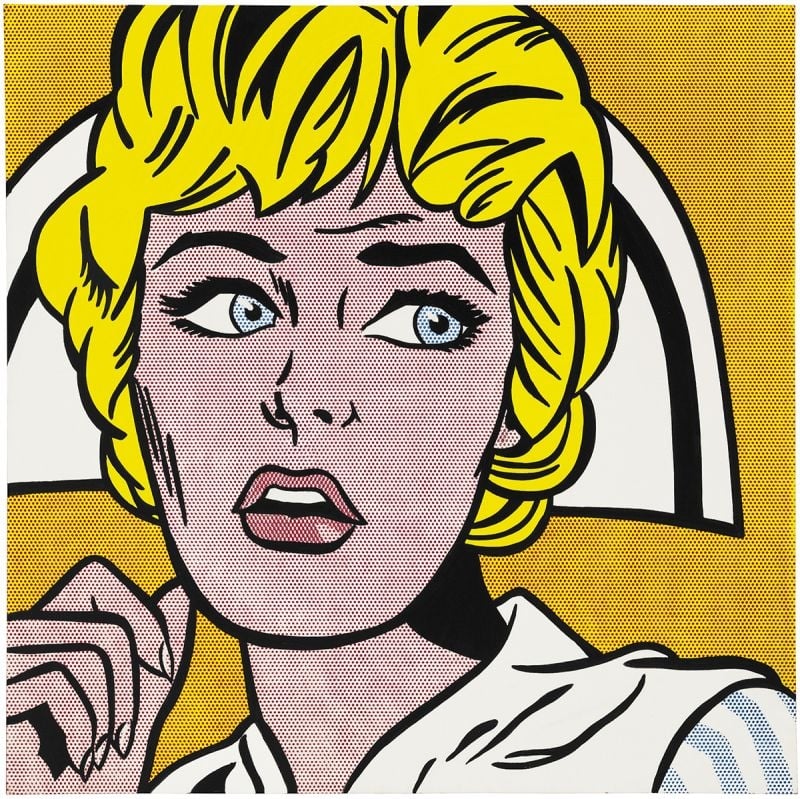
Nurse
Roy Lichtenstein (1964)
Nurse crystallizes Roy Lichtenstein’s 1964 turn to comic-derived icons, amplifying emotion through <strong>Ben‑Day dots</strong>, <strong>thick black contours</strong>, and a <strong>high‑contrast palette</strong>. The cropped close‑up—blond hair, white cap, parted lips, averted gaze—freezes suspense while stripping away speech bubbles. Lichtenstein converts pulp melodrama into a monumental emblem, making style itself the engine of feeling <sup>[1]</sup><sup>[2]</sup>.