How Much Is Woman with Flowered Hat Worth?
Last updated: June 26, 2026
Quick Facts
- Last Sale
- $56.1M (2013, Christie's, New York — Post‑War & Contemporary Evening Sale)
- Methodology
- recent sale
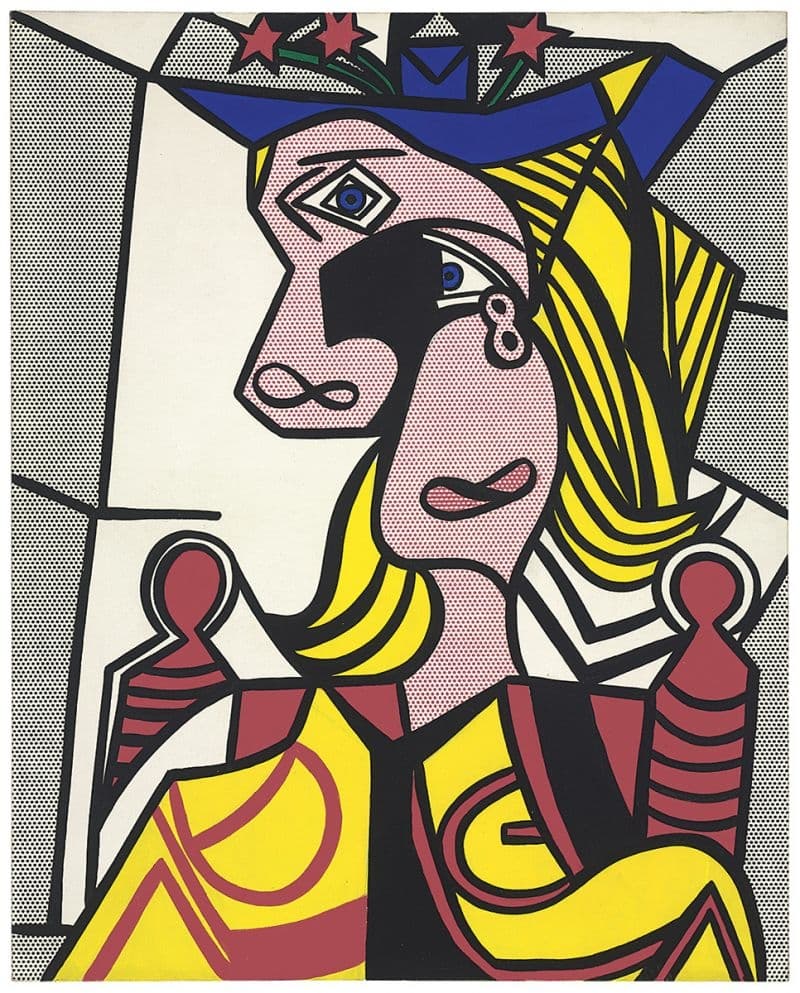
This valuation is anchored to the verified Christie’s sale of Roy Lichtenstein’s Woman with Flowered Hat (1963, RLCR 810) which realized $56,123,750 in May 2013 [1]. Adjusting that primary-market anchor for inflation and market movement and comparing with top-tier 1960s Lichtenstein canvases yields a present market estimate of approximately $70,000,000–$120,000,000 for the identical work in comparable condition and provenance.
Valuation Analysis
Primary anchor and identification. The single most important market datum for this exact painting is the Christie’s New York sale on 15 May 2013, when Woman with Flowered Hat (1963, Magna on canvas) realized $56,123,750 (price realized / including buyer’s premium) — the clearest and most direct market anchor for RLCR 810 [1]. The Roy Lichtenstein Foundation catalogue raisonné confirms this object as RLCR 810 and records the post‑2013 owner, corroborating provenance and the lot record [2].
How the anchor informs today’s value. Using the 2013 realized price as the baseline and factoring in CPI/inflation to recent dollars produces an inflation‑adjusted ballpark near ~$75–80M; however, art‑market pricing also depends on supply/demand dynamics, comparable benchmark sales, and the mechanics of sale (evening sale vs. day sale vs. private treaty). Major mid‑1960s Lichtenstein canvases set the ceiling for the artist (for example, landmark sales such as Nurse in 2015 established a high‑water mark for the artist) and therefore frame the plausible upper bound for RLCR 810 in a very strong market [3].
Range rationale. On balance, for the identical painting with the same provenance/exhibition history and good condition, a realistic present market range is $70M–$120M. The lower bound assumes a conservative public auction scenario (reduced bidder competition, day sale placement, market softening, or minor condition/documentation issues). The upper bound reflects a premium evening‑sale placement with global promotion, guarantees or strong private‑treaty interest, and multiple competing bidders (museums and ultra‑high‑net‑worth private collectors). Exceptional circumstances (a highly competitive private sale, cross‑market bidding wars, or novel cultural relevance) could push the result modestly beyond this band.
Caveats and required due diligence. This valuation presumes the work in question is the RLCR 810 painting sold in 2013 and that it retains comparable condition and clear title. Material refinements require current high‑resolution images, an independent conservator’s condition report, confirmation of catalogue raisonné details and full provenance paperwork, and up‑to‑date comparables at the moment of sale. For transactional advice I recommend formal presale estimates from the primary evening‑sale specialists at Christie’s, Sotheby’s and Phillips, and authentication/verification through the Roy Lichtenstein Foundation prior to any public offering [1][2].
Recommended sale strategy (brief). If you intend to sell, target a marquee evening sale with guaranteed marketing and an exhibition run; if speed or privacy is required, pursue a negotiated private treaty with major dealers/collectors but obtain market checks first. Prepare full documentation (condition report, CR confirmation, exhibition and publication history) to maximize buyer confidence and competitive bidding.
Key Valuation Factors
Art Historical Significance
High ImpactWoman with Flowered Hat dates from 1963, the heart of Lichtenstein’s canonical Pop‑period when he produced his most sought‑after comic‑style portraits. The painting’s visual language — a bold, cropped female head, thick outlines, Ben‑Day dot suggestion and simplified color fields executed in Magna — places it within the core corpus that museums and major private collectors prize. It has recorded exhibition and publication history, which elevates its institutional desirability and market liquidity. Because canonical 1960s canvases are relatively scarce in the private market, a museum‑grade, well‑documented example from this year commands substantial premiums relative to later‑period works.
Provenance & Exhibition History
High ImpactThe painting’s published provenance (Leo Castelli; notable private collections including the Mnuchins and S.I. Newhouse; later consignments via major galleries) and documented exhibition history materially strengthen market value and buyer confidence. Works with an unbroken, reputable chain of ownership and prior museum exhibitions (as recorded in the Christie’s lot notes and the Roy Lichtenstein Foundation entry) reduce buyer risk and broaden the pool of eligible bidders, including institutions. Strong provenance also enables underwriters and guarantors to support higher presale estimates and helps a consignor achieve premium placement in evening auctions.
Condition & Materials
High ImpactThis painting is executed in Magna on canvas; Magna is an early acrylic paint Lichtenstein used in the 1960s. Condition variables for Magna works — surface abrasion, retouching, craquelure due to past conservation treatments, or relining history — can have meaningful price impact. A clean, well‑conserved surface with transparent conservation history supports the top of the estimate; conversely, undocumented or extensive restoration can reduce buyer confidence and depress auction outcomes. A formal conservator’s report is therefore essential to finalize any presale estimate.
Comparables & Price History
High ImpactThe 2013 Christie’s price realized for this exact object ($56.12M) is the primary anchor. Comparable mid‑1960s Lichtenstein canvases have set a wide price band (from mid‑tens of millions to the artist record), which defines a realistic market range. Inflation adjustment of the 2013 price, recent marquee sales, and the pattern of estate consignments/auction supply inform the estimate. Because the exact object has a public auction precedent, it benefits from a transparent provenance and a direct comparable that materially narrows valuation uncertainty versus unattributed or studio‑variant works.
Sale Mechanism & Timing
High ImpactMethod of sale (major evening sale with pre‑sale exhibition vs. day sale or private treaty) is a decisive variable. Evening sales with guarantees and aggressive promotion attract the largest, most competitive bidder pools and frequently produce results above the midpoint of any band. Conversely, a poorly marketed lot, unfavorable auction calendar placement, or a sale in a weak market window can materially depress realized prices. Market timing vis‑à‑vis macroeconomic conditions, holiday seasonality, and concurrent single‑owner sales also affects realized value.
Sale History
Christie's, New York — Post‑War & Contemporary Evening Sale
Christie's, New York — Evening Sale (comparable benchmark)
Sotheby's, New York — Evening Sale (comparable)
Christie's, New York — Evening Sale (recent comparable)
Roy Lichtenstein's Market
Roy Lichtenstein is a blue‑chip Pop‑Art master whose early 1960s canvases are among the most collectible post‑war works. Top examples from 1962–64 achieve multi‑million to multi‑tens of millions at auction, with a recorded auction ceiling established by marquee sales (e.g., Nurse). Demand is anchored by museum interest, institutional placements, and a deep global collector base. While prints and later works have shown growing secondary‑market traction, canonical 1960s paintings remain the primary value drivers and typically command the highest prices in the artist’s market.
Comparable Sales
Woman with Flowered Hat
Roy Lichtenstein
Exact object (RLCR 810). Primary market anchor: same painting, identical provenance/condition parameters reported at sale.
$56.1M
2013, Christie's, New York
~$77.1M adjusted
Nurse
Roy Lichtenstein
Same artist and period (mid‑1960s); landmark, museum‑quality comic‑style canvas that set the artist auction record — useful as an upper‑end ceiling for market value.
$95.4M
2015, Christie's, New York
~$128.8M adjusted
Sleeping Girl
Roy Lichtenstein
Same artist/period (1964) and similar subject (female head/girl motif) and scale — a direct near‑peer among 1960s 'girl' canvases.
$44.8M
2012, Sotheby's, New York
~$62.5M adjusted
Nude with Joyous Painting
Roy Lichtenstein
High‑value Lichtenstein painting sold recently (2020). Although a later‑period work (1994) rather than a 1960s comic 'girl', it demonstrates sustained demand for large Lichtenstein canvases.
$46.2M
2020, Christie's (ONE/global relay sale)
~$57.2M adjusted
Current Market Trends
The high‑end market for blue‑chip post‑war and Pop works has been selective but resilient: strong single‑owner consignments and marquee evening‑sale placements have driven headline prices, while broader market caution can narrow bidder pools. Estate sales and museum placements influence supply and create fresh comparables. Timing, sale mechanics and provenance quality are currently the dominant determinants of whether a blue‑chip painting achieves its upper‑band potential.