How Much Is Whaam! Worth?
Last updated: June 26, 2026
Quick Facts
- Methodology
- comparable analysis
Whaam! (1963) is a canonical Roy Lichtenstein masterpiece in the Tate collection; if hypothetically offered on the open market a defensible working auction estimate is USD 50,000,000–150,000,000, with the most likely competitive realization in the USD 60–100M band. This range is contingent on confirmed provenance, current condition, and the legal/political feasibility of any deaccession or export.
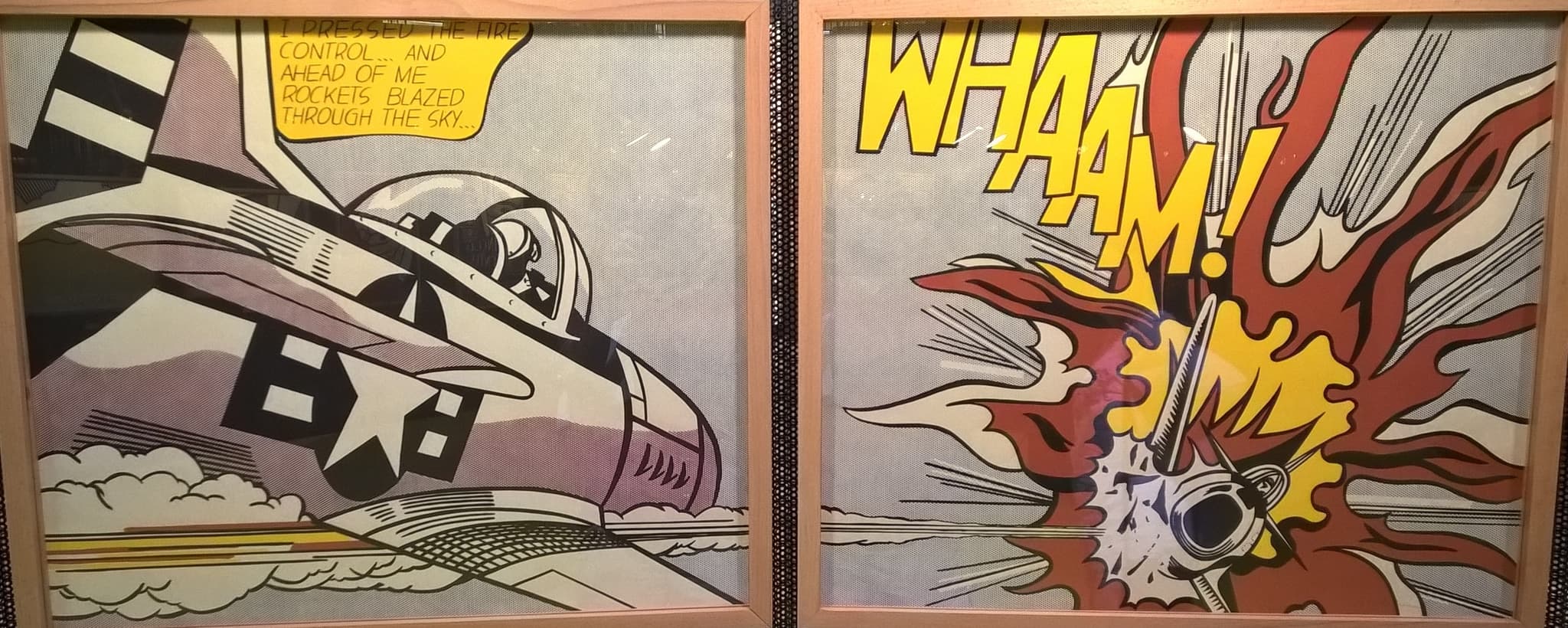
Whaam!
Roy Lichtenstein, 1963 • Magna acrylic, oil, and graphite on two joined canvases (over oil‑modified alkyd ground)
Read full analysis of Whaam! →Valuation Analysis
Valuation conclusion: Using a comparable‑analysis anchored to marquee Lichtenstein evening‑sale results and adjusted for scale, iconography, and permanent museum ownership, my preliminary working auction estimate for Roy Lichtenstein’s Whaam! (1963) is USD 50,000,000 to USD 150,000,000. Whaam! has been in the Tate collection since acquisition from Leo Castelli in 1966 and is documented in authoritative records, which effectively removes it from the tradable pool and increases its theoretical market value should it ever be offered publicly [1][4].
Comparable anchors and rationale: The principal market anchor is Lichtenstein’s 'Nurse' (1964), which established the public auction ceiling for the artist when it realized roughly USD 95.4M in 2015; that sale demonstrates both buyer appetite for marquee Lichtensteins and the price ceiling likely reachable for a museum‑quality trophy in optimal conditions [2]. Other canonical 1963–64 canvases have sold in the mid‑tens to low‑eight‑figure range in evening sales, and a contemporary datapoint—'Anxious Girl' (1964)—sold in May 2026 in the mid‑$40M band, showing current market depth for top‑tier romance/girl imagery [3]. Whaam!’s unique combination of early‑1963 date, monumental diptych format and global iconicity argues for a valuation at or above most 1963–64 canvases and for potential to reach into the low triple digits in exceptionally competitive circumstances.
Provenance, rarity and sale friction: Tate ownership confers impeccable provenance and exhibition history, but museum stewardship also means deaccession rules, donor restrictions and UK export controls could materially impede or forbid a sale—these regulatory and reputational frictions can suppress realizability even while they elevate theoretical rarity premia [1][4]. If an institutional deaccession were legally and politically possible, the pool of likely buyers (major museums, foundation‑backed purchases, marquee private collectors) would be narrow but deep, tending to concentrate bidding and generate premiums above standard market comparables.
Market dynamics and sale strategy: The Pop‑Art market is presently bifurcated: prints/multiples show strong liquidity while trophy unique works require selective, campaign‑style marketing. Recent estate dispersals indicate robust mid‑market demand but also highlight segmentation and price dispersion [5]. To maximize realization, a sale should be run as a single‑lot, well‑guaranteed evening presentation in New York or London, supported by a current conservation/condition report, full provenance documentation, and pre‑sale institutional outreach. Private treaty deals with institutional matching could produce different outcomes—sometimes higher if a buyer values public access preservation.
Final caveat: This valuation is hypothetical and contingent on (a) confirmation of any accession/donor restrictions, (b) a full, up‑to‑date condition report, and (c) a sale strategy (public evening sale vs. private treaty). With those materials and a carefully executed market program, the USD 50–150M band is a defensible market window; absent them, valuation uncertainty is substantial.
Key Valuation Factors
Art Historical Significance
High ImpactWhaam! is one of the defining images of American Pop Art and among Lichtenstein’s most reproduced and cited works. Executed in 1963 as a monumental diptych, it exemplifies the artist’s signature use of comic‑book imagery, mechanical Ben‑Day dot technique, and interrogation of mass media aesthetics. Its influence on scholarship, exhibitions and public perception of Pop Art is disproportionate relative to most works by the artist, which makes it not only culturally indispensable but also commercially prized as a museum‑grade trophy that completes institutional narratives about the period.
Provenance & Ownership (Tate)
High ImpactTate’s acquisition from Leo Castelli (1966) provides unimpeachable provenance and long exhibition history, which significantly supports authenticity and curatorial value. However, museum stewardship also makes the piece effectively off‑market: legal, ethical and donor conditions can prevent deaccession or restrict export. When museum works of this stature are ever sold, they typically command a premium because of scarcity, but the feasibility of sale must be established first—provenance that protects the work from marketplace risk simultaneously constrains its commercial liquidity.
Comparables & Auction Record
High ImpactPublic auction anchors include Lichtenstein’s 'Nurse' (2015, c. USD 95.4M) as a ceiling and other 1963–64 canvases in the USD 40–60M band as strong mid‑tier comparables. These realized outcomes set a practical pricing framework: Whaam!’s scale and iconography justify a valuation at or above the mid‑tier band and make triple‑digit outcomes plausible under best‑case competitive scenarios. Comparative analysis of hammer prices, evening‑sale placement and guarantee structures is central to narrowing the final estimate.
Physical Attributes & Condition
Medium ImpactWhaam! is a large diptych executed in Magna/acrylic and oil on canvas—materials and scale that are desirable for collectors and institutions. Its physical state and conservation history materially influence market value; subtle issues (cleaning, relined canvas, inpainting) could depress bids, while a clean, well‑documented conservation report will support top pricing. A formal condition survey and technical dossier are prerequisites for confident marketing and for underwriting/guarantee decisions.
Market Liquidity & Timing
Medium ImpactThe market for blue‑chip Pop Art is currently segmented: prints/multiples show higher liquidity, while marquee unique canvases sell selectively. Institutional programming (retrospectives, foundation gifts) can create demand spikes for canonical works; conversely, market volatility and poor timing can compress outcomes. For Whaam!, sale timing, geographic venue, and whether the lot is guaranteed or supported by institutional interest will all have meaningful impacts on final realization.
Sale History
Whaam! has never been sold at public auction.
Roy Lichtenstein's Market
Roy Lichtenstein is a blue‑chip Post‑War/Pop artist whose canonical early‑1960s canvases are strongly sought by major museums and top private collectors. The artist’s public auction high remains approximately USD 95.4M ('Nurse', 2015) and other flagship 1963–64 canvases have realized in the USD 40–60M band in marquee auctions. The market benefits from strong institutional holdings, comprehensive scholarship and a catalogue raisonné; nonetheless, it is segmented—prints and multiples are more liquid and accessible, while unique major canvases transact selectively and often require carefully orchestrated sale campaigns.
Comparable Sales
Nurse
Roy Lichtenstein
Artist auction record and marquee evening‑sale trophy from Lichtenstein's peak period (1964). Comparable by date, subject (comic/figure imagery) and market ceiling—useful as the top anchor for a hypothetical Whaam! sale.
$95.4M
2015, Christie's New York
~$124.0M adjusted
Woman with Flowered Hat
Roy Lichtenstein
Large 1963 canvas from the artist's key year; a major evening‑sale result that is directly comparable by date and scale and establishes pre‑mid‑2010s high‑tier pricing for museum‑quality Lichtensteins.
$56.1M
2013, Christie's New York
~$76.3M adjusted
Anxious Girl
Roy Lichtenstein
1964 'romance/girl' image from Lichtenstein's peak period; most recent high‑end comparable by subject and date — offers a current‑market datapoint for similar iconography (adjusted here back to 2025 USD).
$46.1M
2026, Christie's New York
~$44.8M adjusted
Reflections: Wimpy I
Roy Lichtenstein
Top lot from the Roy Lichtenstein estate dispersal (2025). Not directly comparable by date/scale to Whaam!, but useful to show estate/collection supply and strong mid‑market demand for verified/estate‑proximate works.
$2.9M
2025, Sotheby's New York ("Reflections on Pop"—estate sale)
Mirror #5
Roy Lichtenstein
Later‑period work (1970) sold in 2026; while not a direct stylistic/date match for Whaam!, it helps bracket market breadth—shows realized prices for later works/series versus early‑1960s trophies.
$2.3M
2026, Christie's New York
~$2.2M adjusted
Current Market Trends
Contemporary Pop‑Art demand is bifurcated: prints/multiples attract new collectors and liquidity, while trophy unique canvases trade selectively with campaign‑style marketing. Institutional exhibitions, foundation gifts and catalogue raisonné documentation support long‑term interest, but recent seasons show price dispersion for non‑trophy works. Macroeconomic conditions, sale timing and guarantee structures materially influence outcomes for works at Whaam!’s scale.
Study print
Study this painting as a print
Pair the full artwork with a museum-style study sheet focused on one meaningful detail.
Sources
- Tate: Whaam! (1963) — Tate collection entry (accession T00897)
- Bloomberg: 'Lichtenstein's Comic‑Book ‘Nurse’ Fetches Record $95.4 Million' (2015)
- Christie’s press coverage: May 2026 evening sale (Anxious Girl, 1964)
- Roy Lichtenstein: A Catalogue Raisonné — entry for Whaam! (catalogue entry)
- Sotheby’s: 'Reflections on Pop: Works from the Collection of Dorothy and Roy Lichtenstein' (Sep 2025 sale)