Sisley and Cézanne: Atmosphere and Construction
Both artists return to the same motifs to test what painting can know. Sisley stabilizes bridges, churches, and streets so changing weather can be measured against them. Cézanne rebuilds what he sees into interlocking planes and color relations, making a picture that stands as a structure parallel to nature.
Comparison frame: How do Sisley’s atmosphere-first and Cézanne’s construction-first methods change what a painting asks our eyes to do?
Quick Comparison
| Topic | Alfred Sisley | Paul Cézanne |
|---|---|---|
| Deepest shared ground | Serial observation to re‑see the ordinary (Moret church; Port‑Marly floods). | Serial reconstruction to test structure (Sainte‑Victoire; recurring still‑life sets). |
| Decisive difference | Keeps architecture optically coherent; atmosphere does the changing. | Lets construction drive perception; planes and warm–cool order do the holding. |
| Space | Continuous, breathable depth via tonality and aerial perspective. | Built space: tilts, facets, and deliberate mismatches that ask the eye to assemble. |
| Brushwork | Even, broken touch that standardizes light across materials. | Constructive stroke—stacked hatches that forge volume and bind the field. |
| What repeats | One vantage across hours/seasons to calibrate change. | A motif rebuilt in multiple canvases to refine internal order. |
| Motif’s role | Civic anchor (bridges, church, quays) within a single optical envelope. | A vehicle for relations; mountain, bottle, or figure becomes a structural problem. |
| Figures | Scale the scene; staffage within public space. | Become volumes in equilibrium (Card Players as a human still life). |
| Legacy | A model for serial, place‑based modernity and environmental attention. | A foundation for 20th‑century structural experiments (proto‑Cubist logic). |
Shared Ground
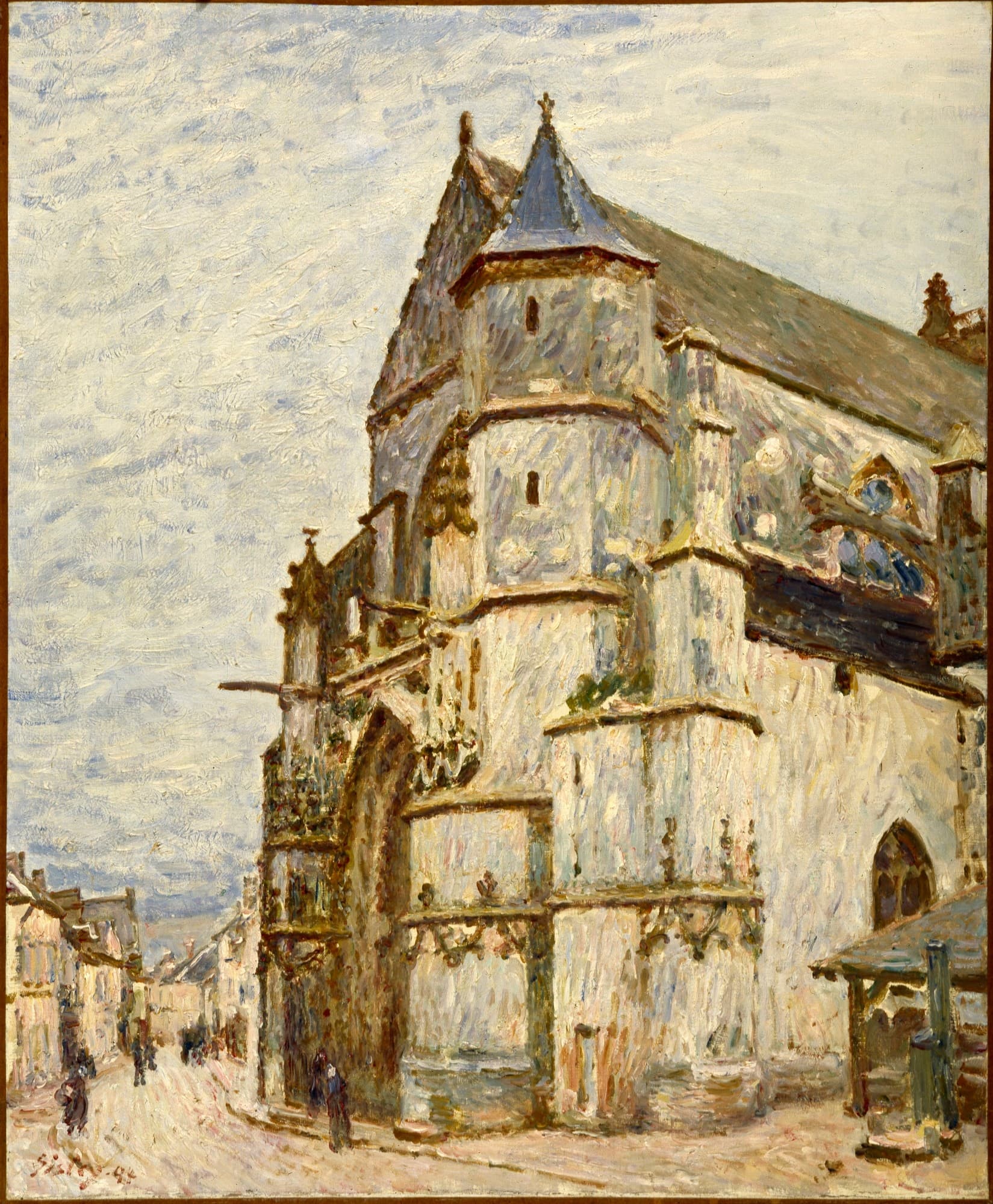
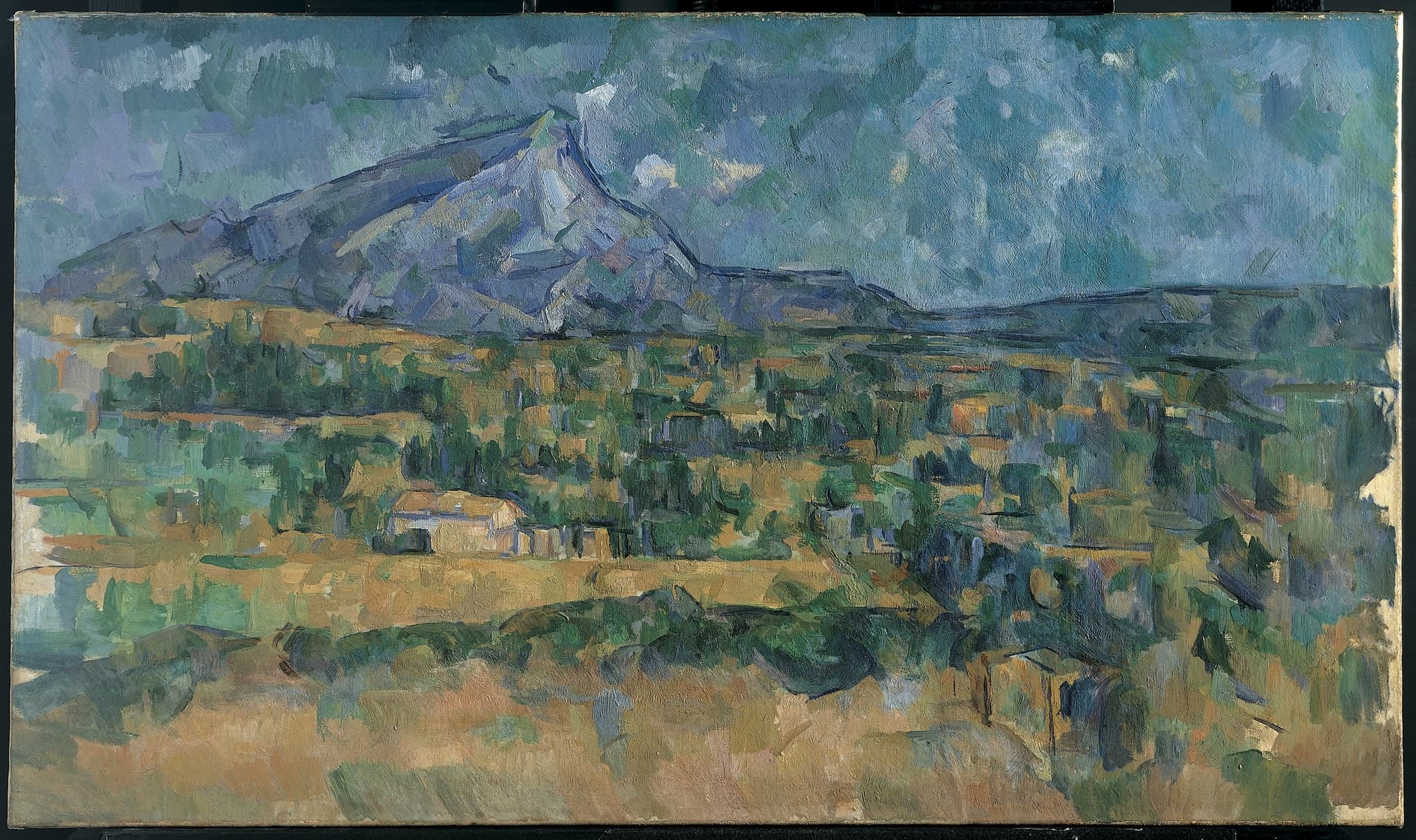
Alfred Sisley and Paul Cézanne share a disciplined way of making the ordinary strange again. Both work in series, returning to a fixed motif to test what changes when time passes and when a painter changes emphasis. Sisley stands in front of the Church at Moret repeatedly in 1893–94, holding the architecture steady while morning, evening, and damp air revise its tonality. Cézanne, from the Les Lauves studio terrace in the early 1900s, repaints Mont Sainte‑Victoire as a sequence of chromatic and planar constructions. In each case, the motif is not an anecdote but a laboratory: the church or the mountain is a constant against which perception is measured.
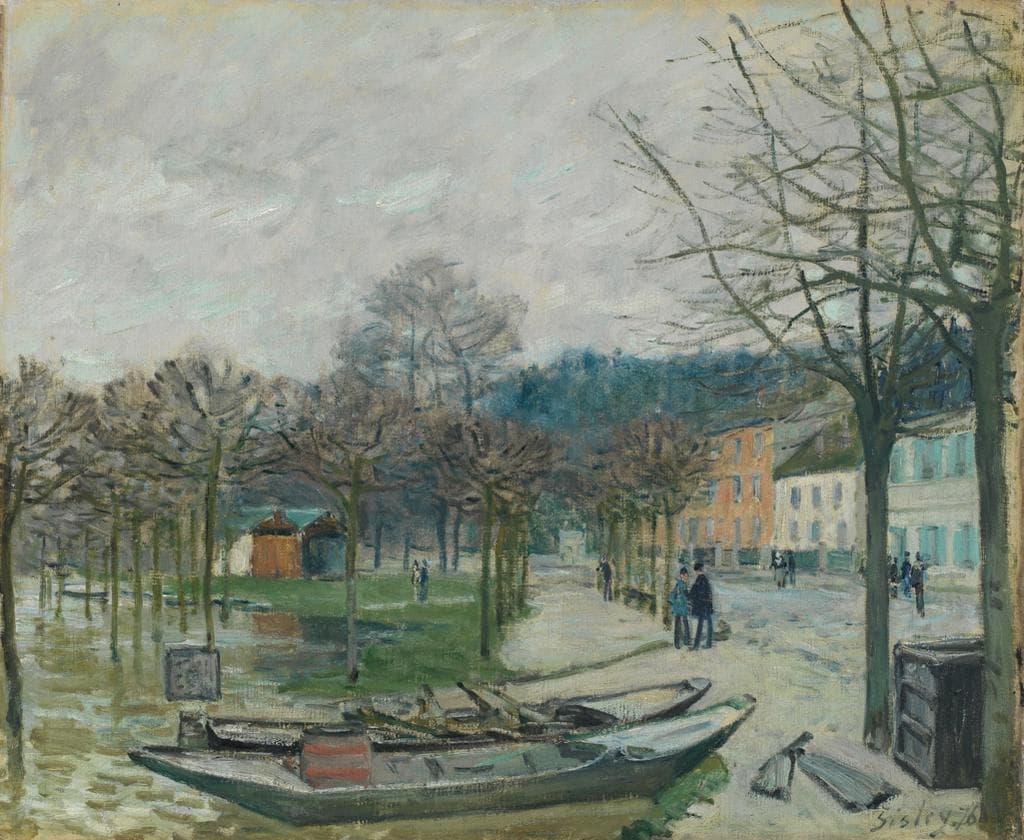
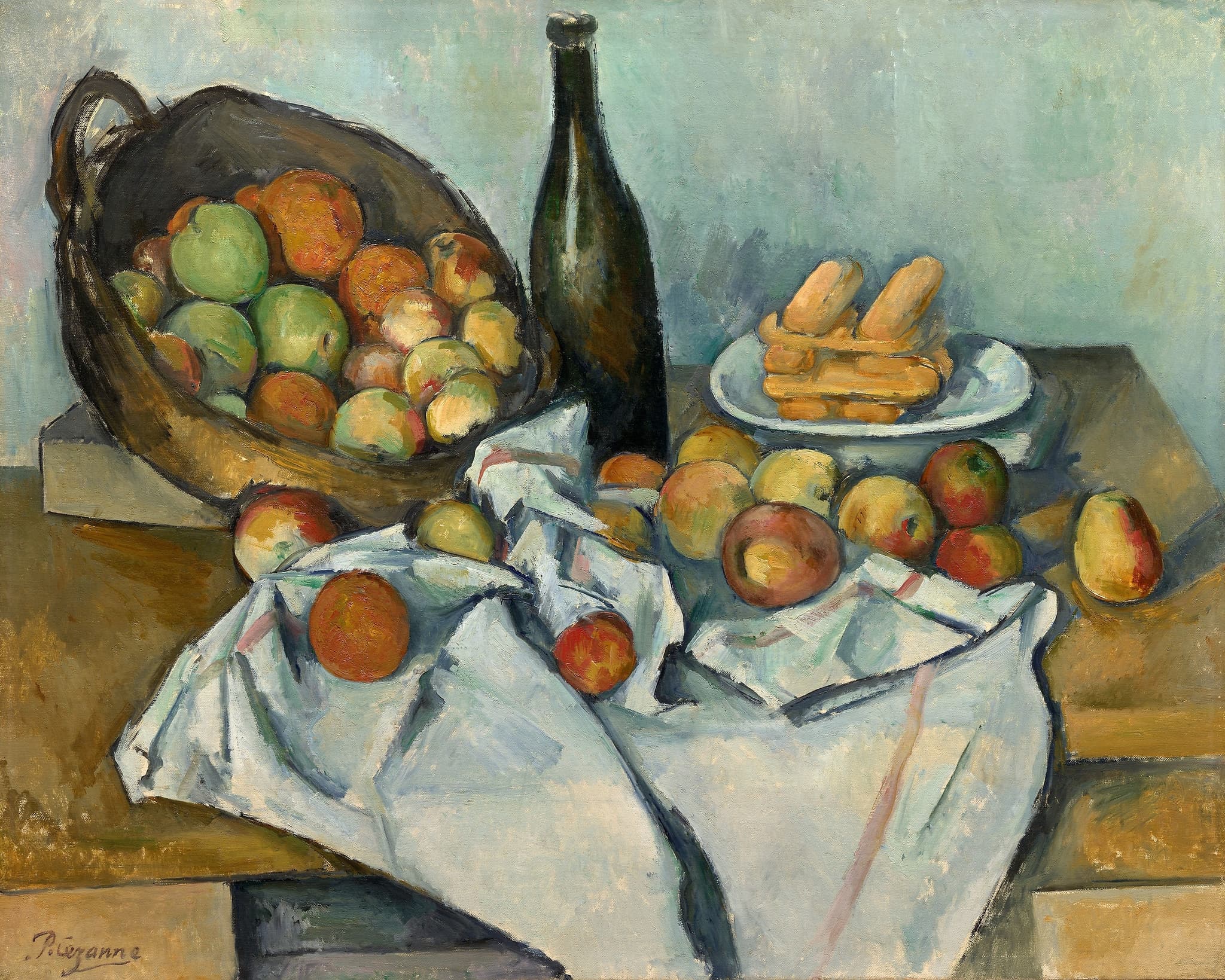
Both artists reduce narrative. Sisley’s bridges, boulevards, and floods are public facts—human circulation and civic adaptation pictured without melodrama. His Flood at Port‑Marly canvases from 1872 and 1876 show streets turned to canals where reflections become a visual instrument more than a symbol. Cézanne pares genres to essentials: a bottle, basket, and biscuits in The Basket of Apples; two peasants and a vertical axis in The Card Players. In each case, repetition sharpens inquiry. Series logic becomes a comparative device across canvases: for Sisley, to register weather’s effect on a stable site; for Cézanne, to discover a durable internal order that does not depend on a single viewpoint or a theatrical light source.
Decisive Difference
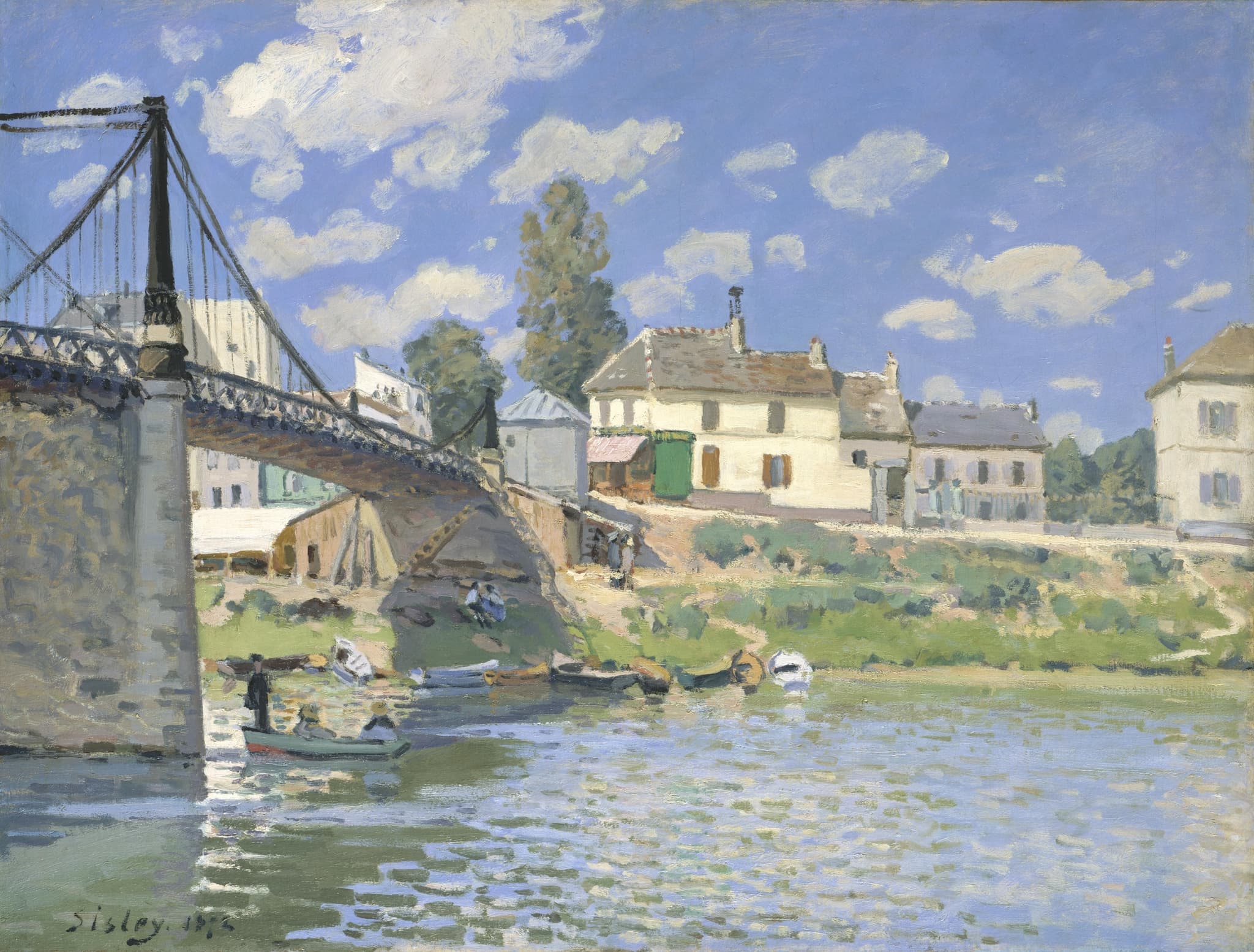
The decisive split lies in how each modernizes seeing. Sisley modernizes by stabilizing civic space and letting atmosphere do the thinking. Bridges, churches, and riverbanks remain legible; space is one continuous envelope unified by even, broken strokes. Light standardizes sky, water, stone, and foliage so that modern life—leisure boats under the Villeneuve‑la‑Garenne bridge, townspeople navigating floodwater at Port‑Marly—reads as a calm negotiation with flux. His pictures ask the eye to glide through depth and compare tonal shifts on a steady motif: permanence receiving change.
Cézanne modernizes by reconstructing what is seen into relations that hold. He builds the world with his constructive stroke and with warm–cool modulation; space is comparative, not continuous. Edges tilt, tabletops refuse to align, and a mountain is articulated as interlocking planes, so that a painting becomes a self-supporting order—a “harmony parallel to nature.” The Basket of Apples shows this program openly: the leaning bottle and broken table edge are intentional instabilities that map how looking accumulates across moments. In Mont Sainte‑Victoire, sky and massif interlock as facets, trading fleeting effect for structure. Cézanne’s pictures ask the eye to assemble and test connections: to feel weight, counterweight, and chromatic scaffolding rather than accept a single, seamless view.
Paired Works
Serial anchors: church and mountain
Focus question: When a motif repeats, what exactly changes—weather on a stable form, or the form’s internal construction?
The Church at Moret vs Mont Sainte-Victoire
Modern space, two ways
Focus question: How do architecture and pathlines organize attention in early 1870s works?
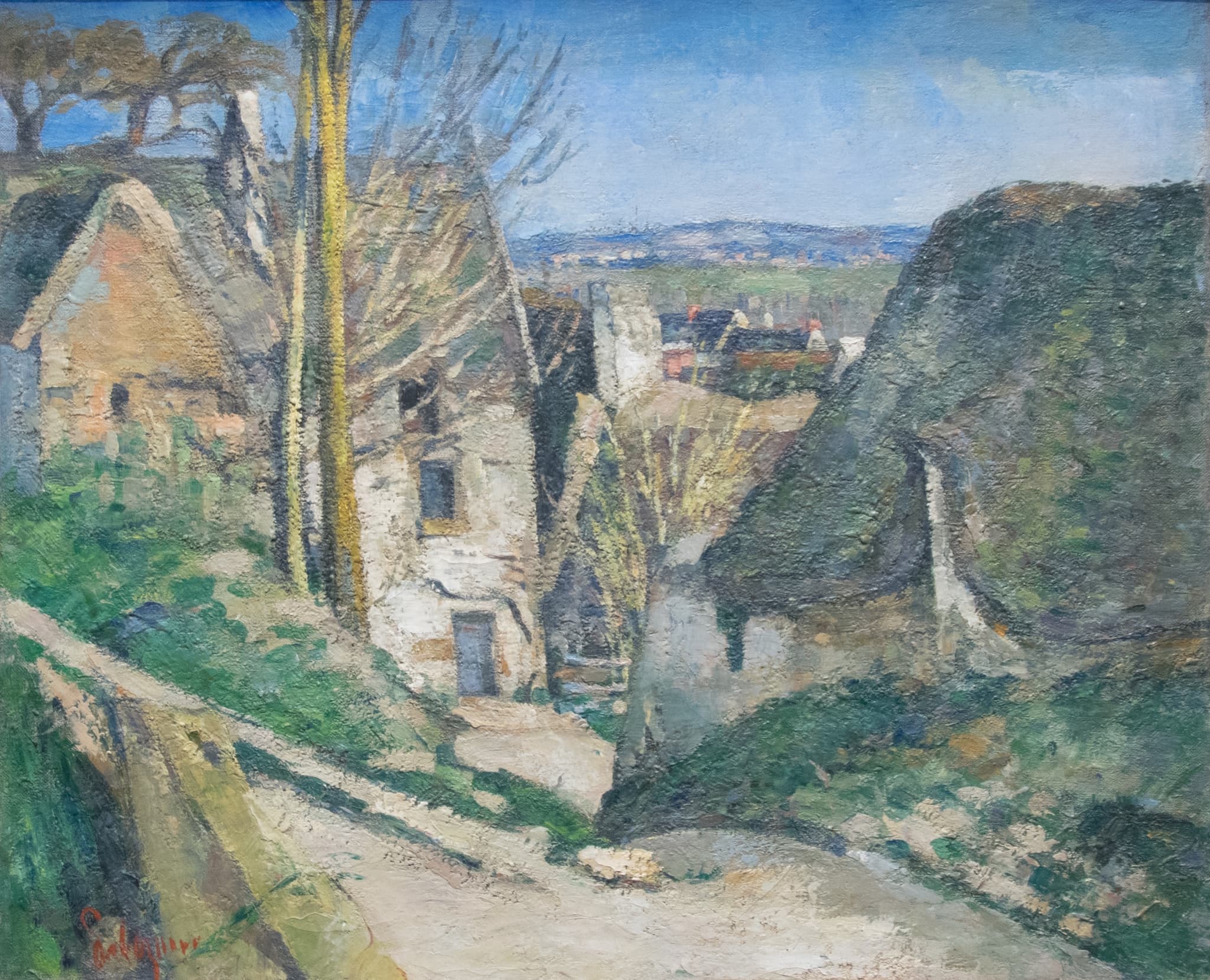
The Bridge at Villeneuve-la-Garenne vs The House of the Hanged Man
Equilibrium under pressure
Focus question: What does stability mean when the world is shifting?
Flood at Port-Marly vs The Basket of Apples
Why This Comparison Matters
Seeing these artists together clarifies what modern painting asks of a viewer. Sisley trains the eye to register change without drama: how a bridge, a church, or a flooded street holds steady while weather and use reshape its look. That habit of attention—comparing a motif across hours or seasons—remains relevant whenever images claim to show the “state” of a place. Cézanne, by contrast, teaches how a picture can be built to hold perception itself: not as an instant, but as relations that endure. His tilted tables and faceted mountains show that truth in painting may require constructive choices that depart from a single view.
For a general reader, this comparison moves beyond labels like Impressionism and Post‑Impressionism. It gives a usable lens: if a Sisley feels calm, look for the optical envelope that binds stone, water, and sky; if a Cézanne feels solid yet unsettled, look for the scaffolding of strokes and warm–cool intervals that make it cohere. The difference is not taste but task. One calibrates the world’s flux on site; the other builds an order that can stand beside it.
Related Links
Sources
- The Metropolitan Museum of Art: Alfred Sisley, The Bridge at Villeneuve-la-Garenne (object page).
- Paris Musées (Petit Palais): Alfred Sisley, L’église de Moret, le soir (series context).
- Philadelphia Museum of Art: Paul Cézanne, Mont Sainte‑Victoire (object page).
- The Museum of Modern Art: Paul Cézanne, Mont Sainte‑Victoire (collection entry).
- Musée des Beaux‑Arts de Rouen: Alfred Sisley, Flood at Port‑Marly (series context).
- Musée d’Orsay: Paul Cézanne, The House of the Hanged Man (object page).
- Art Institute of Chicago: Paul Cézanne, The Basket of Apples (object page and conservation notes).
- Smarthistory: Paul Cézanne, Mont Sainte‑Victoire (analysis of planar/color logic).
- National Gallery of Art: Picturing France (Cézanne’s aim for a “solid and durable” art; “harmony parallel to nature”).
- Nelson‑Atkins/Princeton resources on Cézanne’s constructive stroke (technical summaries).
- Musée d’Orsay Magazine: Restoration and context for Sisley’s Flood at Port‑Marly (1876).