Atmosphere Measured, Intimacy Orchestrated
Both artists emerged from Gleyre’s studio and helped forge Impressionism by chasing unstable light outdoors. Sisley treats bridges, façades, and river towns as steady meters for weather; Renoir uses light to make nearness—touch, conversation, dance—feel bodily present. Each repeats motifs to test perception, but one calibrates time over structure while the other tunes sensation among people. Together they map two precise ways modern painting teaches attention.
Comparison frame: Can a painting be a barometer or a waltz? How Sisley’s measurements of weather over structure and Renoir’s orchestration of social intimacy reshape what we see.
Quick Comparison
| Topic | Alfred Sisley | Pierre-Auguste Renoir |
|---|---|---|
| Core aim | Calibrate weather and time across stable structures | Stage nearness—touch, gesture, décor—through luminous light |
| Typical motif | River towns, bridges, quays, civic façades | Dances, café tables, portraits, domestic music rooms |
| Serial method | Fixed‑vantage series (e.g., The Church at Moret) | Iterated figure schema (e.g., Young Girls at the Piano) |
| Treatment of space | Legible perspective; architecture readable amid flux | Setting often dissolves into an optical envelope around bodies |
| Figures | Small, scale‑giving presences more than anecdote | Primary carriers of meaning; choreographed gazes and hands |
| Color and touch | Cool, even strokes binding sky, water, and stone | Tactile color; warm–cool chords focused on flesh and fabric |
| Modernity emphasis | Infrastructure and environment as lived systems | Public intimacy and social tempo as modern experience |
| Exhibition path | Remained landscape‑centered within Impressionist shows | Moved between group and Salon; Ingres‑like tightening in 1880s |
Shared Ground
Sisley and Renoir share an origin scene and a problem. Trained together around Charles Gleyre’s studio in the early 1860s, they formed plein‑air habits along the Seine and at Fontainebleau that fed directly into Impressionism. Both exhibited with the group and leaned on Paul Durand‑Ruel’s modern dealership. Their common task was to register fleeting perception in modern life: glare on water, shifting cloud cover, the bustle of new leisure spaces. Broken brushwork and high‑key color became tools for turning transitory effects into structure, whether at river suburbs or in the heart of a city.
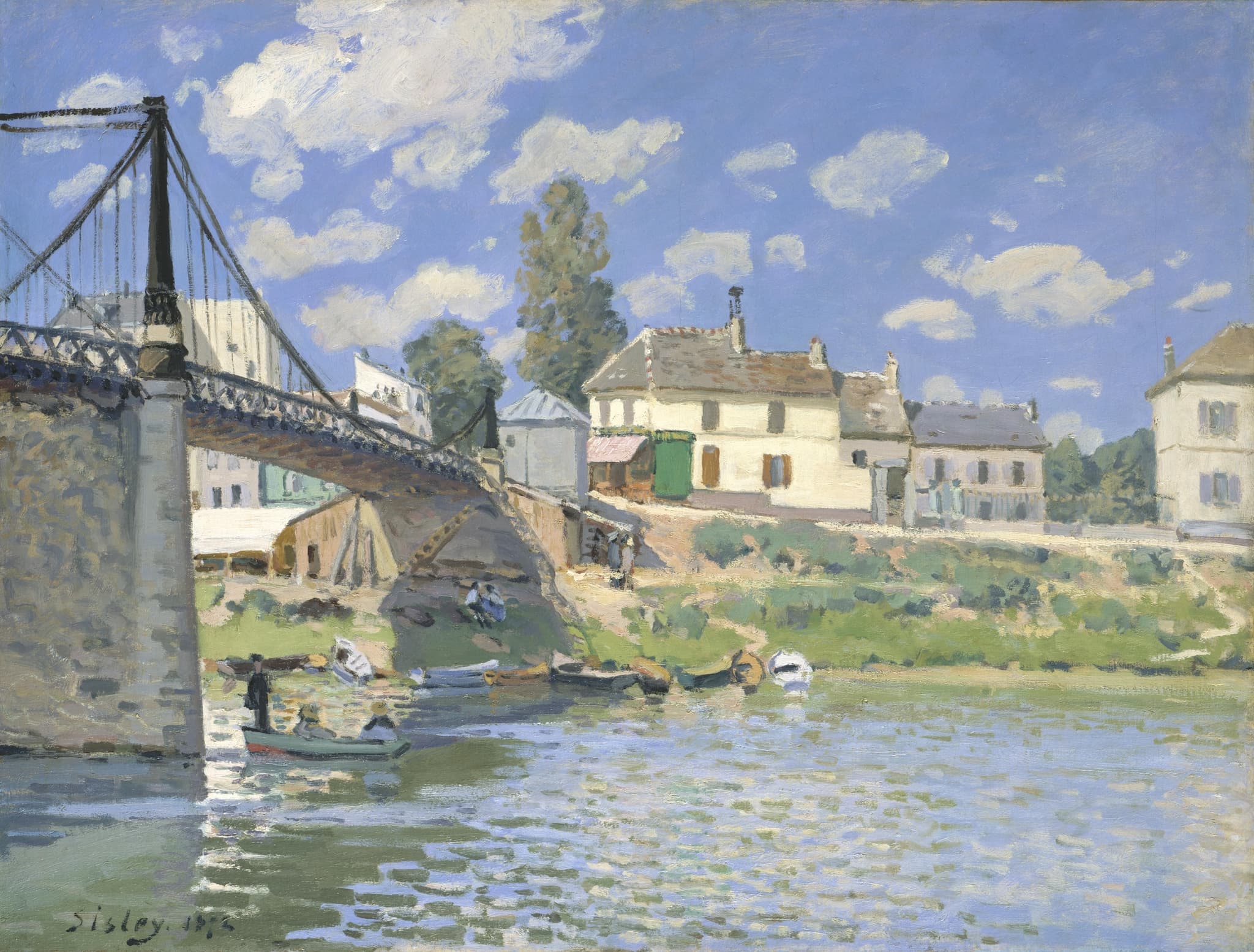
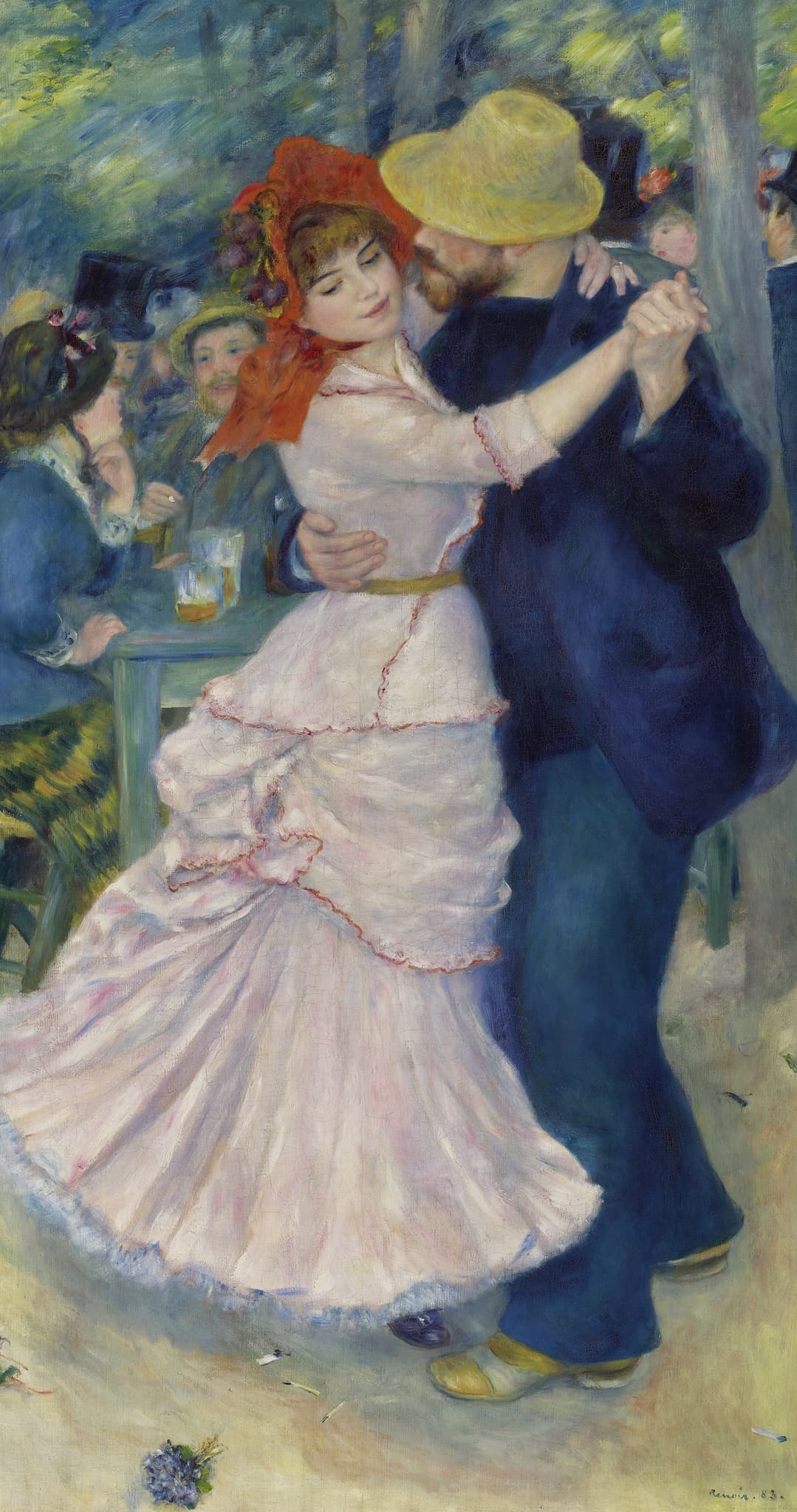
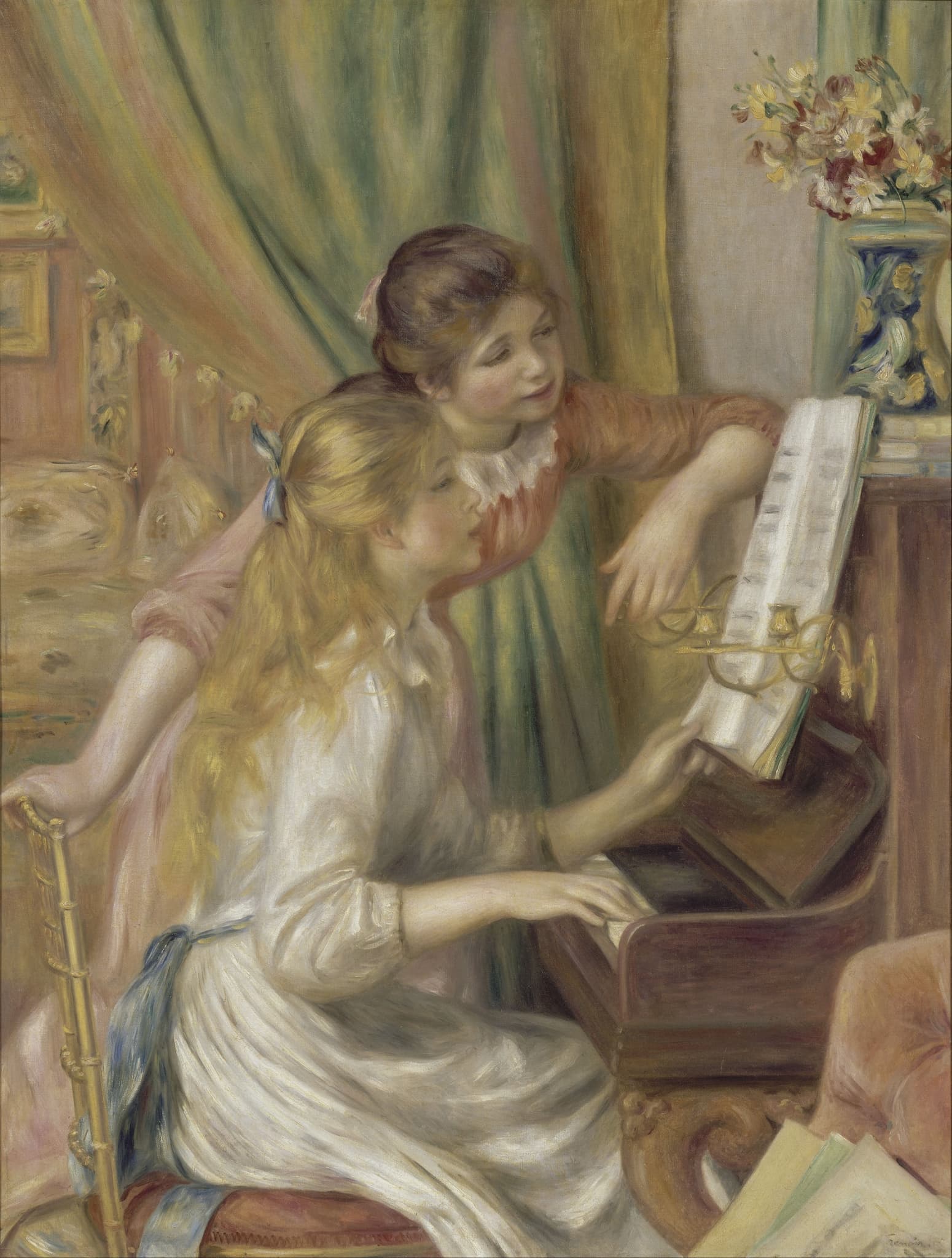
They also share a method: repetition as inquiry. Sisley returns to a motif from a fixed vantage to test how weather edits a façade or quay; Renoir restages intimate social types to refine how light, touch, and etiquette read in paint. This parallel is clearest in Sisley’s sequences at Moret or Port‑Marly and in Renoir’s multiple versions of Young Girls at the Piano. Both artists picture modernity close to home. Sisley’s The Bridge at Villeneuve‑la‑Garenne folds new engineering into everyday boating; Renoir’s Dance at Bougival enlarges a suburban café floor into a stage where color, music, and bodies mingle. Even monuments become laboratories of vision: Sisley’s churches and bridges hold steady while the day slips over them; Renoir’s Piazza San Marco lets domes, mosaics, and crowd dissolve into radiant atmosphere.
Decisive Difference
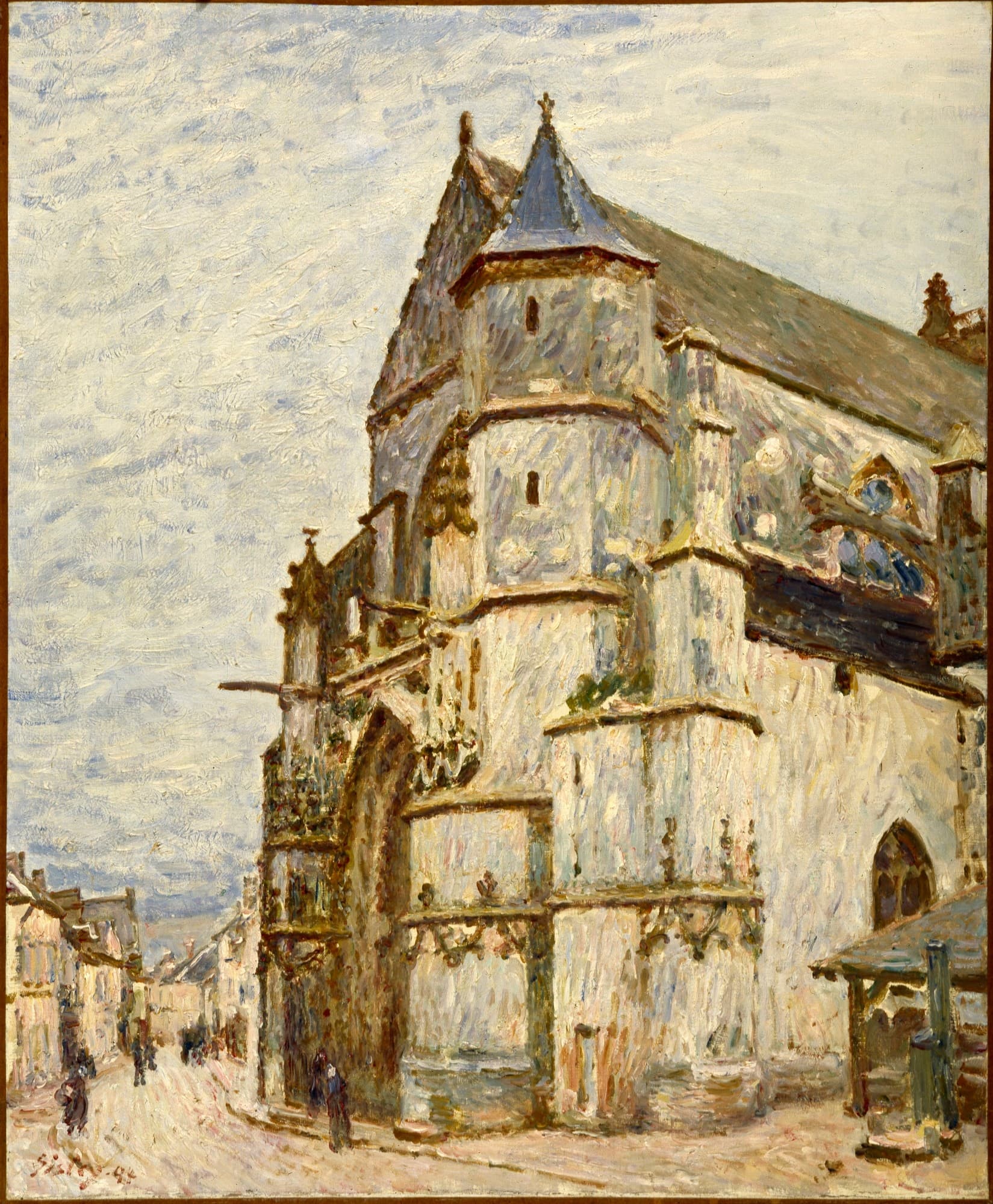
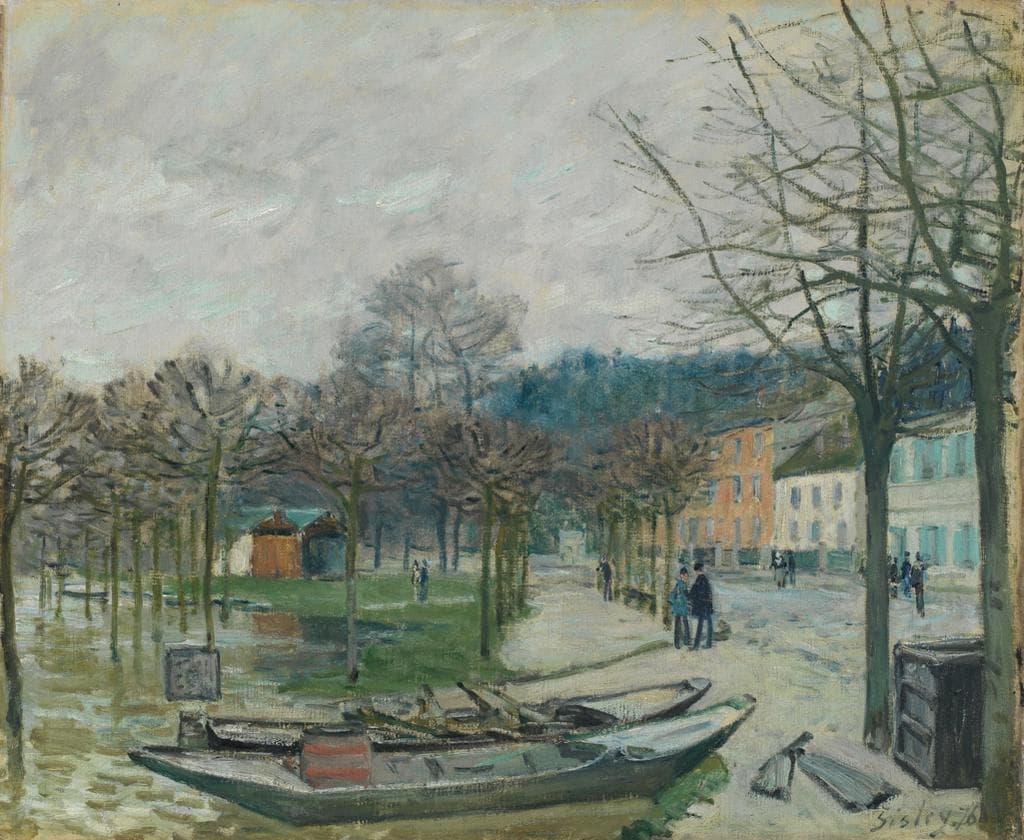
The decisive split is how each artist treats painting’s relation to the world’s stability. For Sisley, a motif is an instrument: fix the viewpoint, keep the architecture countable, and let weather and hour recalibrate appearance. In The Church at Moret, buttresses, portals, and cornices remain legible across variants; change lives in tonality and moisture. Flood at Port‑Marly is a civic street temporarily reassigned as canal, with trees and façades acting as measuring rods for rising water. The Bridge at Villeneuve‑la‑Garenne uses cables and deck as an armature that light traverses; infrastructure is not background but the device that makes flux readable. Observation is calibrated, serial, and public‑facing.
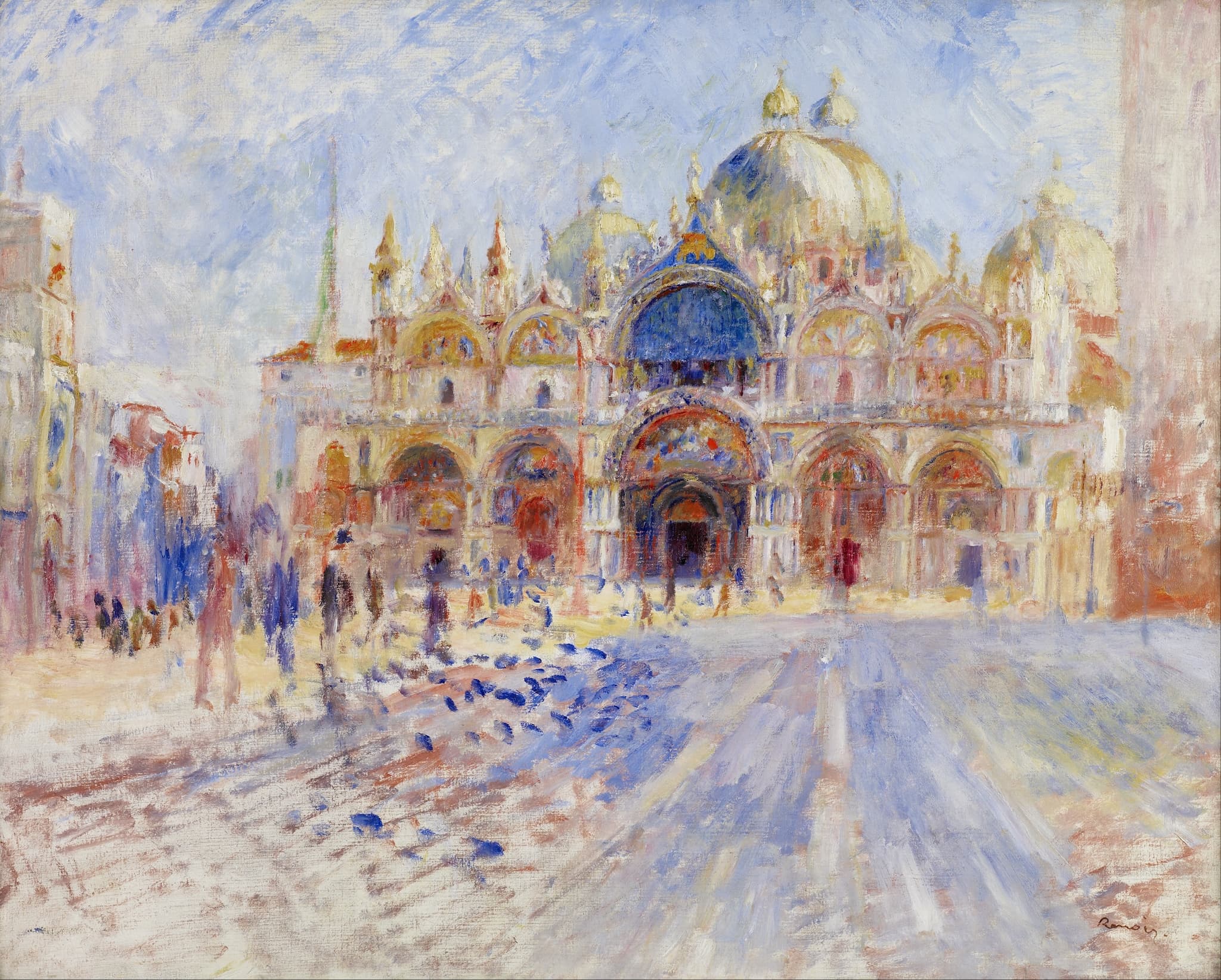
Renoir reverses the priority. Painting is a medium for generating proximity—he builds a palpable envelope of nearness around figures and shared rituals. In The Piazza San Marco, Venice, the basilica’s identity yields to a vibrating field of color so that light itself carries grandeur. Dance at Bougival concentrates warm flesh against cool blues to create a vortex of touch and motion; setting thins to social atmosphere. Even in his Ingres‑inflected turn of the early 1880s, contour tightens chiefly to dignify contact and poise. Young Girls at the Piano iterates a domestic duet until harmony, finish, and public claim align. In short: Sisley shows how time writes over structure; Renoir shows how light stages intimacy. One treats the world as an atmospheric system anchored by things; the other, as a social field organized by bodies.
Paired Works
Monument as measure vs monument as light
Focus question: What happens to a famous façade when the subject is atmosphere versus optical event?
The Church at Moret vs The Piazza San Marco, Venice
Time: environmental cycle vs social beat
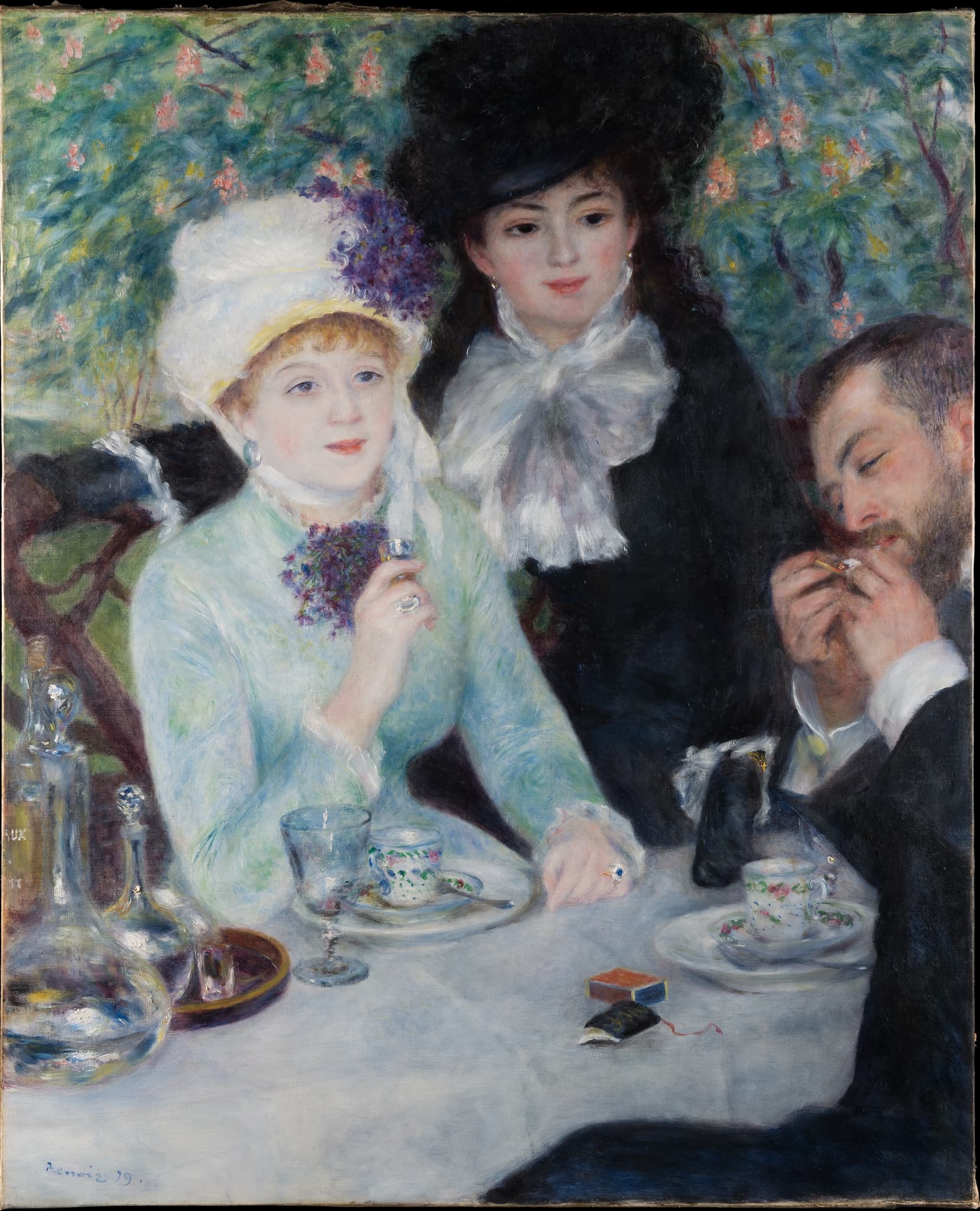
Focus question: How do these pictures tell time?
Flood at Port-Marly vs After the Luncheon
Modernity: infrastructure vs public intimacy
Focus question: Where does modern life live—in engineered passage or in shared touch?
The Bridge at Villeneuve-la-Garenne vs Dance at Bougival
Serial thinking: fixed façade vs iterated duet
Focus question: When a motif repeats, what changes—time or touch?
The Church at Moret vs Young Girls at the Piano
Why This Comparison Matters
Seeing Sisley next to Renoir clarifies two durable ways modern art extends perception. Sisley’s pictures teach how to read the world as a set of enduring structures constantly revised by air, season, and light. Bridges, quays, and churches become instruments that make time visible without theatrics. Renoir’s canvases teach how light creates nearness—how hands, fabrics, and glances organize experience inside a soft envelope of color. Dances, café tables, and domestic music rooms become laboratories for public intimacy.
These are not rival temperaments but complementary optics. The pair helps decode other Impressionists: why Monet can dematerialize a cathedral, or why Degas can make a rehearsal feel spatially thick. It also reframes familiar subjects. A river bridge is not only engineering; it is a way to register change. A luncheon is not only leisure; it is a choreography of attention and touch. Once you feel these logics, city squares, flooded streets, and crowded terraces become legible as systems—of weather and of relation—that painting can measure with unusual clarity.
Related Links
Sources
- The Metropolitan Museum of Art, Alfred Sisley, The Bridge at Villeneuve-la-Garenne (1872), object page
- National Gallery of Art, Washington, Alfred Sisley, Flood at Port-Marly (1876), object page
- Minneapolis Institute of Art, Pierre-Auguste Renoir, The Piazza San Marco, Venice (1881), collection context
- Musée d’Orsay, Pierre-Auguste Renoir, Jeunes filles au piano (1892), artwork page
- Museum of Fine Arts, Boston, Pierre-Auguste Renoir, Dance at Bougival (1883), object page
- The Frick Collection, Renoir’s Ingres period and the Dance series, exhibition resources
- Musée des Beaux‑Arts de Rouen, Alfred Sisley, The Church at Moret in the Morning Sun, artwork page
- Detroit Institute of Arts, Alfred Sisley, Church at Moret, After the Rain (1894), object page
- The Metropolitan Museum of Art, Auguste Renoir (1841–1919), Heilbrunn essay
- National Gallery, London, Inventing Impressionism: Durand‑Ruel and the Modern Art Market
- Musée d’Orsay, Pierre-Auguste Renoir, Danse à la ville (Dance in the City), artwork page
- Smarthistory, Painting modern life: Paris in the 19th century