Circulation vs Construction
Both artists rewired how painting teaches us to look in an age ruled by images. Warhol turns the canvas into a model of circulation—serial screens, grids, and fading pulls that make viewers scan and compare. Picasso turns it into a model of construction—fractured, interlocking planes that demand reconstruction and witness.
Comparison frame: How do Warhol’s systems of repetition and Picasso’s systems of fracture each retrain our eyes—one to read images as circulating commodities, the other to rebuild vision from conflicting viewpoints—and what does that reveal about seeing in a modern media age?
Quick Comparison
| Topic | Andy Warhol | Pablo Picasso |
|---|---|---|
| Core model of painting | A system of circulation: silkscreen, grids, repeat pulls | A system of construction: planes, joins, manual revision |
| How the viewer looks | Scan and compare near-duplicates; read attrition and slippage | Reassemble fractured viewpoints; hold simultaneity in mind |
| Relation to mass media | Imports publicity/wire photos; keeps mechanical signatures visible | Adopts newsprint codes (grisaille) but reauthors through drawing |
| Face as public emblem | Celebrity heads as repeatable types (Marilyn, Elvis) | Allegorical heads as civic feeling (Weeping Woman) |
| Palette logic | Neon lure vs stark monochrome; silver “screen” grounds | Grisaille for testimony; high‑chroma dissonance for psychic strain |
| Display/installation | Retail cadence, contact‑sheet grids, uncut rolls cut to fit walls | Mural scale, studio-built assemblies, single-canvas climax |
| Violence and politics | Serial “Disasters” test numbness vs shock in circulation | Fracture and staging turn atrocity into public lament |
| Sacred borrowings | Secular icons/diptychs; Last Supper multiplied | Mater Dolorosa reworked; history‑painting scale |
Shared Ground
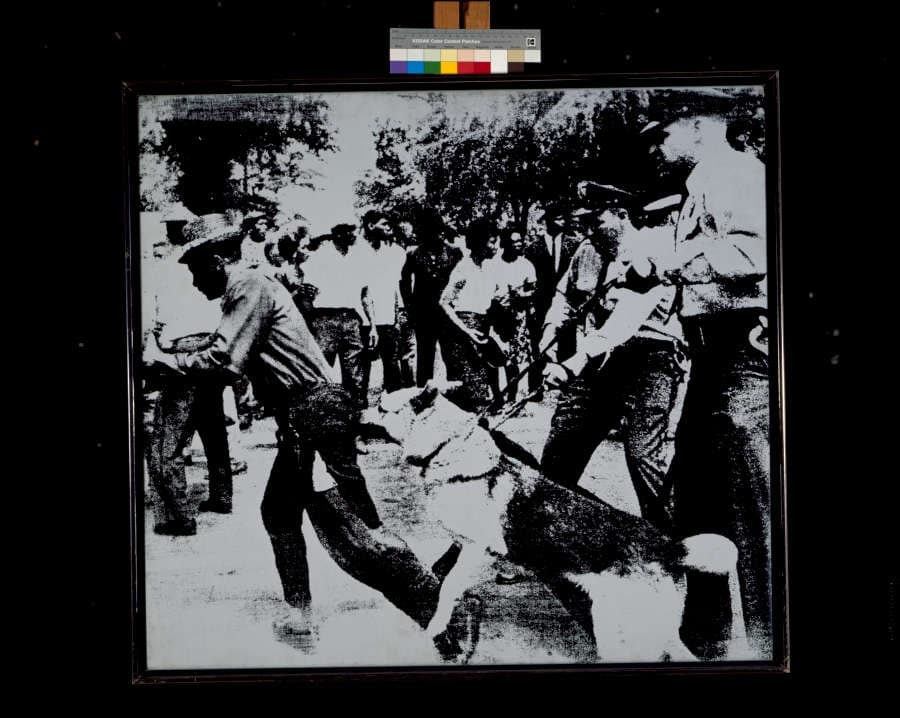
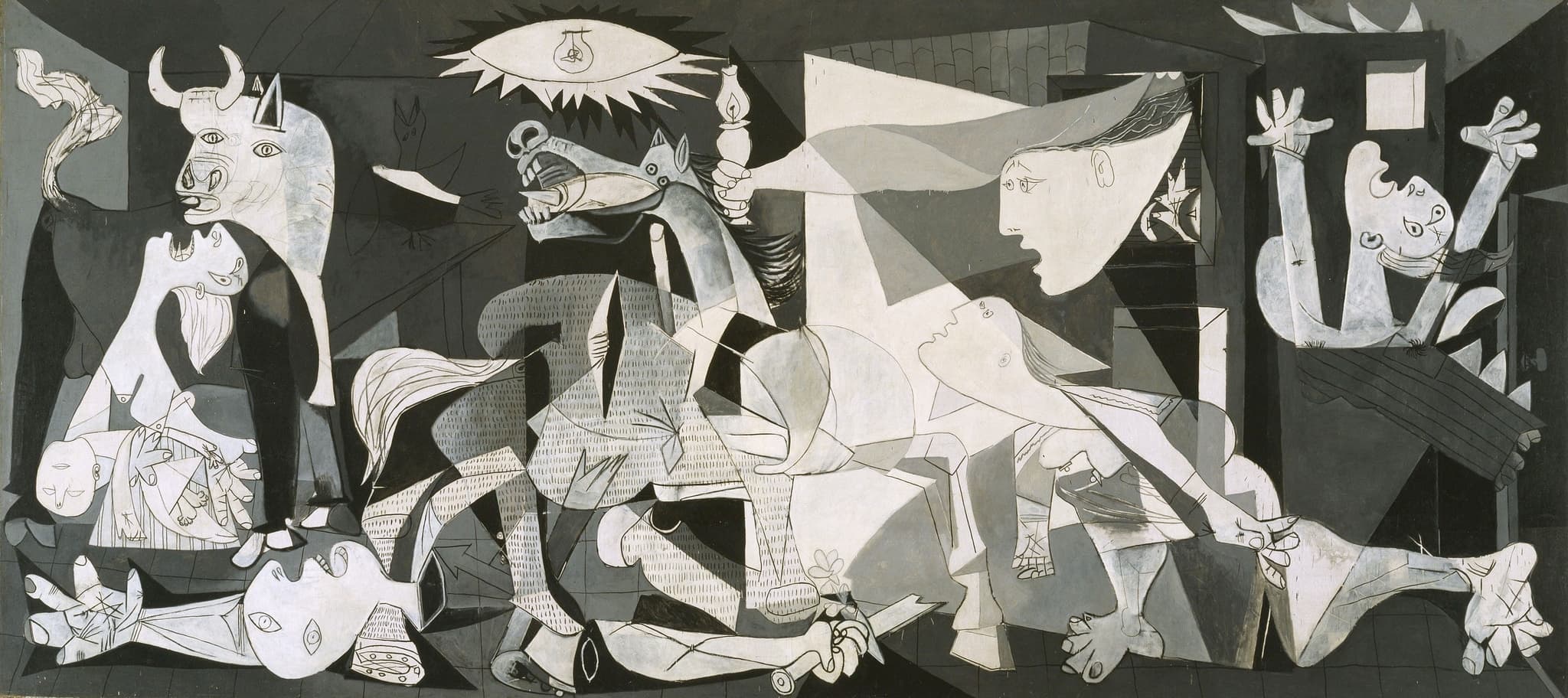
Warhol and Picasso meet on urgent terrain: how painting retrains perception when images arrive fast, loud, and public. Each bends studio practice toward mass‑media logic. Warhol feeds publicity stills, wire‑service shots, and package graphics through handwork and then silkscreen, keeping misregistration and ink drop‑outs visible so the surface admits its industrial birth. Picasso, confronted with press photographs of the 1937 bombing of Gernika, absorbs newsprint’s grayscale authority into Guernica, a mural in sober grisaille that feels developed like film and read like a front page.
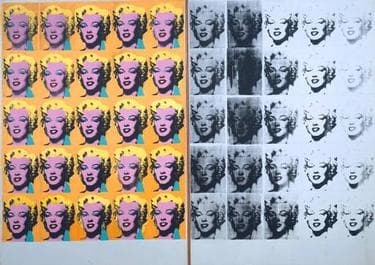
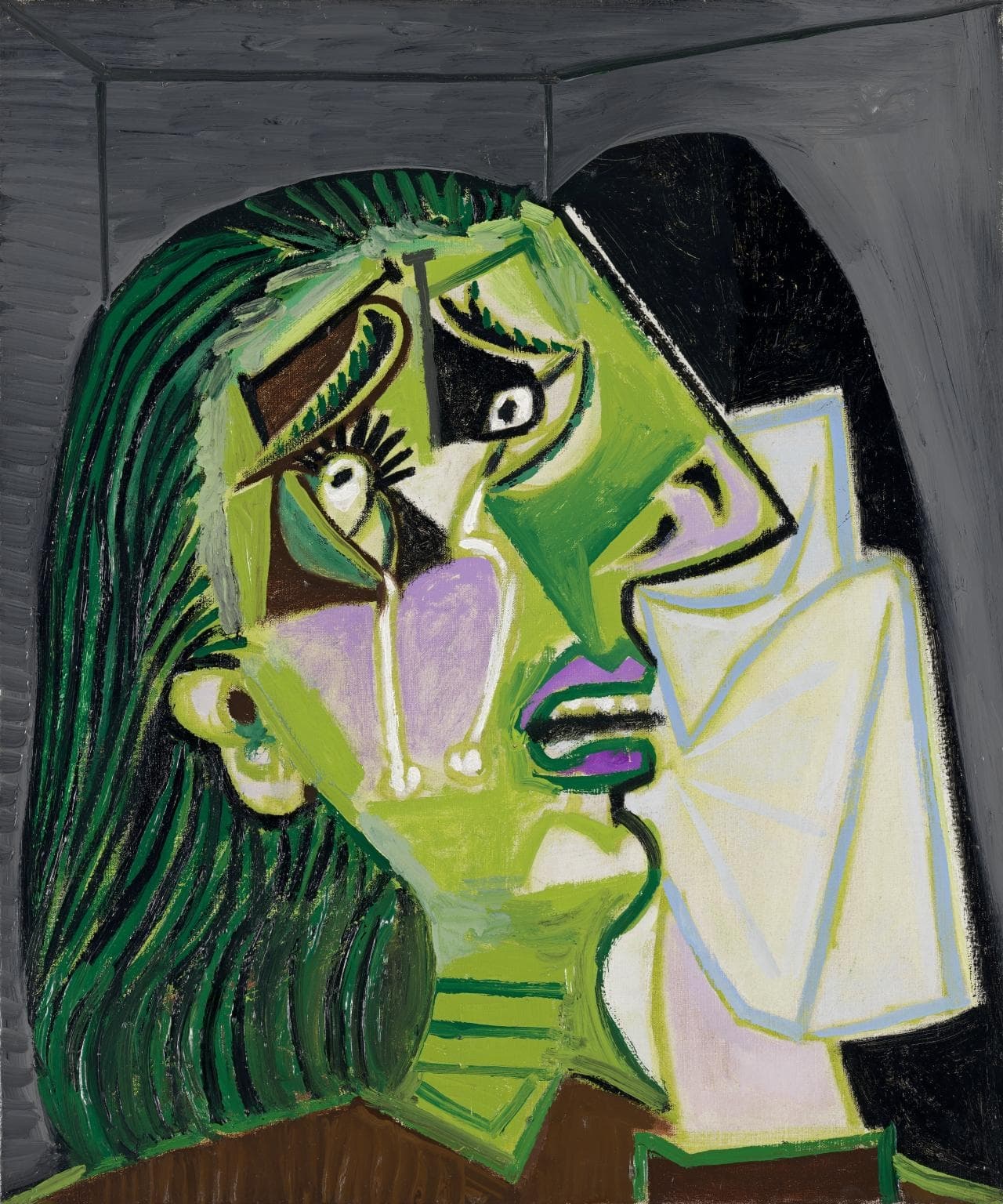
Both convert faces into emblems calibrated for public use. Warhol’s Marilyns and Elvises are not psychological portraits but serial icons whose power grows by repetition and attrition; the image wears out as we watch. Picasso’s Weeping Woman extracts a mourner from Guernica and forges her into a modern Mater Dolorosa: grief engineered by planar drawing, clenched handkerchief, and claustrophobic color. Each artist also borrows sacred/art‑historical formats to reset modern vision—Warhol’s Marilyn Diptych frames celebrity as a secular altarpiece; Picasso scales civilian tragedy to history‑painting magnitude.
Crucially, both make seeing an active procedure. Warhol forces lateral scanning and minute comparison across nearly identical impressions, teaching viewers to read sameness/difference as content. Picasso compels mental reconstruction from fractured planes and compressed space, so that comprehension registers as a labor of witness. In both cases, painting is not a transparent window but a training ground for how images persuade, travel, and testify.
Decisive Difference
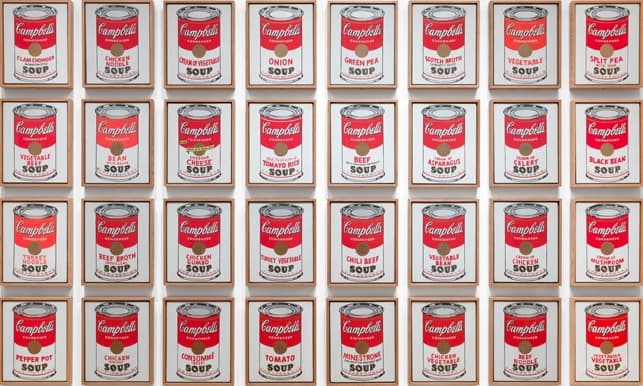
The decisive split is methodological and ethical: Warhol treats painting as a model of circulation; Picasso treats it as a model of construction. In Warhol, the artwork is a system that makes images persuasive—serial grids, repeated screens, and mechanical artifacts that display how pictures move through culture. Campbell’s Soup Cans mimics a grocery aisle, making us count small differences within a fixed template; the Elvis canvases, printed on silver grounds and sometimes shipped as uncut rolls, literalize broadcast and installation thinking. Misregistration, ink starvation, and halftone grit are not flaws but content: aura is produced and eroded by repeat exposure.
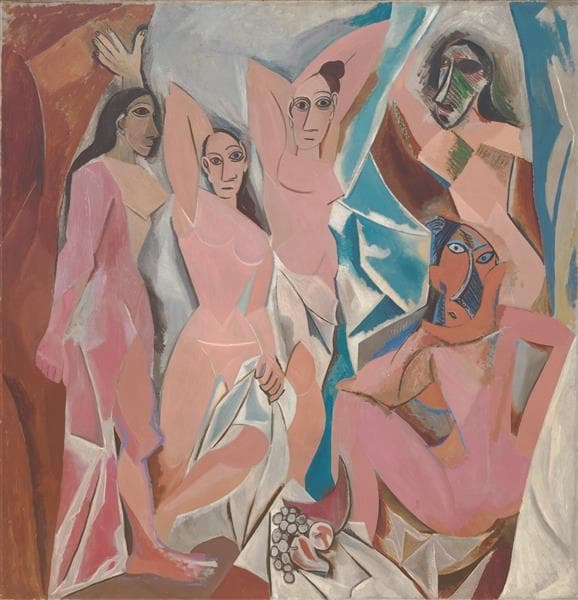
Picasso’s project, by contrast, rebuilds vision from collisions of planes, viewpoints, and compressed stages. Les Demoiselles d’Avignon detonates single‑point perspective, forcing the viewer to assemble bodies from splintered facets. Guernica fuses Cubist fracture with the rhetoric of newsprint to convert atrocity into public lament: electric bulb versus oil lamp, technological glare versus human witness. The canvas remains a site of hand‑drawn revision and allegorical assembly, where meaning is constructed rather than streamed.
Put simply: Warhol models how images circulate and wear down in a media economy; Picasso models how images are built to hold together under pressure. Warhol trains us to scan and compare; Picasso trains us to reconstruct and testify. The difference clarifies two answers to a modern problem—whether painting should mirror image‑flow or fortify the act of making meaning against it.
Paired Works
State Violence, News, and the Picture
Focus question: What changes when a press image is repeated versus reinvented in grisaille?
Icon Faces: Fame and Grief
Focus question: How do repetition and fracture alter empathy in a single face?
Marilyn Diptych vs The Weeping Woman
Shock Points that Reset Looking
Focus question: How does each work retrain the viewer’s body?
Campbell's Soup Cans vs Les Demoiselles d'Avignon
Portrait as Type: Role vs Negotiated Self
Focus question: Is identity repeatable or internally split?
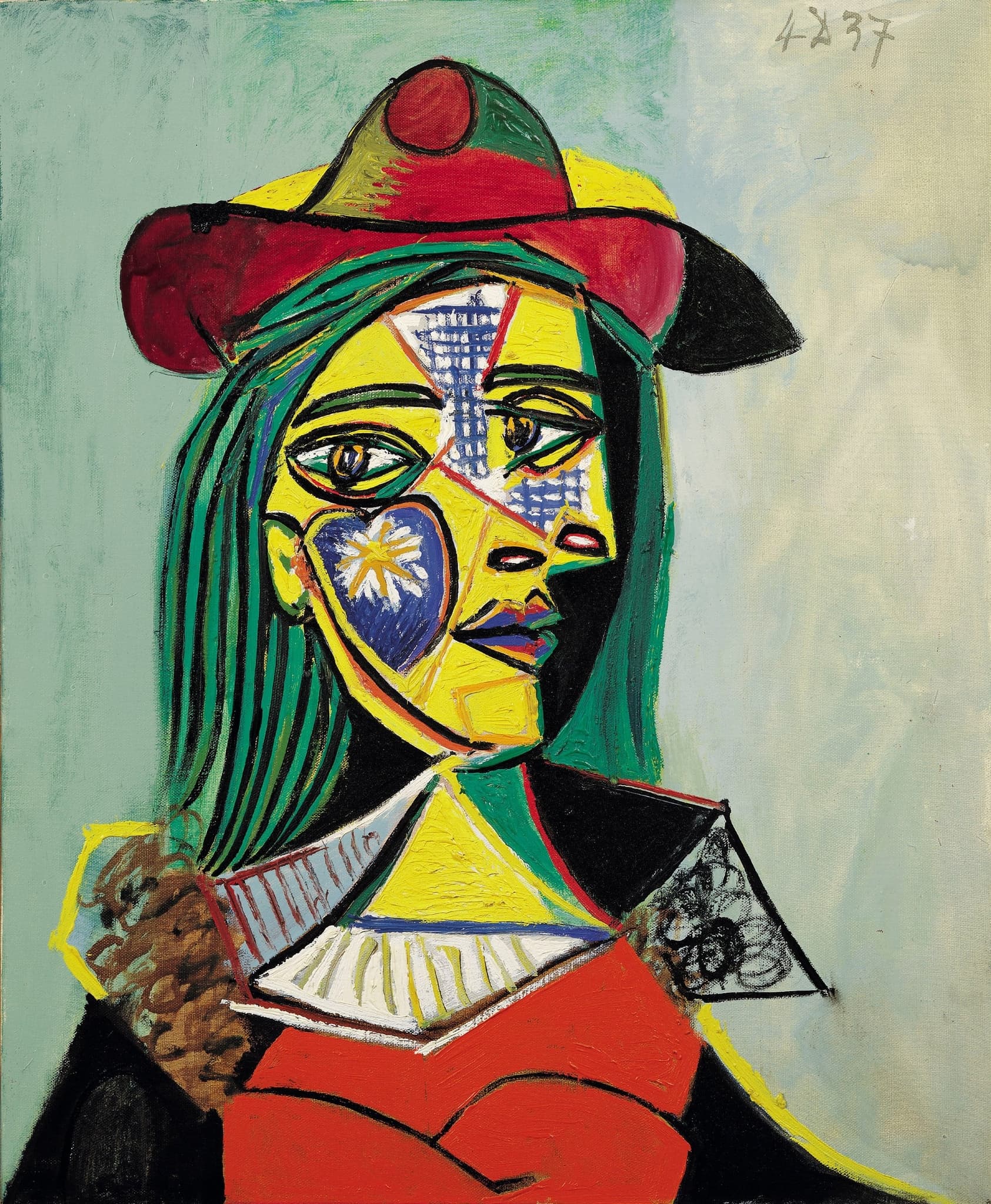
Triple Elvis [Ferus Type] vs Woman in Hat and Fur Collar (Marie-Thérèse Walter)
![Triple Elvis [Ferus Type]](/_next/image?url=https%3A%2F%2Fstorage.googleapis.com%2Fsite-images-programmatic%2Fpaintings%2F1771915343451-6gzg8m.jpg&w=3840&q=75&dpl=dpl_ASiQPiqukSad84i91Tcm2dUShHhL)
Why This Comparison Matters
Warhol and Picasso offer two durable toolkits for reading images now. In feeds saturated by repeats, templates, and remixes, Warhol’s model of circulation teaches how to see sameness working on us: what repetition promises, how allure and fatigue alternate, where the system shows its seams. In a world of edited clips, conflicting accounts, and flattened spaces, Picasso’s model of construction teaches how to rebuild a scene responsibly: to piece together fragments, weigh lights against shadows, and understand composition as testimony.
Their split is not academic. It clarifies choices faced by artists, journalists, and viewers: mirror the flow to expose it, or slow it down to reconstruct meaning. Looking at Race Riot beside Guernica, Marilyn beside the Weeping Woman, we gain a vocabulary for ethics under mediation—how pictures persuade, wear out, and still carry truth. The result is a steadier eye: one that can scan a grid without being fooled by quantity, and one that can hold fractured evidence together without forcing false unity.
Related Links
Sources
- MoMA: Andy Warhol, Campbell’s Soup Cans
- MoMA: Andy Warhol, Race Riot
- Smarthistory: Warhol’s Marilyn Diptych
- Museo Reina Sofía: Guernica, Room 205.10
- MoMA: Picasso, Les Demoiselles d’Avignon
- MoMA slideshow: Warhol’s Elvis works
- Guggenheim: Andy Warhol—The Last Supper
- Stanford Encyclopedia of Philosophy: Walter Benjamin