Morisot vs Degas: Two Ways to Stage the Instant
Berthe Morisot and Edgar Degas both make modern life—and modern looking—their subject. They replace grand narratives with the time-bound glance: a toiletry gesture, a rehearsal pause, a boat slipping across the Bois de Boulogne. Their deepest split lies in ethics and engineering: Morisot builds a protective membrane around her subjects, while Degas builds an apparatus that reveals the systems behind appearance.
Comparison frame: When does looking become care, and when does it become control? Morisot and Degas on privacy, performance, and the construction of the modern eye.
Quick Comparison
| Topic | Berthe Morisot | Edgar Degas |
|---|---|---|
| What painting is | A membrane that negotiates access | An apparatus that exposes systems |
| Ethic of looking | Permissioned privacy; respect for absorption | Analytic proximity; viewer complicit in spectacle |
| Typical vantage | Near-at-hand, eye-level, thresholds and veils | Off-axis, raked floors, high/side views; studio composites |
| Light’s role | Pearly whites that emit; dissolving contours | Footlights/gaslight as technology that isolates |
| Signature handling | Swift, “vaporeuse” non‑finito that fuses figure and setting | Edited structures; pastel/monotype hybrids, serial variants |
| Everyday motifs | Reading, toilette, childcare, balconies, boats | Rehearsal, millinery, orchestra pit, laundresses |
| Face/identity | Often averted or blurred to secure autonomy | Often cropped or flattened by glare and angle |
| Social frame | Domestic intimacy and negotiated public presence | Institutions (Opéra, shop, pit): hierarchy and labor |
Shared Ground
What Morisot and Degas share is a decision to make modern life—and modern looking—their subject. Both turn away from history painting toward the present tense: women reading, dressing, boating, rehearsing, ironing. They treat those routines not as anecdotes but as structures of attention. In Morisot, quick, zig‑zag facture binds figure and environment so that a body and the light that touches it arrive together; in Degas, cropped edges, steep diagonals, and footlights stage a glance taken on the fly yet built with studio discipline.
Each replaces narrative with optics. Morisot’s interiors breathe like plein air: whites and light grounds emit a pearly radiance that registers time and care. Her women—absorbed in books or toilette—hold their own privacy, often through turned faces, unreadable mirrors, or veils that literally mediate access. Degas, by contrast, shows rehearsal rather than performance, labor rather than illusion. Raked stages, orchestra pits, and millinery counters reveal the institutional scaffolding of culture: masters correct, abonnés watch from the wings, commodities press forward, and bodies become instruments of training.
In both artists, the ordinary becomes consequential once organized by angle, touch, and illumination. Summer’s Day compresses public space into companionable nearness; Place de la Concorde stretches it into estrangement. Woman at Her Toilette and The Tub reframe the nude as a modern act of self‑maintenance, their meanings shaped by where we stand and what we’re allowed to see. The result is a shared project: to translate the sensation of the instant into form, and to test what painting can know about the social terms of visibility.
Decisive Difference
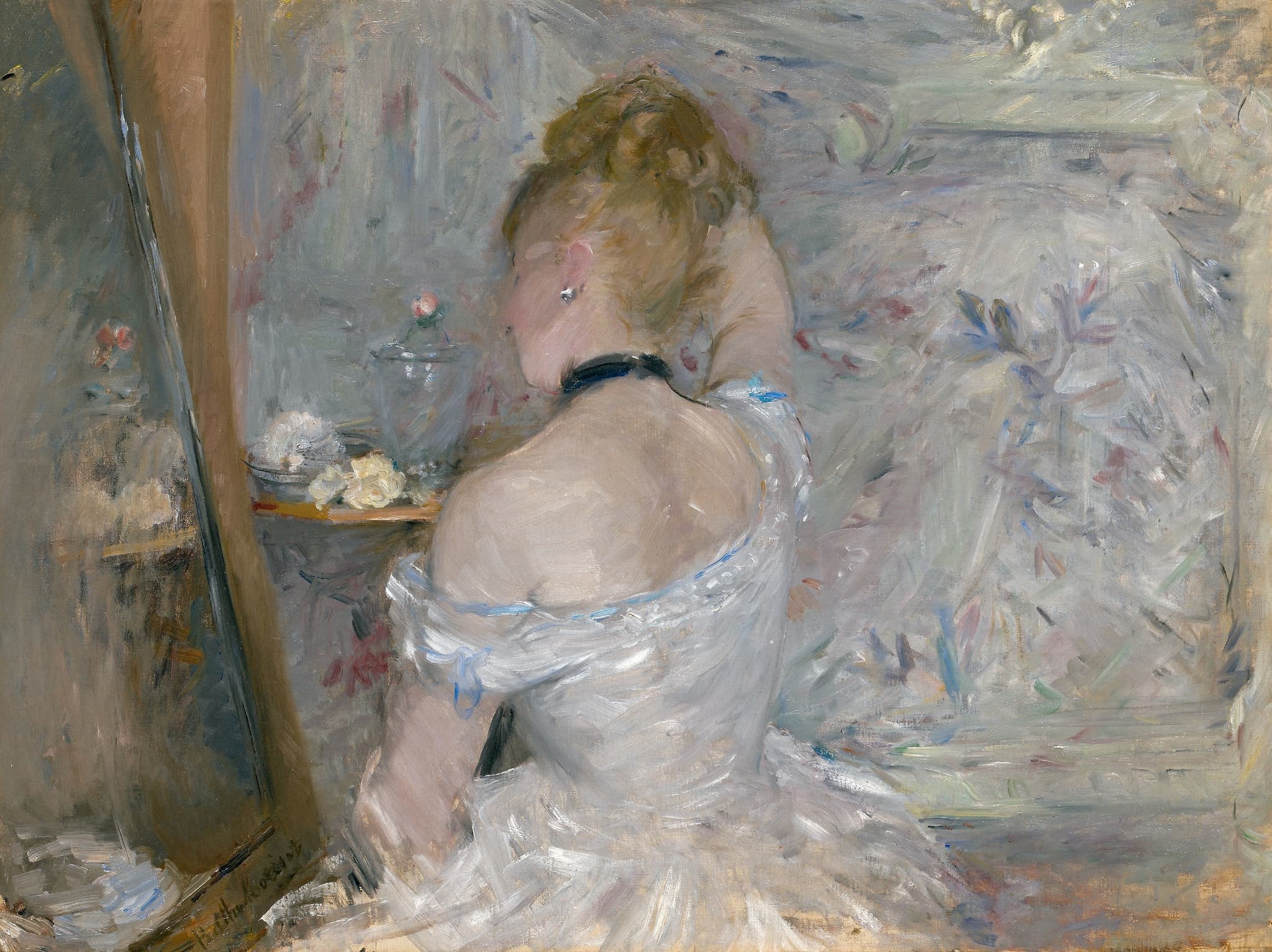
Morisot treats painting as a protective membrane. She negotiates access to her sitters through veils, thresholds, and a luminous non‑finito that keeps identity in flux. Faces are often withheld or blurred; mirrors bloom with objects instead of clear reflections; balconies and verandas function as buffers. The effect is ethical as much as optical: looking is permissioned. In The Cradle, the mother’s raised arm draws a veil between us and the infant, asserting the right to privacy within modern life. In Woman at Her Toilette, the mirror refuses the classic vanity reveal, and Morisot’s signature rides its edge—authorship inserted into the apparatus of looking without surrendering the sitter’s autonomy.
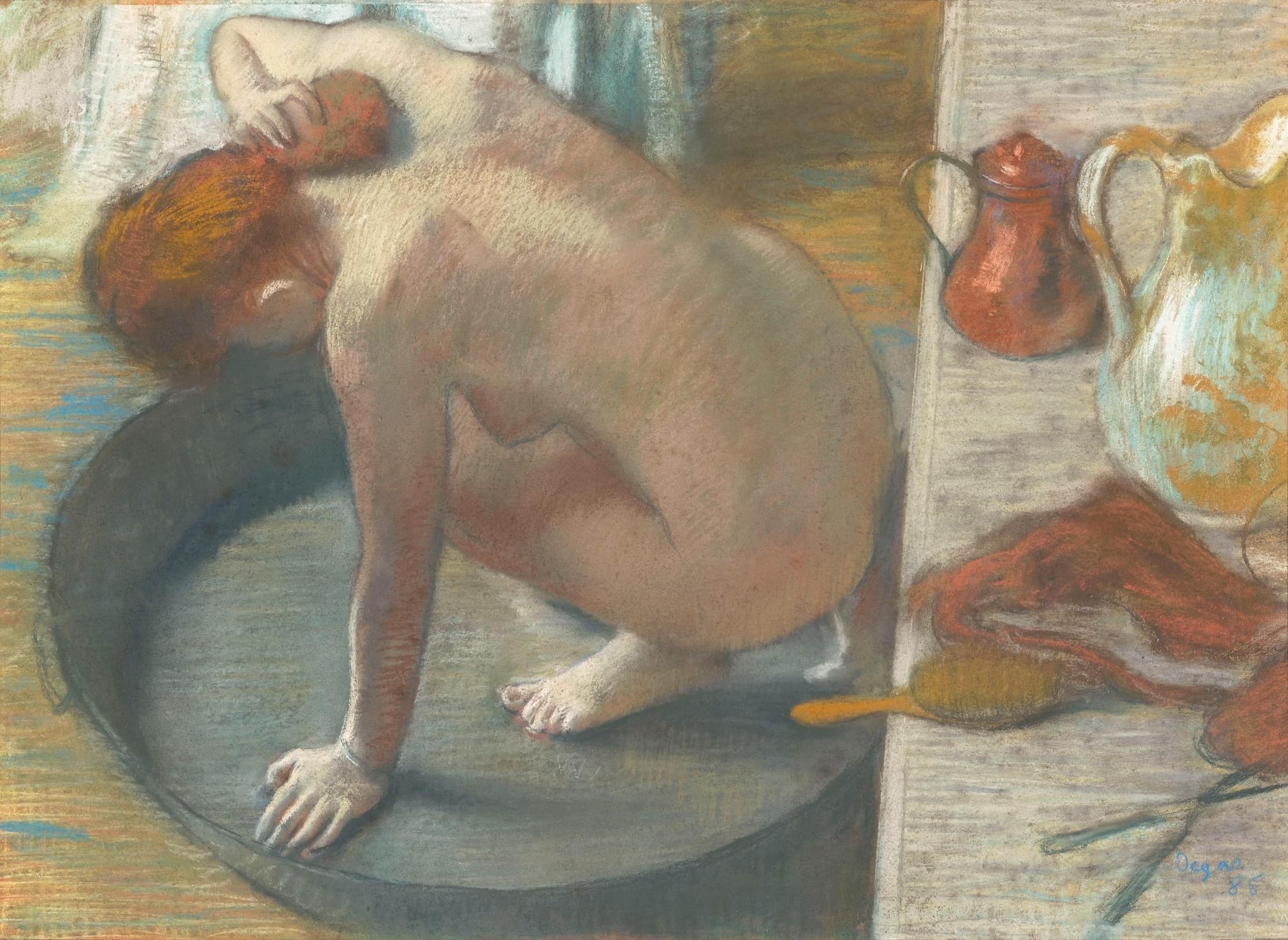
Degas builds painting as an apparatus that exposes the systems behind appearance. He composes from studies, adopts oblique vantage points, and uses artificial light not to flatter but to analyze. Cropping, raked floors, and orchestral foregrounds reveal institutions at work: the Opéra’s footlights isolate gestures; abonnés haunt the wings; a watering can cools the studio’s parquet; a millinery counter crowds the plane with goods that eclipse their maker. The Tub’s overhead angle and split figure/still‑life fuse proximity with design, making the viewer feel both near and unseated. The result is an ethics of analytic looking: we see the labor, hierarchy, and technology that produce spectacle—and we feel our own complicity in the view.
Paired Works
Private care, two ethics of access
Focus question: What changes when a private act is staged by permission (Morisot) versus engineered access (Degas)?
Woman at Her Toilette vs The Tub
Morisot turns the toilette into a negotiation. The sitter faces away; the mirror clouds into a soft inventory of jars and a white flower instead of delivering a face. Identity is in process, not on offer, and the artist’s signature along the mirror’s edge quietly asserts control over what the ritual reveals. The silvery‑violet ground and feathered contour keep the figure inside her own atmosphere. Privacy isn’t a theme; it’s a structure built from paint, angle, and refusal to finish.
Degas answers with a constructed closeness. In The Tub, an overhead, keyhole vantage folds the body into a circular basin and counterposes it with a dense tabletop of ewer, copper pot, brush, and cloth. Pastel layers braid warm flesh with cool blue‑greys so the body reads as work—bracing, balancing, washing—rather than display. Shown in 1886 and indebted to monotype experiments, the image makes intimacy an engineered vantage: we see more, but on the artist’s terms. Morisot’s membrane protects access; Degas’s apparatus manages it.
Care’s veil vs spectacle’s glare
Focus question: How do a veil and footlights define what counts as visibility?
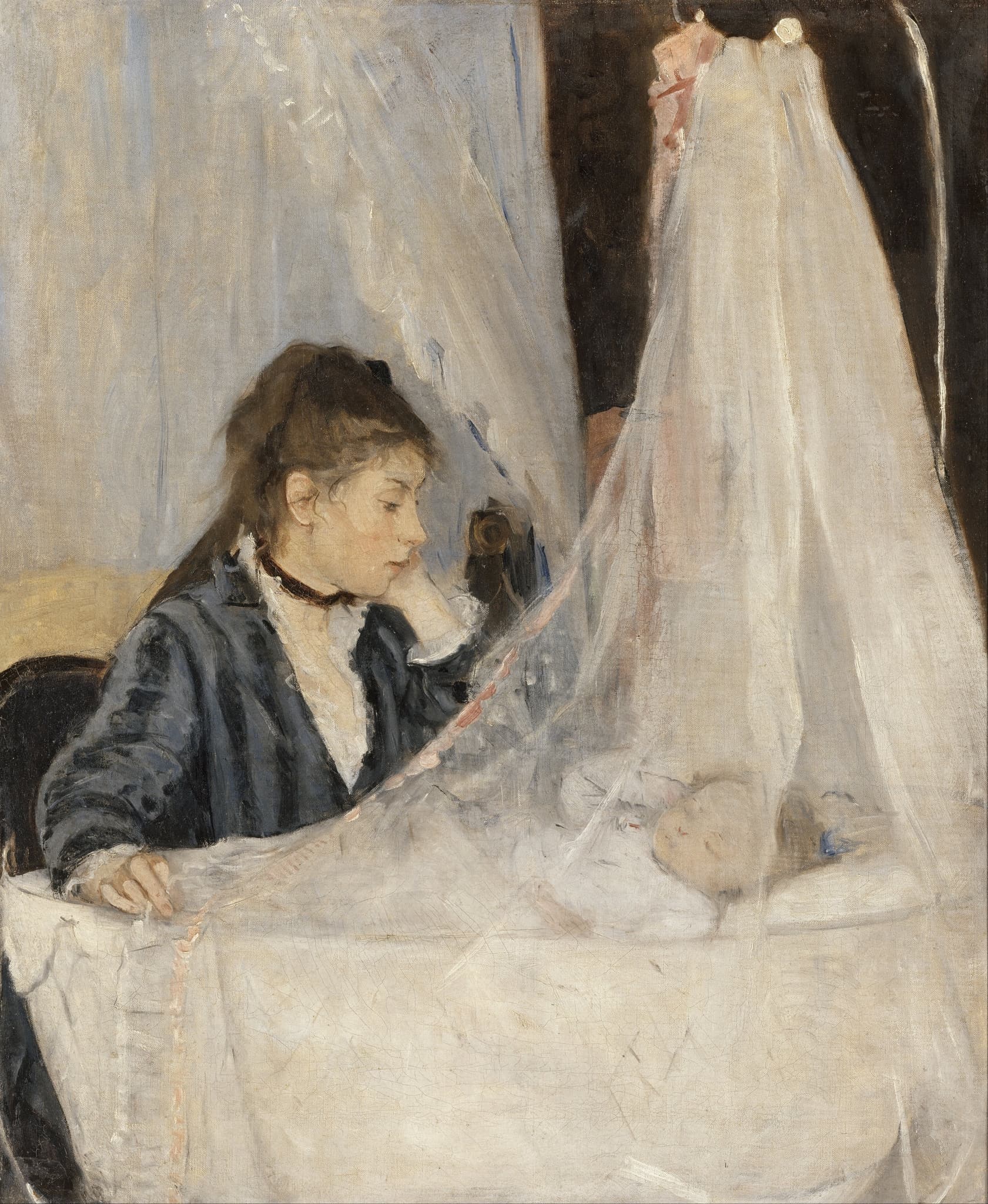
Morisot’s The Cradle, first shown in 1874, builds a diagonal bond between Edma’s lifted arm and Blanche’s bent elbow. The translucent veil softens light and draws a literal boundary between viewer and child; caregiving is rendered as an active architecture of protection, secured by a restricted range of whites and blues. The painting dignifies domestic privacy as a modern subject and makes access contingent on care.
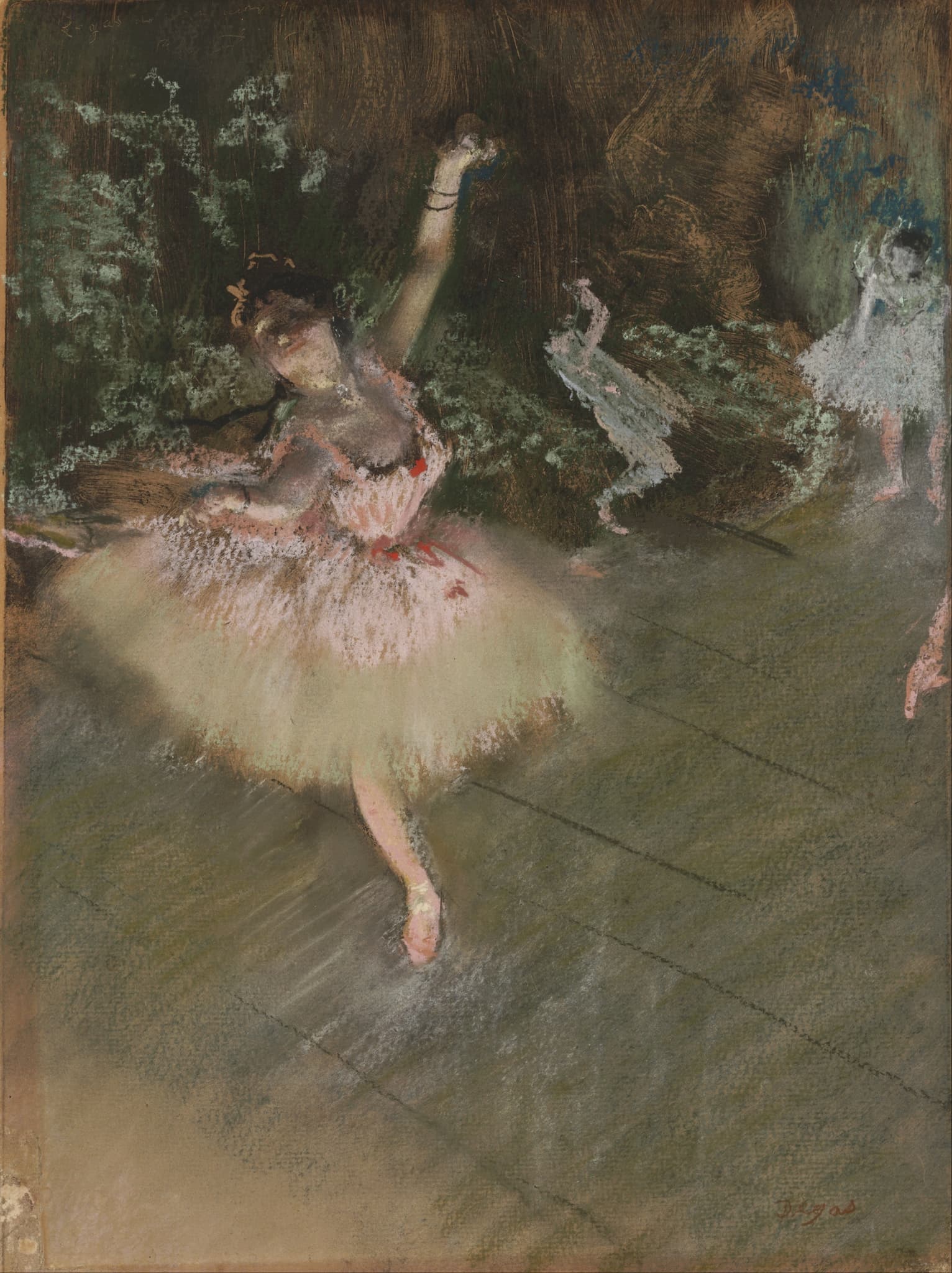
Degas’s The Star isolates an étoile under footlights on a tilted stage. The tutu flares like lit vapor against a murky field; ghosted corps dancers and a wing figure sharpen the sense that visibility is manufactured. Cropping and raked boards force us into a seat that is both privileged and precarious. Where Morisot moderates visibility with a screen, Degas stages it with technology—glare that creates triumph and loneliness in the same instant.
Public nearness vs urban estrangement
Focus question: What does cropping do to public space—bind us to companions or fracture the city?
Summer's Day vs Place de la Concorde
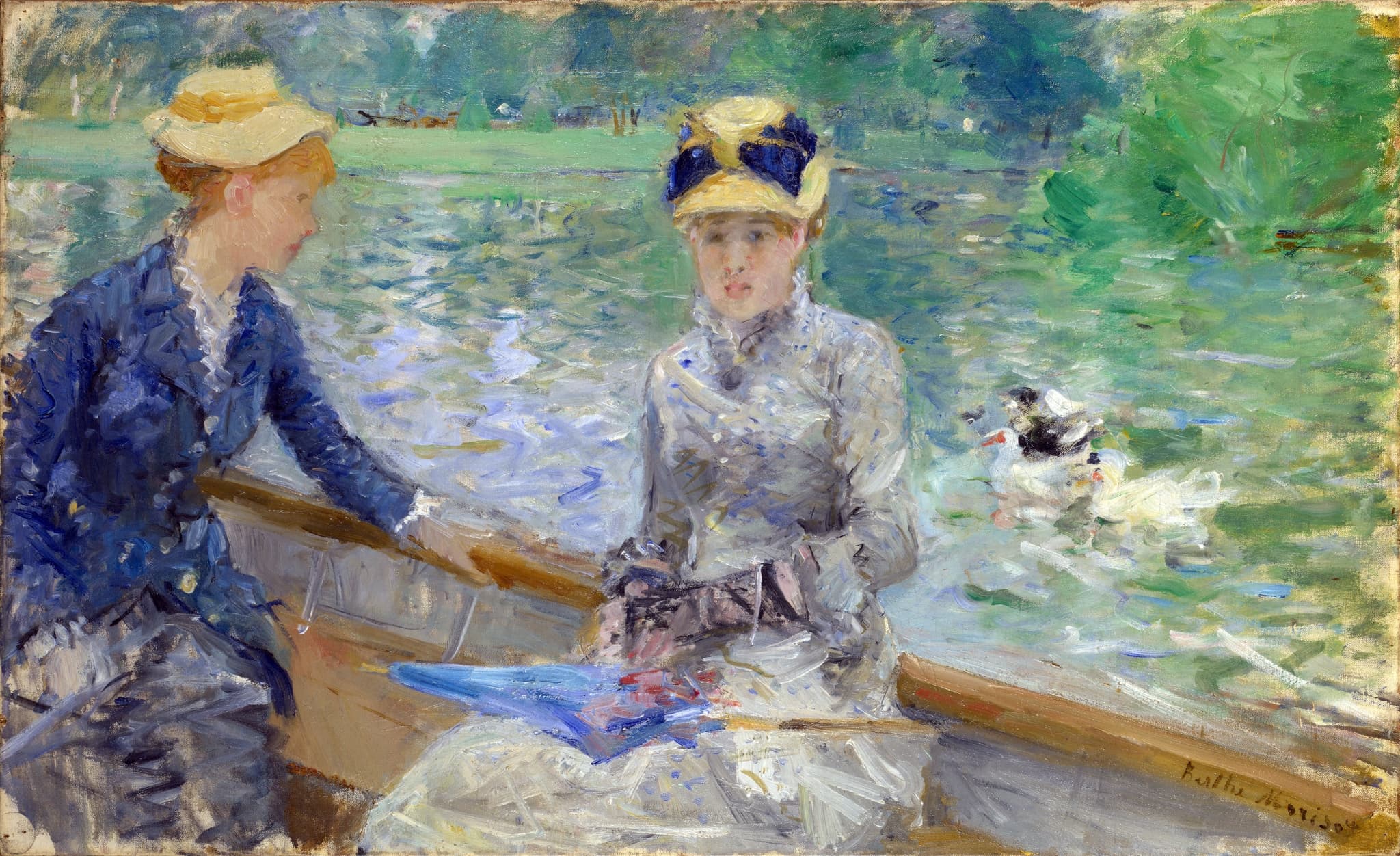
In Summer’s Day (probably exhibited in 1880 as The Lake in the Bois de Boulogne), Morisot pushes the boat close to the picture plane so the two women occupy our space. Zig‑zag strokes bind dresses, parasol, and water into one perceptual field; the women’s averted or inward gaze keeps the scene companionable yet untheatrical. Cropping creates intimacy without surveillance—public presence buffered by shared attention.
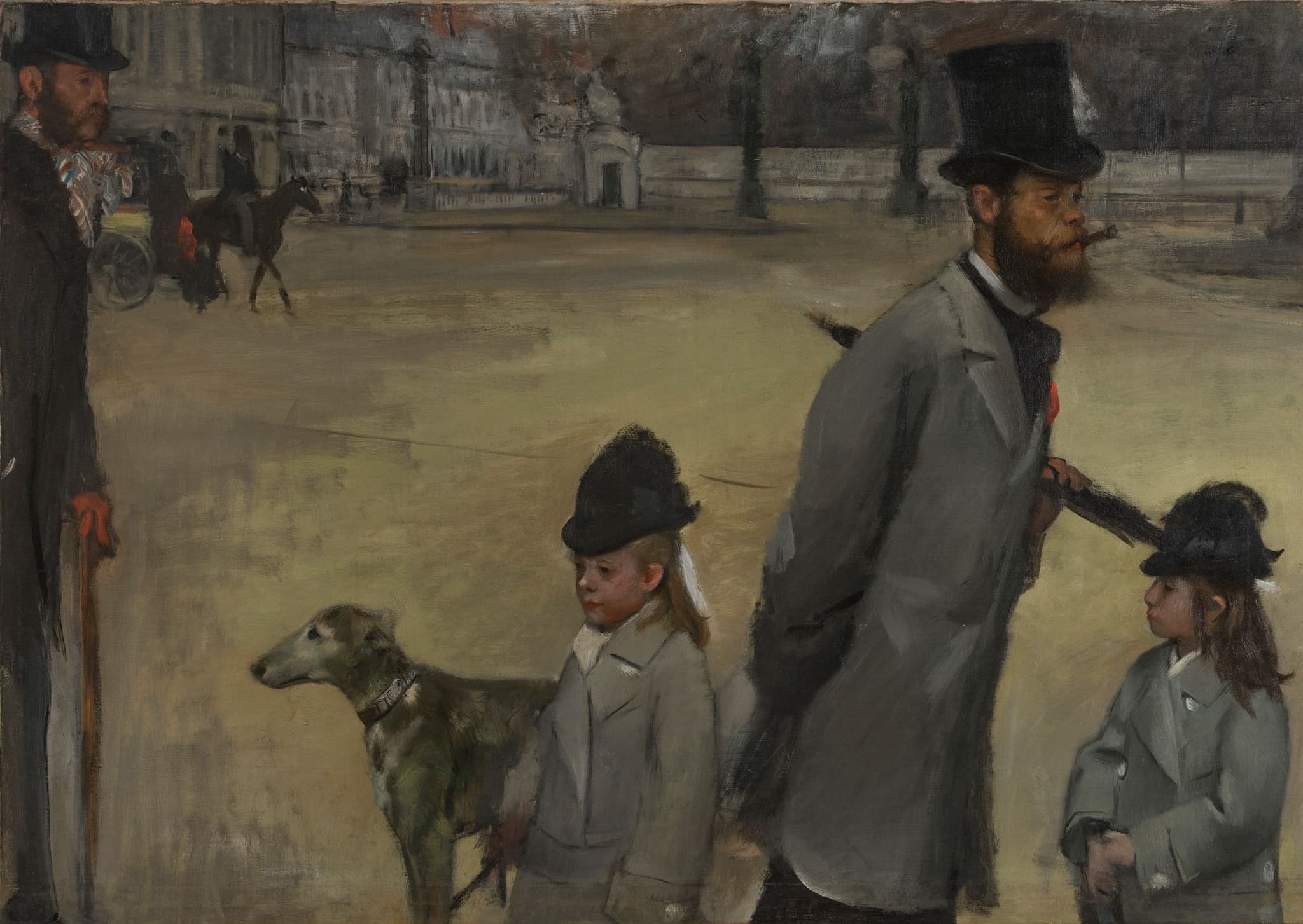
Degas’s Place de la Concorde (1875) uses cropping to opposite effect. Figures stride without contact, heads are cut by the frame, and a wide, scumbled plaza opens gaps between bodies. The “snapshot” modernity is carefully composed, and later trimming only intensifies the sense of a city seen in fragments. Morisot’s crop tightens a bond; Degas’s crop documents estrangement.
Attention anchored: mind or merchandise
Focus question: Where does attention live—within a reader or among goods and making?
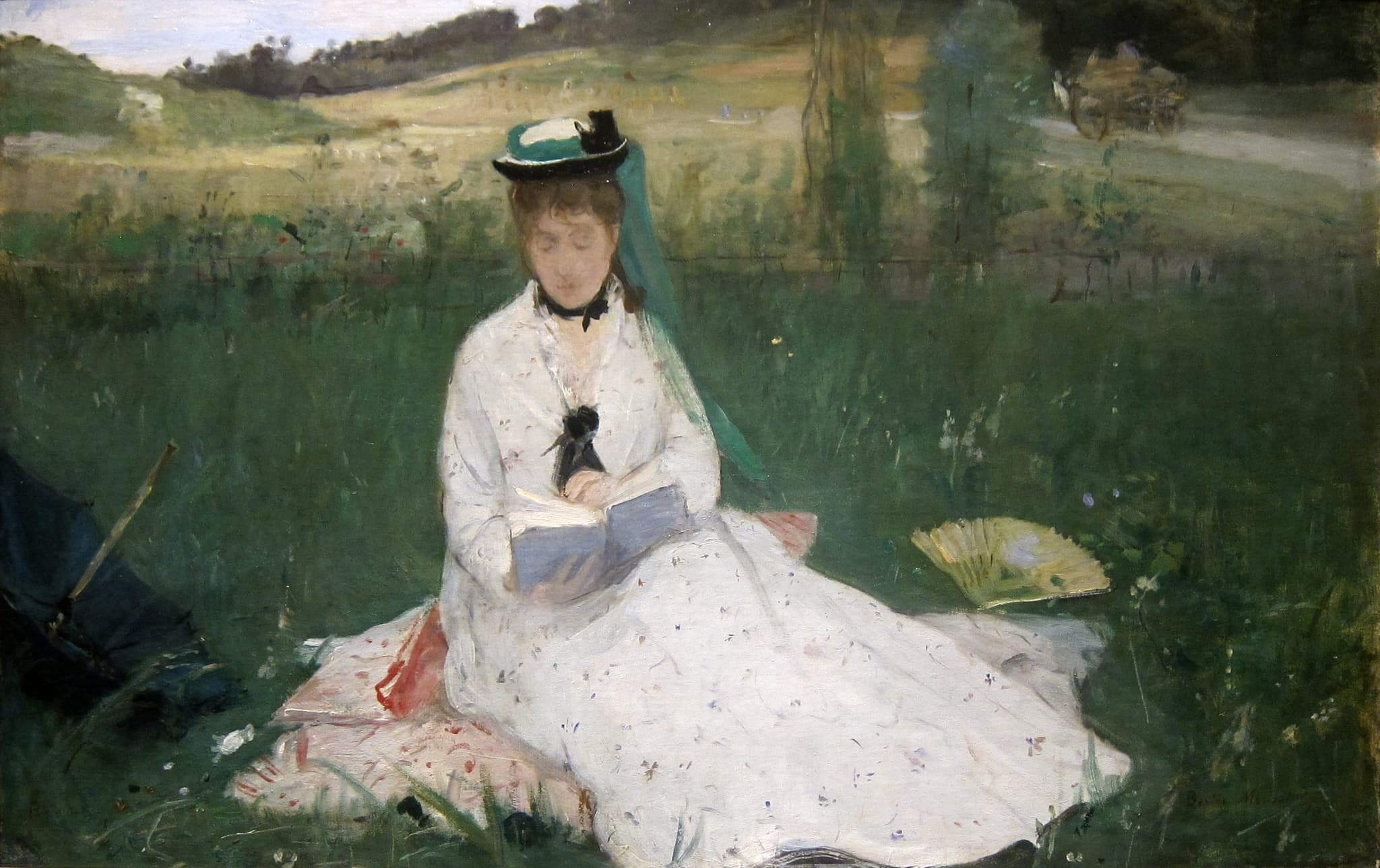
Morisot’s Reading (shown in 1874 as La lecture) is a manifesto of inwardness. A white dress catches violets and greens from the lawn; the face is held to a few strokes, declining portrait specificity. A parasol and fan lie idle, and the distant carriage drifts past. The subject is concentration itself—attention as a self‑secured private space in the open air.
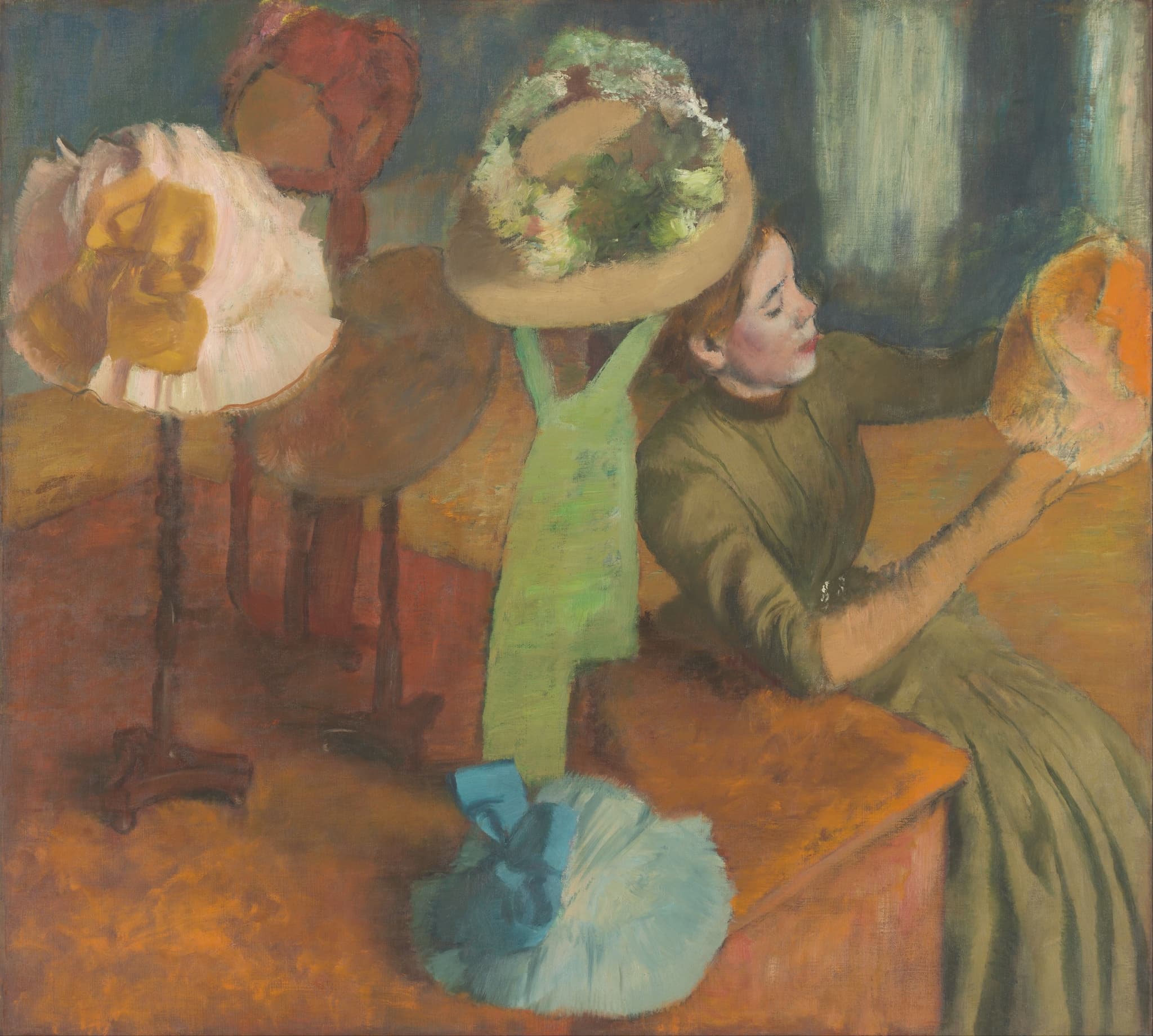
In The Millinery Shop, Degas concentrates attention in commodities and craft. A young woman—likely a worker—studies a glowing orange hat, while stands crowned with ribbons crowd the foreground. Ambiguous status (client or maker?) and a tilted, cropped plane turn the boutique into a shallow stage where goods press forward and labor risks invisibility. Morisot anchors attention in a mind; Degas shows how objects and work capture it.
Why This Comparison Matters
Seeing Morisot beside Degas clarifies two durable models for modern vision. One treats looking as a form of care: access is negotiated, faces can remain unread, and intimacy holds its ground even in public. The other treats looking as an engineered event: institutions, technologies, and vantage points produce what we see and what we miss. Both accounts are true of modern life, and both remain current—from phone cameras compressing privacy to stages and platforms that manufacture visibility.
The comparison also re-centers what counts as significant. Laundry, reading, rehearsal, hat‑making: these are not side subjects but core laboratories where modern painting tested time, light, and attention. Morisot proves that a domestic veil can be a theory of perception; Degas proves that a double bass and a raked floor can be a theory of power. Together they show how form—angle, crop, palette, and touch—carries social meaning. Learning to see their difference equips us to read images now: when are we being invited to witness, and when are we enlisted into an apparatus?
Related Links
Sources
- Musée d’Orsay – The Cradle (Le Berceau) object record
- National Gallery, London – Summer’s Day (object entry)
- Cleveland Museum of Art – Reading (La lecture) object entry
- Art Institute of Chicago – Woman at Her Toilette (object entry)
- Musée d’Orsay – Berthe Morisot: artist/exhibition overview
- Musée d’Orsay – The Tub (Le Tub), 1886
- The Met – The Rehearsal of the Ballet Onstage (variants and media)
- The Met Heilbrunn – Edgar Degas, 1834–1917: Painting and Drawing
- National Gallery of Art – Edgar Degas (artist overview)
- The Met – Dancers Practicing at the Barre (watering can note)
- Hermitage/Actual Art Studies – Place de la Concorde: cropping and politics
- Musée d’Orsay – Degas at the Opéra (footlights, abonnés, staging)