Woman at Her Toilette
Study Print Studio
Create a personal study print
Build a companion study sheet around the part of this painting that speaks to you most. Choose a detail, shape an interpretation, and walk away with something personal and display-worthy.
Fast Facts
- Year
- 1875–1880
- Medium
- Oil on canvas
- Dimensions
- 60.3 × 80.4 cm
- Location
- Art Institute of Chicago, Chicago
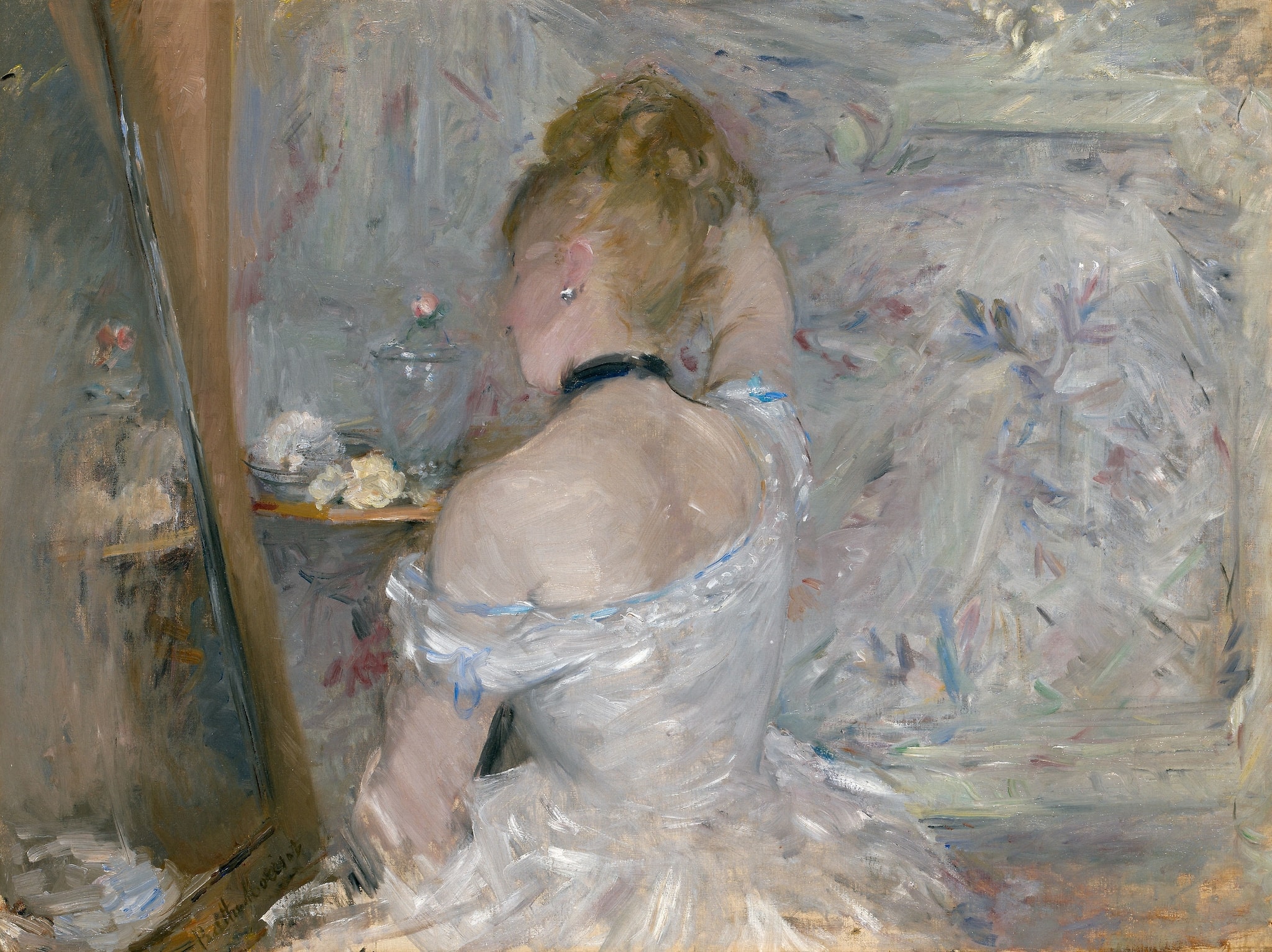
Click on any numbered symbol to learn more about its meaning
Meaning & Symbolism
Explore Deeper with AI
Ask questions about Woman at Her Toilette
Popular questions:
Powered by AI • Get instant insights about this artwork
Interpretations
Formal Analysis: Time Made Visible
Source: Art Institute of Chicago; Encyclopaedia Britannica
Site-Specific Authorship: Bedroom as Studio
Source: Yale University Press (Manet & Morisot excerpt); Art Institute of Chicago
Politics of Looking: The Withheld Face
Source: Anne Higonnet (as summarized in scholarly overviews); Art Institute of Chicago
Genealogy of Style: Rococo Recast
Source: Encyclopaedia Britannica (scholarly synthesis)
Comparative Lens: In Dialogue with Manet
Source: Yale University Press (Manet & Morisot excerpt); Washington Post (exhibition coverage)
Seen in Comparisons
Related Themes
About Berthe Morisot
More by Berthe Morisot
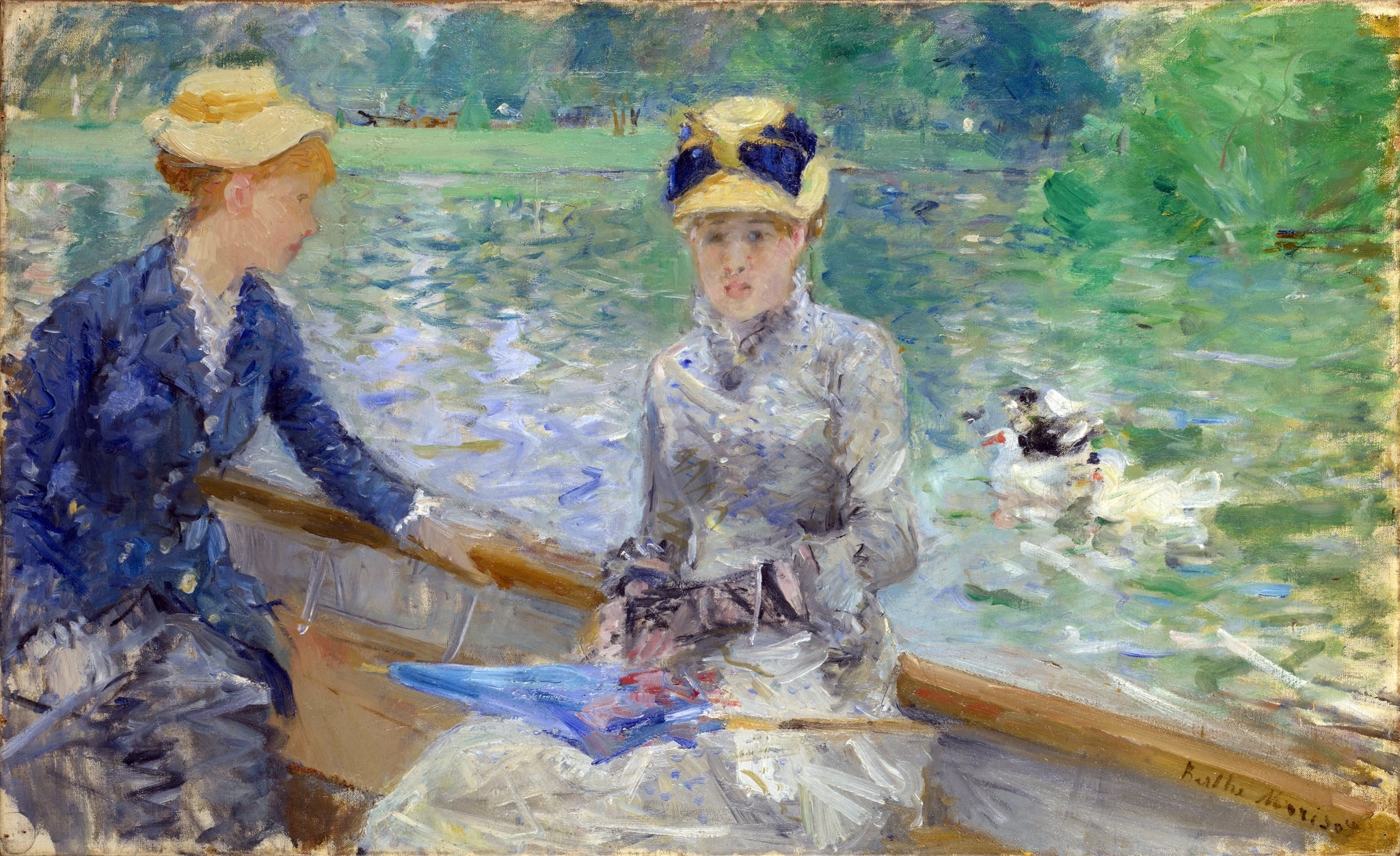
Summer's Day
Berthe Morisot (about 1879)
Two women drift on a boat in the Bois de Boulogne, their dresses, hats, and a bright blue parasol fused with the lake’s flicker by Morisot’s swift, <strong>zig‑zag brushwork</strong>. The scene turns a brief outing into a poised study of <strong>modern leisure</strong> and <strong>female companionship</strong> in public space <sup>[1]</sup>.
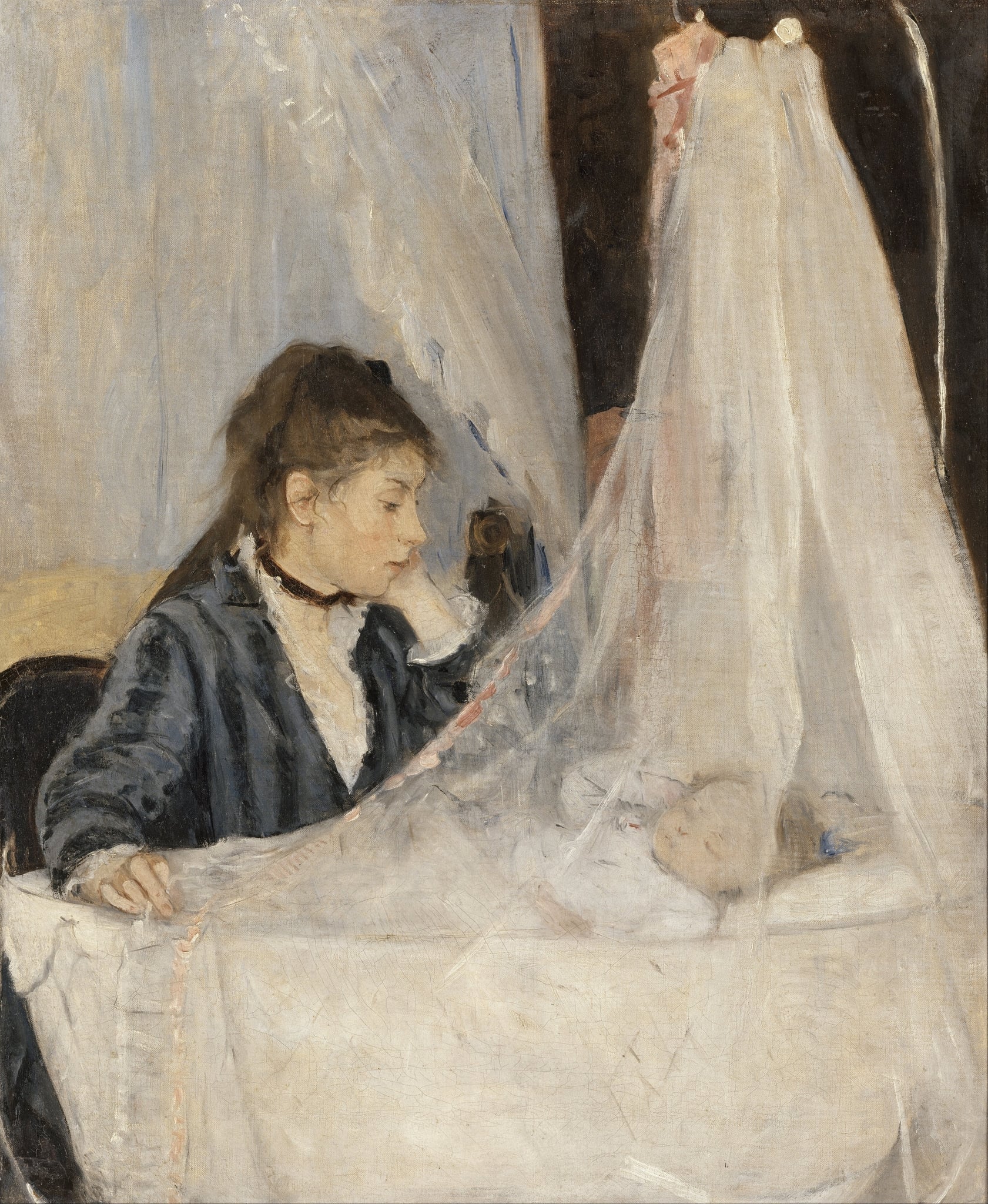
The Cradle
Berthe Morisot (1872)
Berthe Morisot’s The Cradle turns a quiet nursery into a scene of <strong>vigilant love</strong>. A gauzy veil, lifted by the watcher’s hand, forms a <strong>protective boundary</strong> that cocoons the sleeping child in light while linking the two figures through a decisive diagonal <sup>[1]</sup><sup>[2]</sup>. The painting crystallizes modern maternity as a form of attentiveness rather than display—an <strong>unsentimental icon</strong> of care.
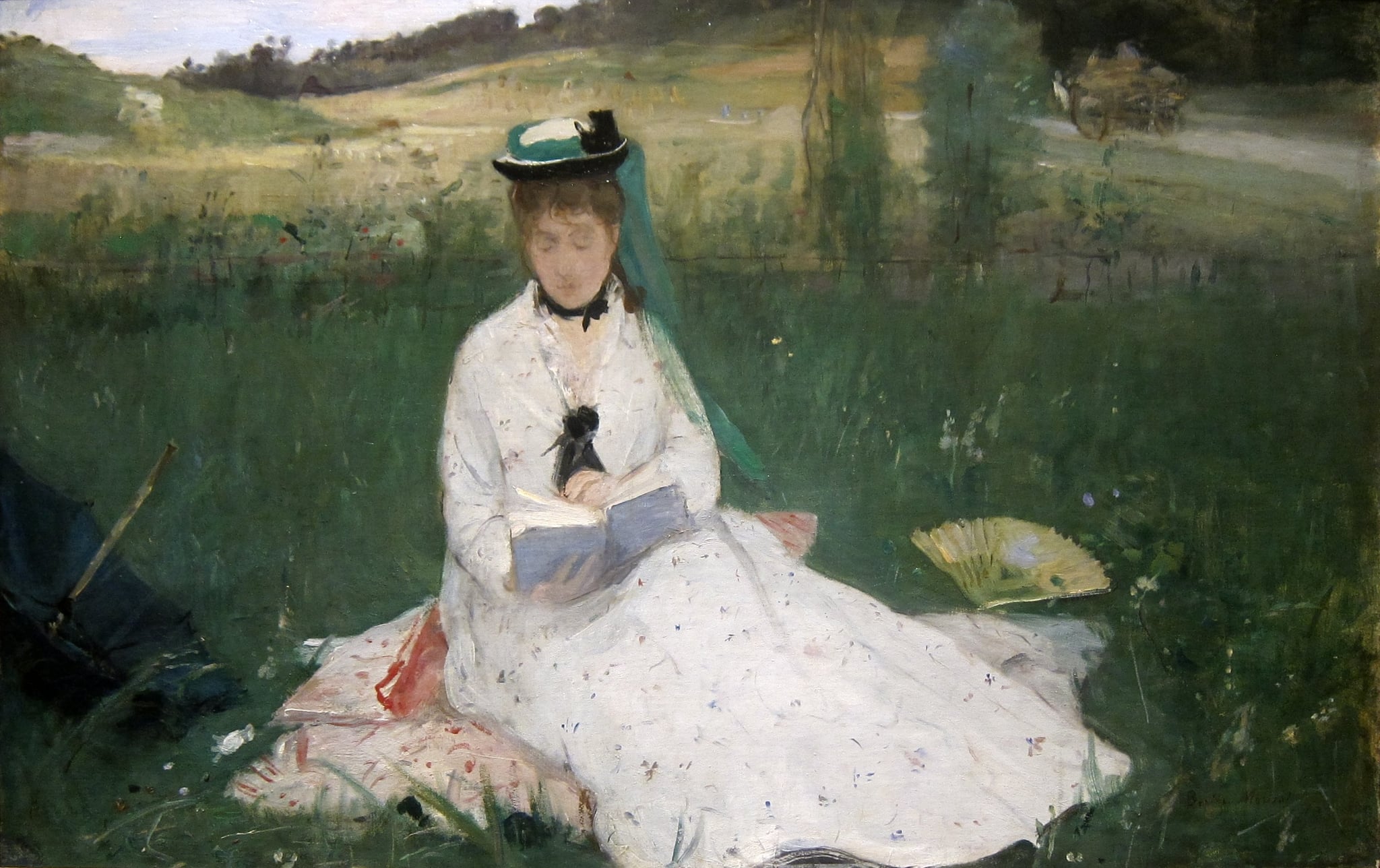
Reading
Berthe Morisot (1873)
In Berthe Morisot’s <strong>Reading</strong> (1873), a woman in a pale, patterned dress sits on the grass, absorbed in a book while a <strong>green parasol</strong> and <strong>folded fan</strong> lie nearby. Morisot’s quick, luminous brushwork dissolves the landscape into <strong>atmospheric greens</strong> as a distant carriage passes, turning an outdoor scene into a study of interior life. The work makes <strong>female intellectual absorption</strong> its true subject, aligning modern leisure with private thought.
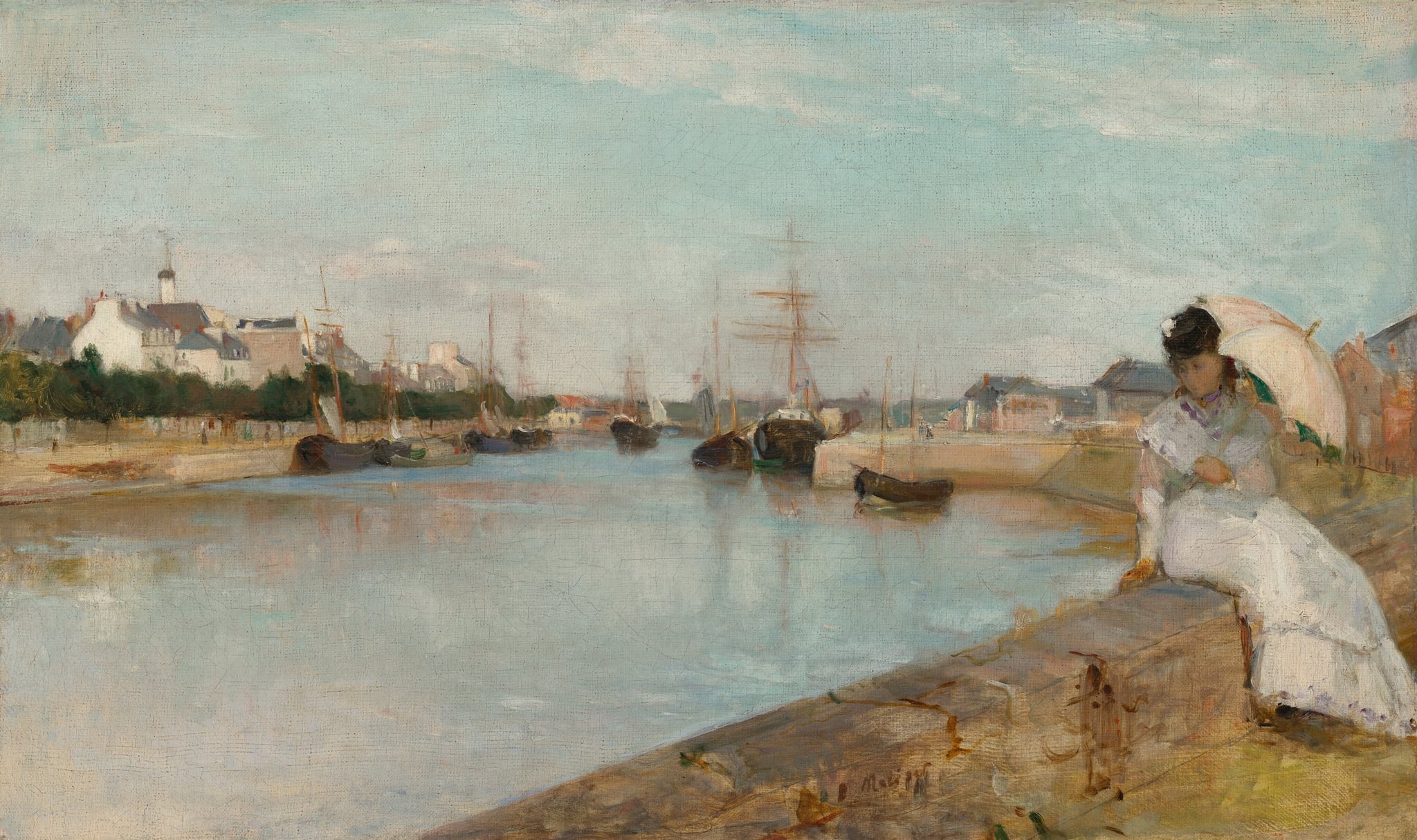
The Harbour at Lorient
Berthe Morisot (1869)
Berthe Morisot’s The Harbour at Lorient stages a quiet tension between <strong>private reverie</strong> and <strong>public movement</strong>. A woman under a pale parasol sits on the quay’s stone lip while a flotilla of masted boats idles across a silvery basin, their reflections dissolving into light. Morisot’s <strong>pearly palette</strong> and brisk brushwork make the water read as time itself, holding stillness and departure in the same breath <sup>[1]</sup>.