The Harbour at Lorient
Study Print Studio
Create a personal study print
Build a companion study sheet around the part of this painting that speaks to you most. Choose a detail, shape an interpretation, and walk away with something personal and display-worthy.
Fast Facts
- Year
- 1869
- Medium
- Oil on canvas
- Dimensions
- 43.5 × 73 cm
- Location
- National Gallery of Art, Washington, D.C.
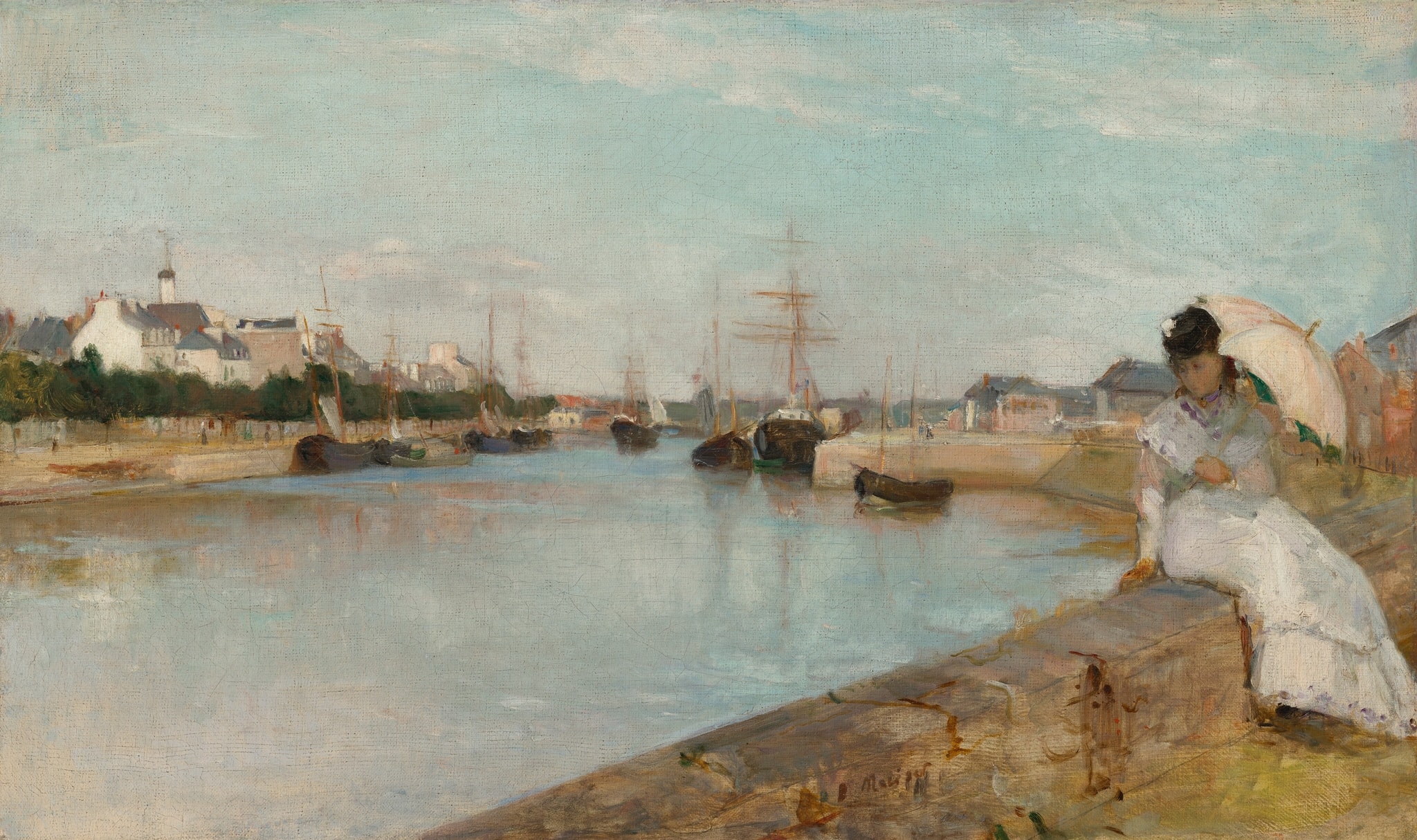
Click on any numbered symbol to learn more about its meaning
Meaning & Symbolism
Explore Deeper with AI
Ask questions about The Harbour at Lorient
Popular questions:
Powered by AI • Get instant insights about this artwork
Interpretations
Historical Context & Networks
Source: National Gallery of Art; Emily A. Beeny (Legion of Honor); French reference on Edma/Lorient
Optics of Gender
Source: National Gallery of Art; Barnes Foundation (Woman Impressionist)
Threshold Urbanism: Quay as Liminal Stage
Source: Barnes Foundation (Woman Impressionist); National Gallery of Art
Temporality and Deferred Motion
Source: National Gallery of Art; Barnes Foundation (Woman Impressionist)
Material Modernism: Facture as Thought
Source: Emily A. Beeny (Legion of Honor); National Gallery of Art
Class and the Undersong of Labor
Source: National Gallery of Art; Barnes Foundation (Woman Impressionist); The Guardian (review)
Seen in Comparisons
Related Themes
About Berthe Morisot
More by Berthe Morisot
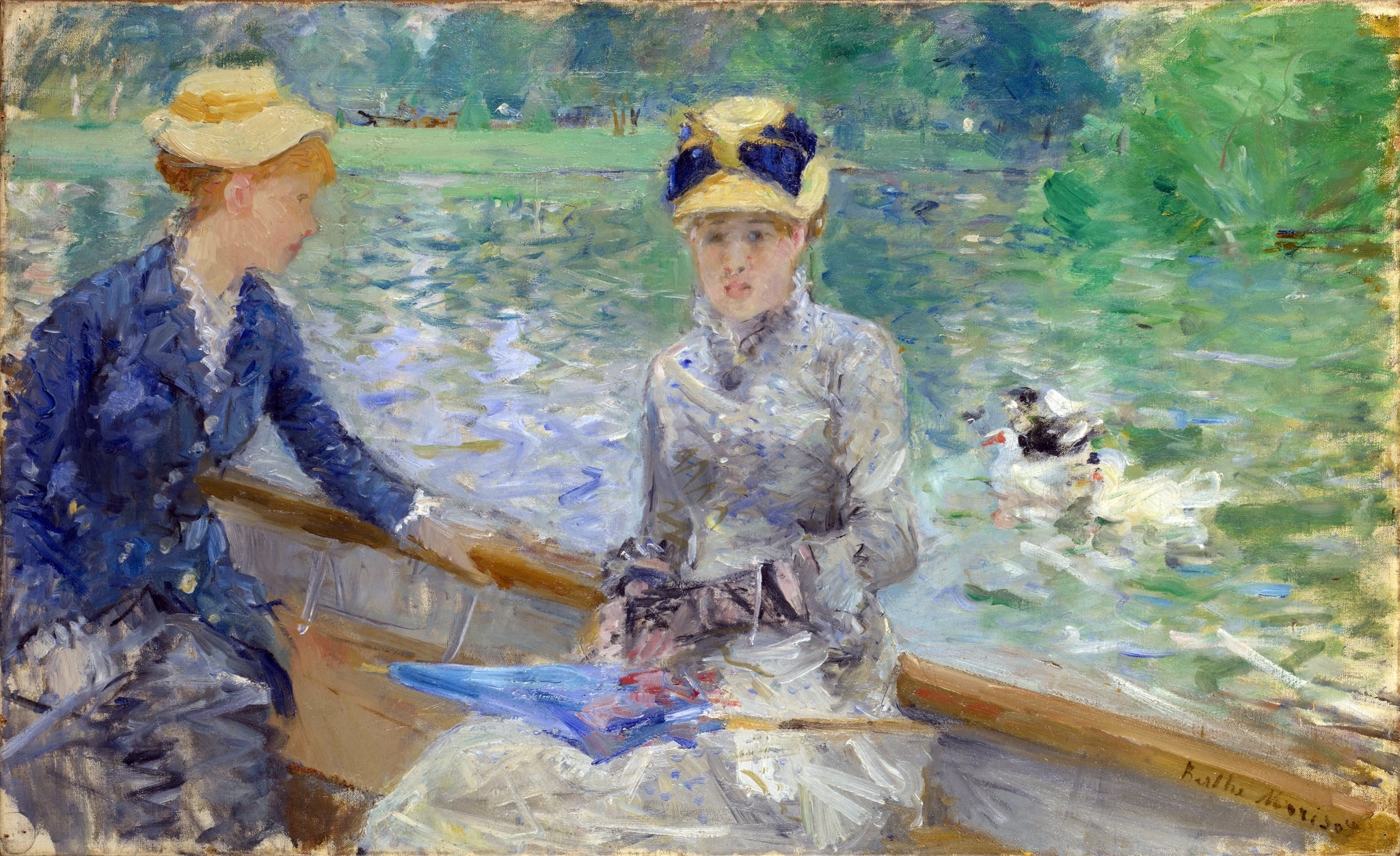
Summer's Day
Berthe Morisot (about 1879)
Two women drift on a boat in the Bois de Boulogne, their dresses, hats, and a bright blue parasol fused with the lake’s flicker by Morisot’s swift, <strong>zig‑zag brushwork</strong>. The scene turns a brief outing into a poised study of <strong>modern leisure</strong> and <strong>female companionship</strong> in public space <sup>[1]</sup>.
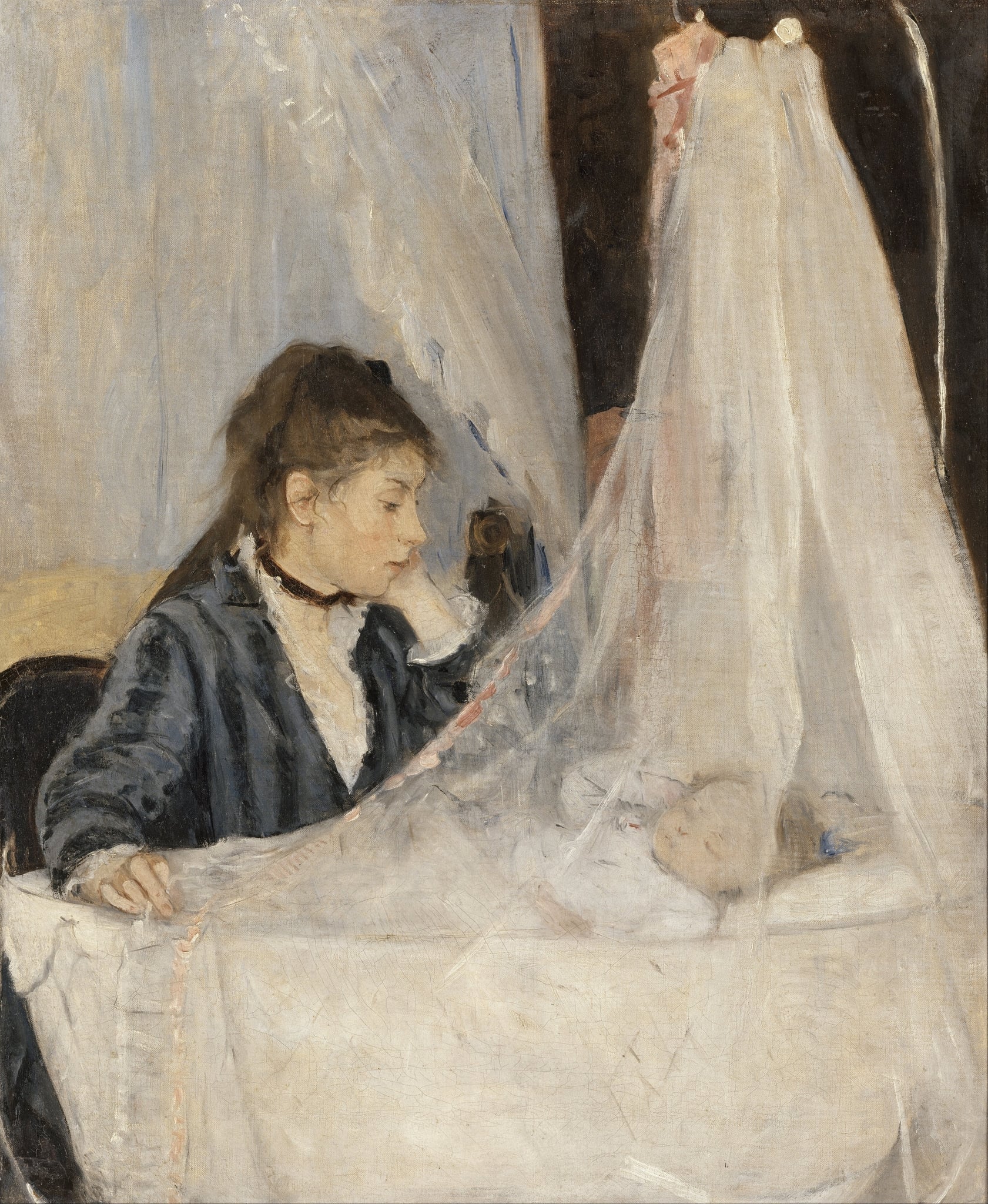
The Cradle
Berthe Morisot (1872)
Berthe Morisot’s The Cradle turns a quiet nursery into a scene of <strong>vigilant love</strong>. A gauzy veil, lifted by the watcher’s hand, forms a <strong>protective boundary</strong> that cocoons the sleeping child in light while linking the two figures through a decisive diagonal <sup>[1]</sup><sup>[2]</sup>. The painting crystallizes modern maternity as a form of attentiveness rather than display—an <strong>unsentimental icon</strong> of care.
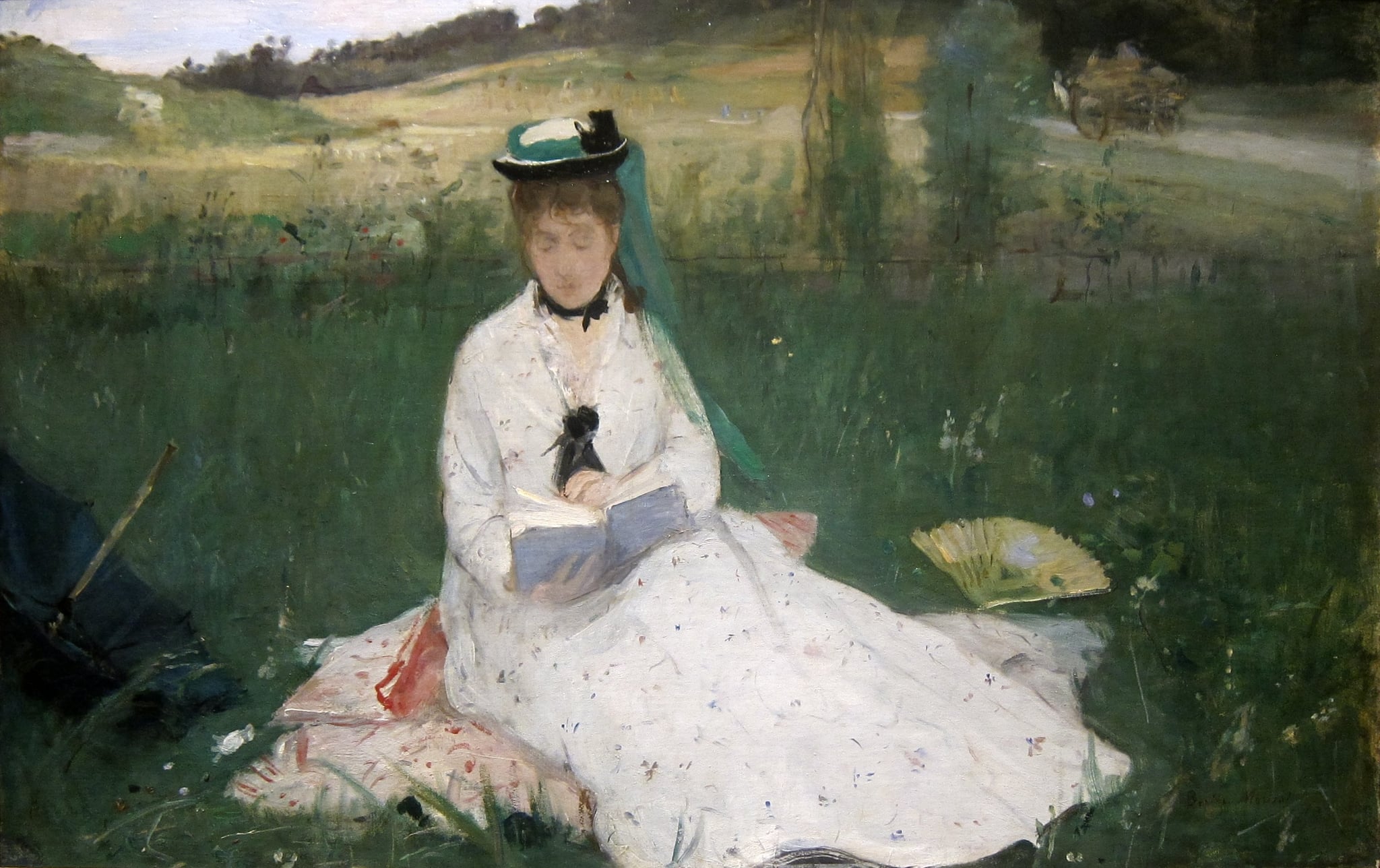
Reading
Berthe Morisot (1873)
In Berthe Morisot’s <strong>Reading</strong> (1873), a woman in a pale, patterned dress sits on the grass, absorbed in a book while a <strong>green parasol</strong> and <strong>folded fan</strong> lie nearby. Morisot’s quick, luminous brushwork dissolves the landscape into <strong>atmospheric greens</strong> as a distant carriage passes, turning an outdoor scene into a study of interior life. The work makes <strong>female intellectual absorption</strong> its true subject, aligning modern leisure with private thought.
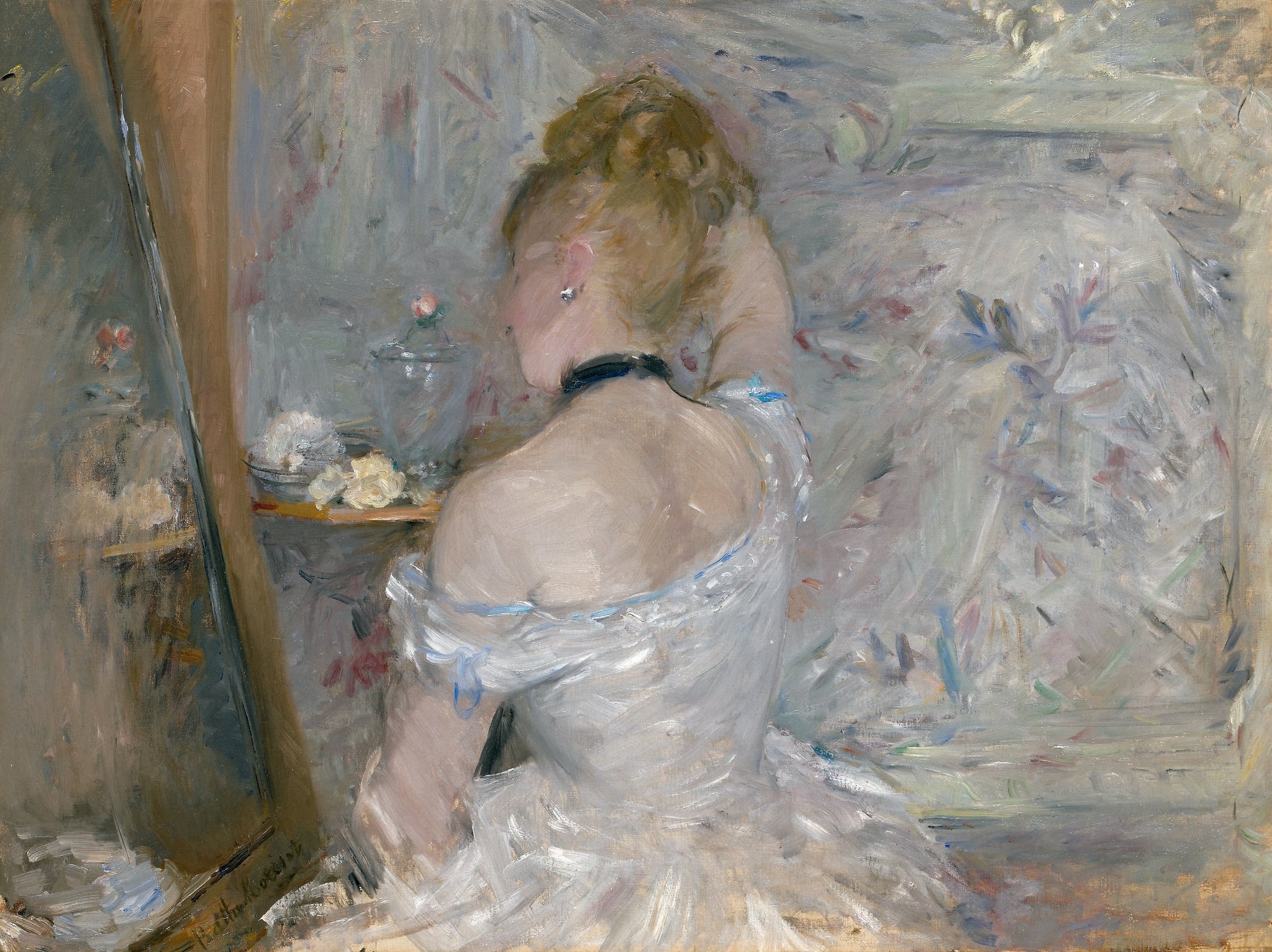
Woman at Her Toilette
Berthe Morisot (1875–1880)
Woman at Her Toilette stages a private ritual of self-fashioning, not a spectacle of vanity. A woman, seen from behind, lifts her arm to adjust her hair as a <strong>black velvet choker</strong> punctuates Morisot’s silvery-violet haze; the <strong>mirror’s blurred reflection</strong> with powders, jars, and a white flower refuses a clear face. Morisot’s <strong>feathery facture</strong> turns a fleeting toilette into modern subjectivity made visible <sup>[1]</sup>.