Atmosphere versus Design, Same Modern Stakes
Morisot and Cassatt made women’s everyday attention—care, leisure, toilette—their central modern subject. Morisot dissolves figure and setting into a shared, protective atmosphere; Cassatt composes clear, guided paths for the eye using high viewpoints, cropping, and pattern. Both dignify ordinary acts while refusing voyeurism. The result is two persuasive answers to how painting can picture lived attention.
Comparison frame: How do Morisot’s luminous dissolves and Cassatt’s designed vantage points remake what looking in painting can do?
Quick Comparison
| Topic | Berthe Morisot | Mary Cassatt |
|---|---|---|
| What seeing feels like | A shared air: soft edges fuse figure and world; vision is provisional and relational. | A taught path: elevated or tipped views, contour, and pattern choreograph attention. |
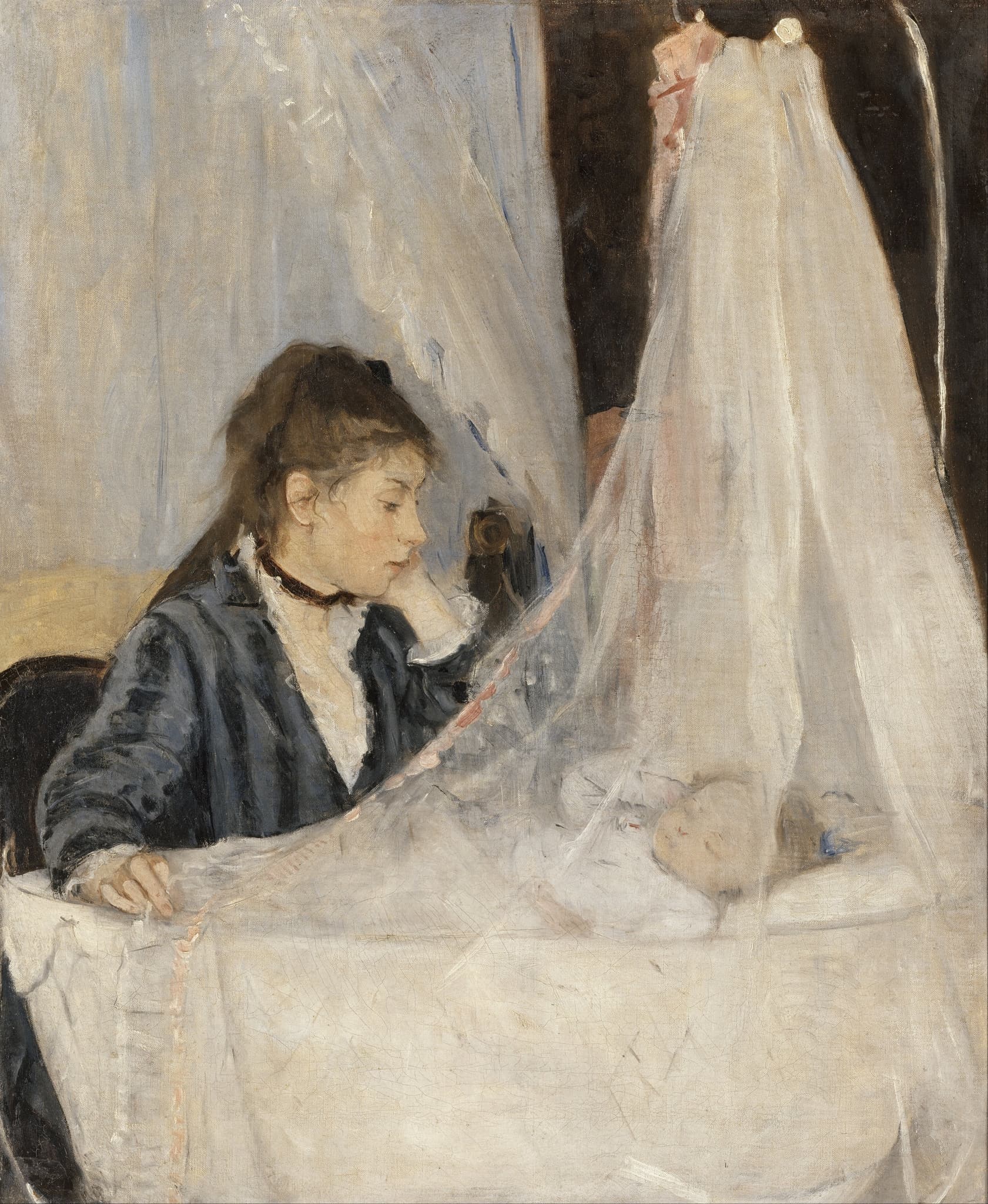
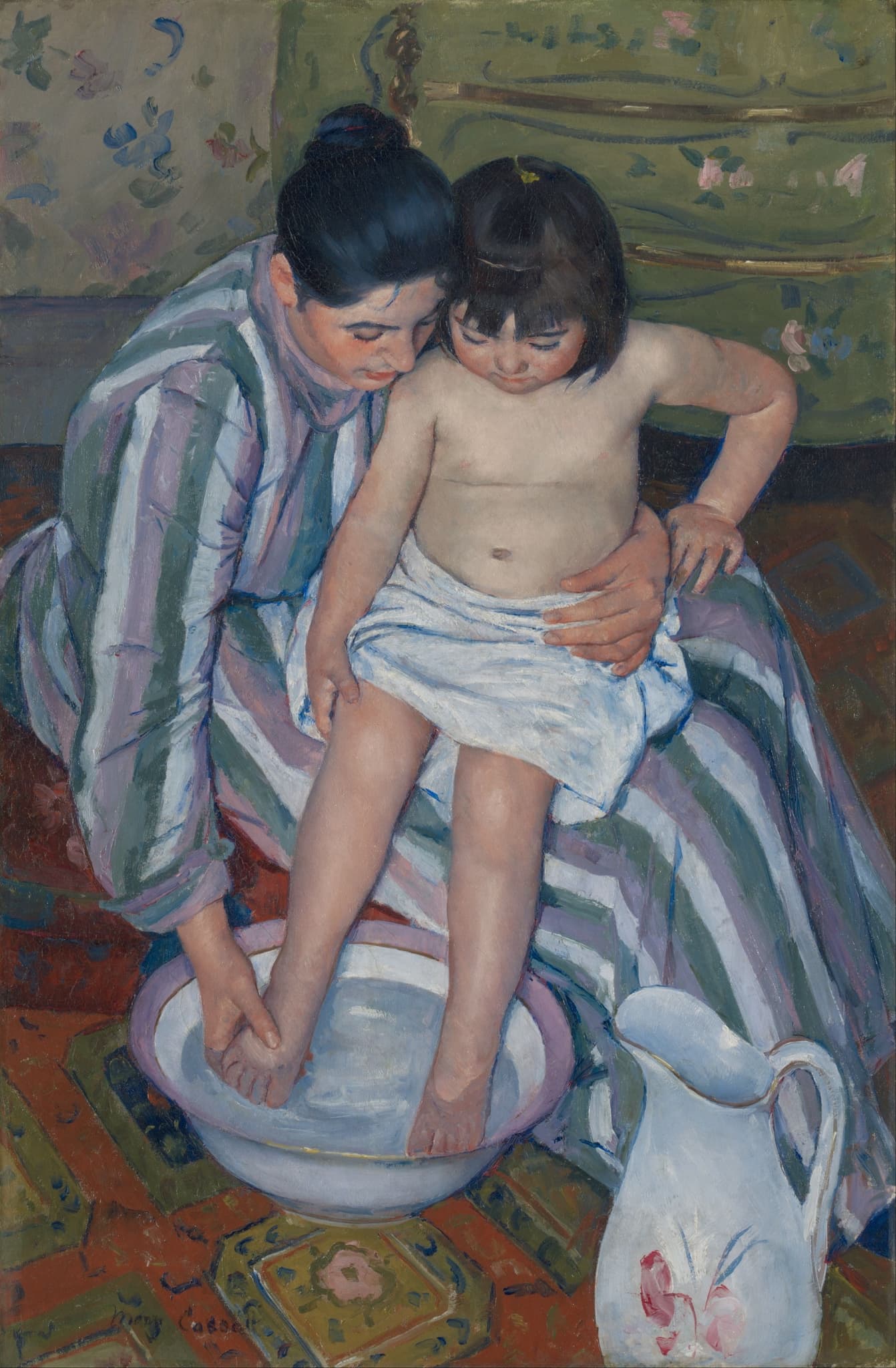
| Anchor work on care | The Cradle: a gauzy veil and arm diagonal form a membrane of protection. | The Child’s Bath: a circle of touch (hands–basin–limbs) organizes the scene. |
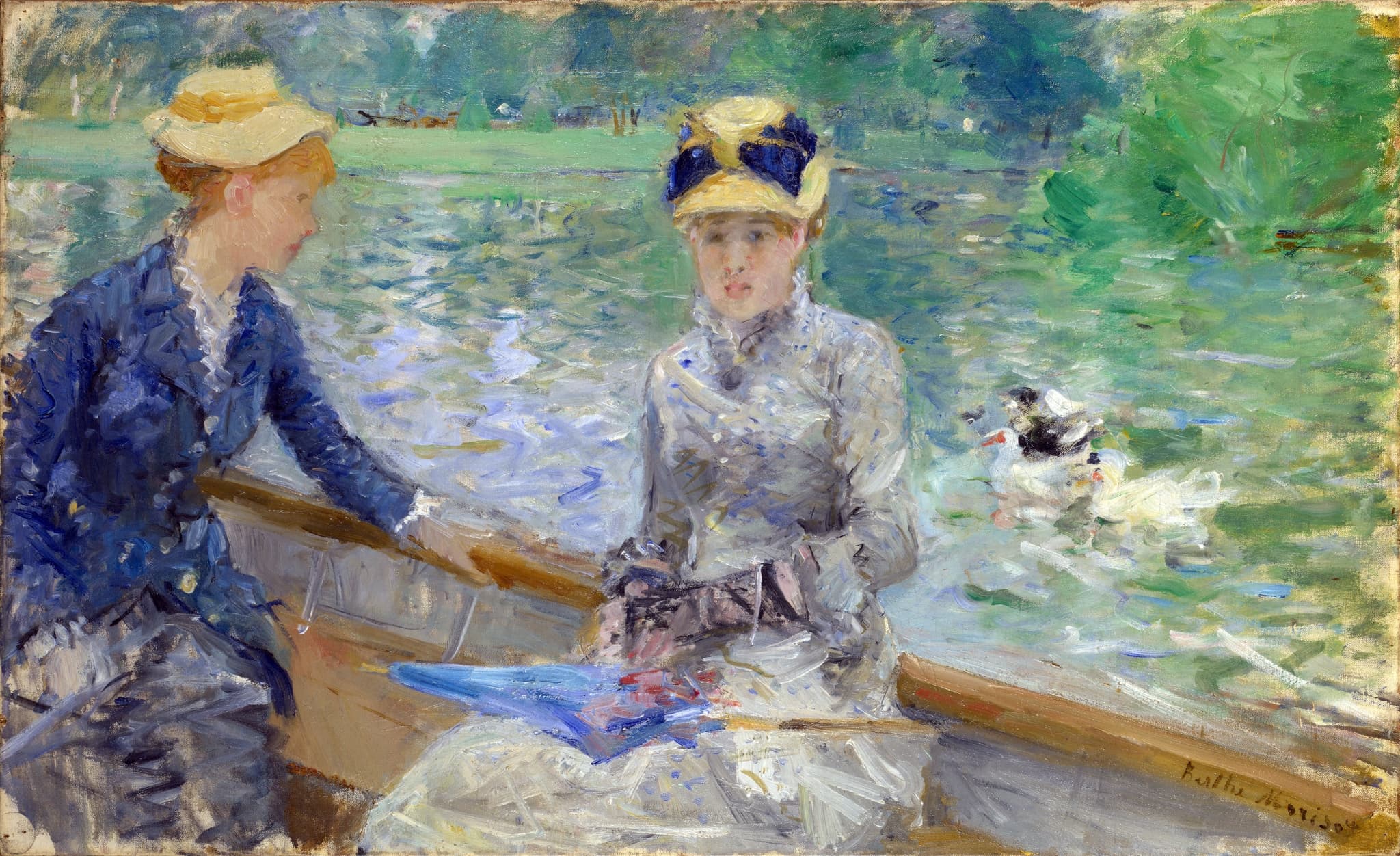
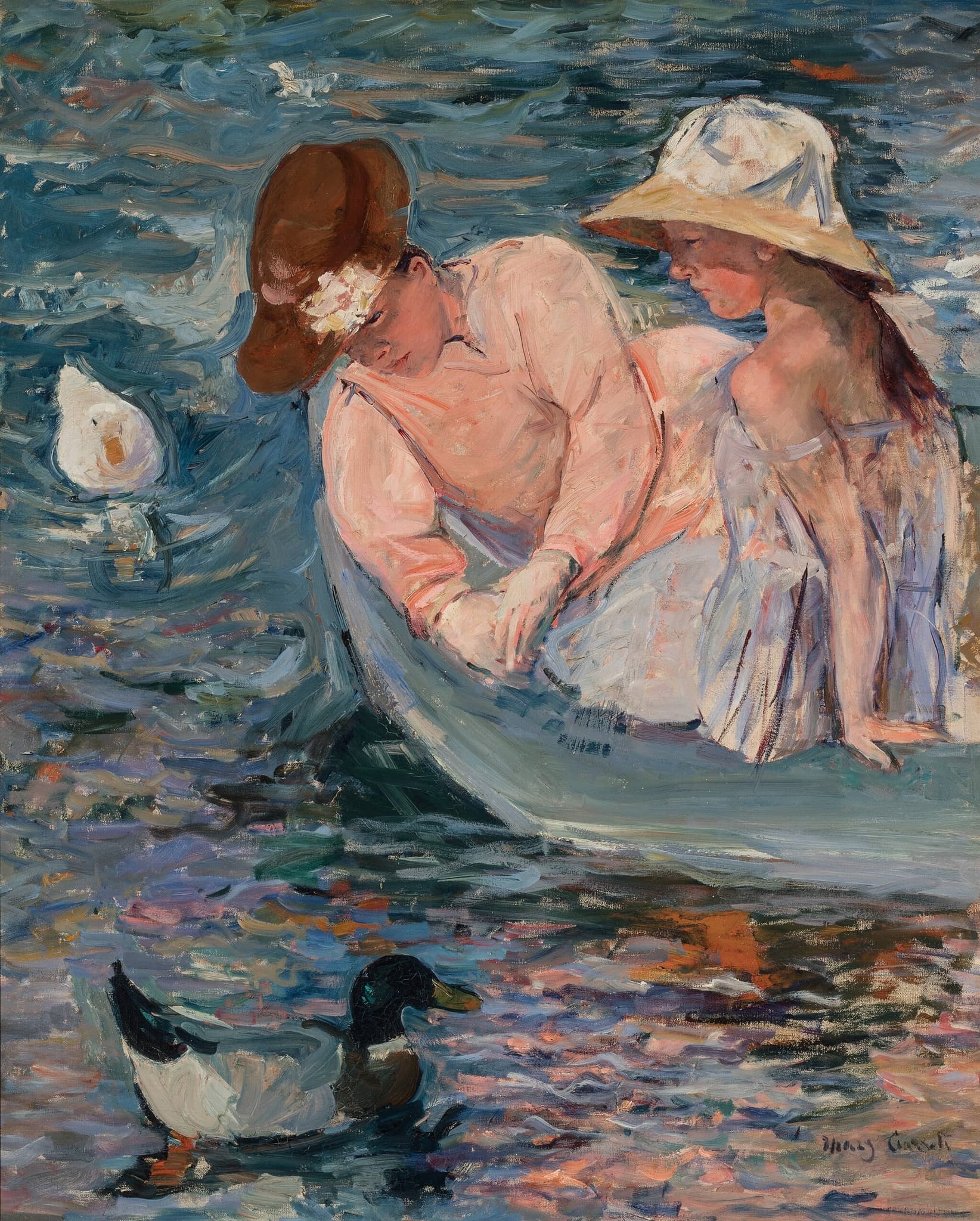
| Boating as modern leisure | Summer’s Day: horizon intact; figures stitched into water’s flicker. | Summertime: no horizon; tipped plane and cropping press vision downward. |
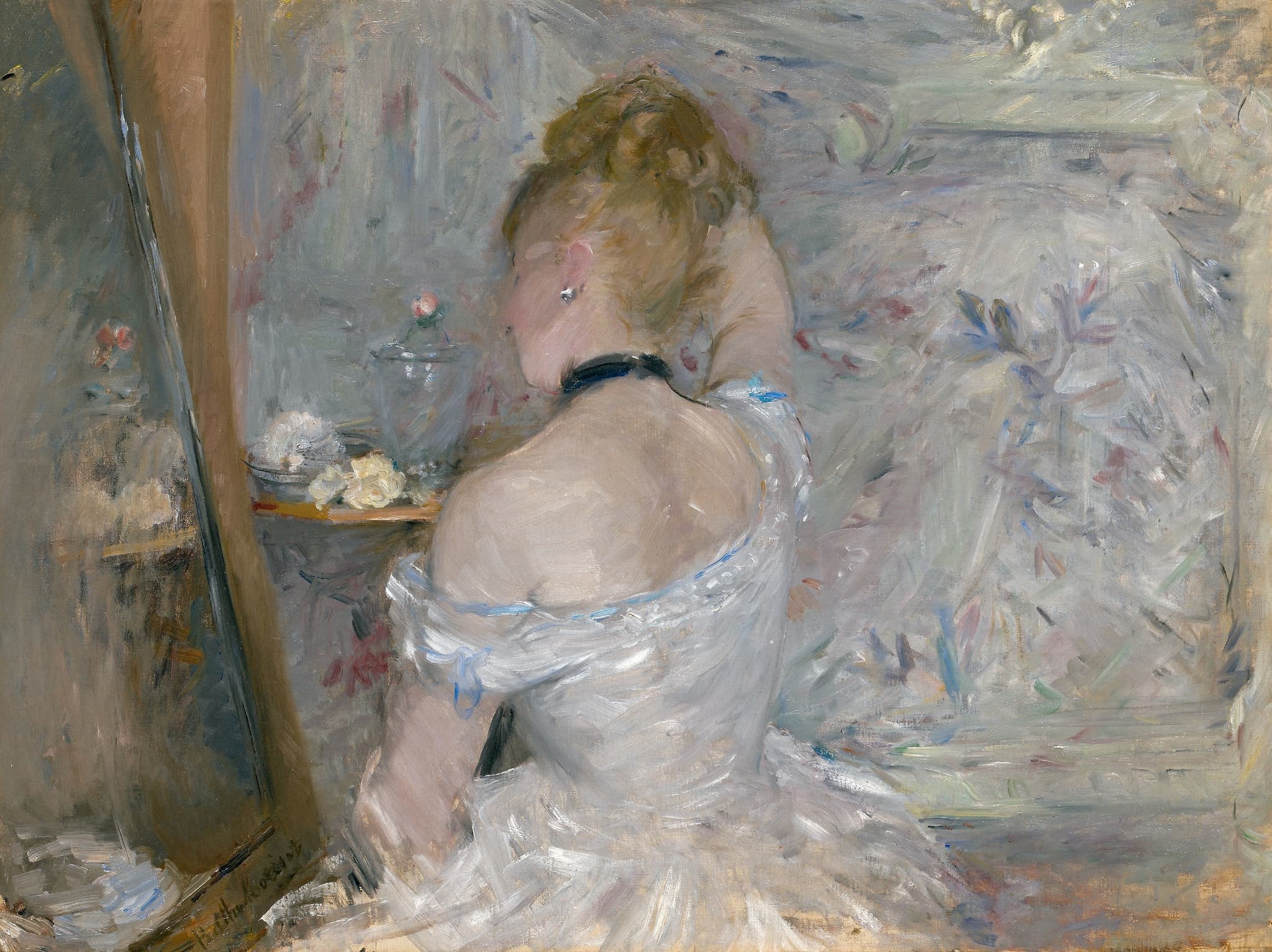
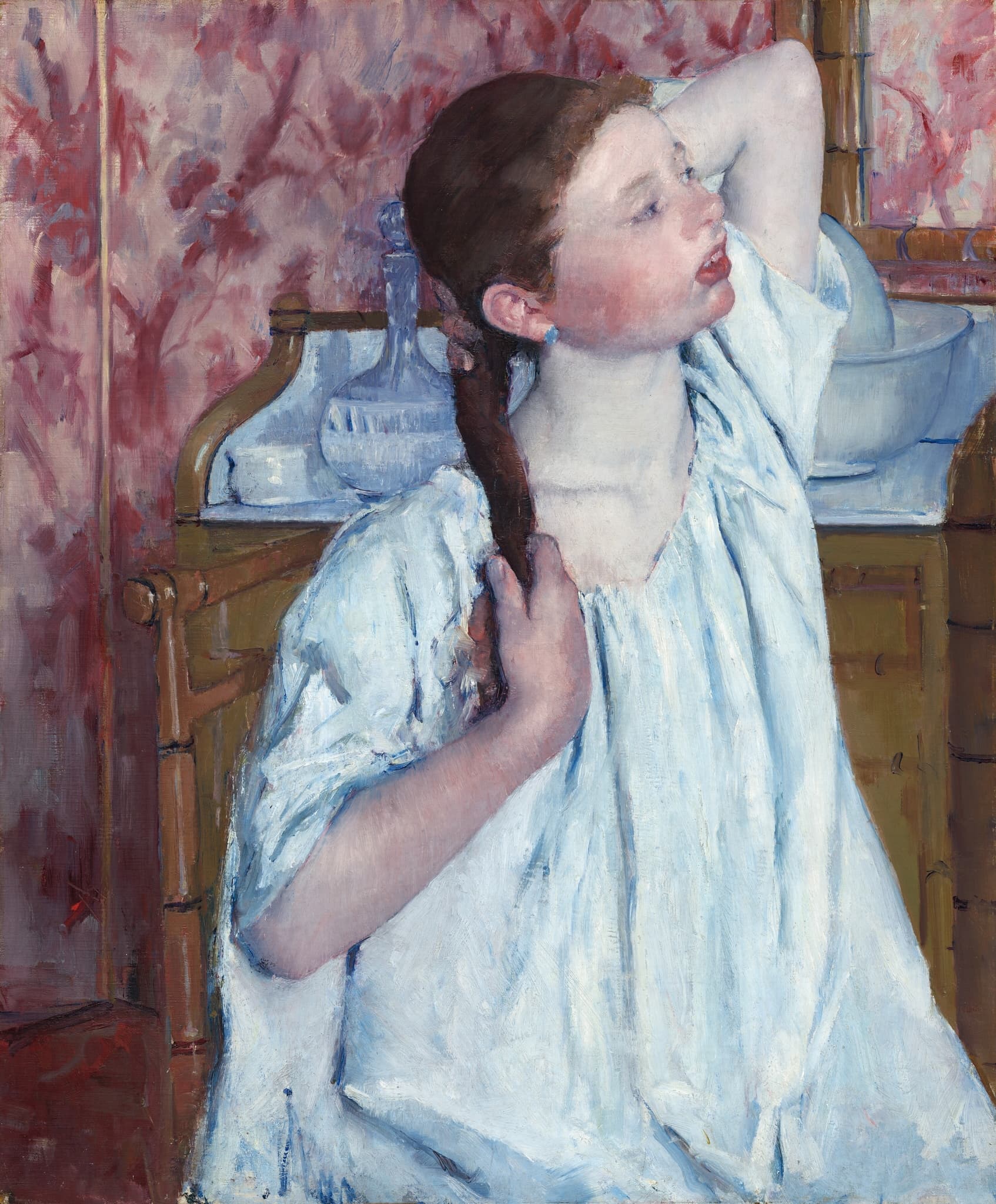
| Toilette and privacy | Woman at Her Toilette: milky mirror and feathery facture withhold the face. | Girl Arranging Her Hair: cropped mirror and clear contours assert autonomy. |
| Preferred sites | Thresholds—balconies, quays, windows—poised between private and public. | Loges, child-level interiors, boats—stages where looking is structured. |
| Touch and palette | Pearly lilacs/blues; feathery, broken brushwork that dissolves contours. | Emphatic contour, bold pattern, japoniste flattening after 1890. |
| Impressionist platform | Only woman in the 1874 debut; early shaper of private-modern subjects. | Joined 1879; late arc innovator, major printmaker and U.S. conduit for the movement. |
Shared Ground
Morisot and Cassatt use Impressionism to relocate modernity into women’s everyday spheres—nurseries, balconies, boats, loges. Their subjects are not spectacle but attention: the felt tempo of bathing a child, adjusting a coiffure, or drifting on urban water. In Morisot’s The Cradle, care is materialized as a veil half raised; in Cassatt’s The Child’s Bath, it becomes a circuit of hands and limbs seen from above. Both turn looking itself into content. Morisot’s Summer’s Day compresses shore, boat, dresses, and ducks into a vibrating field where perception feels shared; Cassatt’s Summertime and The Boating Party stage deliberate chains of attention, using cropped hulls, high horizons, and strong arcs to steer the eye.
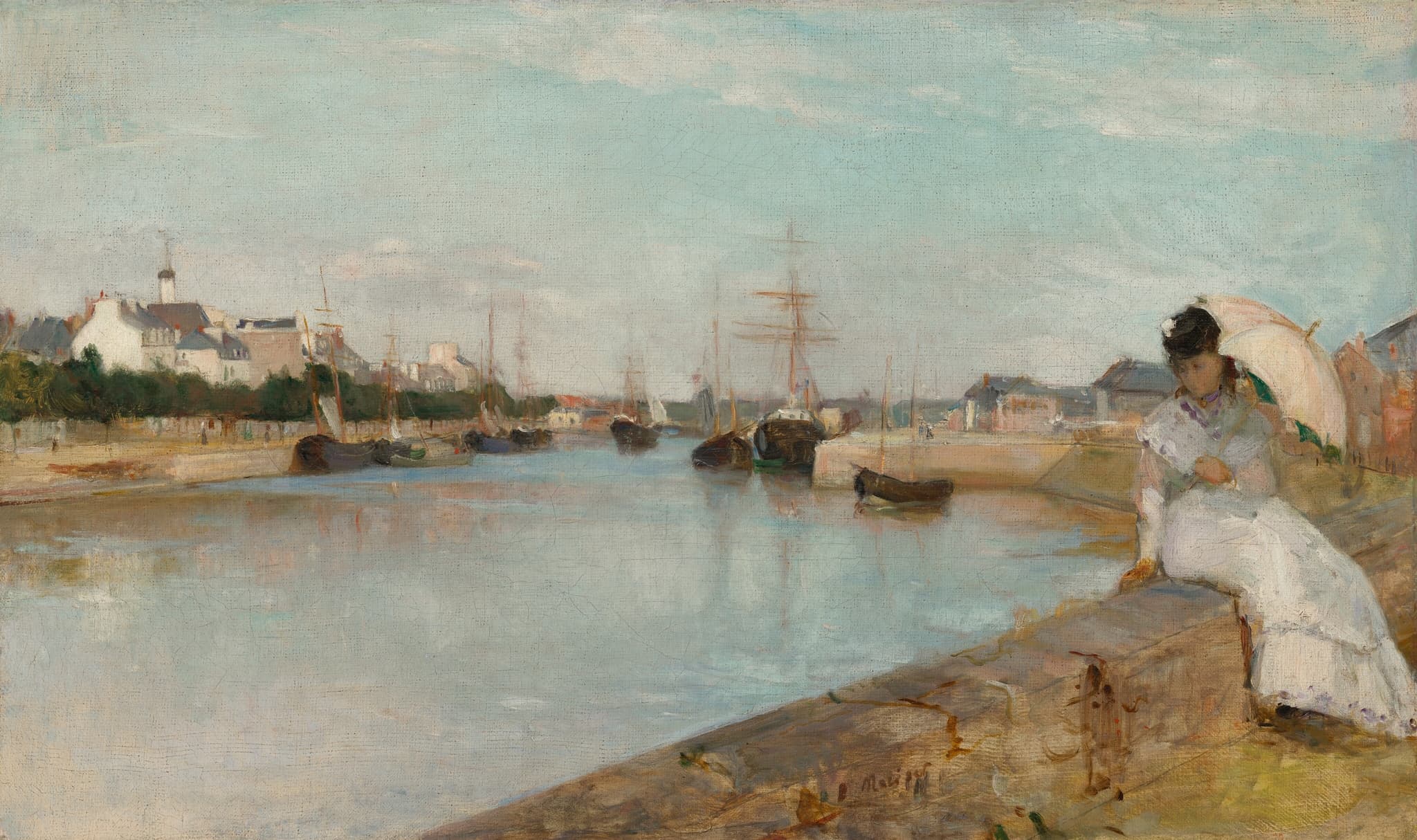
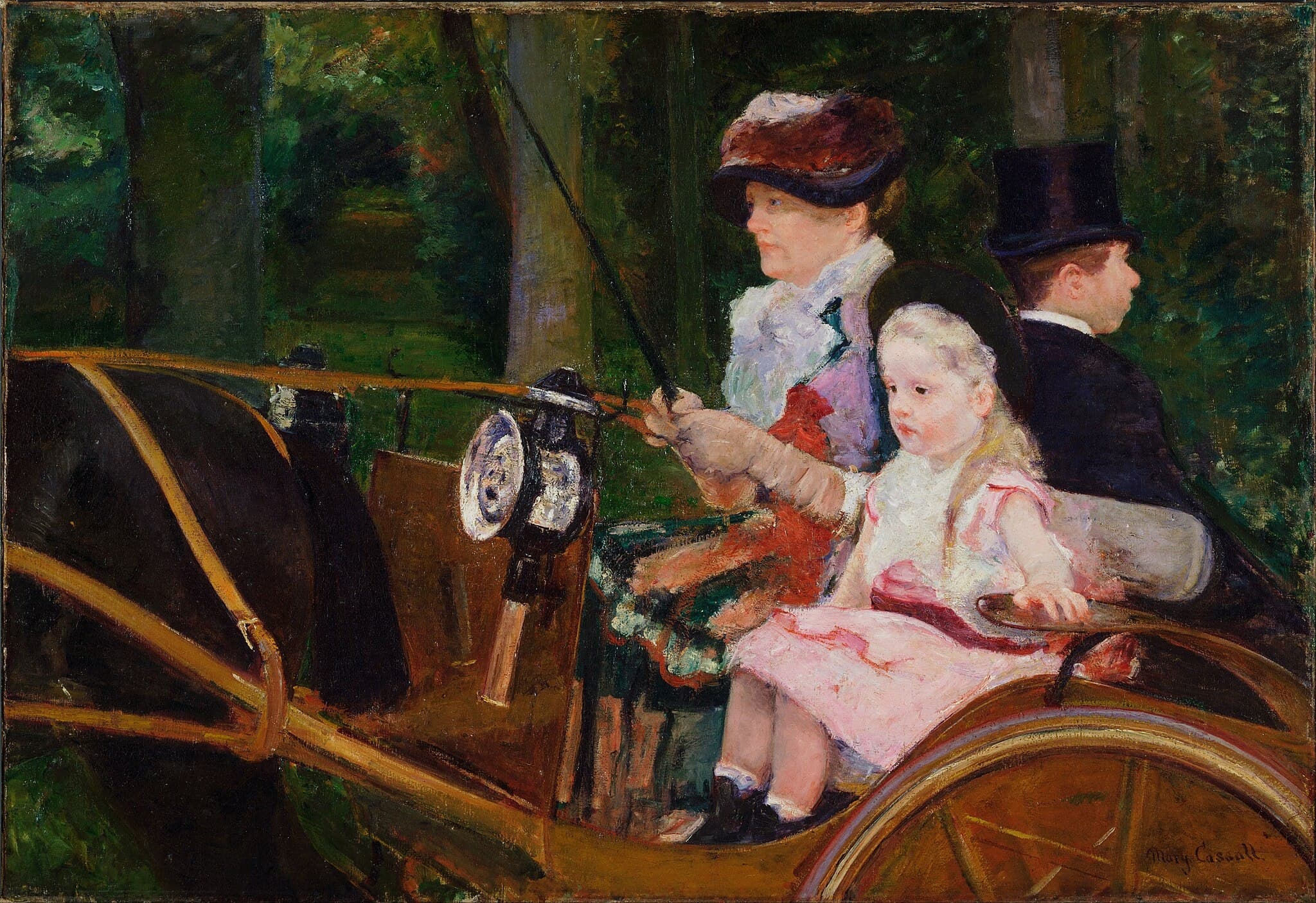
Equally, both resist voyeurism in toilette scenes. Morisot’s Woman at Her Toilette fogs the mirror and turns the body away; Cassatt’s Girl Arranging Her Hair withholds the reflected face and keeps the viewer outside the sitter’s purpose. Their public scenes grant women agency without theater: Morisot’s The Harbour at Lorient suspends a quiet moment at the quay; Cassatt’s A Woman and a Girl Driving renders reins, posture, and apprenticeship as visible competence. Historically, each used the independent exhibitions to broaden “modern life,” with Morisot a founder in 1874 and Cassatt a leading voice from 1879 onward. Across these choices lies a shared conviction: ordinary acts of care, leisure, and self-fashioning are sufficient to carry the weight of modern painting.
Decisive Difference
Both artists ask how to picture lived attention without turning it into theater. Morisot’s answer is optical and atmospheric: she builds a luminous envelope where boundaries soften and privacy is protected by blur, turn, or veil. In Summer’s Day, dresses, water, and shoreline intermingle so perception feels provisional; in The Cradle, a gauzy screen is both light filter and social boundary; in Woman at Her Toilette, the mirror clouds into milky notations. Her feathery facture and pearly violets and blues make figures and setting co-constitute each other, so meaning arises from the sensation of being-with—an ethics of nearness translated into paint.
Cassatt’s solution is compositional and pedagogic. After 1890, Japonisme sharpens her tools: tipped or elevated viewpoints, emphatic contour, cropping, and pattern operate as clear guides for seeing. The Child’s Bath arranges stripes, circles, and diagonals into a legible “circle of touch”; The Boating Party stabilizes motion through bold arcs of oars and a high, flattened horizon; Summertime removes the horizon entirely, tipping the plane so our gaze follows the figures toward ducks and ripple. Even in Girl Arranging Her Hair, a cropped mirror and clean edges organize access. Where Morisot immerses the viewer inside a shared atmosphere, Cassatt designs a path that teaches where attention belongs. The decisive difference is this: Morisot’s paintings feel like entering a living weather of perception; Cassatt’s feel like being shown, with clarity and care, how perception is structured.
Paired Works
Public leisure, seen from the boat
Focus question: How does each artist turn a simple outing into an experiment in how we look?
Toilette without voyeurism
Focus question: If the mirror is present, why don’t we get the face?
Woman at Her Toilette vs Girl Arranging Her Hair
Maternal attentiveness as structure
Focus question: How is care pictured—as atmosphere or as plan?
The Cradle vs The Child's Bath
Women in public space
Focus question: What does agency look like at the threshold versus in motion?
The Harbour at Lorient vs A Woman and a Girl Driving
Why This Comparison Matters
This pairing clarifies two durable ways modern painting can honor everyday life. Morisot shows how attention can be pictured as a shared atmosphere—edges softened, light protective, privacy intact. Cassatt shows how attention can be taught: cropped views, patterned planes, and high vantages that direct care toward hands, tasks, and relations. Seeing these logics side by side explains why their images of women and children do not read as sentiment. They recast care as structure, public presence as competence, and toilette as authorship rather than display.
For a general viewer, the payoff is practical. After Morisot, look for membranes—veils, parasols, dissolved contours—that convert light into shelter. After Cassatt, trace the paths—oars, stripes, rails, mirrors—that guide your eye to the work of care. Both artists broadened what counted as “modern life,” and their solutions still shape how pictures ask us to look with respect. The difference between atmosphere and design is not merely stylistic; it is an ethic of attention.
Related Links
Sources
- National Gallery, London – Berthe Morisot, Summer’s Day (object page)
- Musée d’Orsay – The Cradle (object page)
- Art Institute of Chicago – The Child’s Bath (object page)
- National Gallery of Art – The Boating Party (object page)
- Terra Foundation for American Art – Summertime (collection entry)
- Art Institute of Chicago – Woman at Her Toilette (object page)
- National Gallery of Art – The Harbor at Lorient (object page)
- Petit Palais – The First Impressionist Exhibition (Morisot’s role)
- The Met Heilbrunn Timeline – Mary Stevenson Cassatt (1844–1926)
- Princeton University Art Museum – 1890 Japanese print exhibition (context)
- Museum of Fine Arts, Boston – In the Loge (object page)
- National Gallery of Art – Children Playing on the Beach (object page)