Two ways to stage modern seeing
Mary Cassatt (1844–1926) and Edgar Degas (1834–1917) shared a program: refit pictorial space so it records how attention actually flickers in modern rooms, theaters, and streets. Both built scenes in the studio from observation, drawing, and japoniste cropping, and their long friendship welded methods across oil, pastel, and print. The split is ethical and structural: Cassatt engineers reciprocity and tact; Degas engineers obliqueness and control. In short, seeing becomes care in Cassatt, analysis in Degas.
Comparison frame: How do Cassatt and Degas turn everyday acts into experiments in seeing—and why does Cassatt’s vision resolve as care while Degas’s resolves as control?
Quick Comparison
| Topic | Edgar Degas | Mary Cassatt |
|---|---|---|
| Core project | Stage the ordinary to model attention; high, print-like vantage and decisive crops | Stage the ordinary to model attention; raked floors, wing/overhead views, abrupt crops |
| Ethic of looking | Reciprocity and self‑possession—seeing as care | Analytic obliqueness and control—seeing as system |
| Typical vantage | High, flattened view; suppressed horizon; intimate nearness | Raked, tilted stages; lateral/backstage vantage; overhead surveillance |
| Women’s roles | Agents and spectators whose absorption sets terms of our gaze | Workers in institutions (ballet, bathing, millinery) mapped within hierarchies |
| Toilette/bather focus | Touch‑centered competence; closed circuits of care | Solitary self‑maintenance; keyhole tension between privacy and view |
| Theater logic | Loge as site of female spectatorship and social intelligence | Stage/pit/wings as machine; masters and abonnés visible |
| Medium habits | Oil, pastel, color aquatint; japoniste pattern used structurally | Layered pastel and monotype; abraded surfaces; late high‑chroma fields |
| Public modernity | Composed control—drivers, boaters, watchers | Non‑encounter and drill—estranged streets, rehearsal time |
Shared Ground
Cassatt and Degas meet on firm ground: both treat modern life as a laboratory for vision. Cropped edges, off‑axis viewpoints, and compressed space model how attention actually moves through opera boxes, rehearsal rooms, boulevards, and private interiors. Degas develops the raked floor and side‑stage vantage that fling dancers toward us or tuck them into wings; Cassatt adapts high, print‑like views and decisive crops that press our eye toward hands, tools, and acts. Each modernizes subject matter by centering work behind spectacle—rehearsal rather than performance, bathing rather than display, childcare rather than sentiment.
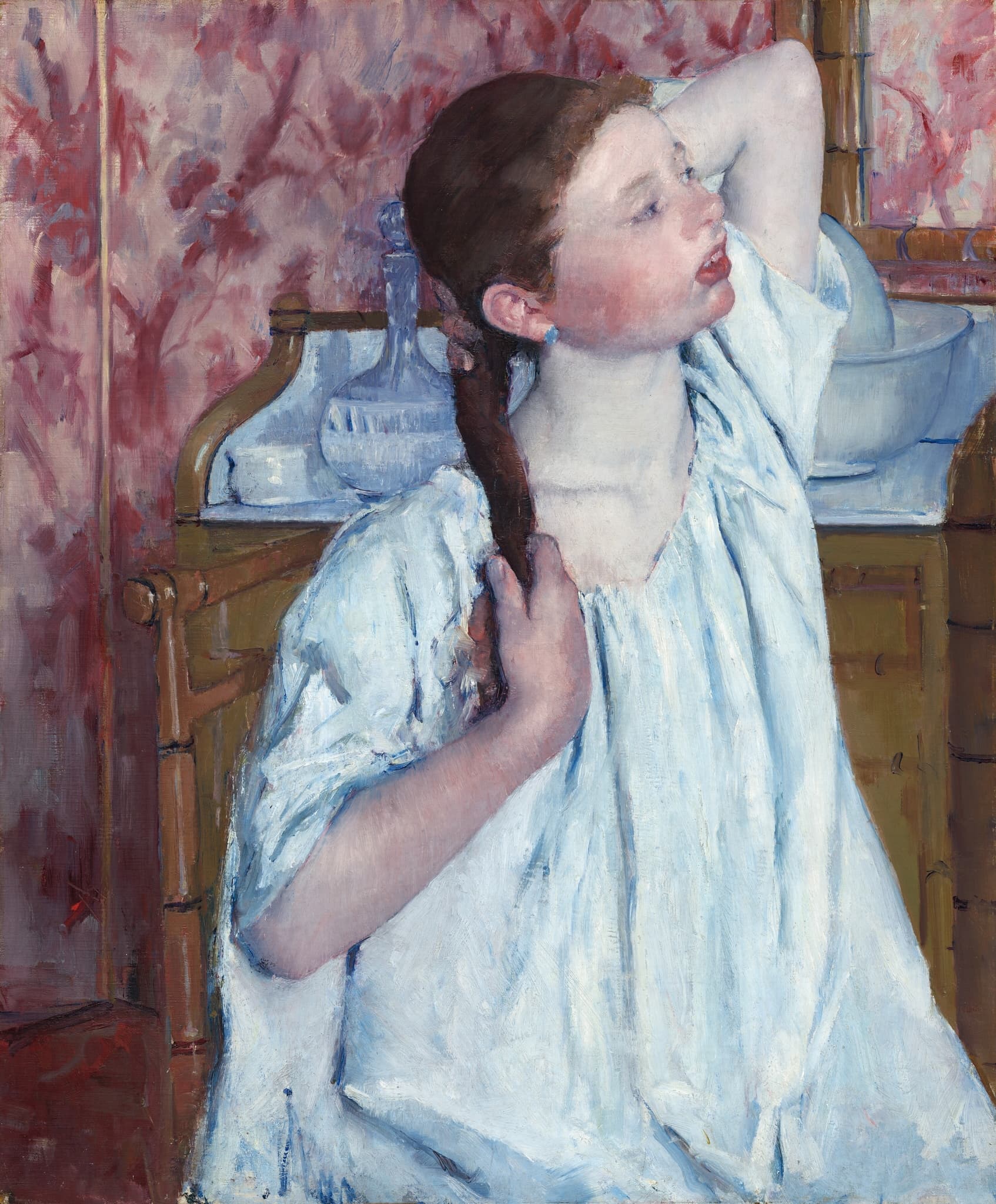
Method unites them. Neither artist relies on plein‑air finish; both build pictures in the studio from drawings, memory, and iterative recomposition. Japonisme powers their redesign of space and pattern: the suppressed horizon, steep angles, and planar fabrics that lock figure to ground. Their exchange is personal and sustained. Degas invited Cassatt to exhibit with the Impressionists in 1877; she later said his work changed her life. The dialogue crosses media (pastel, print) and even canvases: Degas advised and reworked passages in Cassatt’s Little Girl in a Blue Armchair (1878), and he owned her Girl Arranging Her Hair (1886), misattributed to him after his death—evidence of deep formal kinship. The result is a shared project with different ends: a modern picture built from staged observation that elevates ordinary acts to the level of structure.
Decisive Difference
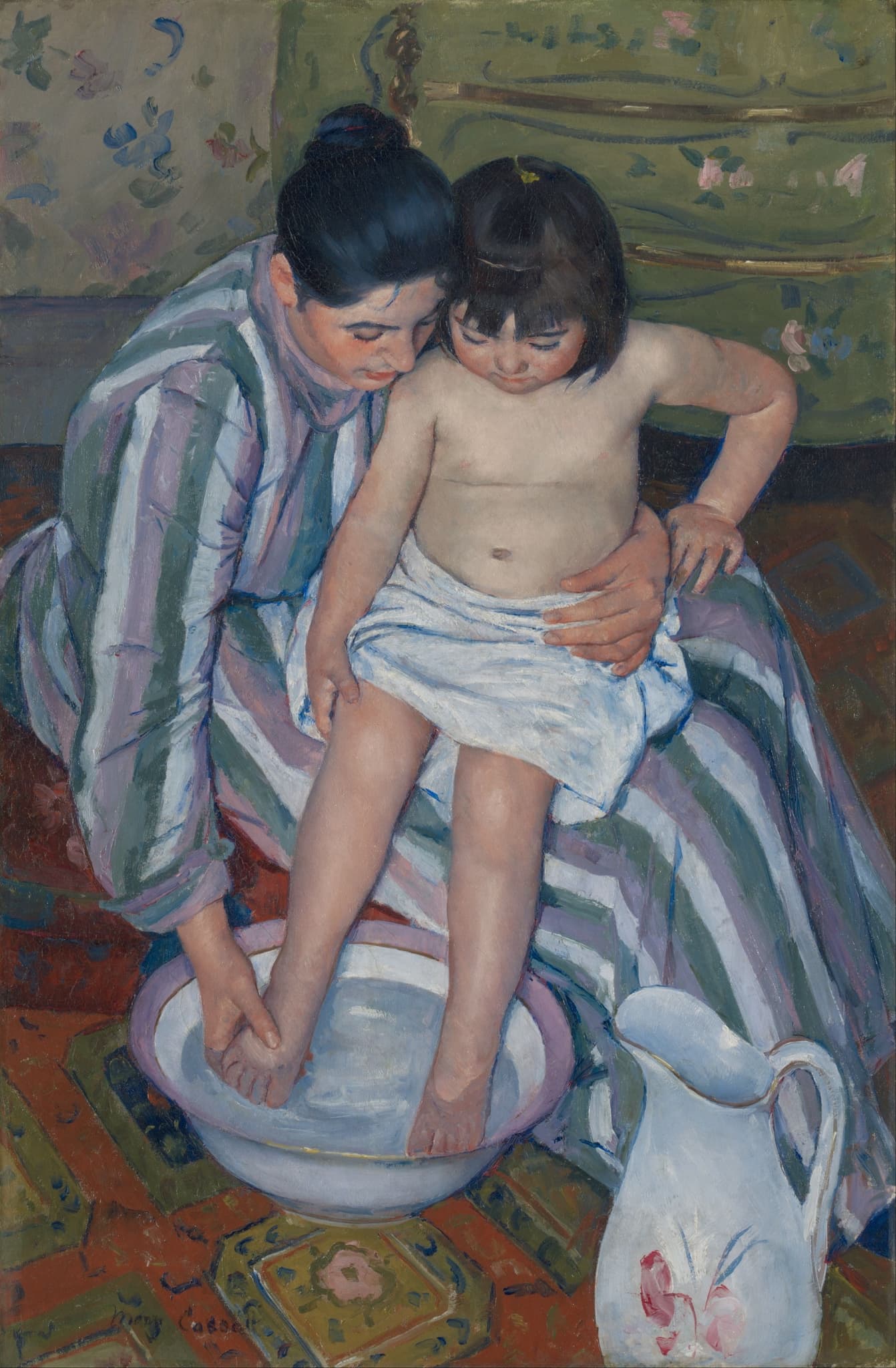
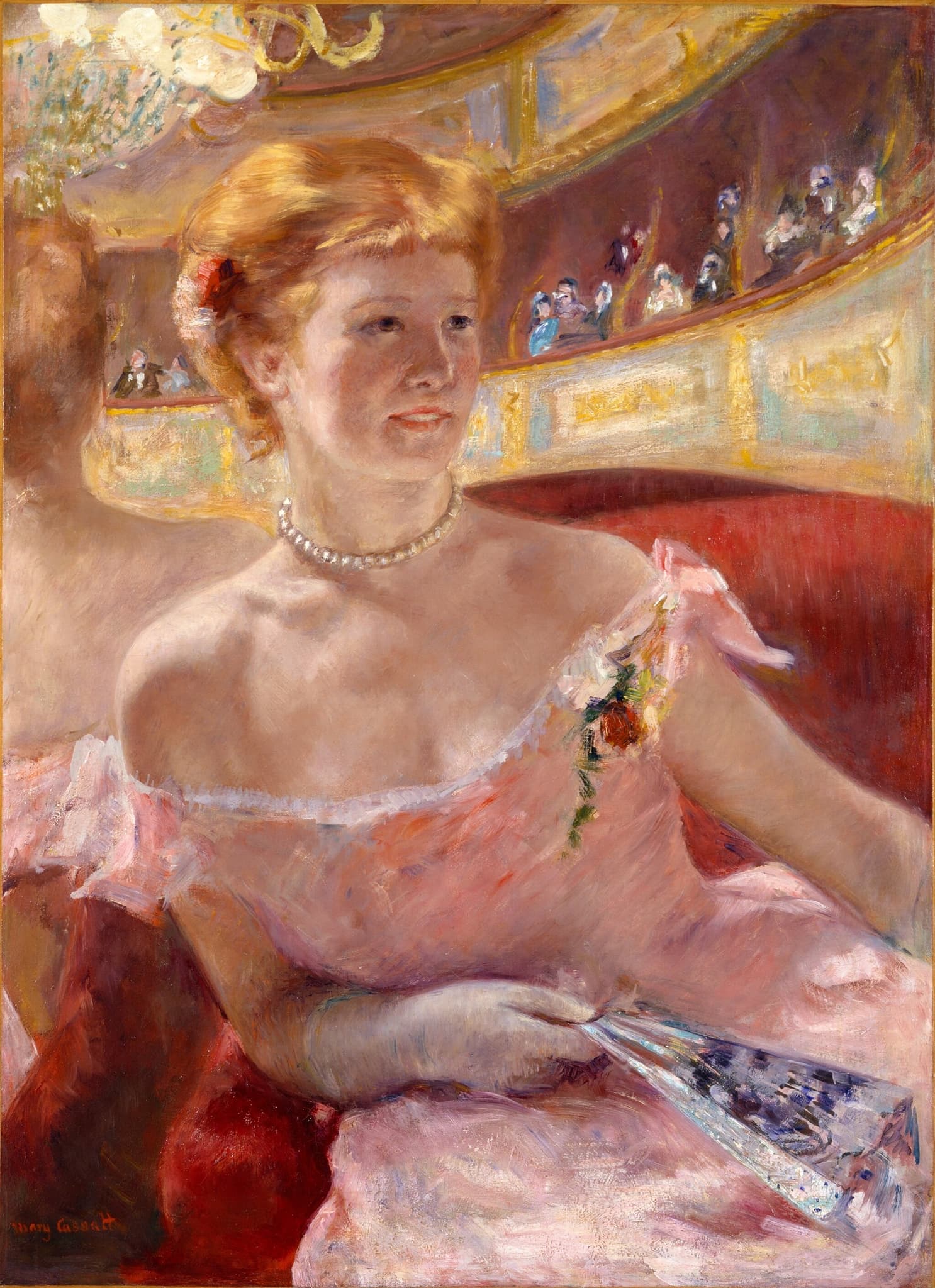
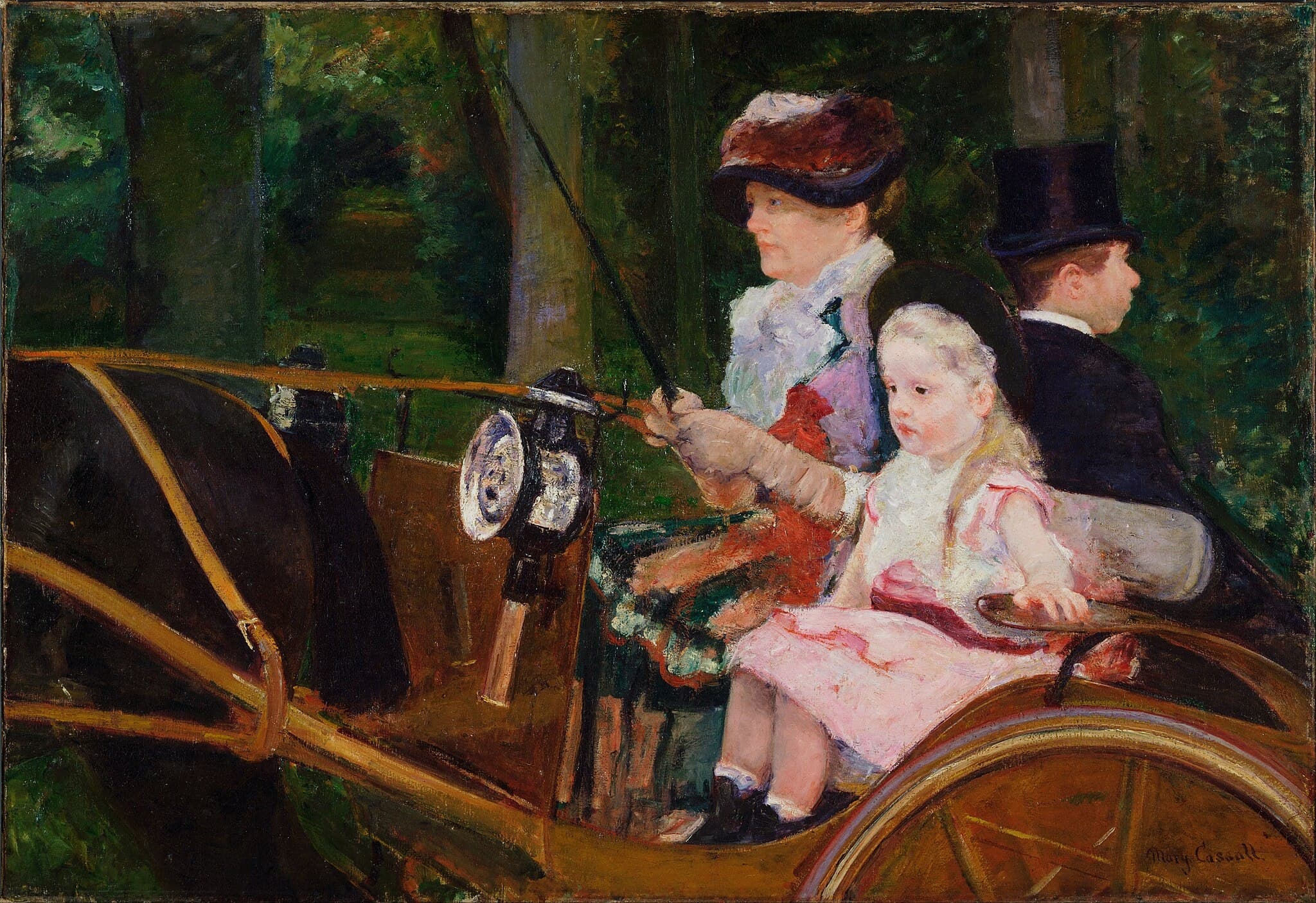
The decisive split is the orientation of looking. Cassatt engineers reciprocity: women act, watch, and work under their own terms, and her designs protect that autonomy. Steep, print‑like views and tight crops draw us to gestures of touch—hands washing a child, fingers on reins, an arm lifting hair—without prying past absorption. Her japoniste flattening consolidates a compact, ethical theater where care organizes form. In The Child’s Bath, the basin’s circle becomes a circle of touch; in Woman with a Pearl Necklace in a Loge, the mirror folds the social theater back through the sitter’s self‑possession.
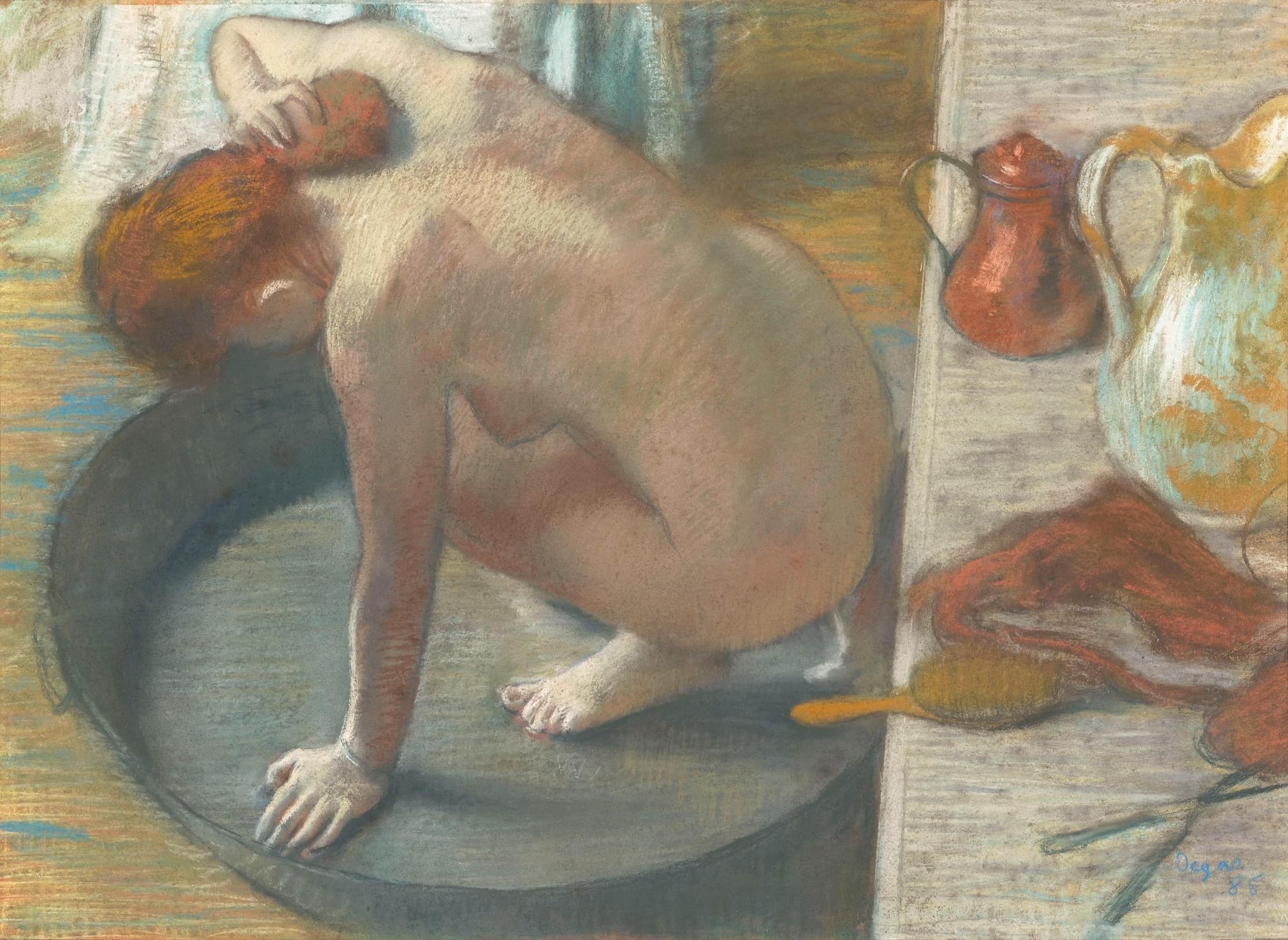
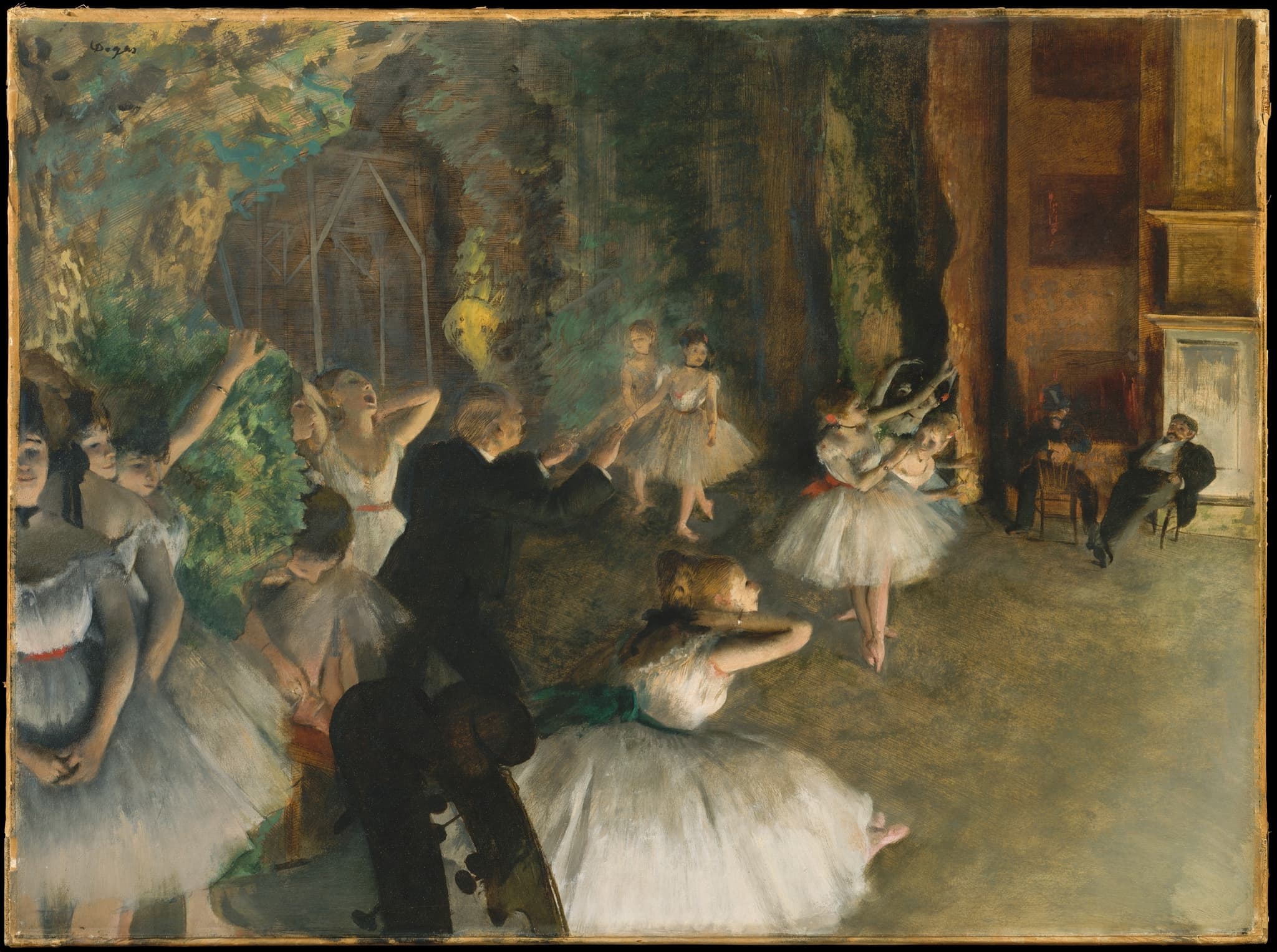
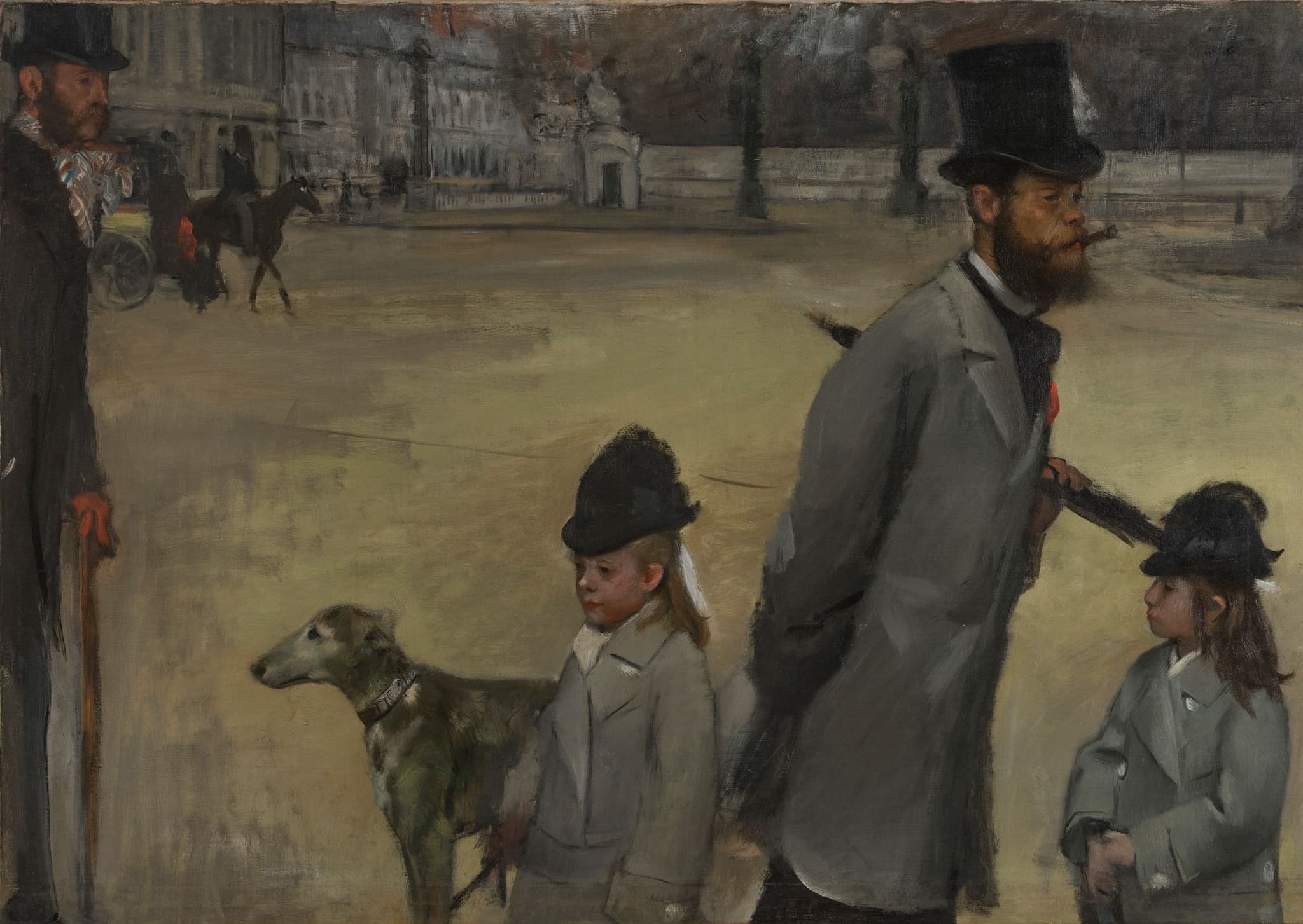
Degas engineers obliqueness and control. Raked floors, backstage angles, and overhead viewpoints expose the systems that produce appearance—labor, hierarchy, light. The Rehearsal of the Ballet Onstage shows work under footlights while abonnés watch from the wings; Place de la Concorde turns the city into a choreography of non‑encounter. His bathers, including The Tub, bind the body to a surveilling, high vantage; still‑life arrays and scraped pastels turn self‑care into an analytic problem of parts. Put simply: Cassatt turns seeing into care, building images that honor self‑contained action; Degas turns seeing into analysis, mapping how institutions and optics shape what we can see. The difference is not subject but stance: partnership versus oversight.
Paired Works
Bath vs. Bath: circle of touch or spiral of enclosure?
Focus question: How do similar high angles produce different ethics of intimacy?
Toilette, two ways
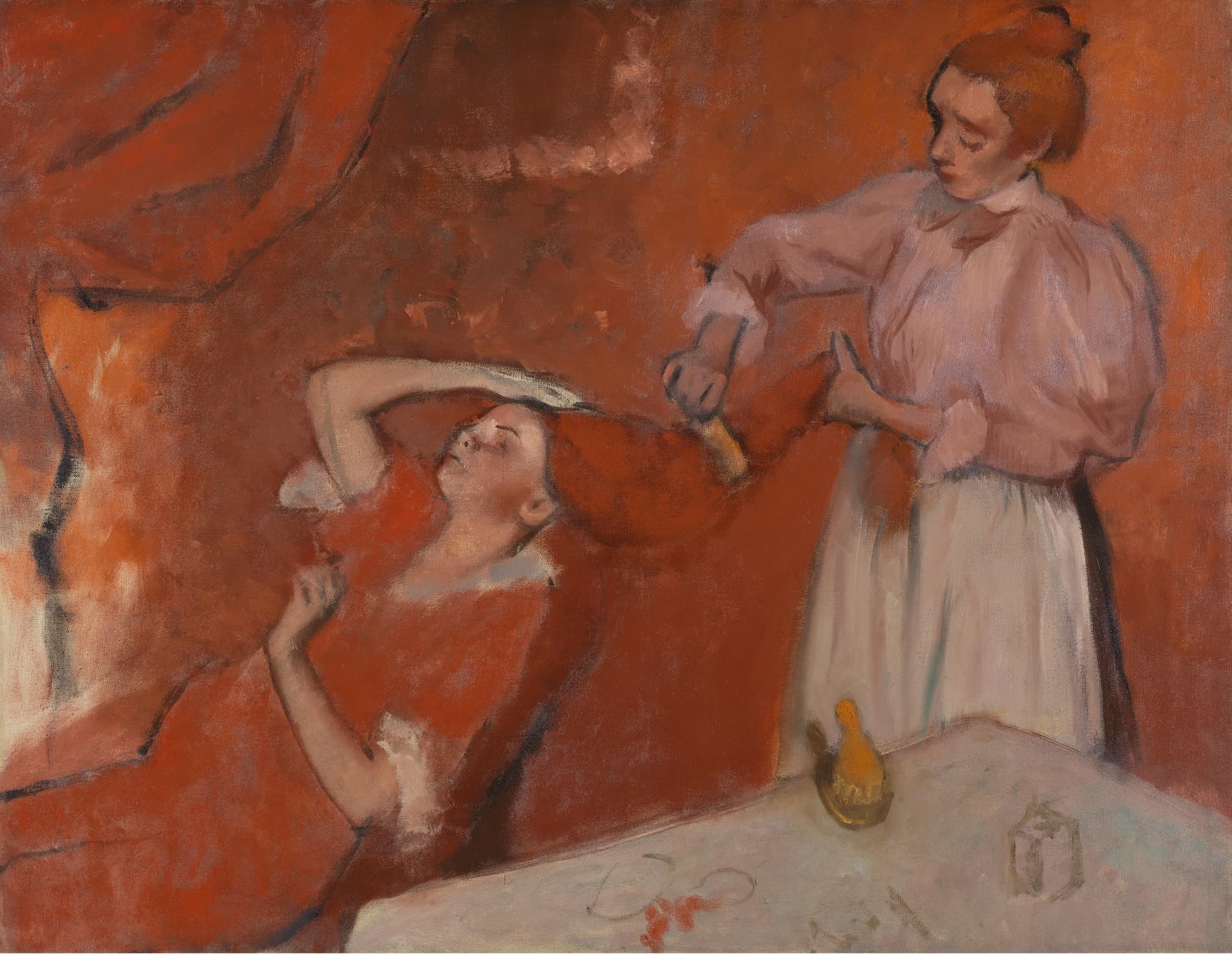
Focus question: When grooming becomes painting, who controls the image?
Girl Arranging Her Hair vs Combing the Hair
Theater: spectator vs. system
Focus question: In the Opéra, who is centered—an individual’s look or the machine that produces spectacle?
Woman with a Pearl Necklace in a Loge vs The Rehearsal of the Ballet Onstage
Public motion: control or drift
Focus question: How do they picture city modernity—as self‑authored motion or as non‑encounter?
A Woman and a Girl Driving vs Place de la Concorde
Why This Comparison Matters
This comparison clarifies what “modern” meant for two artists who helped invent it. Cassatt and Degas share the same toolkit—cropping, off‑axis vantages, studio construction, japoniste planarity—yet drive it to opposite ends. Cassatt’s designs stabilize intimacy and make competence visible; Degas’s designs test how institutions and optics shape bodies and time. Seeing that fork helps decode whole genres: the bather, the loge, the rehearsal, the street.
It also reframes influence. Their dialogue was close and durable—advice, shared media, even direct reworking—without erasing authorship. Cassatt redirected Degas’s lessons toward reciprocity; Degas redirected shared problems toward analysis. The result set terms for later debates about the gaze, gendered labor, and spectatorship. For museumgoers and readers, learning to feel the difference—care versus control—turns familiar Impressionist scenes into precise instruments for thinking about how we look and what our looking does.
Related Links
Sources
- Musée d’Orsay — La Classe de danse (The Ballet Class)
- Musée d’Orsay — Degas at the Opéra (exhibition dossier)
- Musée d’Orsay — Le Tub (The Tub)
- Art Institute of Chicago — The Child’s Bath
- National Gallery of Art — Girl Arranging Her Hair
- Philadelphia Museum of Art — Woman with a Pearl Necklace in a Loge
- Philadelphia Museum of Art — A Woman and a Girl Driving
- The Metropolitan Museum of Art — The Rehearsal of the Ballet Onstage
- Smarthistory — Mary Cassatt, Woman with a Pearl Necklace in a Loge
- National Gallery, London — Degas, Combing the Hair (La Coiffure)
- Smithsonian American Art Museum — Mary Cassatt
- National Gallery of Art — Little Girl in a Blue Armchair
- The Met Heilbrunn Timeline — Mary Stevenson Cassatt (1844–1926)
- Actual Art Studies — On the history and cropping of Place de la Concorde