From Equilibrium to Rupture
Both artists rebuild vision rather than record an instant. Cézanne fuses many glances into a coherent, weight‑bearing order; Picasso turns that constructive logic into a language that can split, quote, and reassemble the world. The difference clarifies why one stabilizes perception and the other confronts it.
Comparison frame: How do Cézanne’s constructed seeing and Picasso’s fractured seeing remake what a painting asks our eyes to do?
Quick Comparison
| Topic | Pablo Picasso | Paul Cézanne |
|---|---|---|
| Core project | Construct a durable order from sustained looking. | Invent an autonomous language that can unmake and remake vision. |
| Space | Tilted tables and shifting viewpoints resolve into equilibrium. | Shallow, faceted fields keep contradictions vivid and active. |
| Time of seeing | Sequential glances reconciled into one steady image. | Simultaneity and collision—multiple views co-present. |
| Mark-making | Constructive brushstroke; color-built planes. | Fracture; collage; stenciled text and materials. |
| Color | Warm–cool modulation models volume and depth. | Strategic palettes (grisaille, acidic dissonance) as rhetorical force. |
| Object status | Painting as a coherent world that bears visual weight. | Picture-object hybrid; signs and citations that invite reading. |
| Viewer address | Private, measured attention; steadied motifs. | Confrontational address; from brothel to bombardment. |
| Legacy | Groundwork for modern structure and perception. | Expands into Cubism’s analytic/synthetic syntax and political reach. |
Shared Ground
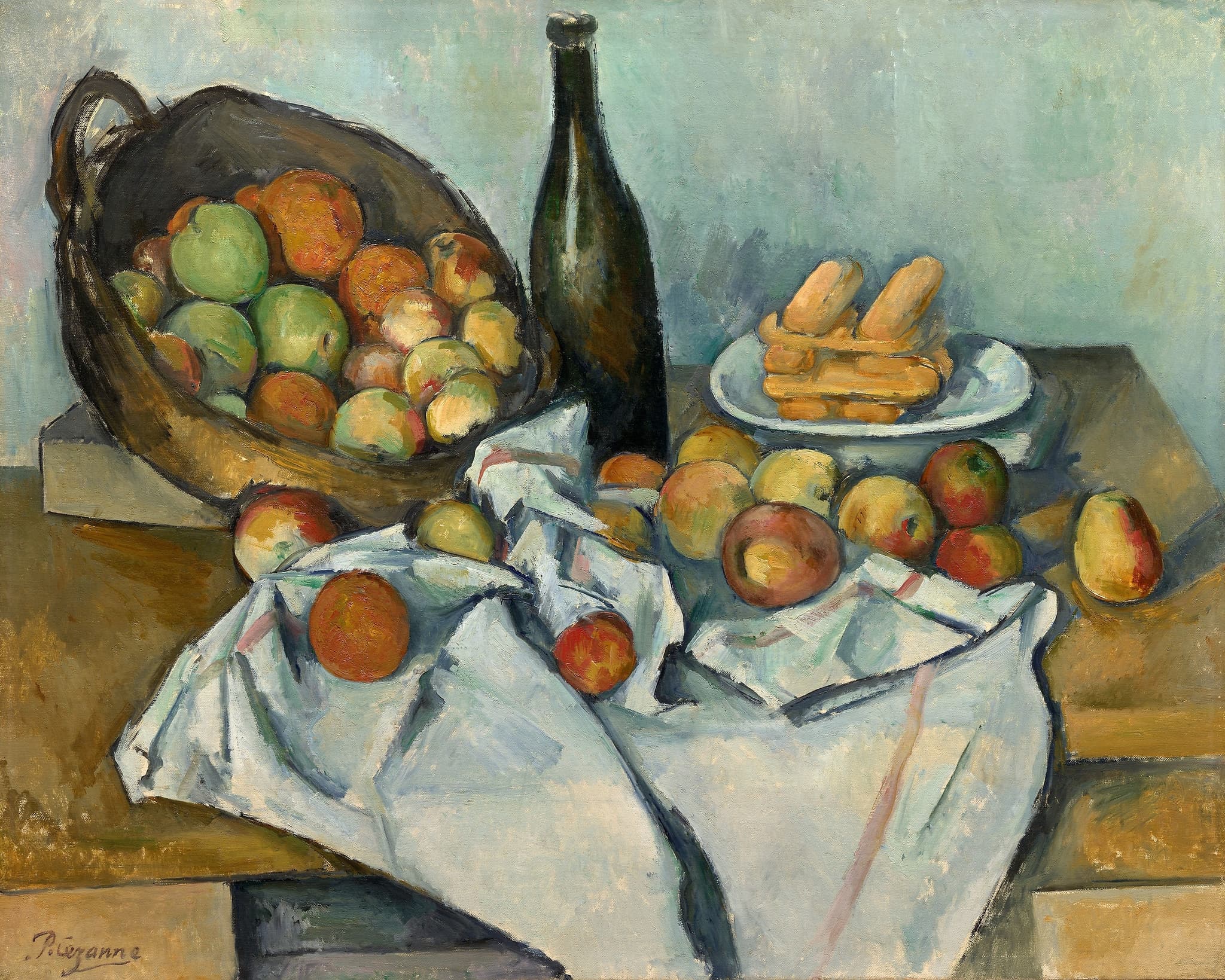
Cézanne and Picasso treat painting as a laboratory for perception. Instead of copying a single instant, both build images from accumulated lookings, coordinating planes so the eye must assemble the scene. Cézanne’s tilted tables, kinked edges, and shifting viewpoints make this plain; his still lifes and landscapes register time—glances knit together—then consolidate those observations into a coherent structure. Picasso takes that constructive premise and radicalizes it: analytic Cubism collapses multiple viewpoints into shallow, interlocking facets, while synthetic Cubism introduces collage, text, and material quotation so that seeing shades into reading.
Across traditional genres—still life, landscape, nude—each artist treats a motif as a problem in construction. Cézanne stabilizes forms by color-built planes and the short, parallel “constructive stroke”; volume and depth arise from warm–cool modulation rather than theatrical light. Picasso converts that scaffolding into a new pictorial language: fracture, simultaneity, and later, pasted paper and printed oilcloth that propose the image as an object among objects. The continuity between them is historical as well as formal: Cézanne’s late works, widely visible after the 1895 Vollard exhibition and the 1907 Salon d’Automne retrospective, catalyzed a generation’s rethinking of perspective and volume, directly feeding Picasso’s 1907–12 breakthroughs. On shared ground, then, both artists show that meaning in painting is built—plane by plane, decision by decision—rather than found.
Decisive Difference
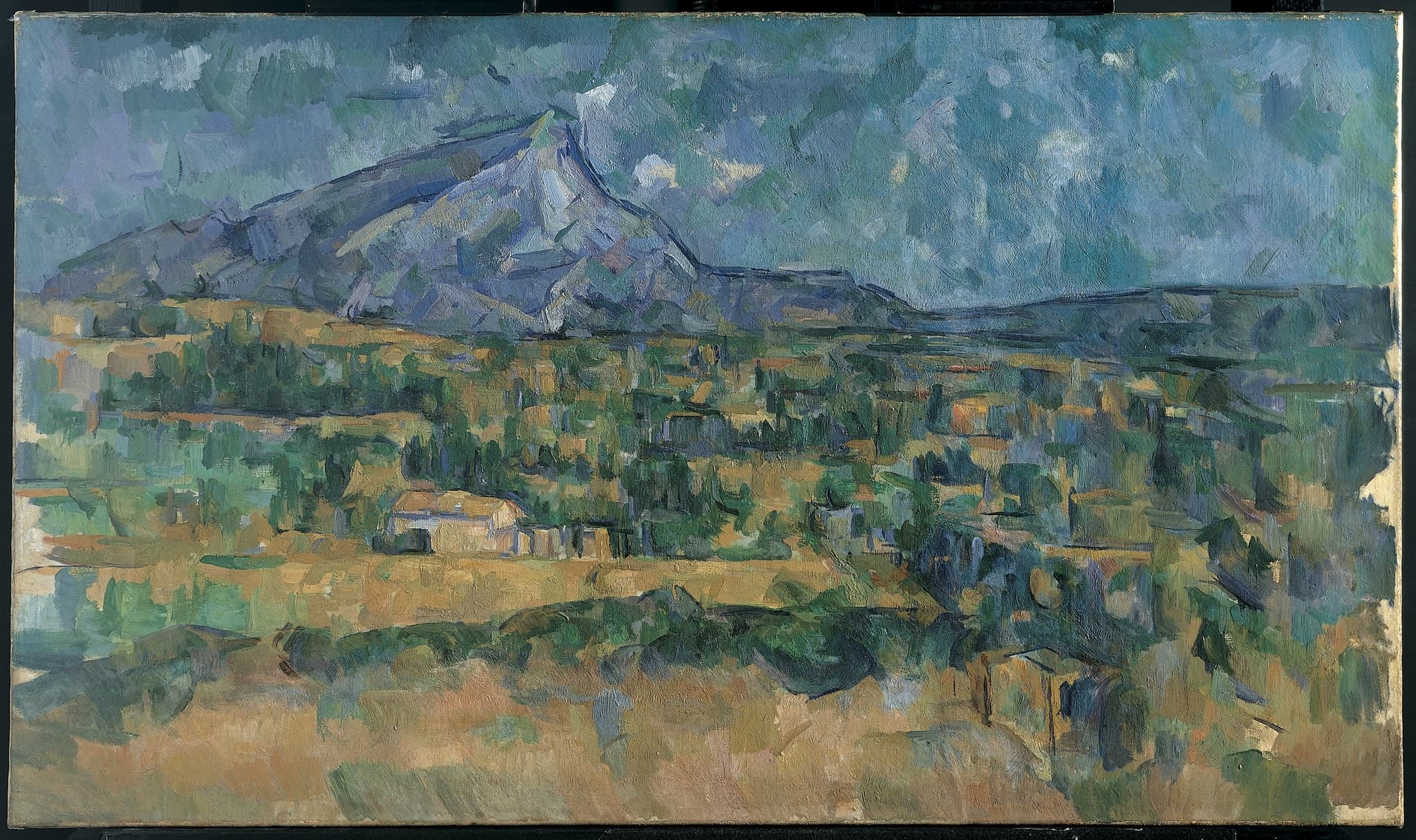
The divergence lies in what construction is for. Cézanne’s end is equilibrium: a durable order distilled from perception. He integrates small misalignments and sequential viewpoints so the painting can carry weight—apples as counterweights, mountains as interlocking volumes, bathers and trees fused into a natural vault. Color does structural work; warm–cool relations model form and knit the field into a single, load‑bearing image. Even when edges refuse to meet, the system resolves. The eye is asked to reconcile.
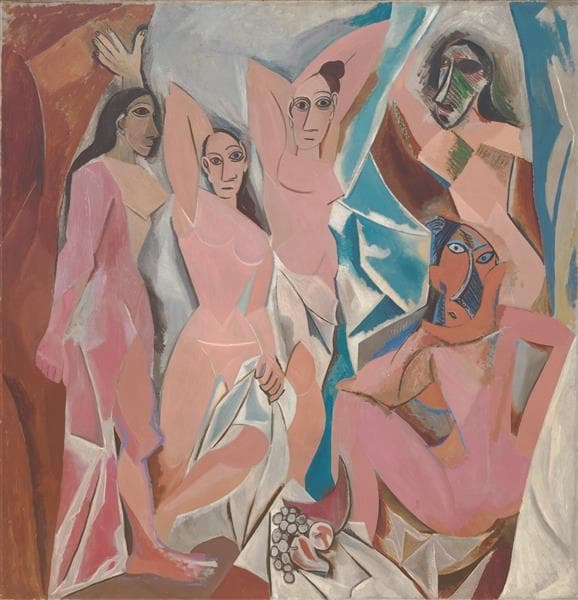
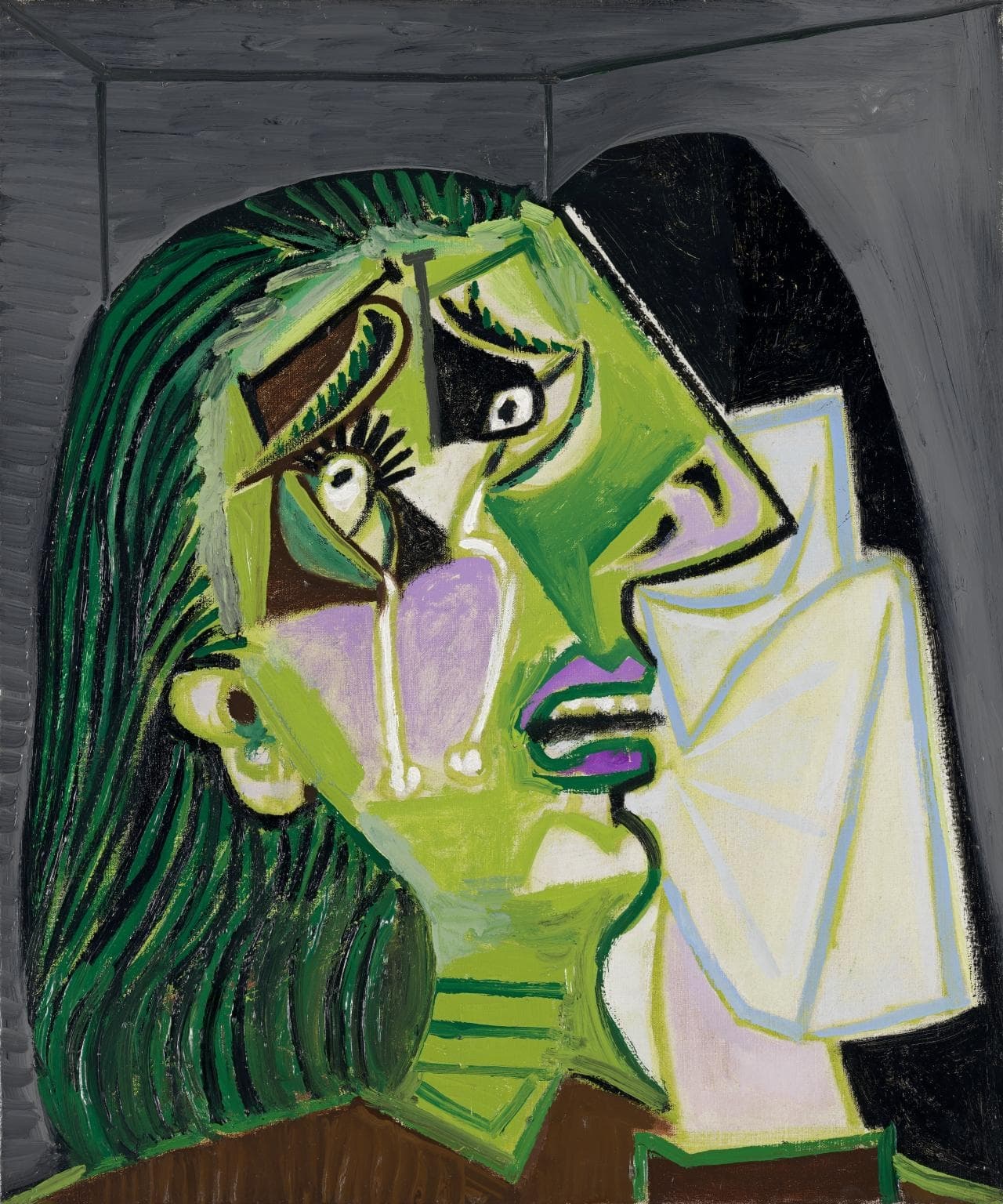
Picasso’s end is a language that can oppose, quote, and legislate. He converts Cézanne’s planar building into active fracture—shards that never fully reconcile—and into signs that pull painting toward reading. Still Life with Chair Caning collapses tabletop space into hybrid picture‑object: printed oilcloth caning, a rope frame, and the stenciled JOU fold café life and newspaper into the surface. In Les Demoiselles d’Avignon, masklike faces and slicing planes reject classical stability and confront the beholder’s role. In Guernica and the Weeping Woman, that language becomes civic: grisaille as reportage, dissonant color as shock, contradiction kept alive so viewers must parse and take a position. Where Cézanne harmonizes sequential seeing into a world, Picasso keeps simultaneity unsettled—turning construction into a tool for reordering how we see and how we think.
Paired Works
Tabletop as a Test of Seeing
Focus question: What happens when a still life stops copying and starts building?
The Basket of Apples vs Still Life with Chair Caning
Landscape into Structure
Focus question: How does each make nature into a system of planes?
Mont Sainte-Victoire vs The Reservoir, Horta de Ebro
Rewriting the Nude
Focus question: What replaces classical beauty in their figure constructions?
The Large Bathers vs Les Demoiselles d'Avignon
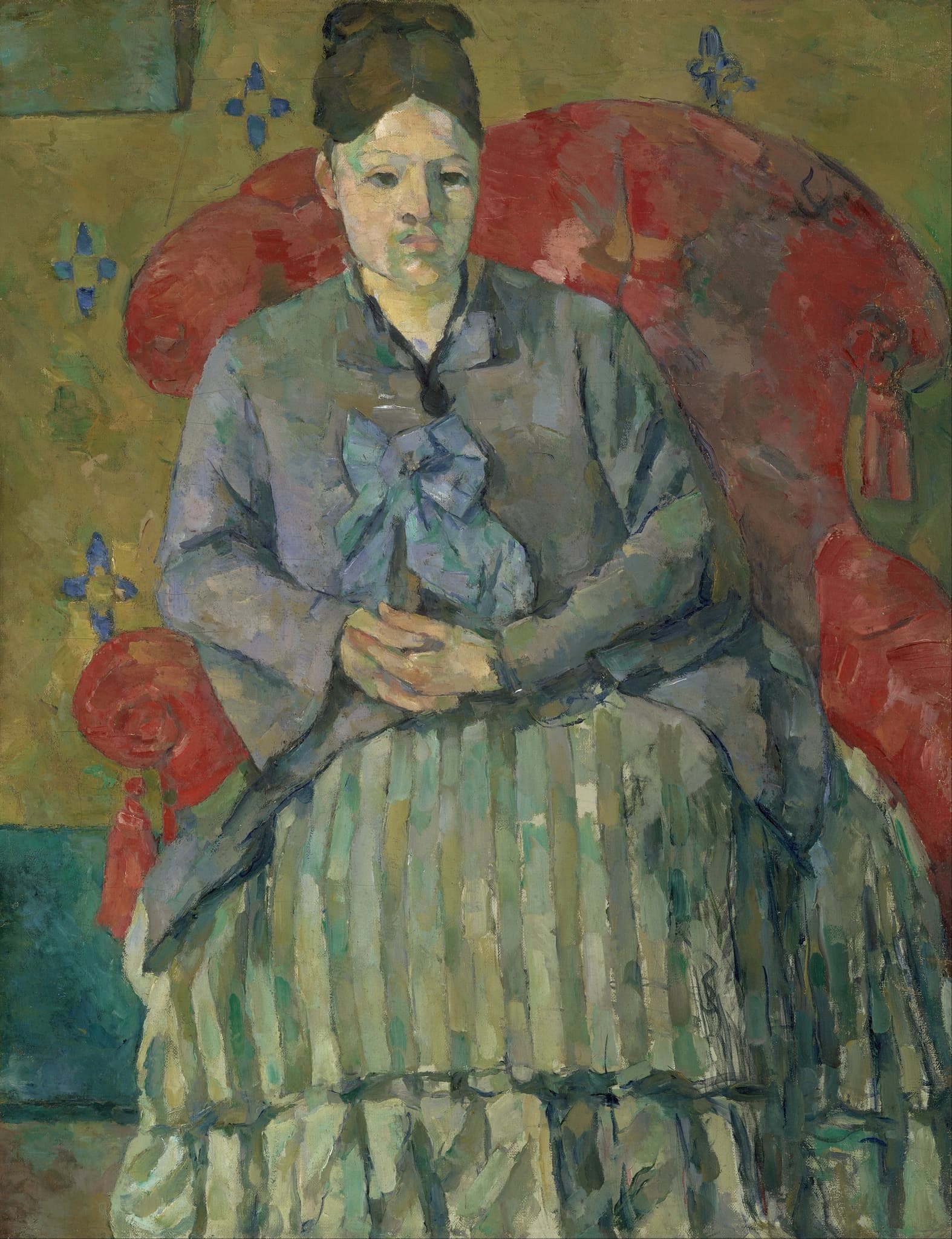
What Color Does to a Face
Focus question: How does color-structure become feeling?
Madame Cézanne in a Red Armchair vs The Weeping Woman
Why This Comparison Matters
Seeing like Cézanne and seeing like Picasso are two modern habits we still live with. Cézanne shows how visual truth can be built from measured relations rather than from camera-like instantaneity; he teaches us to look until parts hold. Picasso shows how images can refuse to reconcile, forcing us to read, parse, and take positions—a skill as relevant to news images and social feeds as to Cubism. Together they reset the contract between painting and viewer: you do not receive the world; you help make it legible.
Understanding their shared ground clarifies why Cubism could happen at all, and grasping their decisive difference explains why twentieth‑century art splits between stabilizing systems and disruptive languages. This comparison equips a curious viewer with a durable lens: when a work invites reconciliation of glances, think Cézanne; when it keeps contradictions active or turns objects into signs, think Picasso. Both are truthful. They answer different questions about how vision—and culture—should be built.
Related Links
Sources
- Art Institute of Chicago — Cézanne’s still lifes under the microscope
- Art Institute of Chicago — The Basket of Apples (object page)
- MoMA — Letters of Paul Cézanne (Danchev ed.), incl. cylinder/sphere/cone
- The Met Heilbrunn Timeline — Cubism
- Musée Picasso-Paris — Nature morte à la chaise cannée
- MoMA — The Reservoir, Horta de Ebro (1909)
- Philadelphia Museum of Art — The Large Bathers
- MoMA — Les Demoiselles d’Avignon
- Museo Reina Sofía — Guernica
- Reina Sofía — Guernica’s custodial history and return to Spain
- National Gallery (London) — Cézanne and modern construction (Reißner PDF)
- Princeton University Art Museum — Cézanne teacher resource (constructive stroke)