Two answers to the same Impressionist problem
Both painters ask how a flat surface can hold optical experience without freezing it. Renoir fuses bodies, décor, and air into luminous unities that feel socially attuned in the present. Cézanne rebuilds what looking discovers over time, using calibrated warm–cool shifts and constructive strokes to make forms endure. Together they map Impressionism’s split into grace versus structure.
Comparison frame: How do Renoir and Cézanne each turn seeing into order—Renoir by harmonizing lived moments, Cézanne by constructing stable relations?
Quick Comparison
| Topic | Paul Cézanne | Pierre-Auguste Renoir |
|---|---|---|
| Core aim | Attunement: harmonize lived, social moments into a persuasive present | Construction: build a durable order from slow, cumulative looking |
| How color works | A luminous envelope: soft, high‑key color fuses figure and setting | Calibrated warm–cool shifts and faceted strokes model mass and bind planes |
| Brushwork | Supple, breathing edges; blended transitions where sensation matters | Short, constructive touches; visible modules that stack into form |
| Space and viewpoint | Atmospheric depth; décor and foliage dissolve into shared light | Tilted planes and purposeful misalignments register multiple viewpoints |
| Model of time | The present tense of sociability: dance, music, café leisure | Sequential perception compressed into one frame |
| Genre as laboratory | Repeats finished variants (e.g., Young Girls at the Piano) for public claim | Serial method (still lifes, Card Players, Sainte‑Victoire) to test equilibrium |
| Figure priority | Grace, touch, etiquette; bodies tuned to décor and light | Figures as interlocking masses; portrait as color architecture |
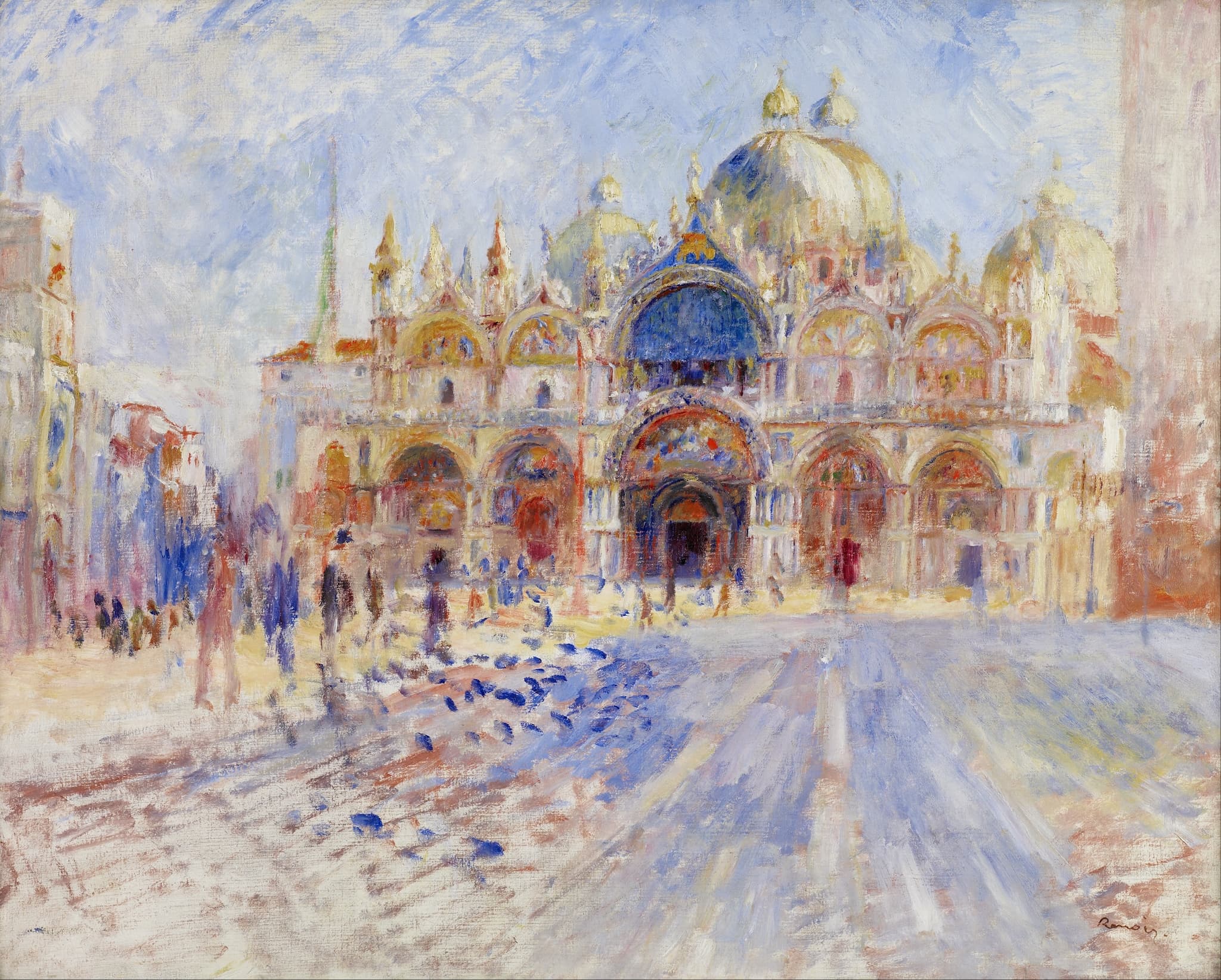
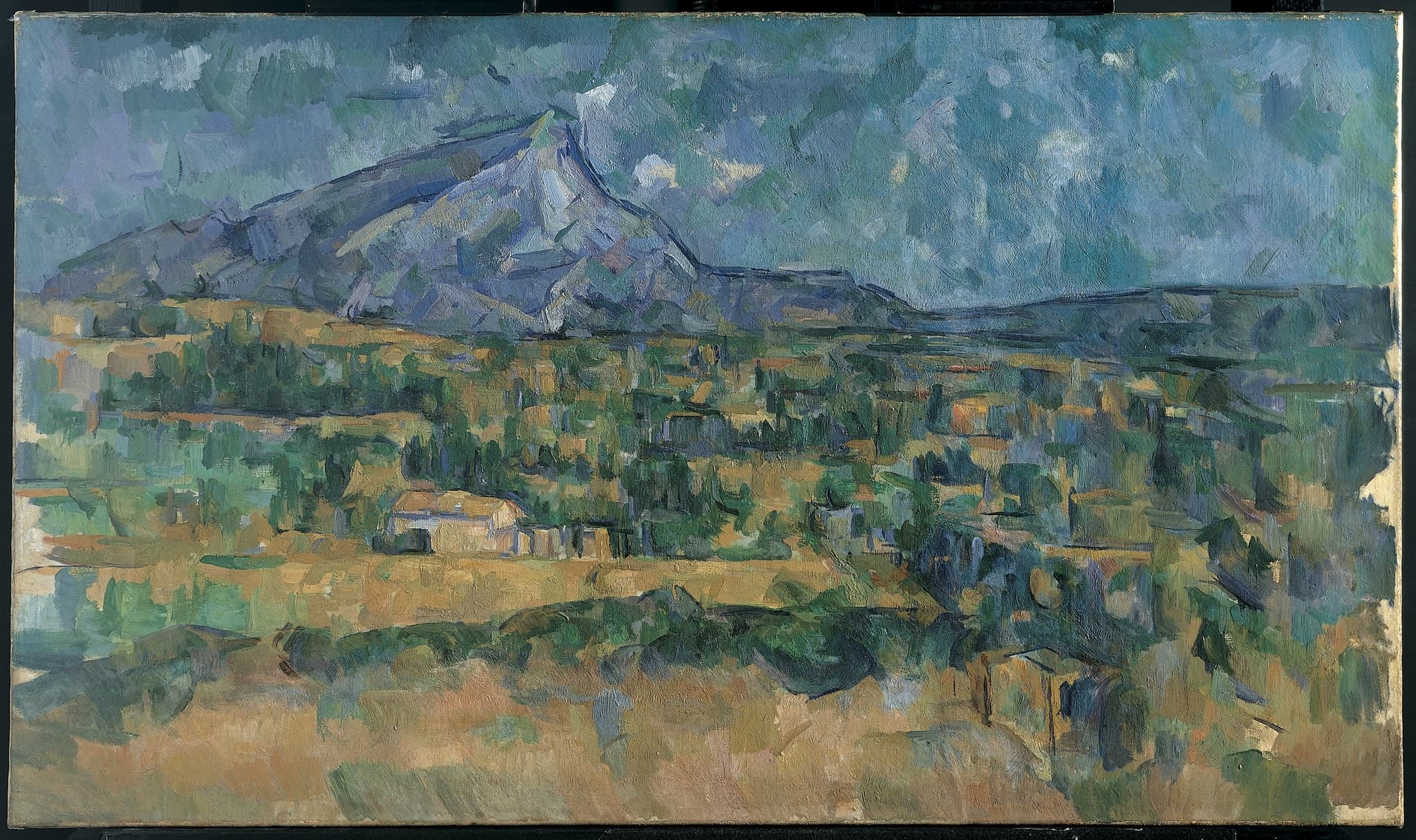
| Landscape | Place as atmosphere (e.g., Piazza San Marco made of light) | Place as constructed principle (Mont Sainte‑Victoire as planes in order) |
Shared Ground
Renoir and Cézanne start from the same wager: color can do the building that line and academic perspective once did. Each treats painting as a way to make the flux of seeing cohere without killing its life. In Renoir, a soft, luminous envelope knits figures and setting—satin, skin, palm fronds, and parquet breathe into one atmosphere. In Cézanne, short, faceted strokes and warm–cool calibrations turn apples, sleeves, and mountains into planes that lock together. Both are solutions grown from Impressionism, but neither is a retreat to mere shimmer.
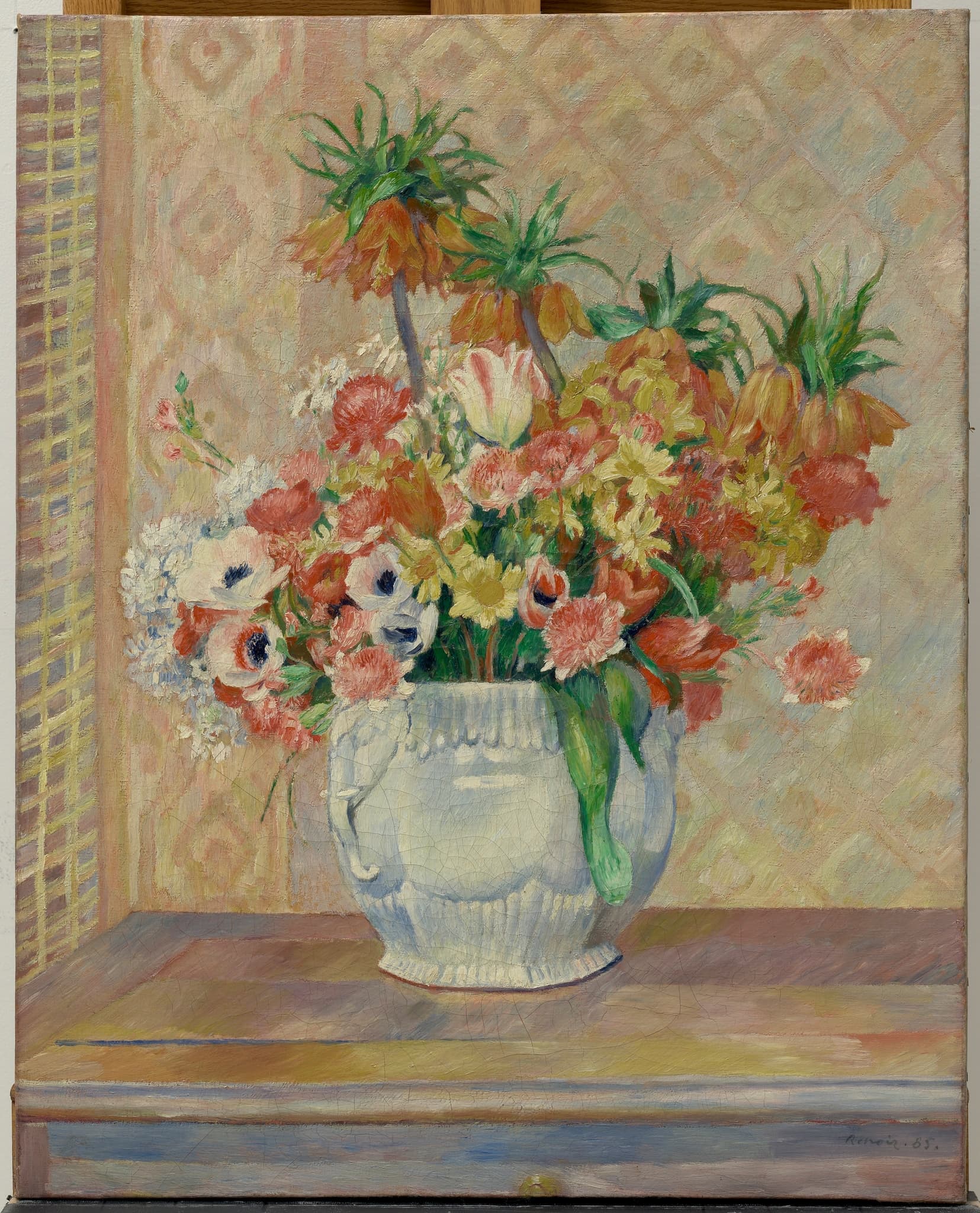
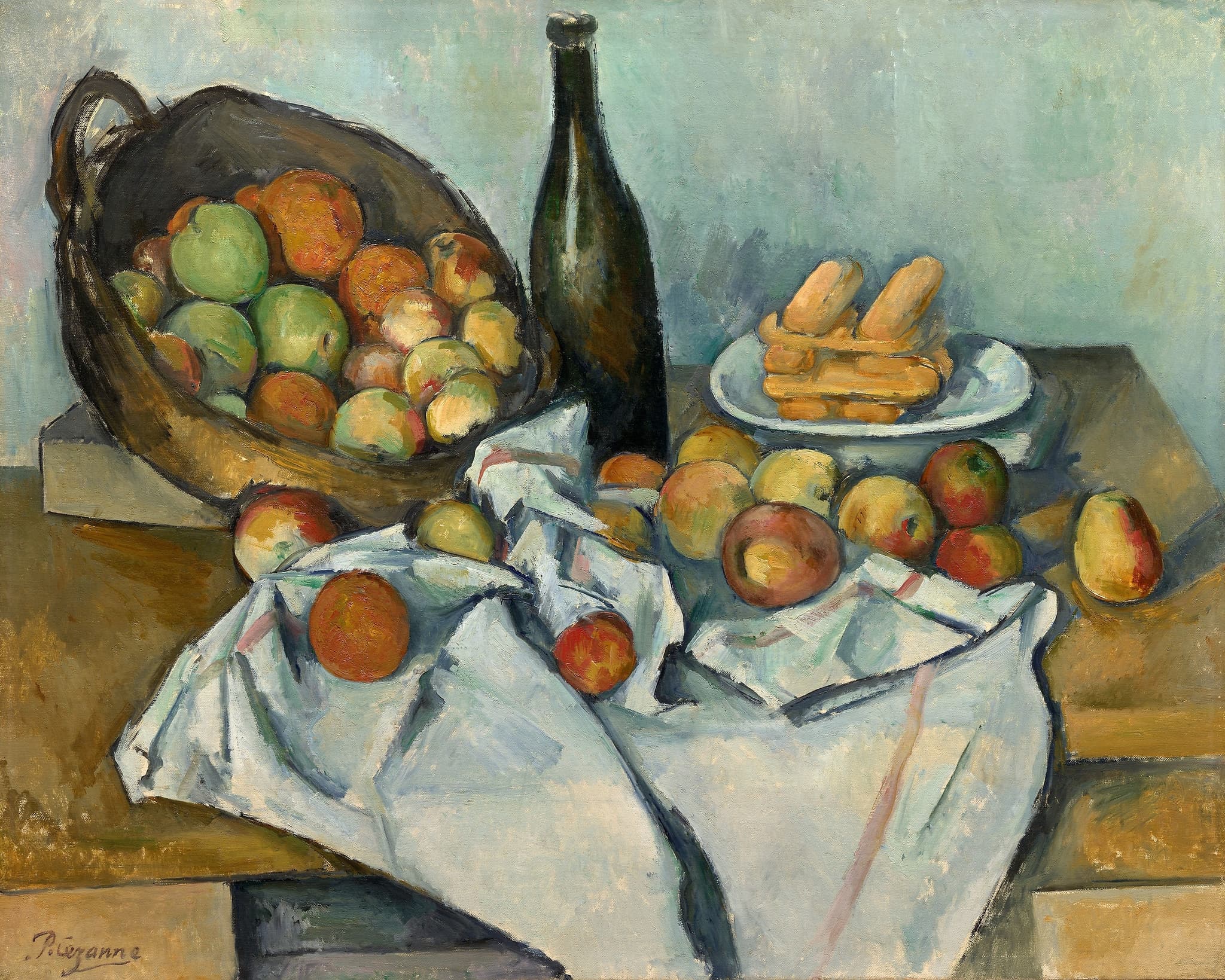
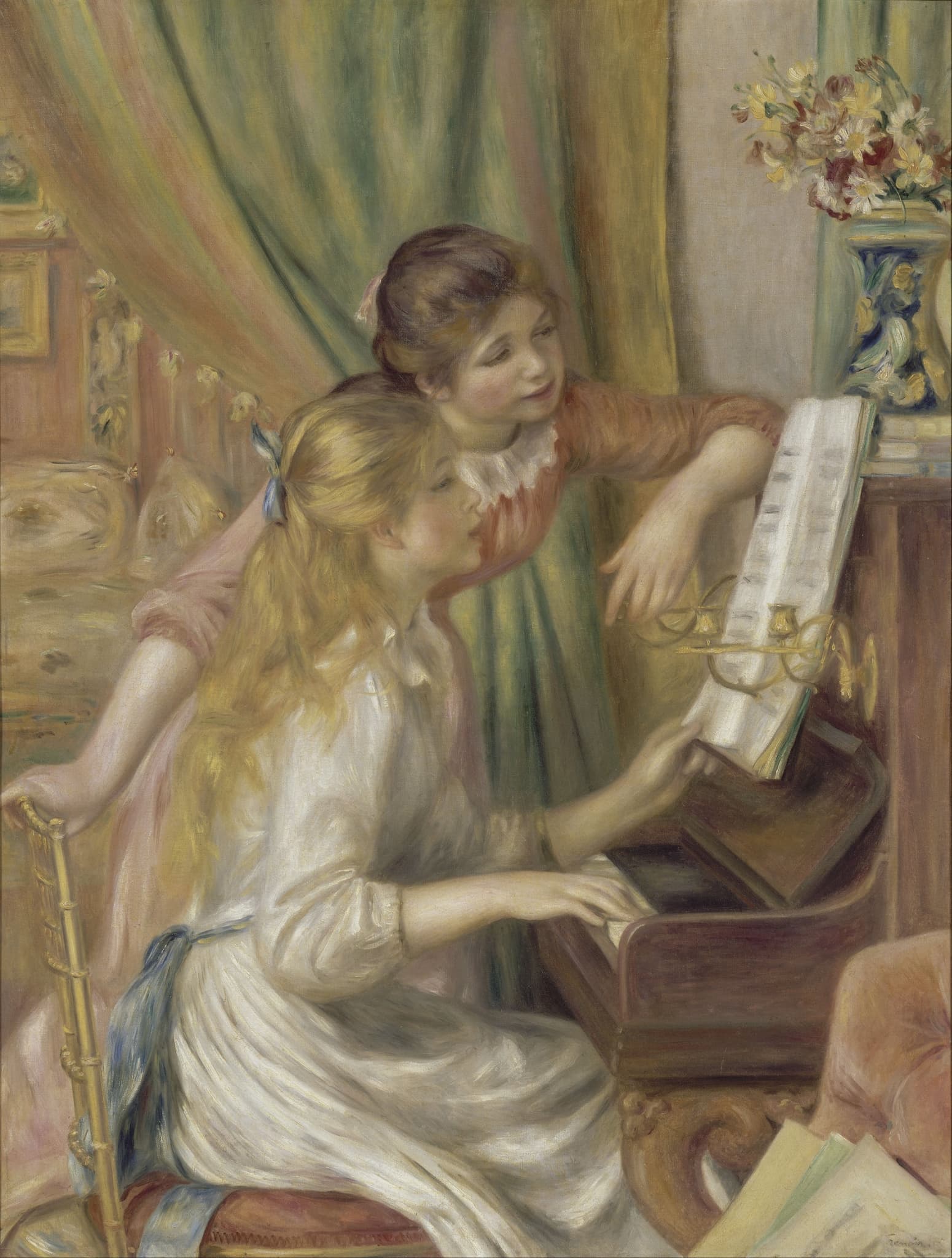
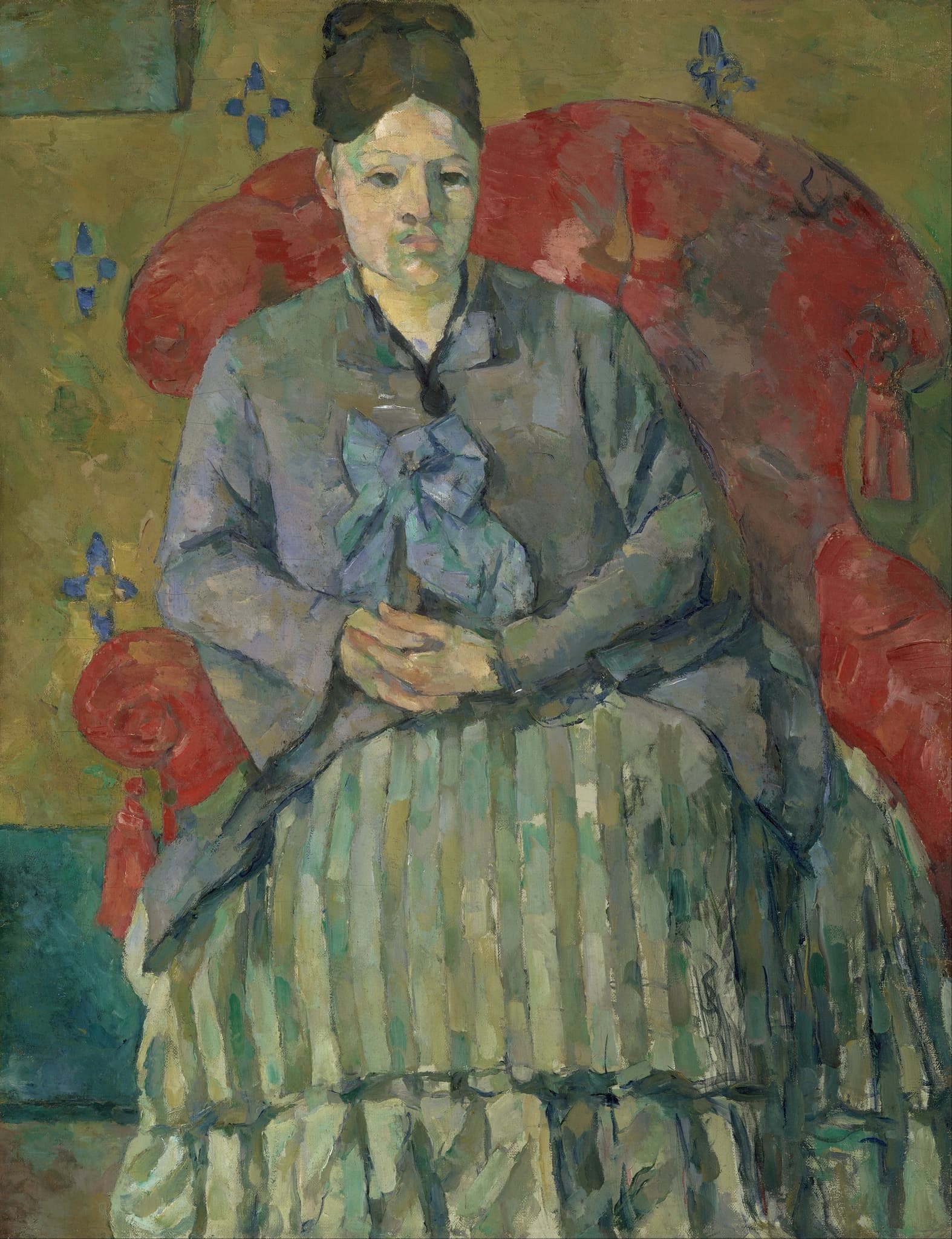
They also share a laboratory mindset. Still life is their truth test: Renoir’s Still Life with Flowers centers a clear, oval bouquet inside dissolving décor, while Cézanne’s The Basket of Apples tips a basket, kinks a tabletop, and leans a bottle to reveal how looking accumulates. Interiors and portraits become method trials: Renoir’s Young Girls at the Piano, made in multiple finished versions for state visibility, pursues harmony among pose, drapery, and color; Cézanne’s Madame Cézanne in a Red Armchair treats sitter and chair as equal, interlocking masses. In landscape, both return obsessively to motifs—Renoir to luminous civic spaces like The Piazza San Marco, Venice; Cézanne to Mont Sainte‑Victoire—testing how far color relations can bind a field. The shared ground is clear: each seeks a credible order of vision on canvas, achieved through color-driven construction and serial refinement.
Decisive Difference
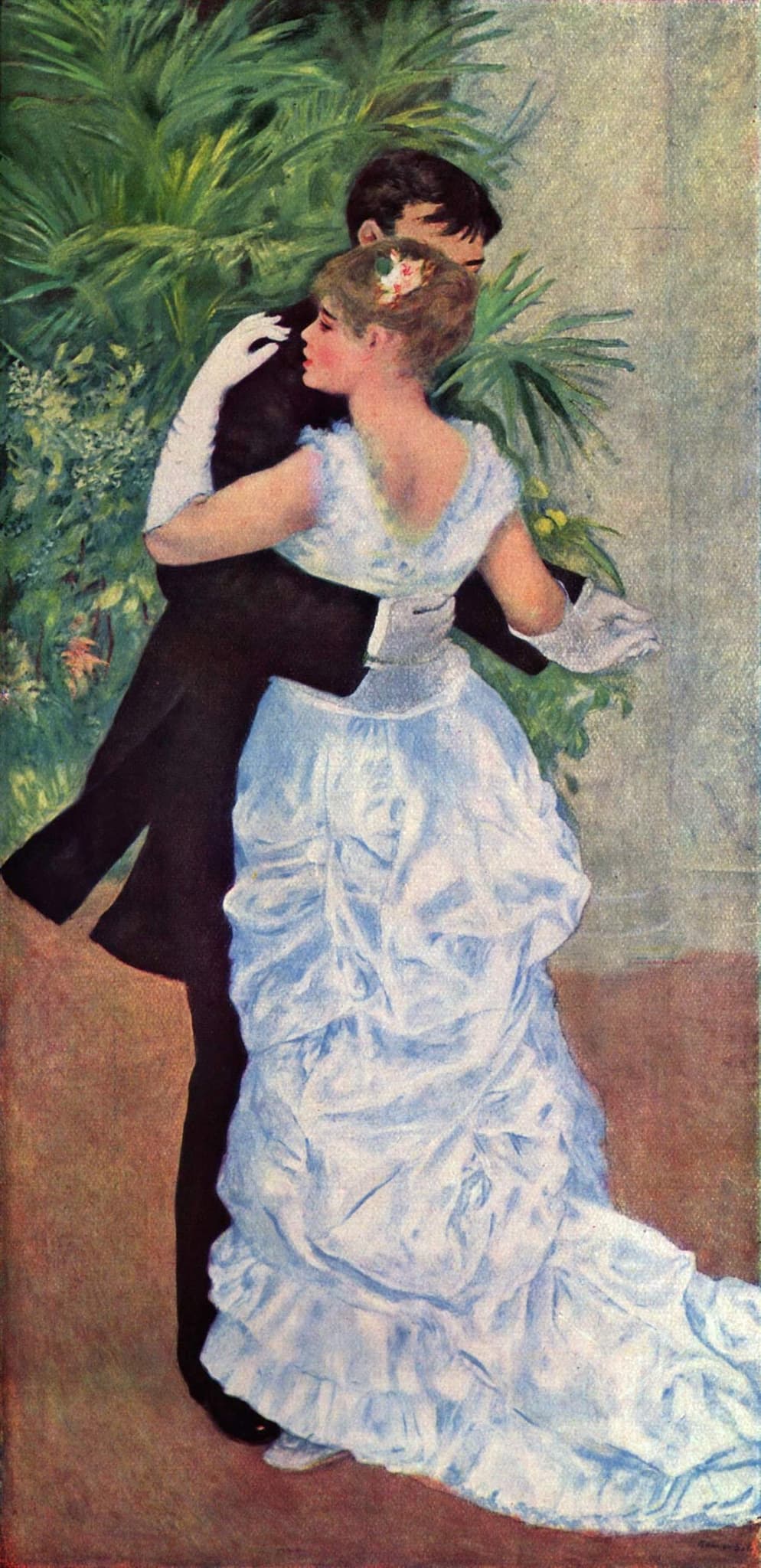
Their split is decisive: Renoir paints attunement; Cézanne paints construction. Renoir’s goal is a present-tense harmony where bodies, manners, and décor align. In Dance in the City, touch is licensed by etiquette—gloves, satin, palms—and color spreads a cool, indoor civility over the couple’s embrace. In Young Girls at the Piano, pose, curtain, and score are orchestrated so instruction turns into duet; multiple finished versions sharpen the rhetoric for public view. Even in travel views like The Piazza San Marco, Venice, architecture is recast as atmosphere: light stages social life.
Cézanne, by contrast, rebuilds what sustained looking discovers. In The Basket of Apples, the skewed table edge, double-read plate, and leaning bottle are planned misalignments; they register sequential viewpoints made legible by color-planes. Madame Cézanne in a Red Armchair gives the chair’s red mass the same structural authority as the sitter; likeness becomes a system of interdependent tones. Mont Sainte‑Victoire fuses mountain and sky into one constructed order, answering his program to treat nature by cylinder, sphere, and cone. Where Renoir convinces through grace—an envelope that feels true to lived sociability—Cézanne convinces through equilibrium—relations that hold under pressure. Both are rigorous; they simply define what must be held differently: a shared present versus a built structure of perception.
Paired Works
Still life as a truth test
Focus question: What makes the tabletop cohere: an atmospheric envelope or built relations?
Still Life with Flowers vs The Basket of Apples
The modern interior, two logics of order
Focus question: Is the home a stage of grace or a scaffold of masses?
Young Girls at the Piano vs Madame Cézanne in a Red Armchair
Public leisure: movement vs equilibrium
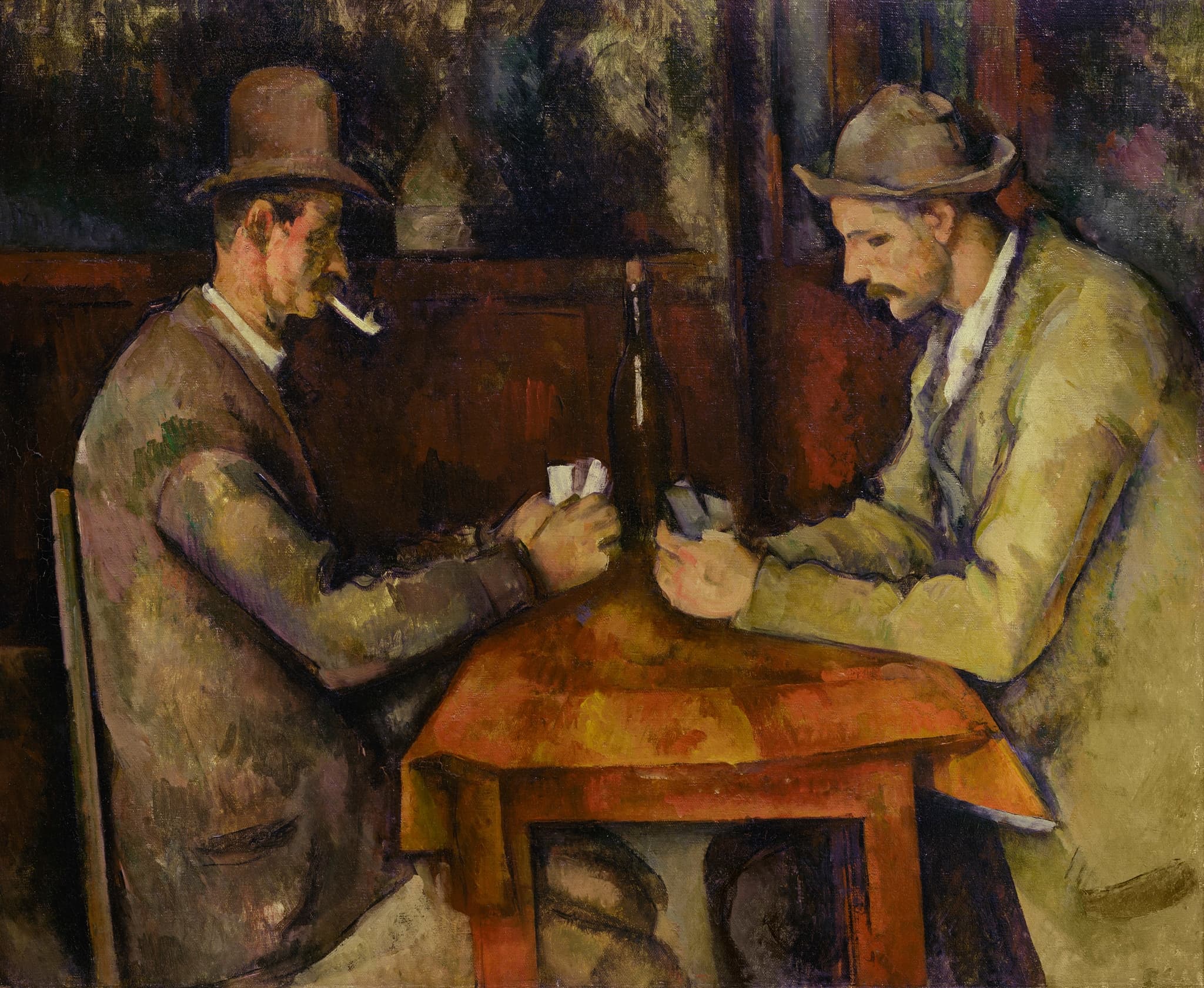
Focus question: What does attention look like in public—turning bodies or balanced focus?
Dance in the City vs The Card Players by Paul Cézanne | Equilibrium and Form
Place turned into principle
Focus question: When landscape becomes method, what changes?
The Piazza San Marco, Venice vs Mont Sainte-Victoire
Why This Comparison Matters
Seeing these painters together clarifies what modern painting decided to be. Renoir proves that a picture can hold the present—touch, manners, music, weather—without narrative props, if light and color are tuned to social life. Cézanne proves that a picture can hold perception itself—its shifts, returns, and tests—by constructing relations that endure beyond any single glance. Their procedures seeded divergent futures: Renoir’s attuned envelope fed a century of painters for whom atmosphere and human warmth carry meaning; Cézanne’s construction underwrote the structural ambitions of Fauvism, Cubism, and beyond.
For viewers, the comparison is practical. Ask, as you look: is the painting persuading me by grace or by equilibrium? Do edges breathe, or do planes interlock? When you can name which order a work seeks—attunement or construction—you read both artists more deeply, and you gain a portable lens for modern art at large.
Related Links
Sources
- Musée d’Orsay – Young Girls at the Piano (state purchase; versions)
- National Gallery, London – Renoir, The Umbrellas (Ingres/Italy period)
- Art Institute of Chicago – Cézanne’s Still Lifes Under the Microscope (Basket of Apples)
- The Met – The Card Players (series; local models; reduction of anecdote)
- MFA Boston – Madame Cézanne in a Red Armchair (about 1877)
- Musée d’Orsay – Danse à la ville (Dance in the City)
- Google Arts & Culture / Minneapolis Institute of Art – The Piazza San Marco, Venice
- MoMA – Mont Sainte‑Victoire (late series context)
- MoMA (Danchev) – Letters of Paul Cézanne (1904 letter to Émile Bernard)
- Smarthistory – Cézanne, Mont Sainte‑Victoire (constructive brushstroke)