Humanity
The symbolism of humanity in art encompasses markers of personal connection, social roles, and emotional dynamics, reflecting complex layers of identity and interaction within modern life.
Member Symbols
Featured Artworks
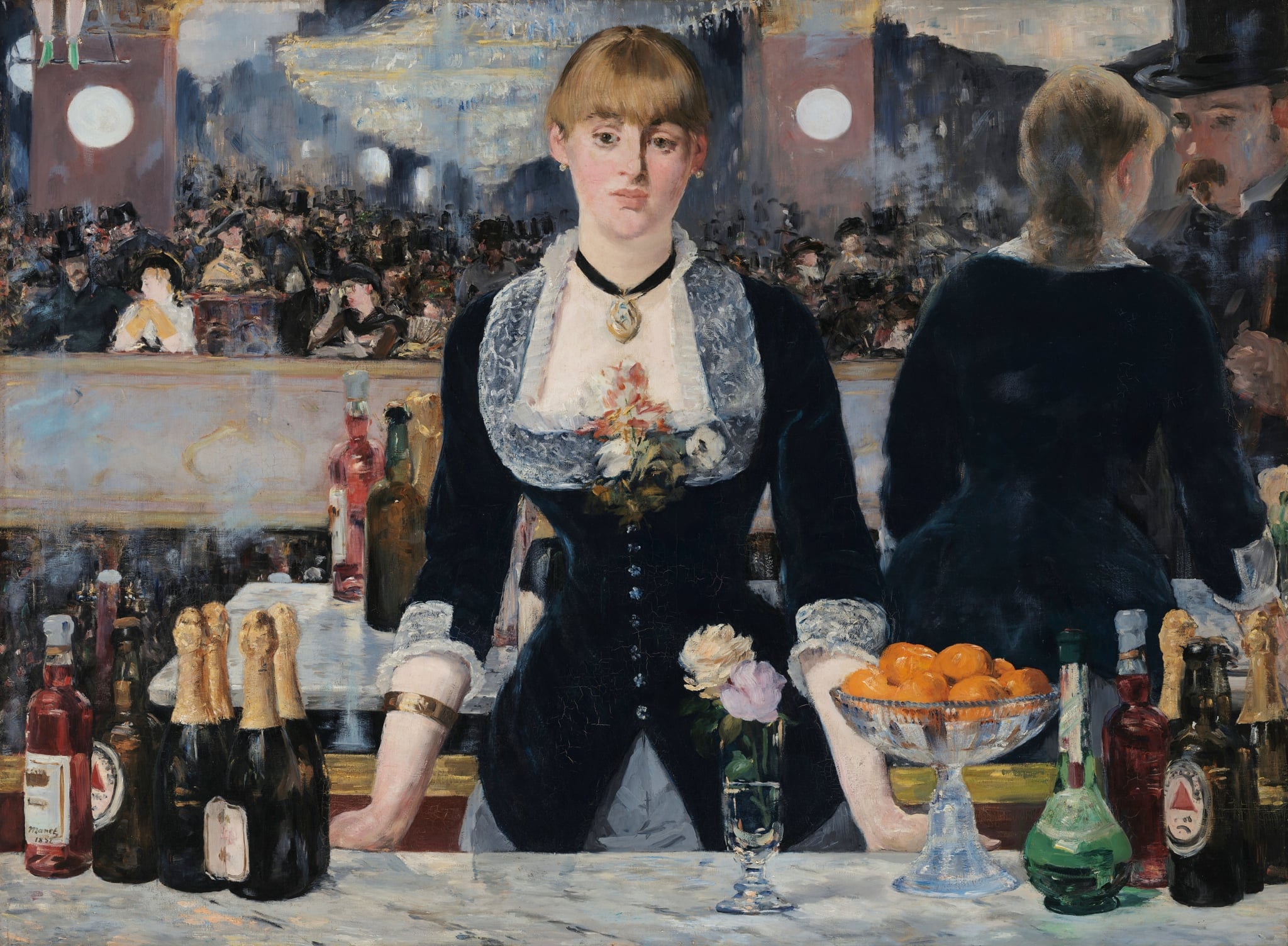
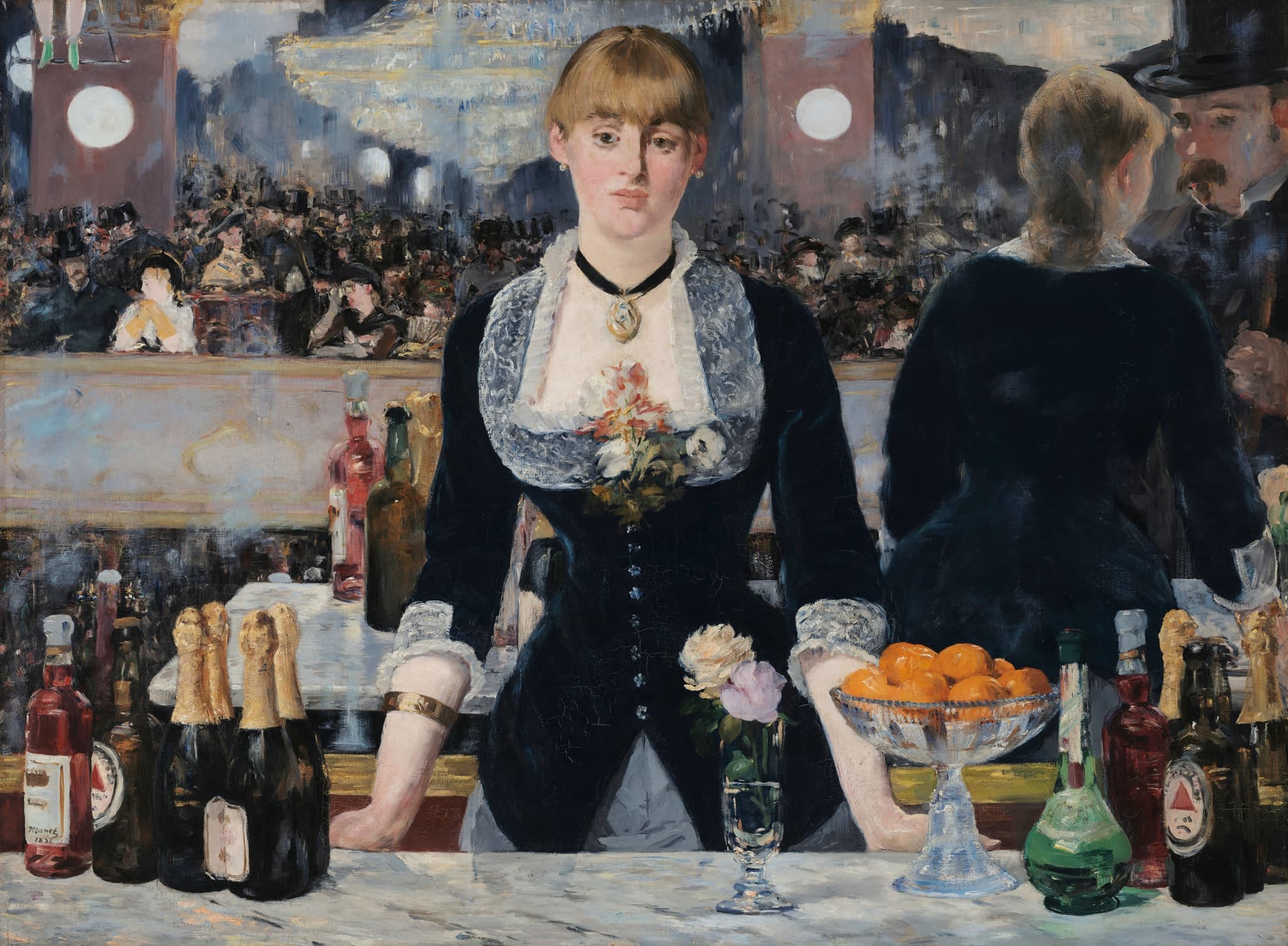
A Bar at the Folies-Bergère
Édouard Manet (1882)
Édouard Manet’s A Bar at the Folies-Bergère stages a face-to-face encounter with modern Paris, where <strong>commerce</strong>, <strong>spectacle</strong>, and <strong>alienation</strong> converge. A composed barmaid fronts a marble counter loaded with branded bottles, flowers, and a brimming bowl of oranges, while a disjunctive <strong>mirror</strong> unravels stable viewing and certainty <sup>[1]</sup><sup>[2]</sup>.
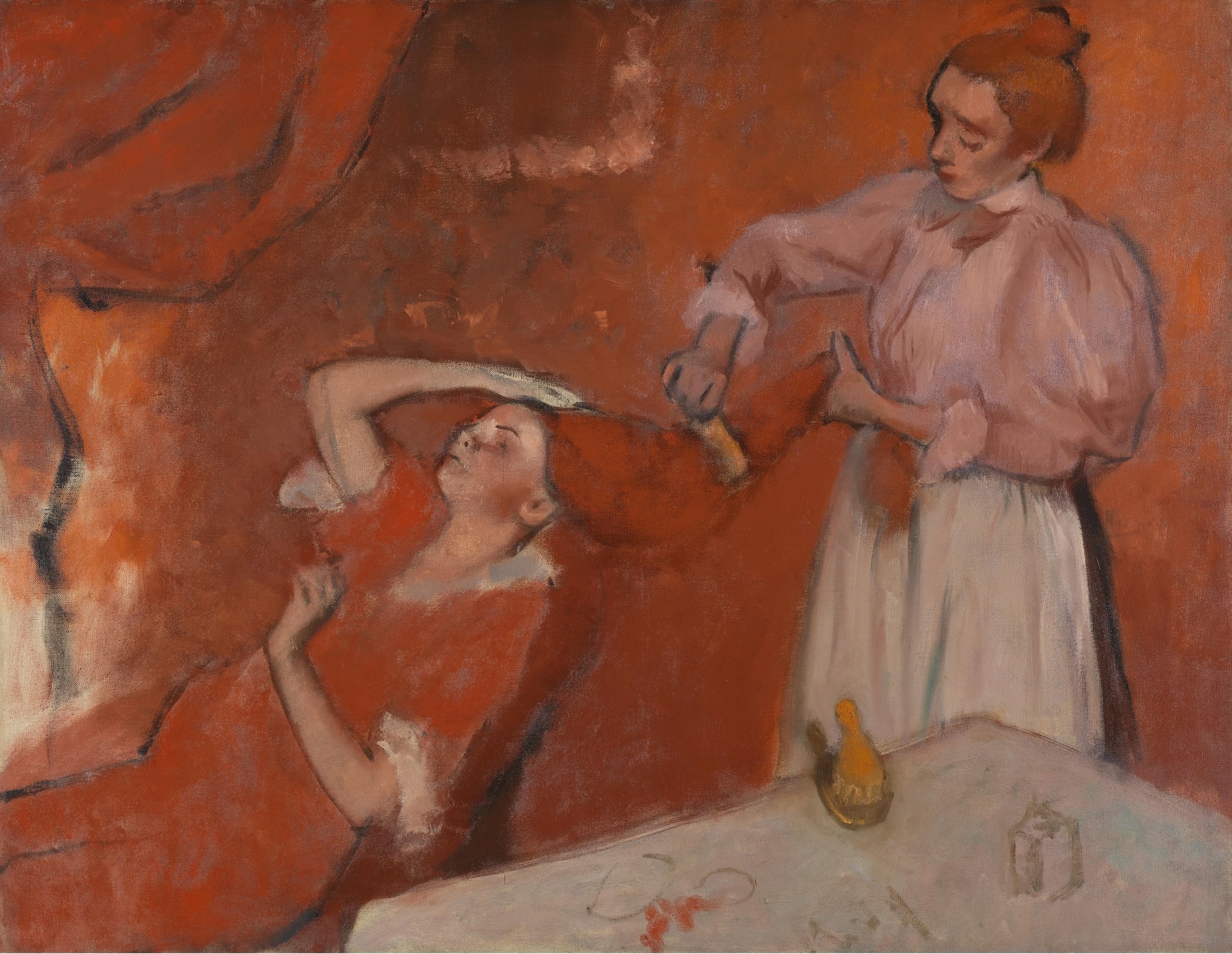
Combing the Hair
Edgar Degas (c.1896)
Edgar Degas’s Combing the Hair crystallizes a private ritual into a scene of <strong>compressed intimacy</strong> and <strong>classed labor</strong>. The incandescent field of red fuses figure and room, turning the hair into a <strong>binding ribbon</strong> between attendant and sitter <sup>[1]</sup>.
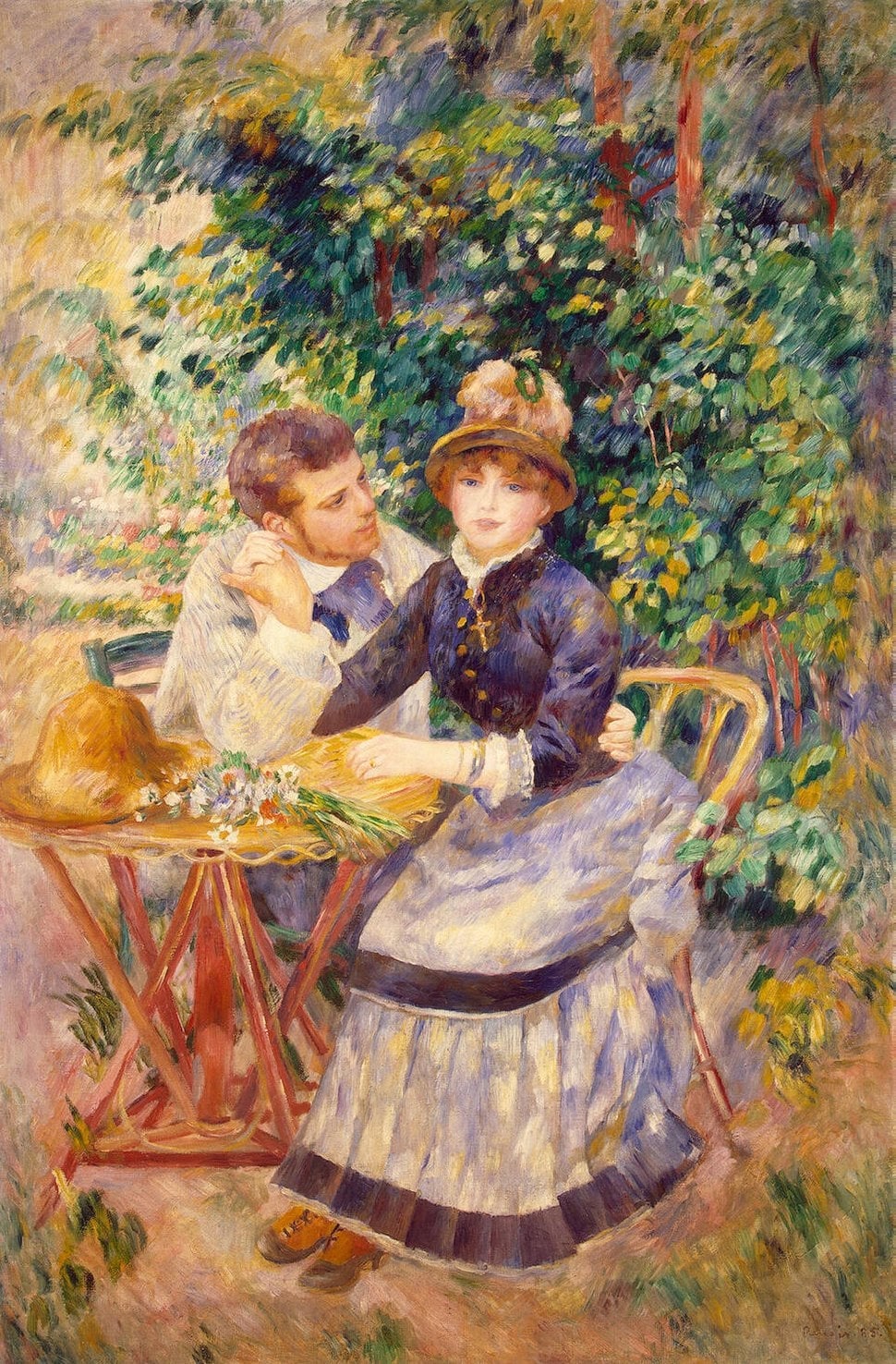
In the Garden
Pierre-Auguste Renoir (1885)
In the Garden presents a charged pause in modern leisure: a young couple at a café table under a living arbor of leaves. Their lightly clasped hands and the bouquet on the tabletop signal courtship, while her calm, front-facing gaze checks his lean. Renoir’s flickering brushwork fuses figures and foliage, rendering love as a <strong>transitory, luminous sensation</strong> <sup>[1]</sup><sup>[3]</sup>.
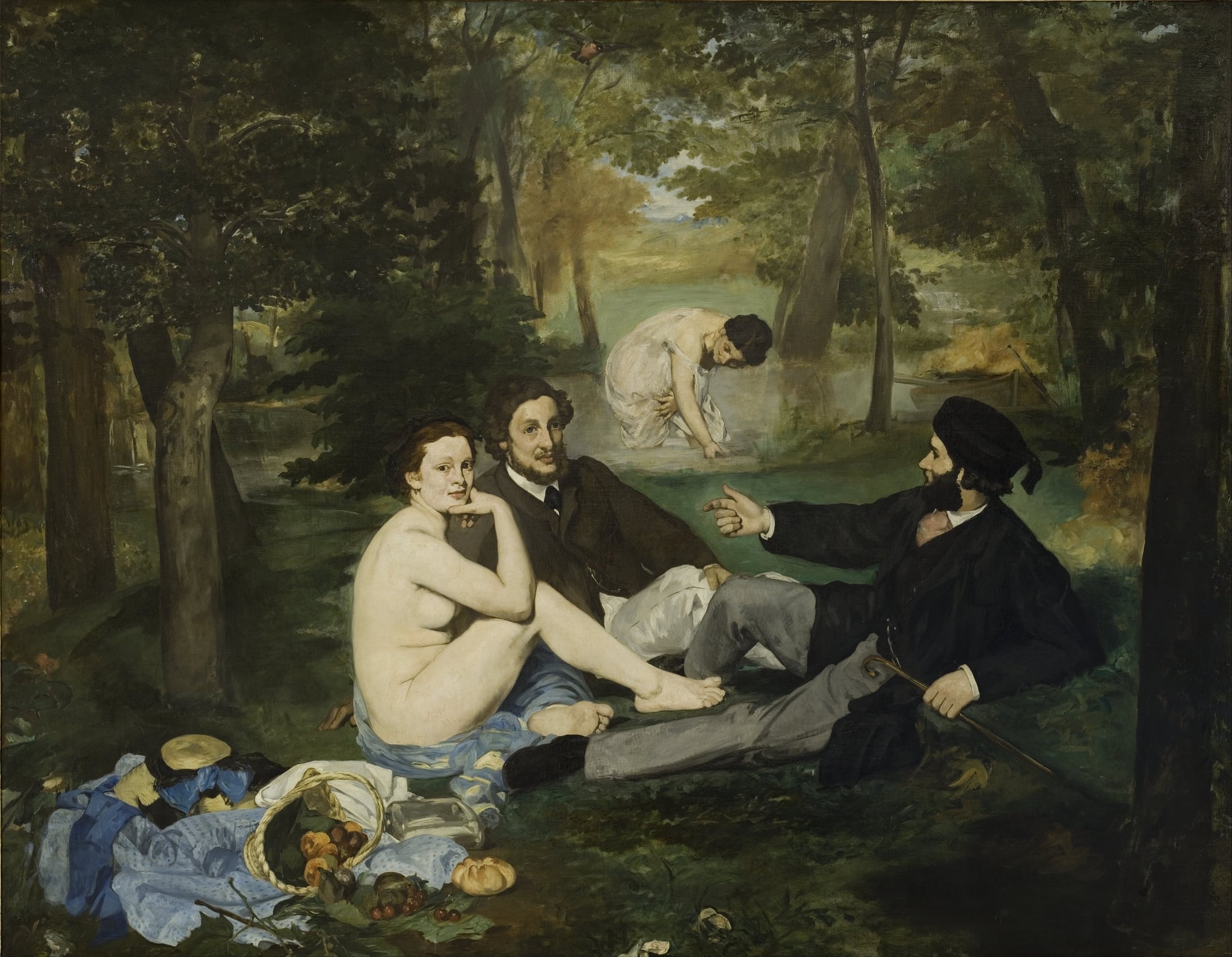
Luncheon on the Grass
Édouard Manet (1863)
Luncheon on the Grass stages a confrontation between <strong>modern Parisian leisure</strong> and <strong>classical precedent</strong>. A nude woman meets our gaze beside two clothed men, while a distant bather and an overturned picnic puncture naturalistic illusion. Manet’s scale and flat, studio-like light convert a park picnic into a manifesto of <strong>modern painting</strong> <sup>[1]</sup><sup>[2]</sup>.
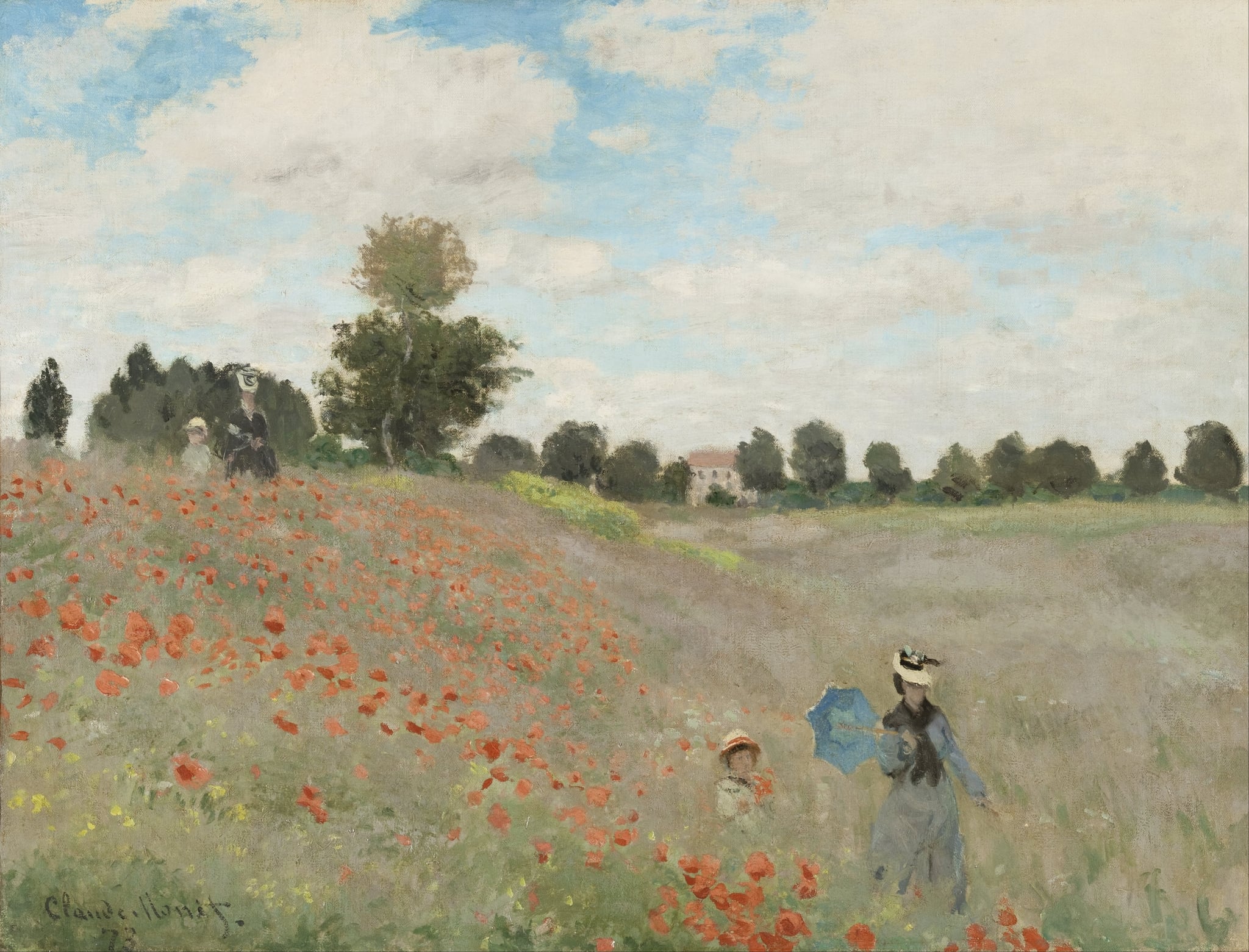
Poppies
Claude Monet (1873)
Claude Monet’s Poppies (1873) turns a suburban hillside into a theater of <strong>light, time, and modern leisure</strong>. A red diagonal of poppies counters cool fields and sky, while a woman with a <strong>blue parasol</strong> and a child appear twice along the slope, staging a gentle <strong>echo of moments</strong> rather than a single event <sup>[1]</sup>. The painting asserts sensation over contour, letting broken touches make the day itself the subject.
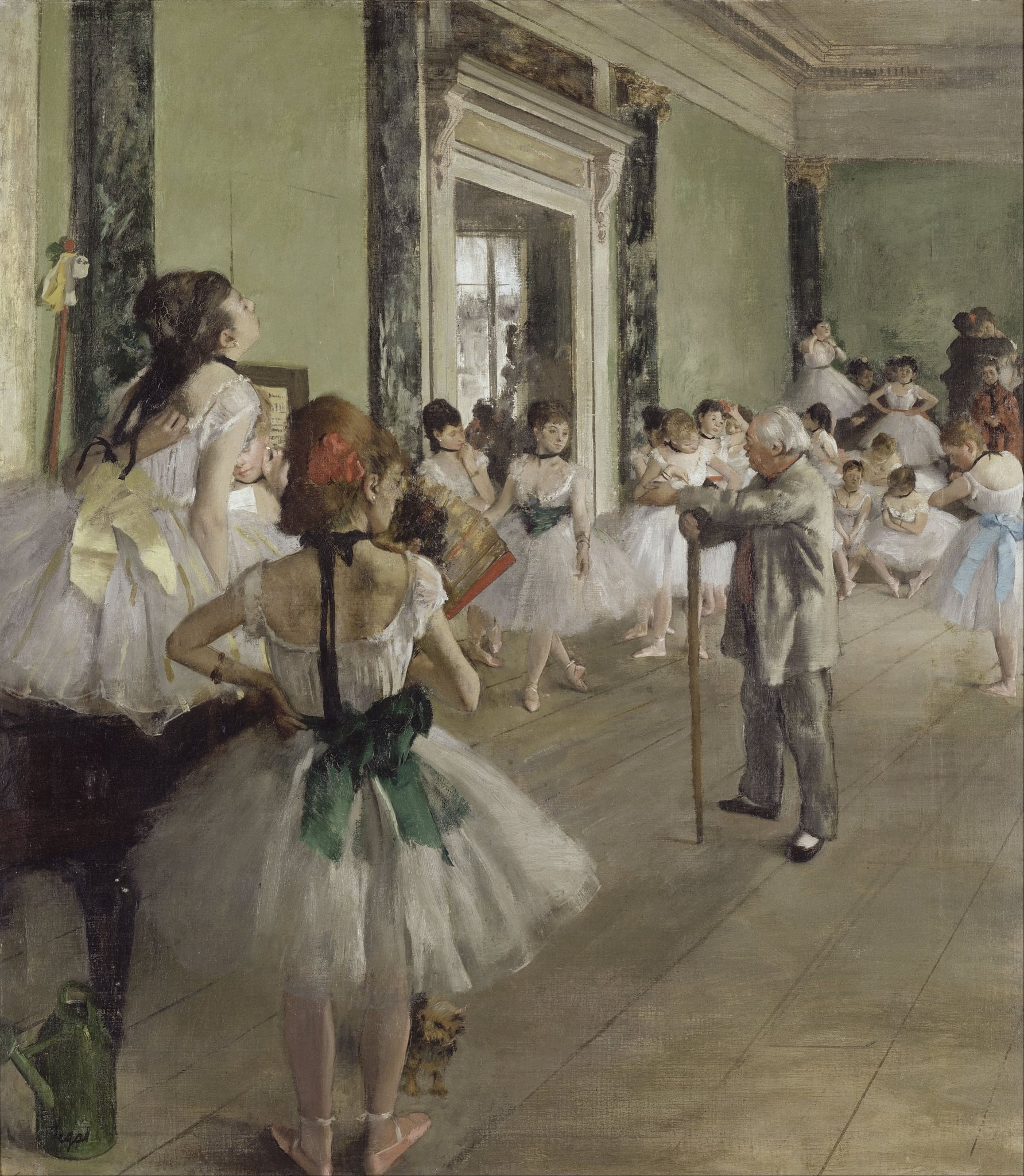
The Ballet Class
Edgar Degas (1873–1876)
<strong>The Ballet Class</strong> shows the work behind grace: a green-walled studio where young dancers in white tutus rest, fidget, and stretch while the gray-suited master stands with his cane. Degas’s diagonal floorboards, cropped viewpoints, and scattered props—a watering can, a music stand, even a tiny dog—stage a candid vision of routine rather than spectacle. The result is a modern image of discipline, hierarchy, and fleeting poise.
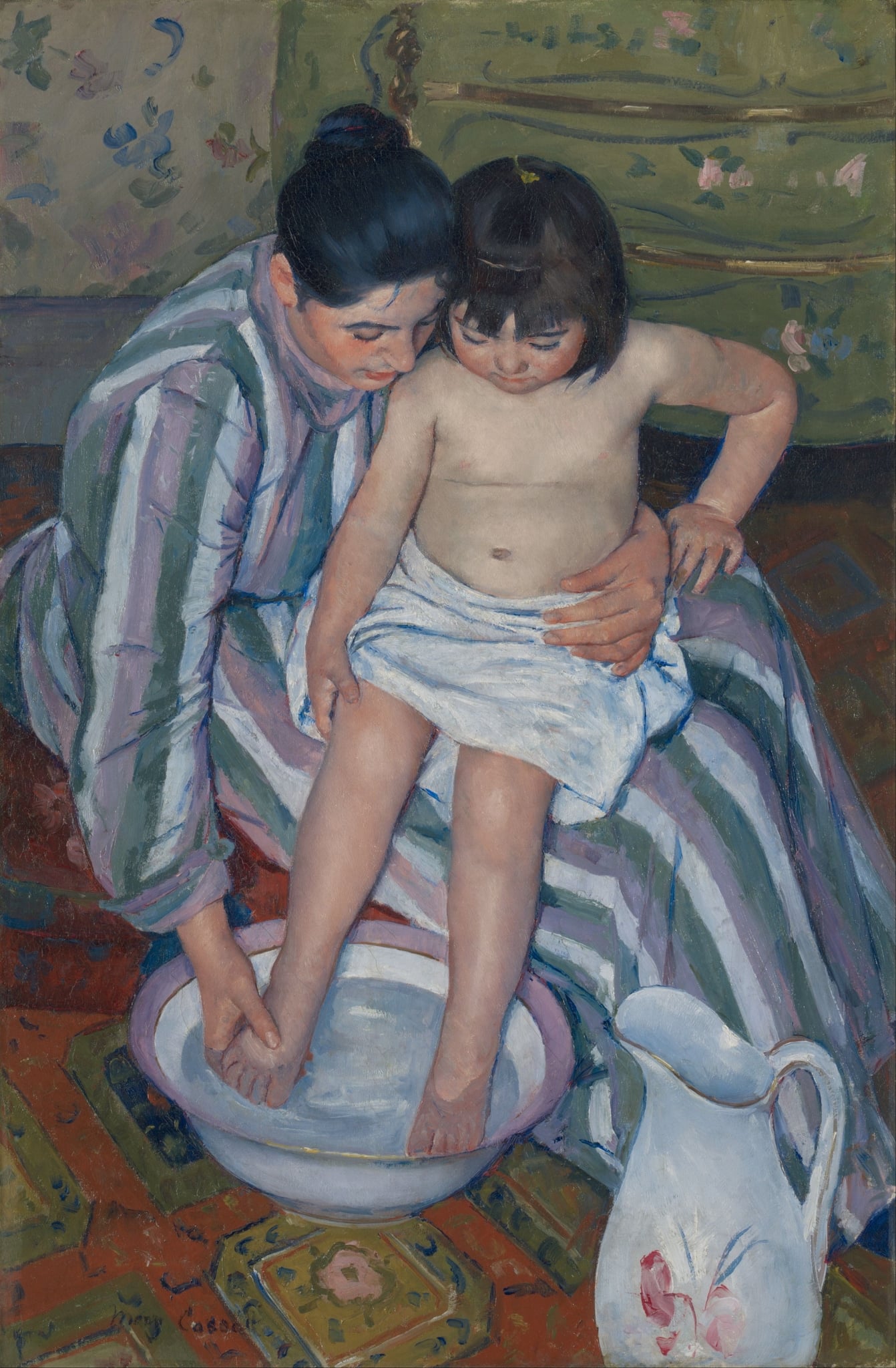
The Child's Bath
Mary Cassatt (1893)
Mary Cassatt’s The Child’s Bath (1893) recasts an ordinary ritual as <strong>modern devotion</strong>. From a steep, print-like vantage, interlocking stripes, circles, and diagonals focus attention on <strong>touch, care, and renewal</strong>, turning domestic labor into a subject of high art <sup>[1]</sup><sup>[3]</sup>. The work synthesizes Impressionist sensitivity with <strong>Japonisme</strong> design to monumentalize the private sphere <sup>[1]</sup><sup>[2]</sup>.
Related Themes
Related Symbolism Categories
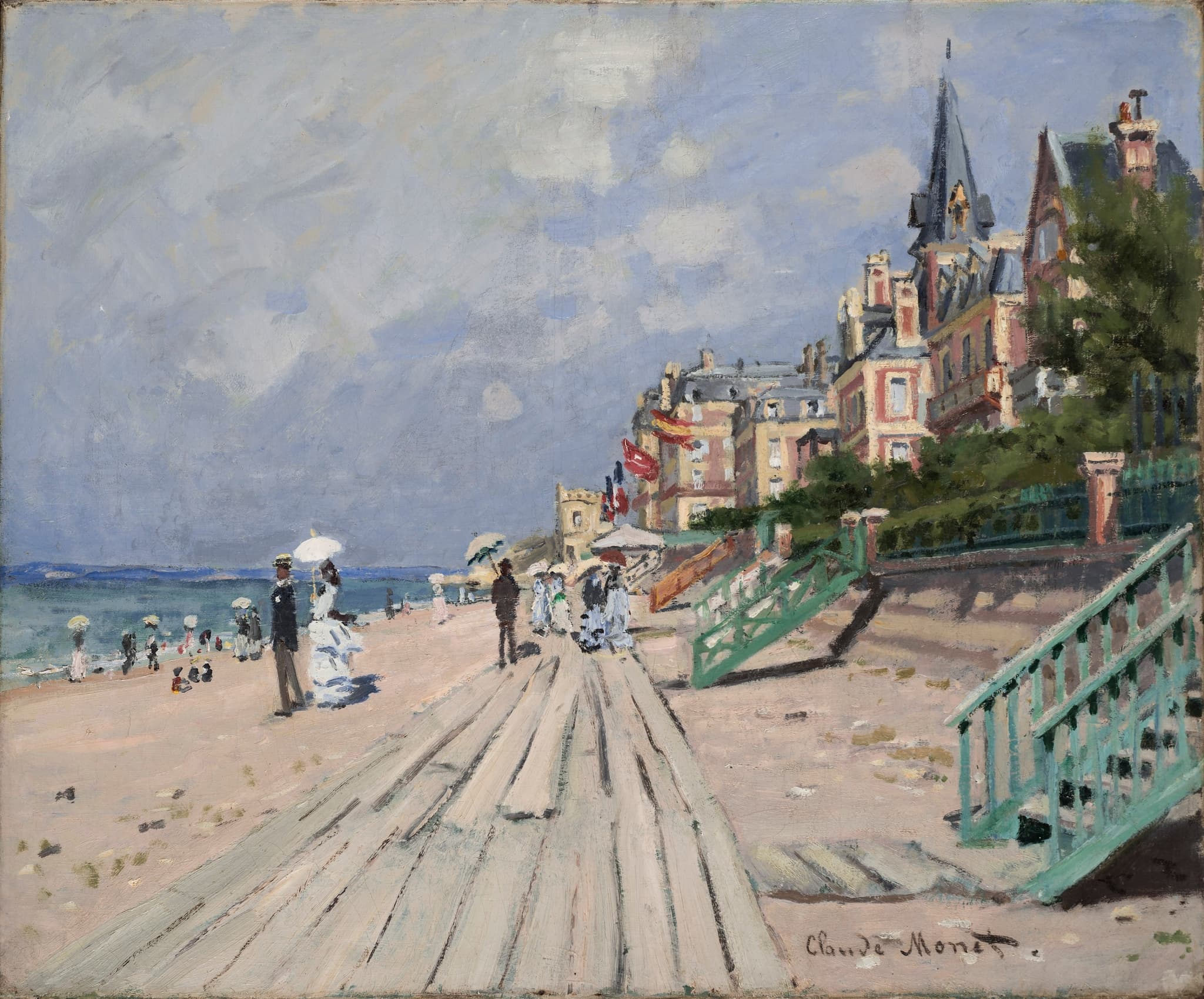
Fashion
In Impressionist and related modern painting, fashion functions as a coded system of class, gender, and spectatorship, translating older allegorical and mythic meanings into the language of couture, accessories, and regulated bodily comportment.
Society
The Society symbolism category charts how nineteenth‑century artists encoded modern social relations—class hierarchy, gendered labor, spectatorship, and leisure—through recurring motifs of dress, gesture, and urban setting that transform everyday bourgeois and working-class life into a legible iconography of modernity.
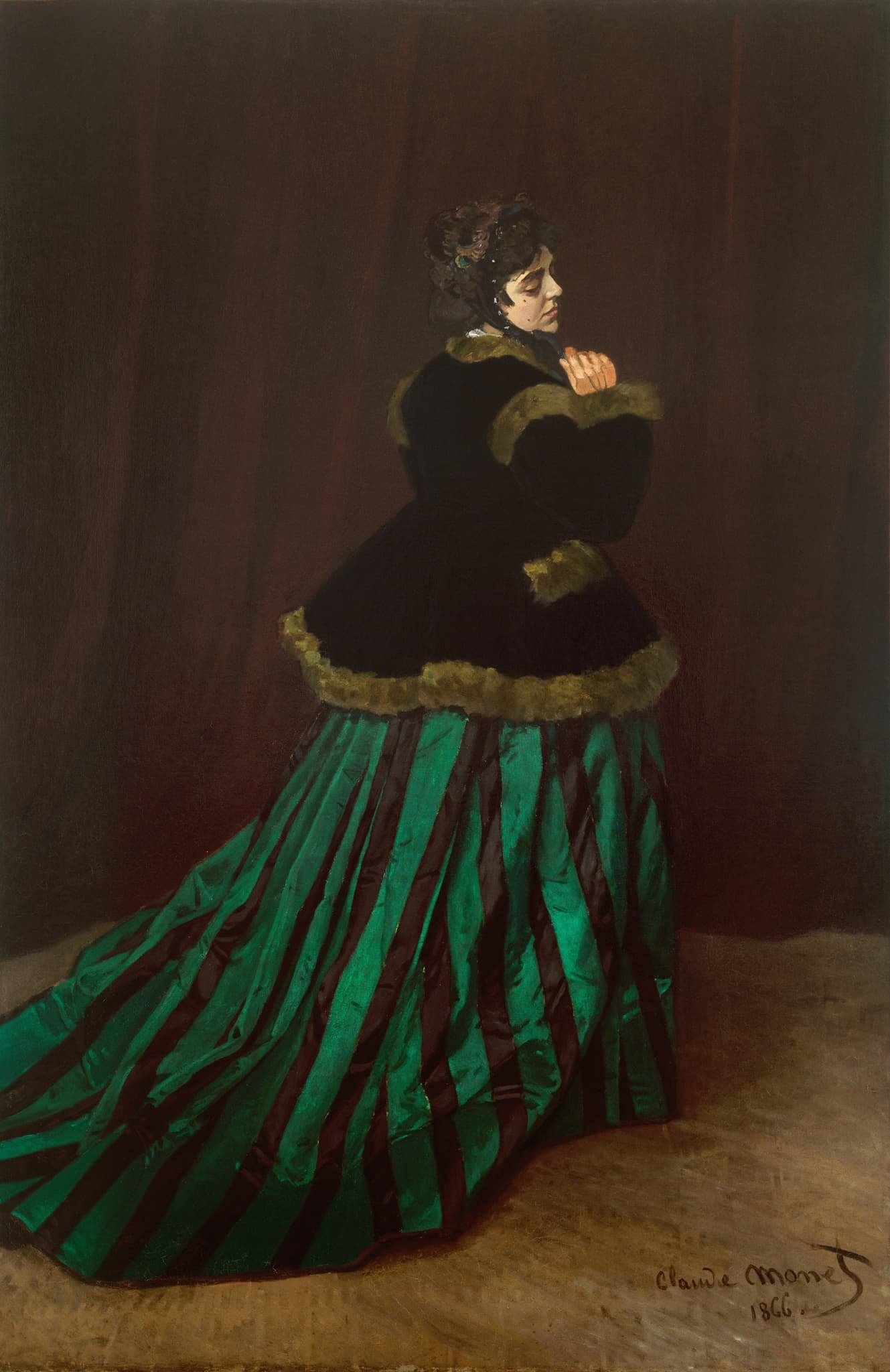
Mortality
The “Mortality” symbolism category in nineteenth‑century painting translates death from theological drama into terse, often secular signs—blood, smoke, wilted flowers, exhausted bodies—through which modern artists register the finitude of life and the procedural, sometimes anonymized character of modern violence.
The exploration of humanity within the visual arts has long focused on symbols that articulate complex social, emotional, and interpersonal dynamics. The 19th century, a period marked by urbanization and social transformation, infused these symbols with a new, multifaceted resonance. In this era, artists employed depictions of human interaction, attire, and gestures to convey not only personal and social identity but also broader sociocultural narratives. By examining symbols such as the apron and work blouse, the barmaid, clasped hands, and the direct gaze of the nude, we uncover the nuanced operation of these elements within modern art’s semiotic framework.
Édouard Manet’s A Bar at the Folies-Bergère is a seminal work that engages with the human face of urban commerce through the figure of Suzon, the barmaid. She becomes a mediator and a symbol of both service and commodification. Her presence, fronting a marble counter filled with consumables, epitomizes the dual identity of the salesperson and potential commodity, reflecting the complexities of urban exchange. The skewed reflection in the mirror destabilizes the viewer’s gaze, transforming it into a contemplation of modern desire and identity. This manipulation of perspective and reflection draws attention to the barmaid’s direct, unreadable gaze, further accentuating her transient role between viewer and marketplace.
In Edgar Degas’s Combing the Hair, classed labor and personal ritual are deftly intertwined. The symbolism of the apron and work blouse signals service devoid of sentimentality, as the attendant performs a routine transformed into a compelling choreography of tension. This interaction echoes the ballet master’s cane in The Ballet Class, where authority and discipline govern the measured tempo of training. Here, Degas captures the tension between aspiration and the inherent limits of the human body, accentuating labor as an integral component of perceived grace and beauty.
Renoir’s In the Garden captures a quiet moment of courtship with clasped hands, symbolizing a tentative bond poised between emotional petition and restraint. This imagery acts as a visual idiom for courtship within the modern milieu, with Renoir’s brushwork rendering love as both ephemeral and luminous. The scene’s delicate balance between connection and autonomy reflects the nuanced dynamics of contemporary relationships.
Mary Cassatt’s The Child’s Bath employs the motif of encircling hands and arms, forging a “circle of touch” that embodies protection, trust, and care. This work monumentalizes domesticity by transforming a mundane ritual into an expression of modern devotion. The composition’s Japonisme influences fundamentally alter traditional representations of intimacy, underlining the significance of touch as a vehicle for expressing mutual attention and emotion.
The evolution of these symbols over time reflects shifting societal attitudes toward identity, gender roles, and interpersonal dynamics. The direct gaze of the nude in Manet’s Luncheon on the Grass breaks from classical ideals, introducing a confrontational exchange that forces acknowledgment of contemporary complexity. This bold interaction contrasts with the passive allegory of predecessors, signaling a move towards self-awareness and modernity.
In conclusion, the human symbolism explored throughout these iconic works encapsulates the dialogic exchange between individual narratives and broader social currents. By decoding these symbols semiotically and iconographically, we discern the intricate layers through which 19th-century artists articulated the human condition. As these symbols evolved, they continued to shape the portrayal of identity and interaction, offering a profound window into the social fabric of modern life.