Bread and wine Symbolism
In Christian art, bread and wine signify the Eucharist—the body and blood of Christ and the new covenant instituted at the Last Supper. Their inclusion signals a shift from narrative action to sacramental meaning, connecting the scene to liturgical practice and theology.
Bread and wine in The Last Supper
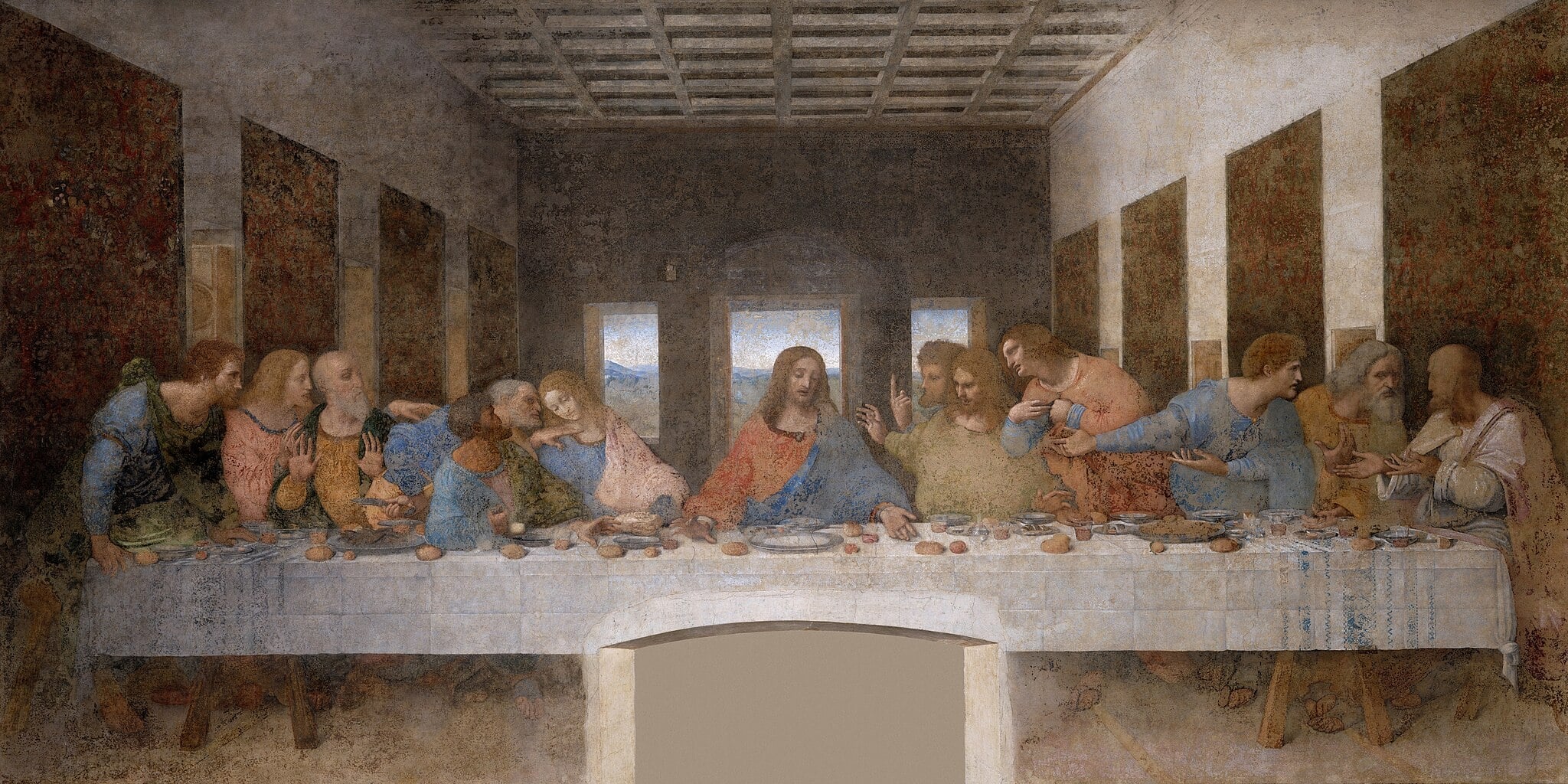
In Leonardo da Vinci’s The Last Supper (1495–1498), the bread and wine set before Christ “announce the Eucharist,” making the table not only a site of conversation but the place where the sacrament is signaled. Positioned at the compositional center, where the one‑point perspective funnels all space to Christ’s head and his triangular stillness, these elements focus the viewer’s attention on his role as the giver of his body and blood.
Around this calm center, the four flanking trios surge in shock, doubt, and protest, while Judas recoils in shadow clutching a purse of silver. Against this human tumult, the bread and wine quietly assert the sacramental core of the scene—the institution of the Eucharist within the moment of announced betrayal.