Brush in motion Symbolism
A brush in motion marks grooming as active, embodied work, where touch organizes and disciplines the body. In late 19th-century interiors, the repeated stroke often registers intimacy and hierarchy at once, turning routine care into visible effort.
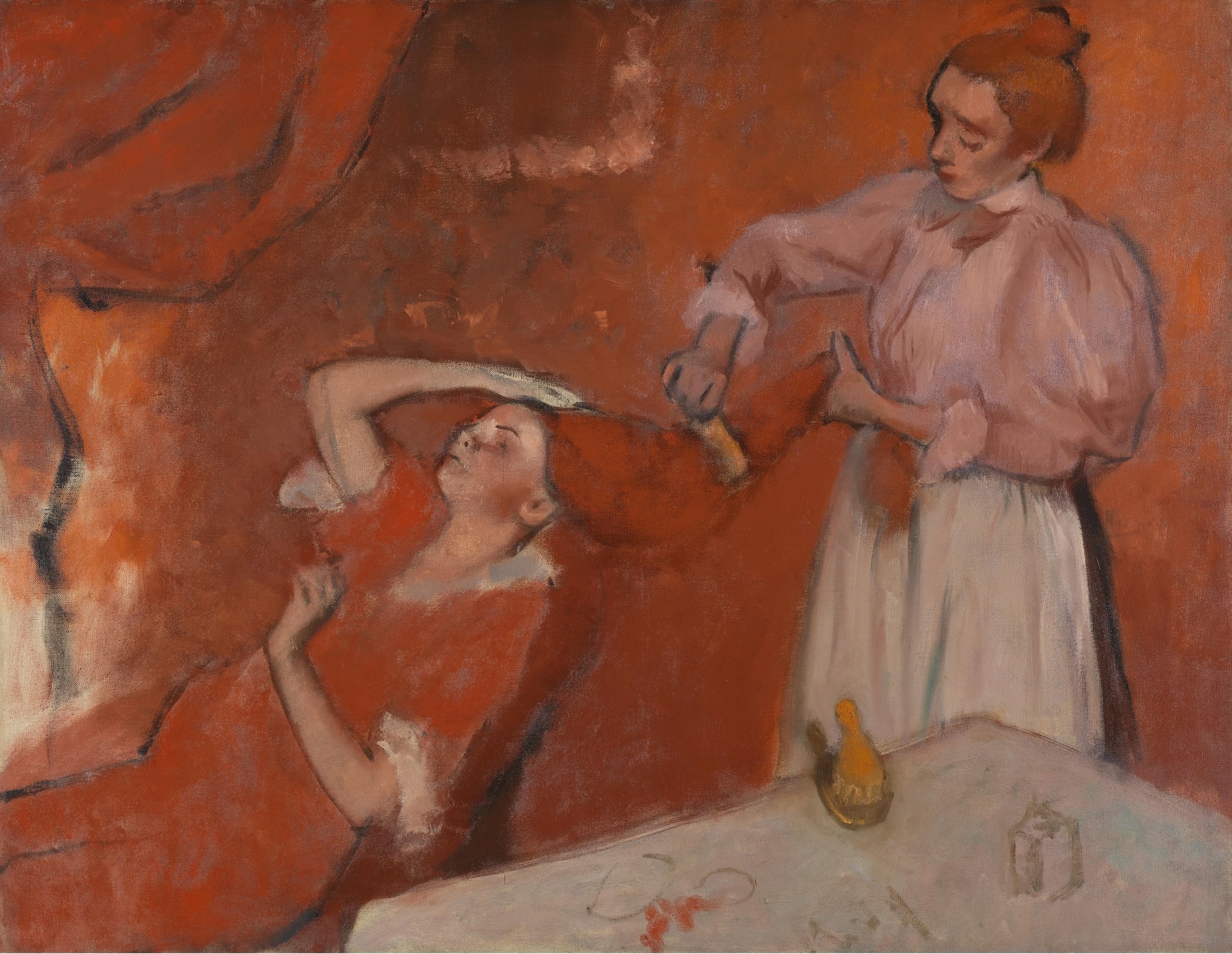
Brush in motion in Combing the Hair
In Edgar Degas’s Combing the Hair (c.1896), the moving comb fulfills the role of a brush in motion: the grooming tool becomes an instrument of labor and control. Degas compresses a private ritual into close quarters, where the attendant’s sustained strokes make routine care palpable as effort and classed service.
The incandescent field of red fuses figure and room, and the stretched arc of hair operates like a binding ribbon between attendant and sitter, making motion itself the structural link of the composition.