Cradle with rocking pole and cord Symbolism
In 19th-century genre painting, a cradle fitted with a rocking pole and cord signifies practical, continuous childcare within a working home. This humble device lets caregivers soothe an infant while sustaining other tasks, and so it often stands for the durability and routine of family life.
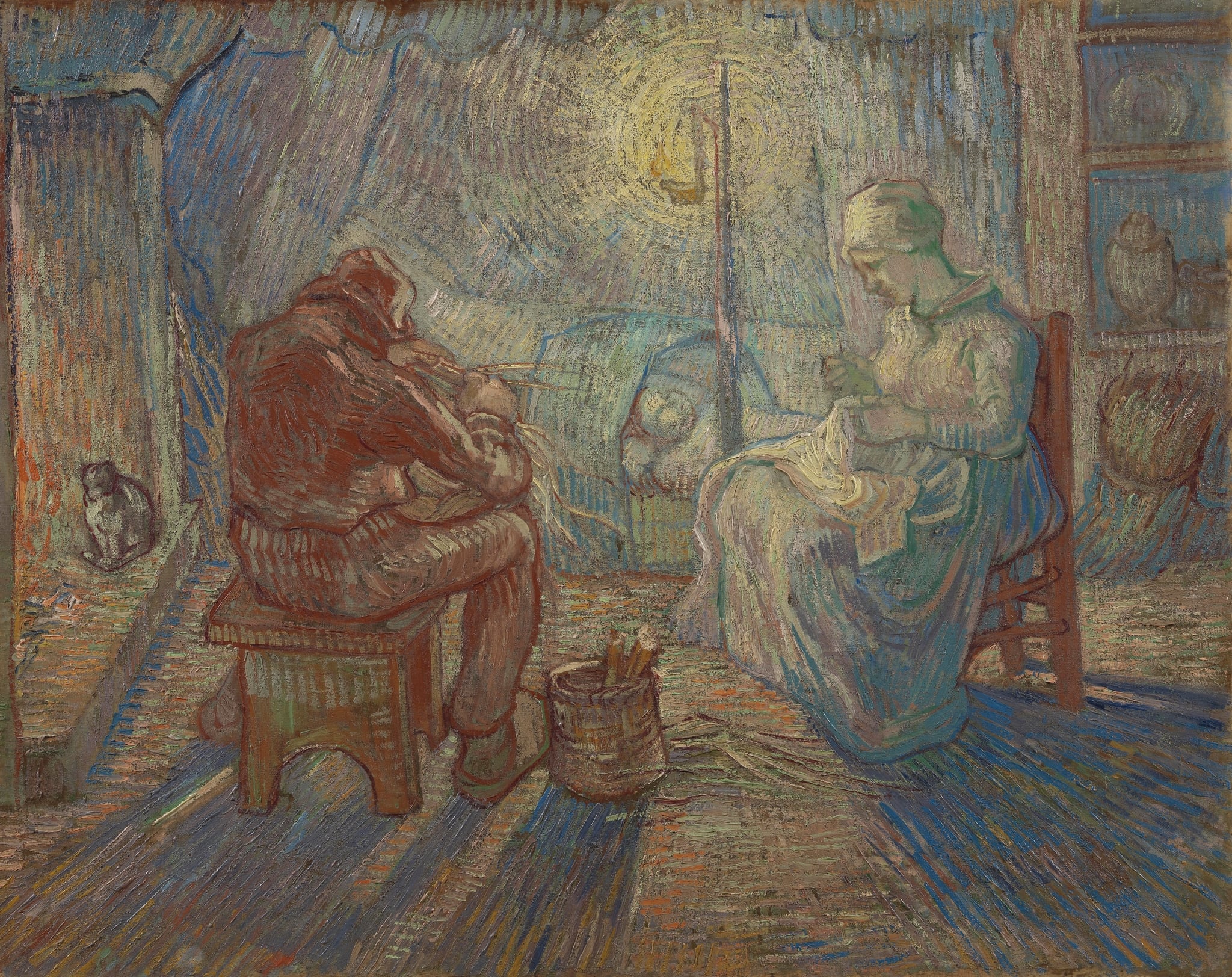
Cradle with rocking pole and cord in Evening (after Millet)
In Evening (after Millet) (1889), Vincent van Gogh translates a peasant interior into saturated color and lamplight. Within this lamplit scene, the cradle with its pole-and-cord rocker functions as a simple machine of nurture, keeping care ongoing while the peasant couple bends to evening tasks. The symbol reinforces the painting’s meditation on care, labor, and light at day’s end, aligning domestic rhythm with the warm halo at the room’s center.