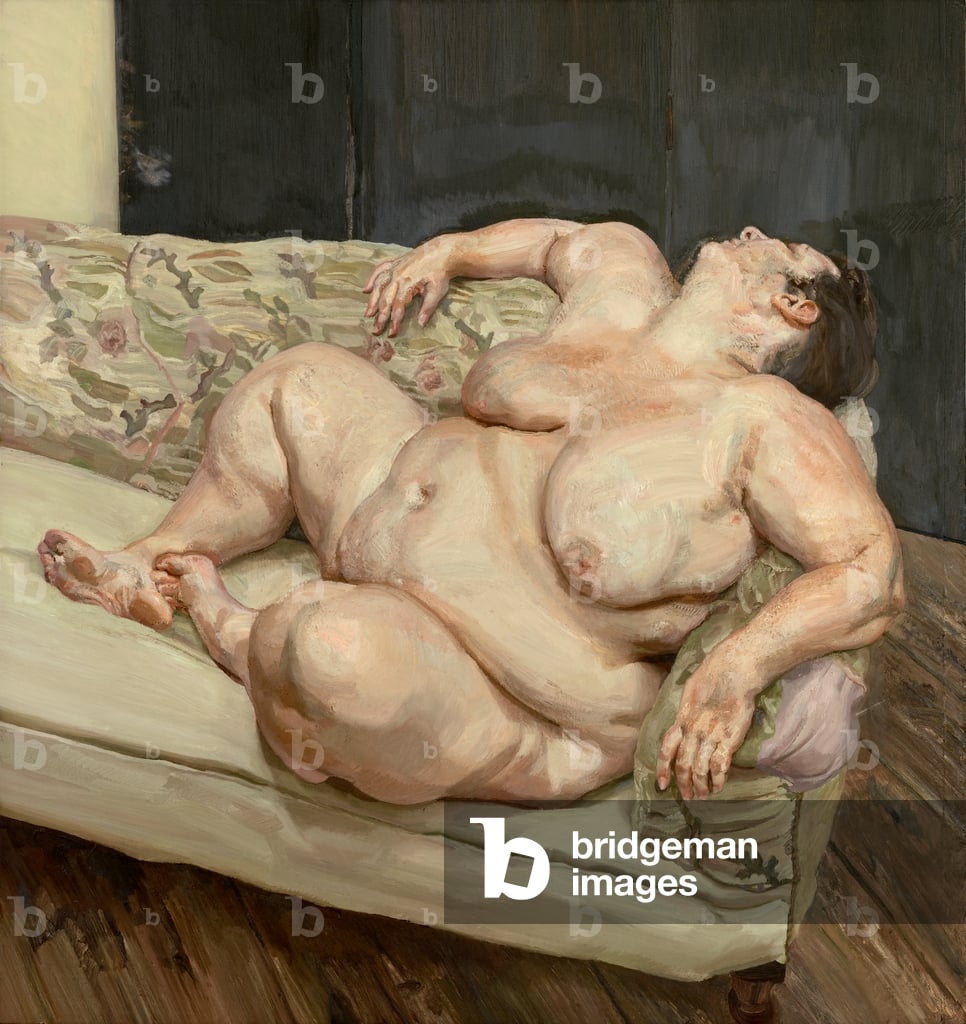
Diagonal sprawl of the body Symbolism
The diagonal sprawl of the body is a compositional pose in which a reclining figure cuts obliquely across the picture plane, occupying space through breadth and weight rather than vertical poise. In art history, such oblique repose has organized the viewer’s gaze in the reclining‑figure tradition while negotiating ideals of beauty, dignity, and control. In contemporary uses it often signals a claim to space and a refusal of choreographed elegance, framing rest as presence rather than display.
Diagonal sprawl of the body in Benefits Supervisor Resting
In Benefits Supervisor Resting (1994) by Lucian Freud, the sitter’s sprawled, off‑axis recline across a sagging floral sofa makes the body the canvas’s dominant diagonal force. The tilted head and unarranged limbs divert attention from portrait convention toward an expansive "landscape of flesh," built up in dense, mottled strokes that stress weight, texture, and lived corporeality. Set against a humble studio of scuffed wooden floor and dark wall, the pose reads as a monumental claim to space that confronts the reclining‑nude tradition without flattering idealization. Freud’s diagonal sprawl thus treats rest as a right rather than a pose, asserting bodily presence through scale, spread, and unvarnished dignity.