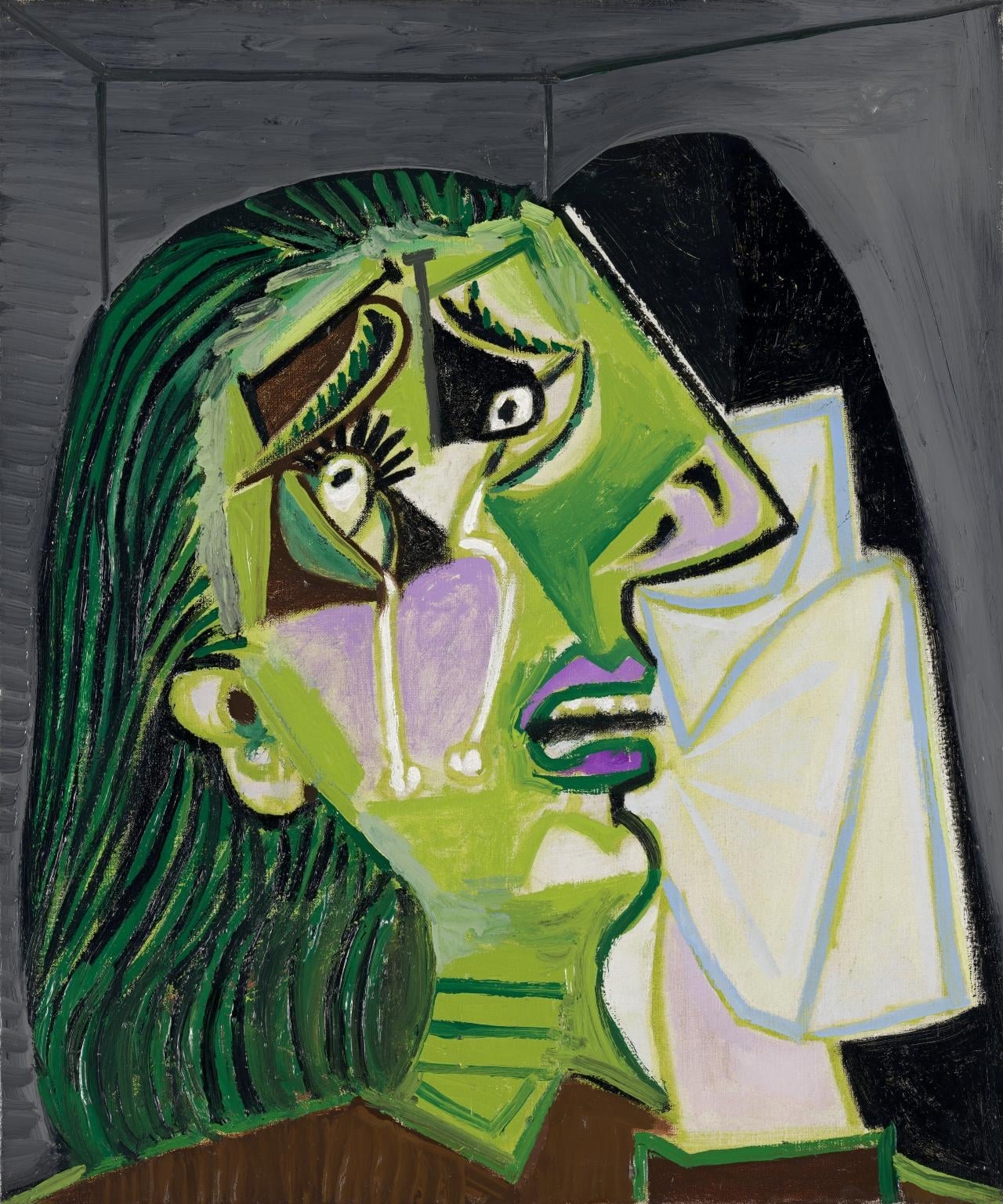
Geometric handkerchief clenched in teeth Symbolism
A handkerchief clenched between the teeth, rendered as a hard, geometric shape, turns a private instrument of comfort into an emblem of contained anguish. In Picasso’s modernist, fractured vocabulary, the soft cloth becomes a rigid wedge that makes consolation feel futile and pain constrained. The motif compresses mourning into a graphic sign, aligning with 20th-century strategies that harden feeling into form.
Geometric handkerchief clenched in teeth in The Weeping Woman
In The Weeping Woman (1937) by Pablo Picasso, the handkerchief, bitten between the figure’s teeth, is articulated as a sharp, faceted form that seems to lock the jaw. Integrated with the painting’s shattered planes, acidic greens and purples, and jewel-like tears, the cloth reads less as a soft aid than as a hard device that braces the face and structures the image. This shift from hand-held comfort to mouth-held clamp turns private mourning into a public, iconic emblem of civilian grief, and the geometric wedge participates in the fracture of perception that follows trauma. In this single example from our collection, the motif operates both descriptively—registering the physicality of weeping—and symbolically—fixing pain into a visible geometry that cannot soothe.