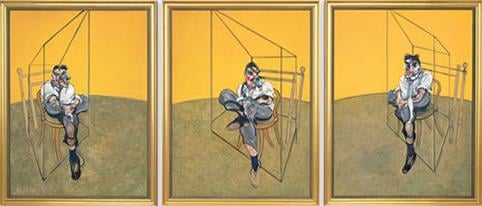
Geometric space-frame (cage) Symbolism
A geometric space-frame (or cage) is a linear, architectonic structure drawn around a figure to define and measure space. In art history, such frames often signal rational order—perspective, scrutiny, and display—set against the contingency of the living body. By isolating the subject, the cage makes viewers conscious of control, examination, or performance.
Geometric space-frame (cage) in Three Studies of Lucian Freud
In Francis Bacon’s Three Studies of Lucian Freud (1969), the sitter appears as a restlessly rotating presence enclosed by a rectilinear cage set on a searing yellow ground. The spare lines operate like a measuring box: they stage the figure, fix distance, and expose the body to inspection. Against this rational armature, the smeared, mask-like head, crossed legs, rolled sleeves, and upturned brogues turn likeness into psychological performance, intensifying the tension between a controlled frame and a volatile, living sitter.