Grotto / cave Symbolism
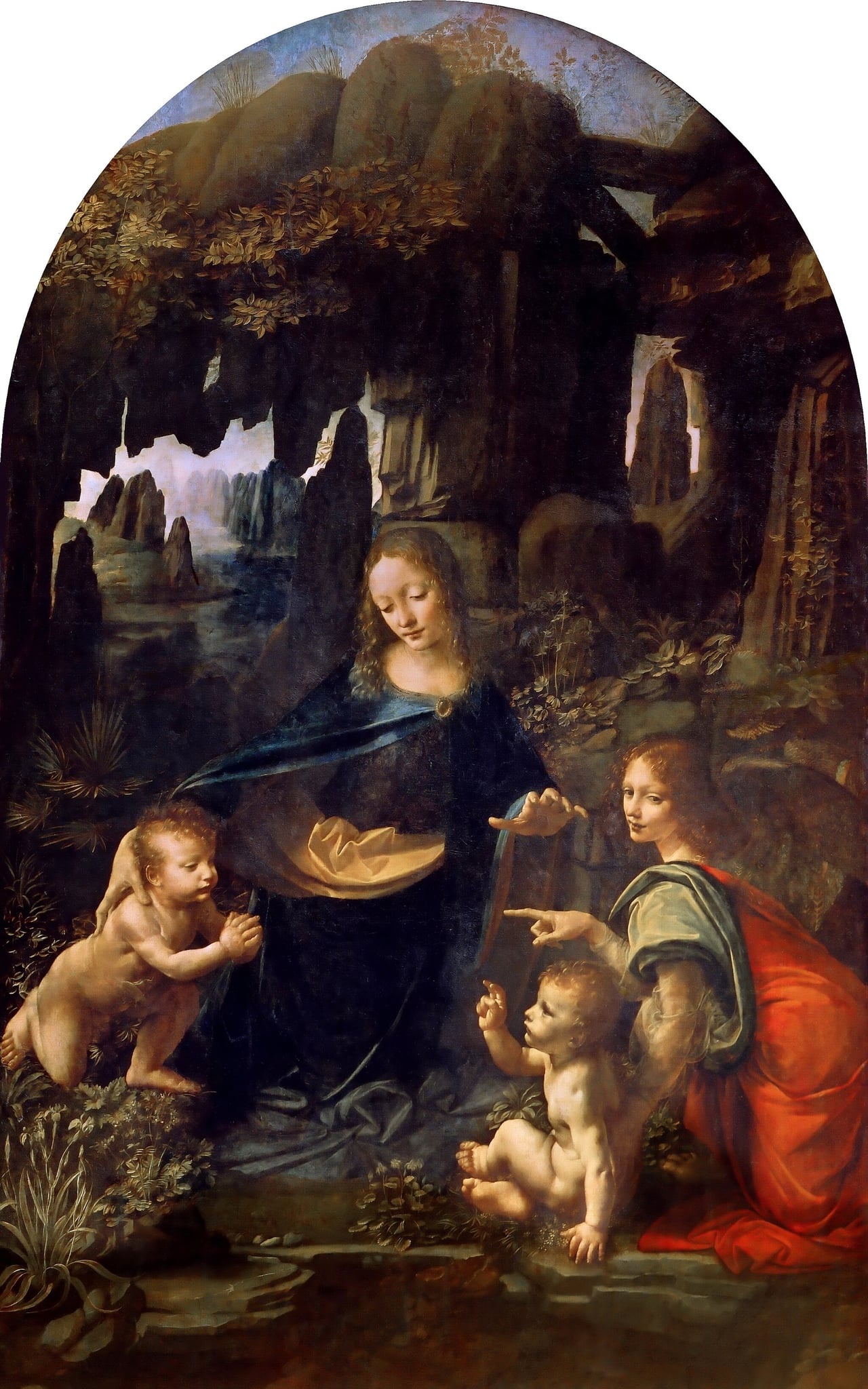
In Christian art, the grotto or cave serves as a natural sanctuary that binds sacred events to the earth's elemental depths. It signals origins, shelter, and hidden revelation, turning rock and water into a kind of created chapel. Leonardo da Vinci's Virgin of the Rocks shows how a cavern setting can merge sacred presence with the living world.
Grotto / cave in Virgin of the Rocks
In Virgin of the Rocks (c. 1483–1494), Leonardo da Vinci stages the Holy Family and an angel inside a cavern where rock, water, and foliage form a living chapel. The angel's pointing hand and outward gaze guide the viewer to the kneeling infant John as Mary shelters him and blesses the Christ Child, binding the figures in a pyramidal, breath-like sfumato. By omitting overt markers like halos, Leonardo lets grace register as immanent within creation itself; the grotto functions as both refuge and revelation, a protective setting that unites sacred presence with nature's primordial elements.